GR
Heraklion
The Gate to Crete
The Gate to Crete
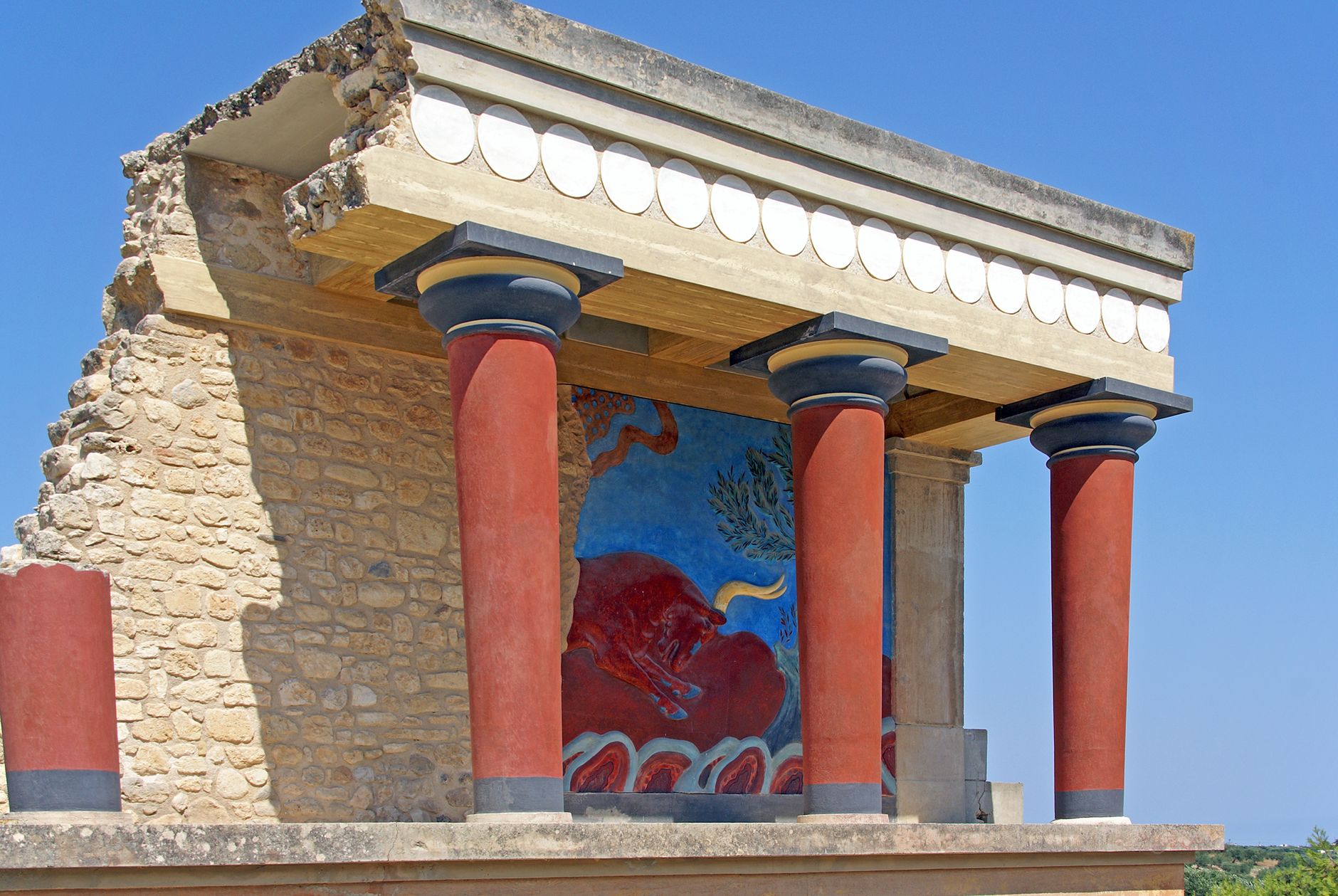
Knossos (€15; 5km from Heraklion; combined ticket with Archaeological Museum €20) is the largest Bronze Age archaeological site in Crete and the centre of Minoan civilisation (2000–1350 BC). The partially reconstructed palace complex — throne room, ceremonial halls, storage magazines — covers 22,000 square metres. Go at 8am opening to avoid tour groups, which arrive in volume after 10am.
💡 Knossos (€15; book at etickets.culture.gr; bus 2 from Heraklion bus station; €1.70; 20 min) is the largest Bronze Age palace in Europe (1700 BC). Arrive at 8am — the site fills quickly from 10am. The Arthur Evans reconstructions are controversial but allow non-archaeologists to understand the scale.
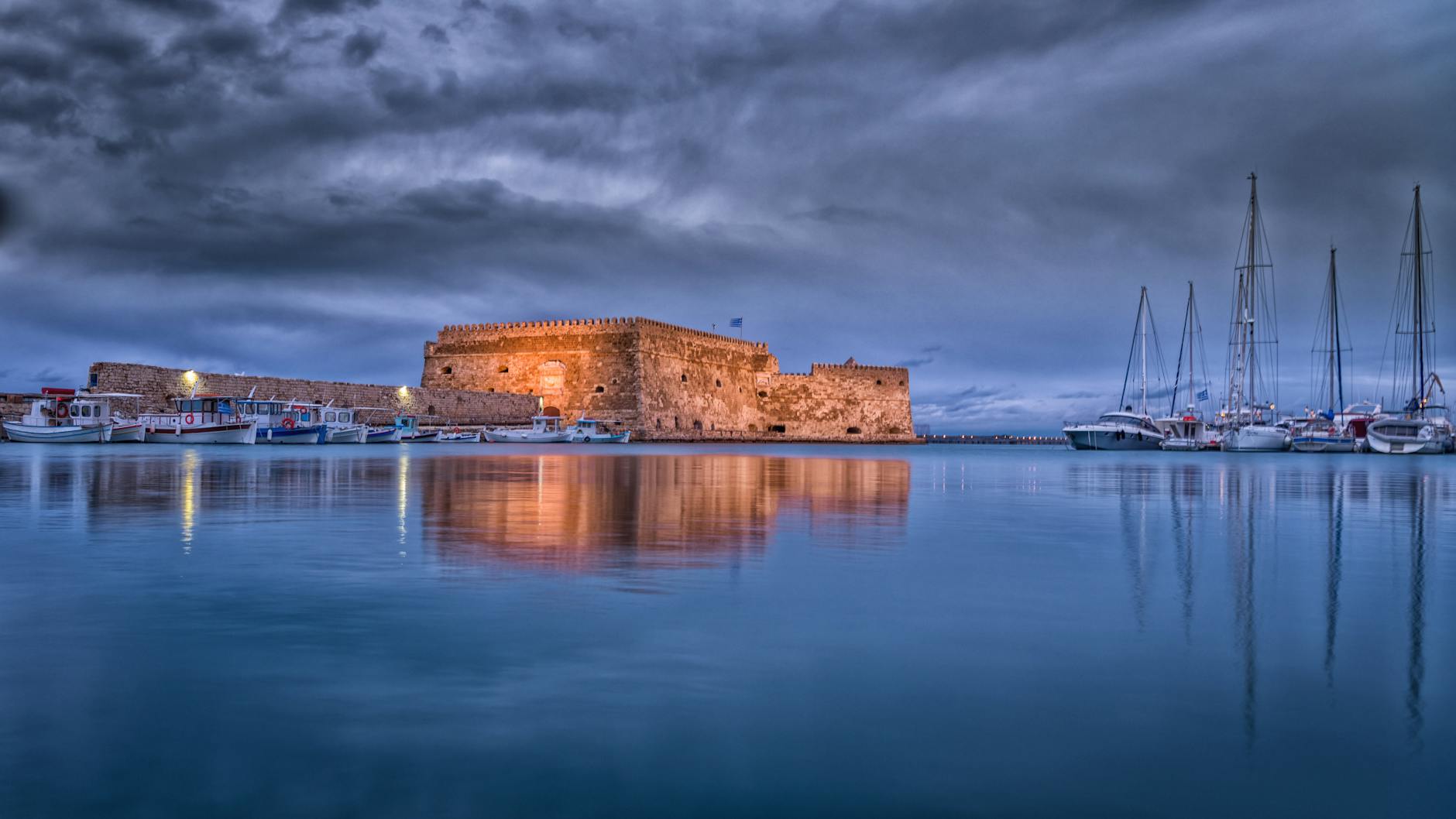
Koules Fortress (€4; 1523 AD) stands at the entrance to Heraklion’s old harbour — a Venetian sea fort bearing three relief carvings of the Lion of St Mark. The inner harbour it guards is still used by fishing boats and the ferry to the islands. The evening light on the stone and water is at its best from the quayside restaurants directly opposite.
💡 The Koules Fortress (€4; culture.gr; the Venetian sea fortress at the harbour entrance; 1303 restored 1550) gives the finest elevated view of Heraklion harbour. The Venetian harbour basin (free to walk) and the Loggia (free; the 17th-century Venetian town hall) are adjacent — allow 1.5 hours for the harbour circuit.
The Archaeological Museum (€12, or €20 combined with Knossos) holds the world’s finest collection of Minoan art: the bull-leaping fresco, the Phaistos Disc, the Snake Goddess figurines, and the Harvester Vase. Allow two hours minimum. Lion Square (Plateia Venizelou) directly outside features the 17th-century Morosini Fountain — the social centre of the old city.
💡 The Heraklion Archaeological Museum (€15; combined ticket with Knossos €23; book online; closed Mon) is the finest Minoan collection in the world — the Phaistos Disc, the Bull’s Head rhyton and the Snake Goddess figurines are the three essential exhibits. Allow 2 hours.

Heraklion is the access point for some of Crete’s finest beaches. Matala (75km west; famous 1960s hippie caves) and Bali (35km west; a sheltered cove with clear water) are both reachable by public bus. Elounda and Spinalonga island (90km east; the former leper colony) make the best day trip combination from Heraklion: ferry to Spinalonga, lunch at Elounda.
💡 The Heraklion coast beaches (Amnisos, Karteros, Kokkini Hani; free; bus east; €1.70) are the most accessible from Heraklion without a car. Vai Palm Beach (95km east; rental car or bus; 2h) is the only natural palm forest in Europe — 5,000 endemic Phoenix theophrastii palms.
Cretan food is one of the most specific regional cuisines in Greece: the dakos (a rusk topped with grated tomato, crumbled feta or mizithra cheese and olive oil — one of the finest and simplest dishes in the Mediterranean), the lamb or goat slow-cooked with wild herbs, the snails in olive oil and rosemary (a Cretan speciality), the local cheeses (graviera, a firm cow’s milk cheese aged for 3 months; anthotyros, fresh and mild; mizithra, used in dakos) and the Cretan olive oil (among the finest produced in Greece, with a high polyphenol content). The 1866 Street Market (the indoor market running from Plateia Kornarou to Eleftherias Square) is the best place to buy all of these: open Monday to Saturday, best before noon.
For restaurants: the old-town tavernas around Lion Square (Peskesi, which serves traditional Cretan cuisine with sourced local ingredients; Erganos, known for the most authentic Cretan mezze in the city) are the most serious addresses in the centre. The fish restaurants along the old harbour and the El Greco Park area are reliable and well-positioned for the Koules fortress view at sunset.
The old town of Heraklion is walkable: the Archaeological Museum, Lion Square, the 1866 Market, the Venetian loggia and the Koules fortress are all within 1.5km of each other. The city bus (KTEL; €1.20) to Knossos (Bus 2, frequent, from the city bus station on the waterfront road) is the most useful transit for tourists. Taxis are cheap for short city journeys (€5–15). For exploring the rest of Crete, a rental car (€25–45/day) is essential — Crete is 260km long and the interior villages and south-coast beaches are not accessible by public transport on a day-trip basis.
Apr–Jun and Sep–Oct are optimal: warm (20–26°C), the archaeological sites are uncrowded in the morning, the sea is swimmable from late May. Jul–Aug is very hot (32–35°C) and Knossos is at absolute capacity by 10am. The November–March off-season sees most coastal beach resorts close but the city itself remains fully open.
Heraklion is mid-range by Greek island standards: cheaper than Mykonos or Santorini, slightly pricier than Thessaloniki. A rental car significantly improves value by opening up the whole island. Per person per day.
The combined Heraklion archaeological ticket (€20) covers Knossos, the Archaeological Museum and the Historical Museum — the three essential sites. The 1866 Street Market dakos lunch is around €5.
A rental car for 2–3 days (€30–45/day) opens up Phaistos, Elounda, Spinalonga and the south coast, which are not feasibly reached by public transport on a day-trip basis.
The Elounda area (70km east of Heraklion) has the finest luxury hotels in Greece: the Elounda Beach Hotel and the Blue Palace Resort both have private beach access, multiple pools and direct Spinalonga views.
Three days covers Knossos, the Archaeological Museum, the Venetian harbour and a drive to Phaistos or Elounda.
Bus 2 to Knossos at 8am (arrive before the tour buses; 20-min bus from the city bus station on the waterfront). 2 hours at the palace. Return to the city. Archaeological Museum in the afternoon (€12; the Snake Goddesses, the Phaistos Disc, the Minoan frescoes; 2–3h). Lunch at the 1866 Street Market. Evening: the old harbour area, Koules fortress at sunset, fish dinner at one of the harbour restaurants.
💡 Bus 2 to Knossos (8am; €1.70; before the tour coaches). Archaeological Museum in the afternoon (€15; 2h; closed Mon). Koules Fortress at sunset (€4). Lion Square for ouzo in the evening.
Rental car (or KTEL bus; 1.5h) to the Palace of Phaistos (55km, 1h by car; €8; the most atmospheric Minoan site, no reconstructions, extraordinary mountain view). Continue to Matala beach (13km further; the cliff caves, the hippie history, the tavernas on the beach). Drive back via Gortyn (an ancient Roman city with the earliest written European legal code inscribed on stone blocks, free to view). Return to Heraklion for dinner at Peskesi (book ahead).
💡 Rental car or KTEL bus to Phaistos (€9 return by bus; 2h; the second major Minoan palace; €6; less restored and quieter than Knossos). Matala beach south coast (1h from Phaistos; the hippie cave dwellings in the cliffs are now protected archaeological sites; €3 to visit).
Drive east (70km, 1.5h). Elounda harbour for coffee. Boat to Spinalonga island (every 30 min from the Elounda quay; €8 entry; 1.5h on the island). Lunch at a seafood taverna on the Elounda waterfront. Return to Heraklion via Malia (the beach, and the adjacent Minoan palace site if not yet visited; €6). Final evening dinner at Erganos in the old town (traditional Cretan mezze).
💡 Rental car or organised tour (1.5h east). Spinalonga island ferry (€15 return; departs Elounda and Plaka) — a Venetian fortress island that served as Europe’s last active leprosy colony until 1957. Elounda waterfront for lunch.
Knossos (Bus 2 from the Heraklion bus station, every 15–20 min; €1.20 + €15 entry) is manageable before 9am and overwhelming after 10am in July–August.
The Cretan dakos (a twice-baked barley rusk moistened with tomato juice, topped with grated tomato, crumbled feta or mizithra, and a drizzle of cold-pressed Cretan olive oil; €4–7) is one of the finest dishes in the Mediterranean and the correct introduction to Cretan food.
The overnight Blue Star Ferry from Heraklion port to Piraeus (Athens; departs 9pm, arrives 6am; cabin berth €45–80) is the most efficient way to connect Crete to Athens: you arrive in Athens at dawn with a full day ahead and have saved a night’s accommodation.
The Minoan Palace of Phaistos (55km southwest; 1h by car or bus; €8; the second-largest Minoan palace; far less crowded than Knossos; the courtyard view over the Messarà Plain and Mount Ida) is the finest Crete archaeology day trip.
The Samaria Gorge (16km, the longest gorge in Europe; south coast, 2h from Heraklion by car or bus; €5 entry) is one of the finest walks in Greece.
Spinalonga (accessible by boat from Elounda, 70km east of Heraklion; €8 entry) is the Venetian island fortress (1579) that operated as the last active leper colony in Europe from 1903 to 1957.
Overnight Blue Star Ferry from Heraklion to Piraeus (9h, departs 9pm; cabin berth €45–80). Also inter-Cretan ferries to Santorini (2h) and Rhodes (7h). Essential for island-hopping routes.
Free
Official Crete inter-city bus network: Heraklion to Chania (2.5h, €14), to Rethymno (1.5h, €8), to Malia (40 min, €3) and to Phaistos (1.5h, €7). Timetables and online booking.
Free
Taxis across Heraklion city: airport to centre (€15–20), city to Knossos (€10–15), old-town short journeys (€4–8). Night tariff from midnight.
Free
Dedicated guide to all Minoan sites on Crete: Knossos, Phaistos, Akrotiri, Malia, Zakros and Gortyn. Site maps, historical context and audio guides. Essential for the Knossos visit if not using a live guide.
Free
Restaurant reservations in Heraklion: Peskesi (Cretan cuisine, farm-sourced), Erganos (traditional mezze) and upscale old-town restaurants. Book Peskesi 3–5 days ahead in summer.
Free
Download all of Crete offline — the road network in the interior (the Psiloritis mountains, the south coast road between Agia Roumeli and Hora Sfakion) has patchy mobile coverage.
Free
Quick answers to the questions travellers most often ask before visiting Heraklion.
Spring (April-June) and autumn (September-October) offer warm, comfortable weather ideal for sightseeing. Summer is hot and busy, and winters are mild — among the warmest in Europe.
One to two days for the Minoan palace of Knossos and the superb Archaeological Museum, plus the Venetian harbour — then use it as a base to explore the rest of Crete.
The city centre is walkable and served by buses; to explore the island of Crete beyond the city, a rental car is essentially essential.
Being the largest city and main gateway of Crete, home to the famous Minoan palace of Knossos, the outstanding Heraklion Archaeological Museum, and a historic Venetian harbour and fortress.
Discover more of Greece’s extraordinary destinations.