PA
Portobelo
Pirate forts and living Congo culture
Pirate forts and living Congo culture
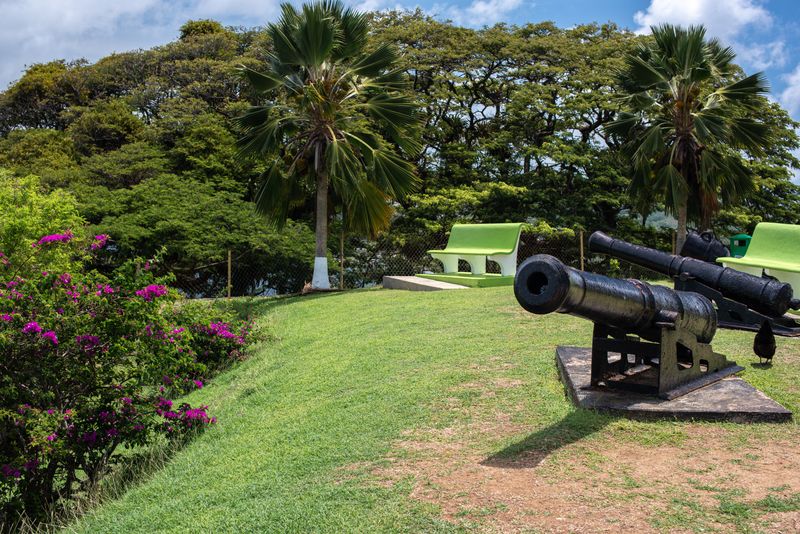
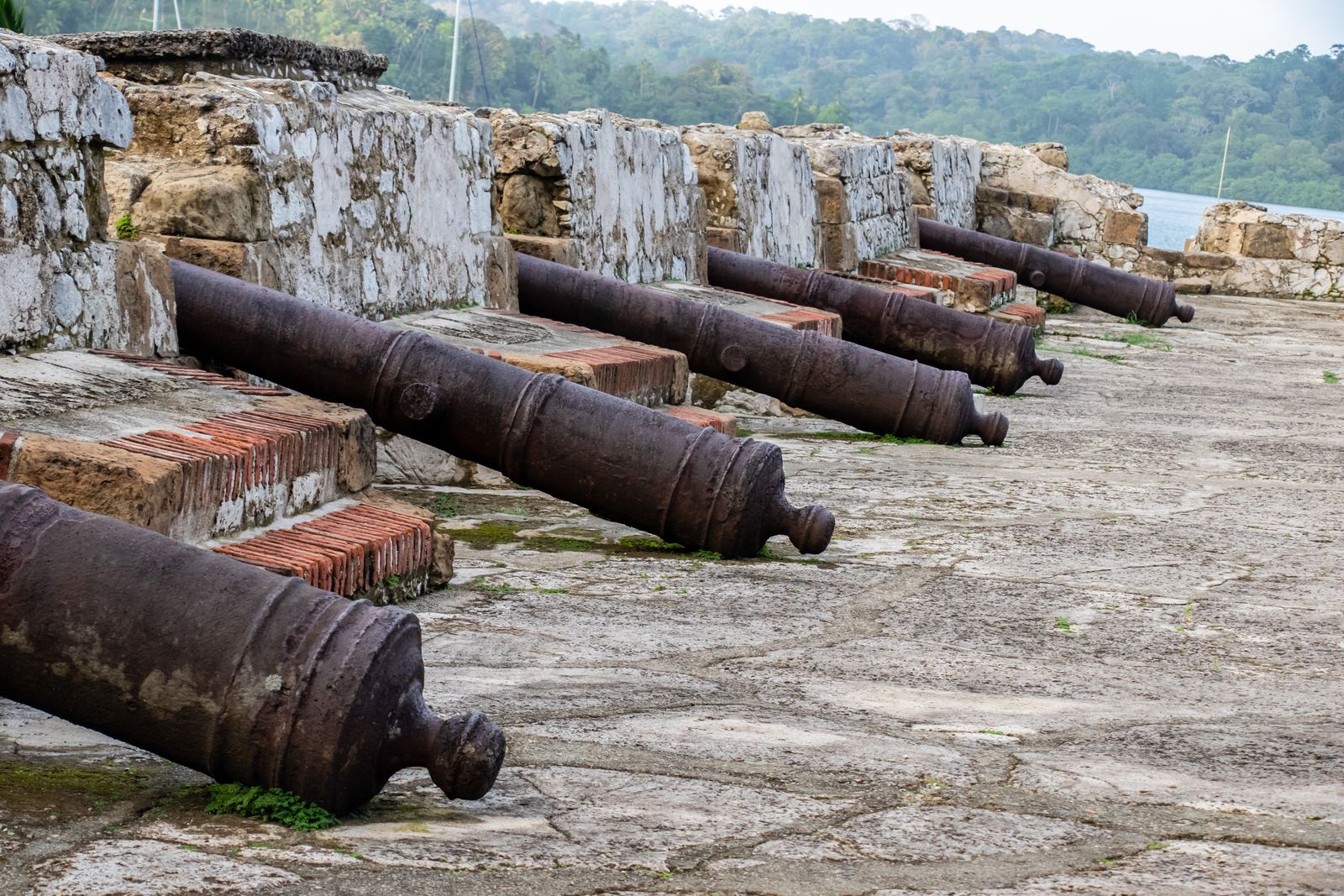
Portobelo’s UNESCO-listed fortifications — San Jerónimo, Santiago and the Customs House — sprawl around the bay, their weathered stone walls and rows of cannon still guarding the harbour where the Spanish treasure fleets once loaded silver. You can clamber over the batteries, peer through the gun embrasures and imagine Henry Morgan’s raid of 1668.
💡 Fort Santiago and San Jerónimo are right in and beside the town — free to wander; the restored Customs House holds a small museum of the treasure-fleet era.
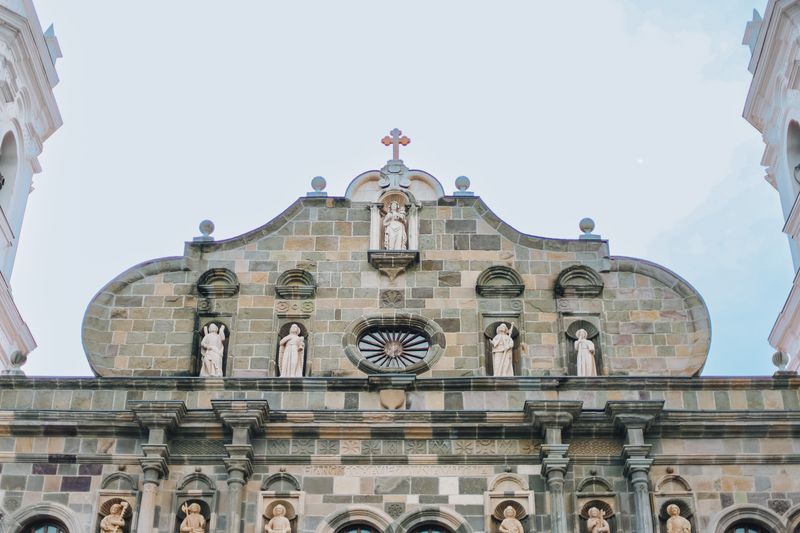
In the town church stands the Nazareno — the Black Christ — a dark-wood statue of Jesus that is one of Panama’s most venerated religious icons. Each October 21st, tens of thousands of pilgrims, many crawling the final stretch or dressed in purple robes, converge on Portobelo for the Festival of the Black Christ, one of the country’s great spiritual events.
💡 The church is open year-round to see the statue; if you come for the October 21 festival, expect huge crowds, deep devotion and an unforgettable atmosphere.
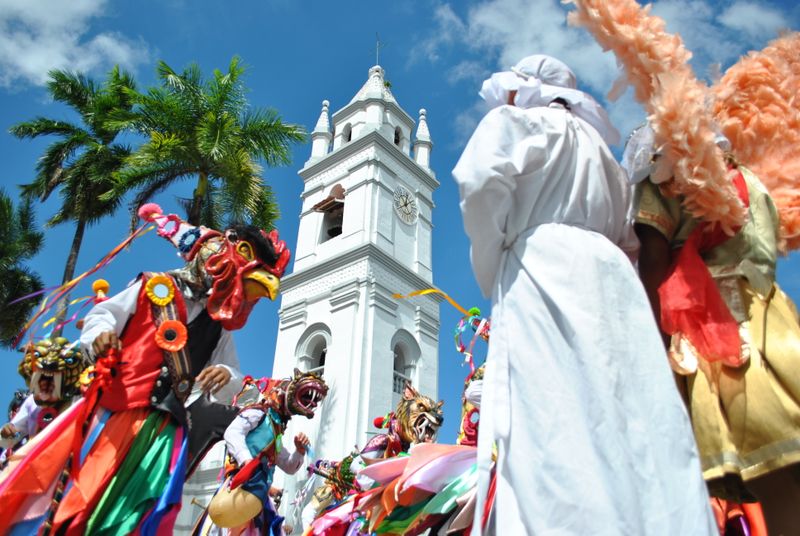
Portobelo is the capital of Panama’s Congo tradition — the theatrical, rebellious culture of the Cimarrones, Africans who escaped Spanish slavery and built free communities on this coast. It lives on in fierce devil masks, satirical drumming-and-dance performances, and a Carnival like nowhere else. Local artists’ galleries and workshops keep the mask-making and art alive year-round.
💡 Visit the Casa Congo or a local art space to see the masks and, if you’re lucky, a Congo dance — Carnival (Feb/Mar) is the spectacular full experience.
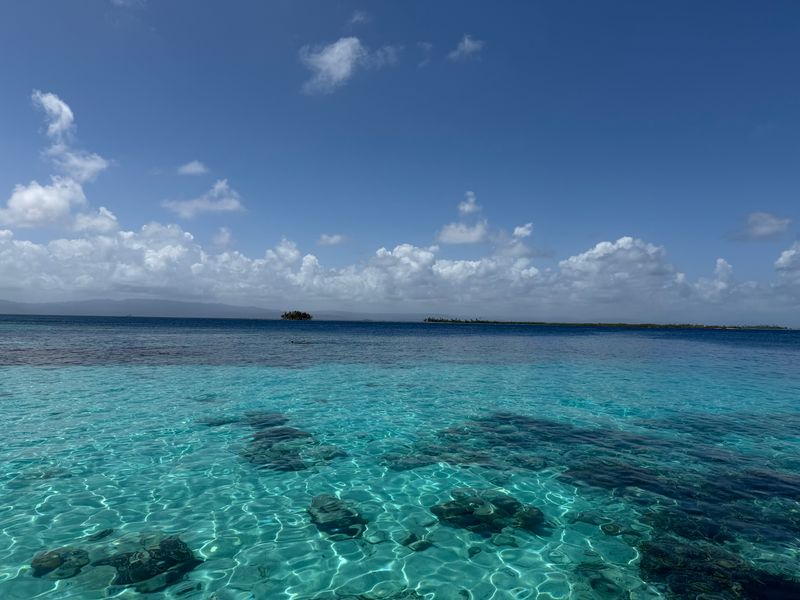
Portobelo’s bay and the surrounding coast offer easy Caribbean diving and snorkelling — shallow reefs, a couple of wrecks and warm, sheltered water, with dive shops in and around town. Boat trips run to nearby beaches and to Isla Grande, a laid-back island just up the coast with sand, palms and reggae bars.
💡 Combine a morning dive with an afternoon on Isla Grande, a short boat ride away — the classic Portobelo coast day; weekends are livelier.
Portobelo’s kitchen is Afro-Caribbean and built on the sea: fish and lobster in coconut, rice with coconut and pigeon peas, fried snapper with patacones, and the rich seafood stew that shows up all along this coast. Roadside stalls and simple fondas do fresh, cheap plates — whole fried fish with a squeeze of lime is the classic — and coconut flavours everything, savoury and sweet. Cold Balboa and Atlas beers and coconut-water-and-rum drinks cool the tropical afternoons. It’s humble, home-style food rather than a dining scene, but eating grilled catch by the old forts with the Caribbean lapping at the walls has its own considerable charm. Bring cash — this is small-town Panama.
Clamber over the cannon-lined bastions of San Jerónimo and Santiago where the Spanish treasure fleets loaded silver — the Customs House museum fills in the pirate-era story.
Visit the church of the venerated Black Christ, then a Congo art space for the devil masks and the story of the free communities of escaped slaves — lunch of fried snapper by the bay.
Dive or snorkel the sheltered reefs and wrecks of the bay, or take the short boat to laid-back Isla Grande for sand, palms and a swim.
Grilled catch and a cold Balboa as the sun sets over the old fort walls, drumming drifting from somewhere in town — Portobelo winds down Caribbean-slow.
Portobelo stacks pirate-era forts, a revered pilgrimage site and living Afro-colonial Congo culture into one small town — it rewards curiosity beyond the beach.
It’s about 90 minutes from Panama City — doable as a long day trip, but an overnight lets you enjoy the coast and the evening calm.
Carnival (Feb/Mar) brings Congo devils and drumming; October 21 draws huge Black Christ pilgrimages — spectacular, but book ahead and expect crowds.
This is small-town Panama — ATMs are scarce and cards rarely accepted; carry US-dollar cash for rooms, food and boats.
Pair the history with a dive or a boat to Isla Grande — the sheltered Caribbean water makes for easy, warm snorkelling and swimming.
This coast is wetter than Panama’s Pacific side — showers are possible year-round; the drier February–April window is the safest bet.
Directions from Panama City along the Caribbean coast to Portobelo and Isla Grande.
Free
Best used in Panama City for your transfer — local transport takes over on the coast.
Free
How dive shops, boat operators and guesthouses take bookings on the coast.
Free
Multi-currency card for the region — but bring US-dollar cash for small-town Portobelo.
Free
The canal-side skyline of Panama City, the Caribbean isles of Bocas del Toro, highland Boquete, the Guna-governed San Blas and historic Portobelo — Panama packs two oceans of variety into one isthmus.