JP
Kyoto
The Ancient Capital
The Ancient Capital

Ten thousand vermilion torii gates donated by businesses over centuries wind up a forested mountain 4km behind the main shrine. Open 24 hours, no entry fee. Arrive at 6am: the lower gates are quiet, the forest steams in the morning light, and the path to the 233m summit (2–3 hours return) thins progressively as you climb. By 10am the lower section is dense with visitors. The upper paths stay relatively quiet all day. This is the most photographed sight in Kyoto for good reason.
💡 Arrive at 6am for dawn through the vermillion gates — most visitors turn back at the first clearing. The upper trails above Yotsutsuji (30 min up) have a fraction of the lower crowd. The 4.4km summit trail takes 2 hours round-trip.

The 14th-century Zen temple, clad in gold leaf on its upper two floors, reflected in a mirror pond within a meticulously maintained garden, is one of Japan’s most recognised images. That it lives up to the photographs in person is genuinely surprising. Entry is ¥500. Arrive early (it opens at 9am); the garden is large enough that even at peak season you can find space to look at it properly. The garden design — attributed to Musō Soseki — uses the Kitayama mountains as borrowed scenery behind the pavilion.
💡 Entry (¥500) includes the garden walk around the lake. Morning photography is best with sun behind you (the pavilion faces east). Arrive at opening (9am) — tour buses peak 10am–2pm and the queue for the golden reflection photograph becomes unmanageable.
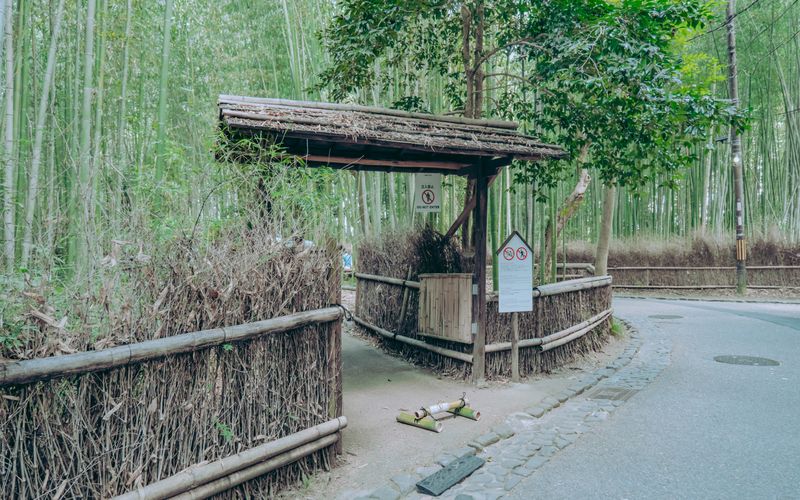
The bamboo grove is a 300-metre path through towering moso bamboo; the sound of wind through it is protected as one of Japan’s “100 Soundscapes.” Arrive at 6:30am for quiet and the best light. The JR Sagano Line from Kyoto Station takes 15 minutes. Adjacent Tenryū-ji (¥500–800) has a Zen garden designed in 1339 using the Arashiyama mountains as the back wall of the composition — one of the finest gardens in Japan.
💡 The bamboo grove is free and walkable in 10 minutes. The experience is at dawn (6am) before the rickshaw tours begin. Tenryû-ji garden (¥500) has the finest Heian garden composition in Kyoto — allow 45 minutes for the full circuit.
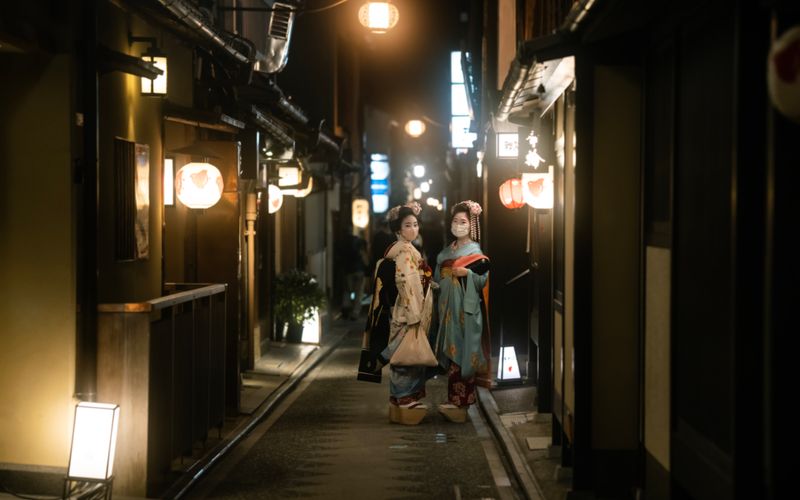
The Gion district is Kyoto’s geisha quarter: lantern-lit machiya townhouses along Hanamikoji Street, ochaya teahouses and the occasional appearance of geiko and maiko at dusk (5–8pm, look quietly and don’t photograph without permission). The Higashiyama walking route connects Kiyomizudera temple (¥400, the stage-on-stilts temple over a cliff) through Ninen-zaka and Sannen-zaka stone lanes to Kodai-ji and back to Gion: 3–4 hours at any pace, the finest walking route in Japan.
💡 The Higashiyama stone lanes (Ninen-zaka and Sannen-zaka) are most beautiful at dusk after the day-trippers leave. On Gion’s Hanamikoji Street: if you see a maiko (apprentice geisha), keep your distance — do not attempt to photograph close-up.
Kyoto’s food tradition is kaisēki — the multi-course seasonal cuisine that evolved from the tea ceremony and reaches its most refined form here. A formal kaisēki lunch (¥5,000–10,000/person) at Kikunoi Roan, Mizai or Nakamura (established 1716) is a more accessible version than the evening menu; the food quality difference is minimal and the price is substantially lower. Every ingredient reflects the season: bambū shoots in spring, eggplant in summer, matsutake mushrooms in autumn, white turnip in winter.
More affordable and equally important: the Nishiki Market (“Kyoto’s Kitchen,” a 400-metre covered arcade) for pickled vegetables, freshly made tofu, grilled skewers and things you cannot identify from stall signs without Google Translate. Yudofu (tofu simmered in kelp stock) is the quintessential Kyoto dish: served in restaurants near Nanzen-ji temple with dipping sauce and a seasonal side. Matcha (powdered green tea) here is not a flavour added to things; it is a ceremony, a tradition and the basis of Kyoto’s entire wagashi sweet culture. Drink it properly at a tea house at least once.
The city bus is the main way to reach most temples. A 1-day bus pass (¥700, from Kyoto Station Bus Information Center) covers unlimited rides on all city buses. The JR Sagano Line runs to Arashiyama (15 min) and the Kintetsu Kyoto Line runs to Nara (45 min) and Osaka (30 min). The Higashiyama district is best explored on foot or by bicycle. Bicycle rental shops are plentiful near Kyoto Station (¥800–1,200/day); the city is flat west of the main boulevard and hilly east toward the temples. Taxis are metered and affordable for evening restaurant runs.
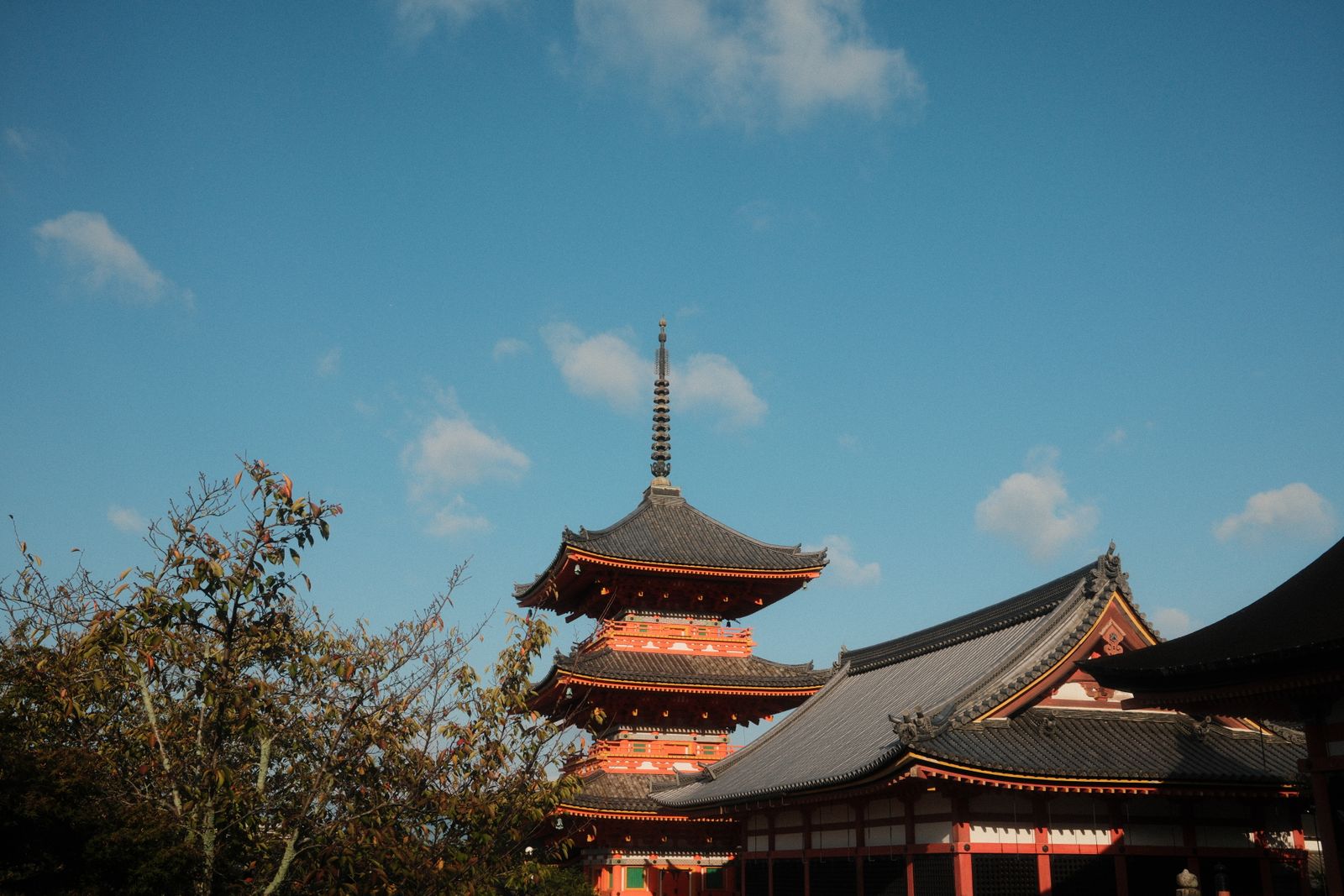
Spring sakura (late March–April) and autumn leaves (November) are peak seasons for good reason: the city is strikingly beautiful. Both are extremely busy. Late May and October offer the same mild weather with substantially smaller crowds. June’s rainy season brings lush moss gardens and hydrangeas that are their own reward.
Kyoto’s costs split neatly: temple entries (¥400–800 each) and bus passes are affordable; ryokan stays and kaisēki dinners are not. Most visitors end up somewhere in the middle. Cherry blossom and autumn seasons carry a 30–50% accommodation premium. Per person per day, couple travelling.
Fushimi Inari is free, open 24h and the most spectacular sight in Kyoto. Budget travellers have access to the same experience as anyone else.
A mid-range ryokan in Gion with kaisēki dinner included (¥18,000–30,000/person/night) is the recommended Kyoto splurge.
Tawaraya ryokan (established 1709) is widely considered the finest inn in Japan. Barack Obama, Steve Jobs and countless heads of state have stayed here. Book 6–12 months ahead.
Four days covers Kyoto properly: the major temple complexes at the right time of day, a Nara day trip and one slow afternoon in Gion.
Check in, ideally in or near Gion. Walk Hanamikoji Street at dusk (5–7pm). Dinner in one of the small restaurants on the lanes off Shijo-dori. No temple today — preserve energy for 6am starts.
💡 Check in, walk Ninen-zaka and Sannen-zaka at 5pm — the stone lanes are most atmospheric as the day-trippers leave. Gion’s Hanamikoji Street from 7pm: the greatest chance of spotting a maiko heading to an engagement.
Alarm at 5:30am. Taxi or bus to Fushimi Inari by 6am. Hike at least 45 minutes up into the gate tunnel — the upper paths are quieter and the forest is thicker. Return by 9am. Breakfast near the station. Afternoon: Kiyomizudera, Ninen-zaka, Sannen-zaka stone lanes, Kodai-ji (the Higashiyama route takes 3–4 hours).
💡 Fushimi Inari at 6am is one of Japan’s great experiences. The 4km trail to the summit takes 2 hours round-trip. Return to the city by 10am and walk Higashiyama before it fills with tour groups.
JR Sagano to Arashiyama (15 min). Bamboo grove at 7am (arrive on the first train). Tenryū-ji garden (¥500–800). Return bus to Kinkaku-ji by 10am — the crowds there are unavoidable; go early. Nishiki Market in the afternoon for lunch and browsing. Philosopher’s Path walk in the late afternoon (Nanzen-ji to Ginkaku-ji).
💡 Take the Sagano Scenic Railway (¥880; 25 min; book ahead) through the river gorge before the bamboo grove. Kinkāku-ji in the afternoon when the light hits the gold leaf directly.
Kintetsu express from Kyoto Station to Kintetsu Nara (45 min, ¥690). The deer meet you immediately outside the station. Todai-ji temple (the Great Buddha — the largest bronze Buddha in Japan; book online in peak season ¥600). Kasuga Taisha shrine through the forest. Return by 4pm. Farewell kaisēki dinner (book 2–4 weeks ahead).
💡 Nara by Kintetsu Limited Express from Kyoto (45 min; ¥720) drops at Kintetsu Nara station, closer to the park than the JR line. A full day covers Tōdai-ji, the deer park, Kasuga Taisha and return by 7pm.
The three most visited sights — Fushimi Inari, Arashiyama bamboo grove, Kiyomizudera — are manageable at 6am and overwhelming at 10am. Set the alarm.
The Gion district has posted notices asking visitors not to photograph geisha and apprentices without permission. This is a matter of basic respect for people at work.
A traditional inn with tatami floors, a futon laid on the mat, a shared or private onsen and a kaisēki dinner included is the most specifically Japanese experience available to a traveller.
Kyoto during cherry blossom (late March–early April) and autumn koyo (mid-November) is the busiest domestic tourist destination in Japan. Hotels sell out and double in price.
Many gardens prohibit stepping on moss or stone borders; some paths are closed entirely. The rules are posted clearly and are taken seriously.
The 2km stone path along a cherry-blossom-lined canal in the Higashiyama district connects Nanzen-ji to Ginkaku-ji (Silver Pavilion).
Official Kyoto bus app with real-time departures, route maps and 1-day pass management. Essential for reaching all major temple areas from Kyoto Station.
Free
Comprehensive Japan transport planner covering Kintetsu to Nara, Hankyu to Osaka, JR to Arashiyama and Shinkansen onwards. More detailed than Google Maps for private railways.
Free
Japan restaurant review app. Kyoto has the highest concentration of kaisēki restaurants in Japan; Tabelog’s ratings are the most reliable guide to quality at every price tier.
Free
Essential for menus, temple sign translations and market stall labels. Download Japanese offline pack before arriving. Works without internet for camera translation.
Free
Cherry blossom forecast by location: projected bloom date, current state (bud/early/full/falling) and historical averages by city. Essential for planning a sakura-timed Kyoto trip.
Free
Download Kyoto offline. The Gion back lanes and Higashiyama walking path are easiest navigated with GPS; the bus stop names are in Japanese and Google Maps shows which stop to use for each temple.
Free
Quick answers to the questions travellers most often ask before visiting Kyoto.
Spring (late March to April) for cherry blossom and autumn (November) for fiery foliage are the most beautiful — and the busiest. Summer is hot and humid, while winter is cold but serene and much quieter.
Three to four days covers the major temples and shrines, Arashiyama and the Gion district without rushing. Add a day or two for trips to nearby Nara or Osaka.
Buses and the subway cover the city, much of the historic core is walkable or great by bicycle, and the JR and private railways reach outlying sights and nearby cities. A car isn’t needed.
Absolutely — it’s Japan’s cultural heart, with over a thousand temples and shrines, geisha districts, traditional gardens and refined cuisine. It offers the classic, historic Japan that perfectly complements modern Tokyo.
Discover more of Japan's great destinations.