JP
Tokyo
Where Ancient Japan Meets the Future
Where Ancient Japan Meets the Future

Tokyo’s oldest temple (628 AD) is in the Asakusa neighbourhood — the most intact piece of old Edo remaining. The Nakamise shopping street leading to the main hall sells traditional snacks, crafts and souvenirs. Go at 6am before the tourist crowds arrive: the temple is open from dawn and the lighting at sunrise is extraordinary. The Kaminarimon (Thunder Gate) with the giant red lantern is the obligatory photograph; the main hall interior is free.
💡 Arrive before 7am to have the temple largely to yourself. The Nakamise shopping street fills with tour groups by 9am. The Asakusa backstreets west of the shrine (Hoppy Street, Kappabashi) reward early morning wandering.
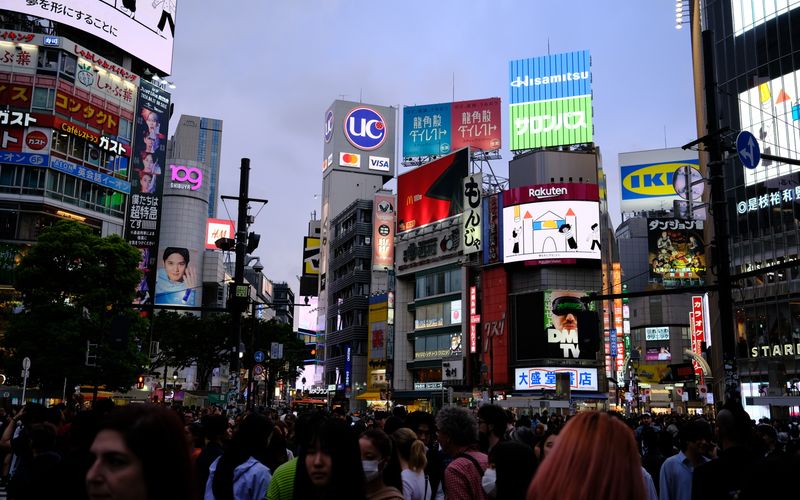
The busiest pedestrian crossing in the world processes 3,000 people per light cycle — an estimated 2.4 million per day. The best view is from the Starbucks on the second floor of the Tsutaya building on the corner (free to enter, buy a coffee), or from the Shibuya Sky observation deck (¥2,200, book ahead). The crossing itself is free to experience: walk across it at 6pm on a weekday when the office workers fill it.
💡 The Crossing is best photographed from above: the Mag’s Park building on the north side has a free vantage point, or the Starbucks on the corner gives a table-level angle. The Shibuya Sky deck (¥2,000; book online) gives the proper aerial view.

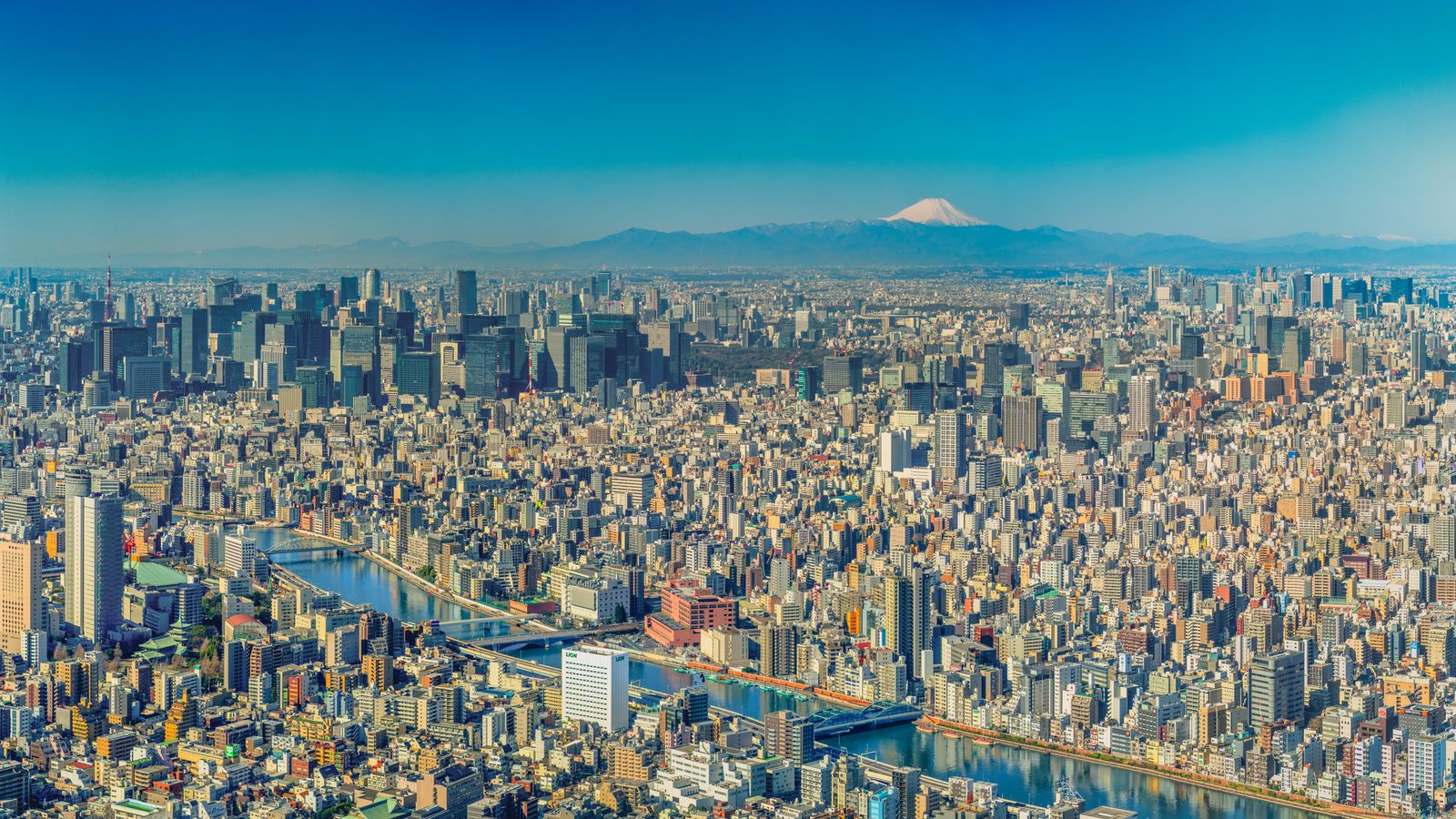
At 634 metres, the Skytree is the world’s second-tallest structure and Tokyo’s communication tower. The observation deck at 350m (Tembo Deck, ¥2,100) and the 450m upper deck (Tembo Galleria, additional ¥1,000) give a panorama of the entire Kanto Plain on clear days. Book online to avoid queues. The Skytree is in Asakusa’s neighbouring district — combine with a Sensō-ji visit on the same morning.
💡 Book the Skytree observation decks online at tokyo-skytree.jp (¥3,100 for 350m Tembo Deck; ¥4,700 combined with Tembo Galleria at 450m). Go late afternoon for the city lights coming on at dusk — the finest view in Tokyo.

Shinjuku’s east side contains Kabukicho (the entertainment district, neon, pachinko, late-night everything) and the Golden Gai — a cluster of 200 tiny bars, most seating 6–8 people, in six narrow lanes that have survived since the 1950s. Golden Gai bars have themes (photography, horror films, Japanese folk music) and house rules posted outside. Go at 10pm, choose a bar that appeals, and spend the evening in one or two places. This is Tokyo at its most itself.
💡 Golden Gai has 200 tiny bars across 6 alleys, each seating 5–8 people. Most charge a cover (¥500–1,000). Bar-hop slowly: order the house drink, ask the master what they recommend. The experience is the conversation, not the drink.
Tokyo’s food culture is the deepest in the world by measure of Michelin stars, but the stars are the least of it. The ¥800 ramen counter in a basement in Shinjuku, where the chef has been perfecting one bowl for 30 years, is as serious as the 20-course kaiseki dinner in Ginza. The izakaya (pub-restaurant) culture — where groups share small dishes of grilled chicken (yakitori), edamame, sashimi and cold beer for two or three hours — is the city’s social infrastructure. Conveyor belt sushi (kaiten-zushi) at a serious chain like Sushiro or Hamazushi costs ¥1,000–2,000 for an excellent meal. Tonkatsu (breaded pork cutlet), tempura, soba — each food type has restaurants dedicated to nothing else, and the specialists are almost always better than the generalists.
The food floors of department stores (depachika) in Isetan (Shinjuku), Takashimaya (Nihonbashi) and Mitsukoshi (Ginza) are the correct place to understand Tokyo food culture quickly: every regional specialty from across Japan, every prepared food, every sweet, all at the highest level. The basement food halls are free to browse and inexpensive to eat from. Tsukiji Outer Market still operates as a fresh fish market and sushi breakfast stop, even after the main market moved to Toyosu.
Buy a Suica card (¥500 deposit + any amount loaded) at any JR station machine on arrival. It works on the Tokyo Metro, JR lines, most buses, the Narita Express and most convenience stores. The Yamanote Line circular route connects all major hubs (Shinjuku, Shibuya, Harajuku, Akihabara, Ueno, Ikebukuro). Google Maps’ transit routing is accurate to the minute. Taxis start at ¥730 and are rarely faster than the metro. Never take a taxi from a tourist spot; it costs 5x the metro fare.
Cherry blossom (late March–early April) and autumn leaves (November) are the peak seasons for a reason — Tokyo is at its most visually spectacular. October is the sweet spot: autumn colour beginning, summer humidity gone, still warm, manageable crowds. Avoid July–August: 35°C with 80% humidity.
Tokyo is cheaper than most Western European capitals at the budget and mid-range tiers. Excellent ramen costs ¥800 (about €5). The splurge tier has no ceiling. Per person per day, couple travelling.
Convenience store meals are genuinely good in Japan. A 7-Eleven onigiri for breakfast is not slumming it; it is eating as Tokyo does.
The Narita Express (¥3,070) is the correct airport train. It arrives at Shinjuku in 53 minutes and the Suica card covers onward connections.
The Park Hyatt Tokyo (Sofia Coppola filmed Lost in Translation here) is the aspirational Tokyo hotel. The New York Bar on the 52nd floor at 10pm is the correct splurge moment.
Seven days is the minimum for Tokyo. The city is too large and too layered for fewer days; even seven leaves entire neighbourhoods unexplored.
Sensō-ji in the evening after you land. Buy a Suica card at Narita or Haneda. Walk Nakamise Shopping Street. First dinner: conveyor belt sushi (Sushiro, any branch) or ramen. Sleep early.
💡 Buy an IC card (Suica or Pasmo; ¥1,000 deposit) at any JR station on arrival — it works on every train, subway, bus and many convenience stores in Tokyo. You won’t need cash for transit.
Shibuya crossing at 9am and 6pm (both are worth seeing). Yoyogi Park and Meiji Shrine. Harajuku Takeshita Street. Shinjuku in the evening: Golden Gai from 9pm. One bar, stay 2 hours.
💡 Harajuku is best on Sunday mornings when Takeshita Street fills with cosplay and avant-garde fashion. Omotesando boulevard behind it has the flagship stores of every major luxury brand — a 20-minute walk from street style to high fashion.
Tokyo National Museum in Ueno Park (¥1,000 — the finest collection of Japanese art outside Kyoto). The Ueno park itself (best during cherry blossom). Yanaka neighbourhood in the afternoon: old-town Tokyo, temples, cats, craft shops.
💡 Yanaka is Tokyo’s most intact pre-war neighbourhood. The temple cemetery and Yanaka Ginza shopping street survived the 1923 earthquake and the 1945 firebombing. Walk from Nezu Shrine through the cemetery to the shopping street (30 min; free).
Akihabara for electronics and anime culture (morning). Tsukiji Outer Market for a sushi or seafood breakfast at a market stall. Ginza in the afternoon (the depachika food halls).
💡 Tsukiji Outer Market (public section; free; open from 5am) has the finest sushi breakfast counters in Tokyo — counter seats fill by 7am. Budget ¥1,500–3,500 for breakfast. The inner wholesale market moved to Toyosu; the outer market is the one worth visiting.
Tokyo Skytree at 9am (book online). Sumida neighbourhood walk. Afternoon: Nakameguro canal, especially beautiful in cherry blossom and autumn. Ramen for dinner at Fuunji (Shinjuku, worth the queue).
💡 Book both Skytree decks online for late afternoon: the city lights coming on at dusk from 450 metres is the finest view in Tokyo. The Sumida Park below has the finest cherry blossom in central Tokyo in late March.
1h by train from Shinjuku. The Kotoku-in bronze Great Buddha (13m tall, 750 years old, open air). Engaku-ji temple. Hase neighbourhood for the sea view. Zeniarai Benzaiten shrine (wash money for good fortune). Return by 6pm.
💡 See local info.
Shimokitazawa for vintage clothing, independent music venues and coffee. Koenji for punk and art. Kagurazaka for French-Japanese hybrid culture. Spend the entire day in one place and eat where you find yourself at meal times.
💡 See local info.
Buy a Suica card at the airport Narita Express counter or at the JR East Travel Service Center before you get on the train.
Sakura season in late March–early April is when Japan fills. Hotels book out completely 3–12 months ahead; prices double.
Many traditional restaurants, shrine stalls and neighbourhood bars are cash only. Always have ¥5,000–10,000 in cash.
Pick up a pocket Wi-Fi unit or SIM card at Narita or Haneda on arrival — available at the information counters before customs.
Temples, some restaurants and all traditional inns (ryokan) require shoe removal. Slip-on shoes or easy lace-ups are significantly more practical than boots.
7-Eleven, FamilyMart and Lawson in Japan are legitimately good food sources: fresh onigiri (rice balls) for ¥130, hot coffee for ¥150, excellent sandwiches, ATMs, printing.
Quick answers to the questions travellers most often ask before visiting Tokyo.
Less than its reputation suggests. Budget travellers manage comfortably on €50–70/day — eating at ramen counters and konbini (convenience stores), using JR rail passes, and staying in capsule hotels or guesthouses. Mid-range visitors typically spend €120–180/day.
Not really. Major train stations and tourist sites carry bilingual signage, and Google Translate’s camera mode handles menus and street signs in seconds. A handful of phrases — sumimasen (excuse me), arigatô (thank you) — go a surprisingly long way.
A minimum of four to five days covers the essential areas: Shinjuku, Shibuya, Asakusa, Harajuku, and Akihabara. A full week lets you add a day trip to Nikko, Kamakura, or Mount Fuji.
Consistently ranked among the world’s safest major cities. Violent crime against tourists is exceptionally rare. Petty theft is uncommon but worth being aware of on packed Yamanote Line trains during morning rush hour.
Cherry blossom season (late March – early April) is spectacular but crowded and expensive. Autumn (late October – November) offers vivid foliage, comfortable temperatures, and fewer tourists. Avoid Golden Week (late April – early May) unless you book several months ahead.
Official JR East app for Suica IC card management: top-up, balance check and Apple Pay integration. Download before arriving; activating Suica on iPhone avoids the physical card queue at the station.
Free
Real-time Tokyo Metro route planner with fare calculation and delay alerts. Works offline once you’ve downloaded the map data. Covers all subway and JR Yamanote connections.
Free
Point the camera at any Japanese menu, sign or package for real-time translation. Download the Japanese offline language pack before arriving. Essential for navigating restaurants without English menus.
Free
Japan’s restaurant review platform — more reliable than TripAdvisor for Japanese restaurants. Search by neighbourhood and cuisine; the ratings are local and honest. Some restaurants accept reservations through the app.
Free
Shinkansen timetables, fare calculation and platform information for bullet train travel to Kyoto (2h15), Osaka (2h30) and Hiroshima (4h). Buy tickets at any JR Ticket office or at the machines.
Free
Download Tokyo offline. The metro map overlay and walking directions are essential for navigating between stations and finding restaurants in dense areas like Shinjuku and Shibuya.
Free
Discover more of Japan's great destinations.