EG
Luxor
The Greatest Open-Air Museum on Earth
The Greatest Open-Air Museum on Earth
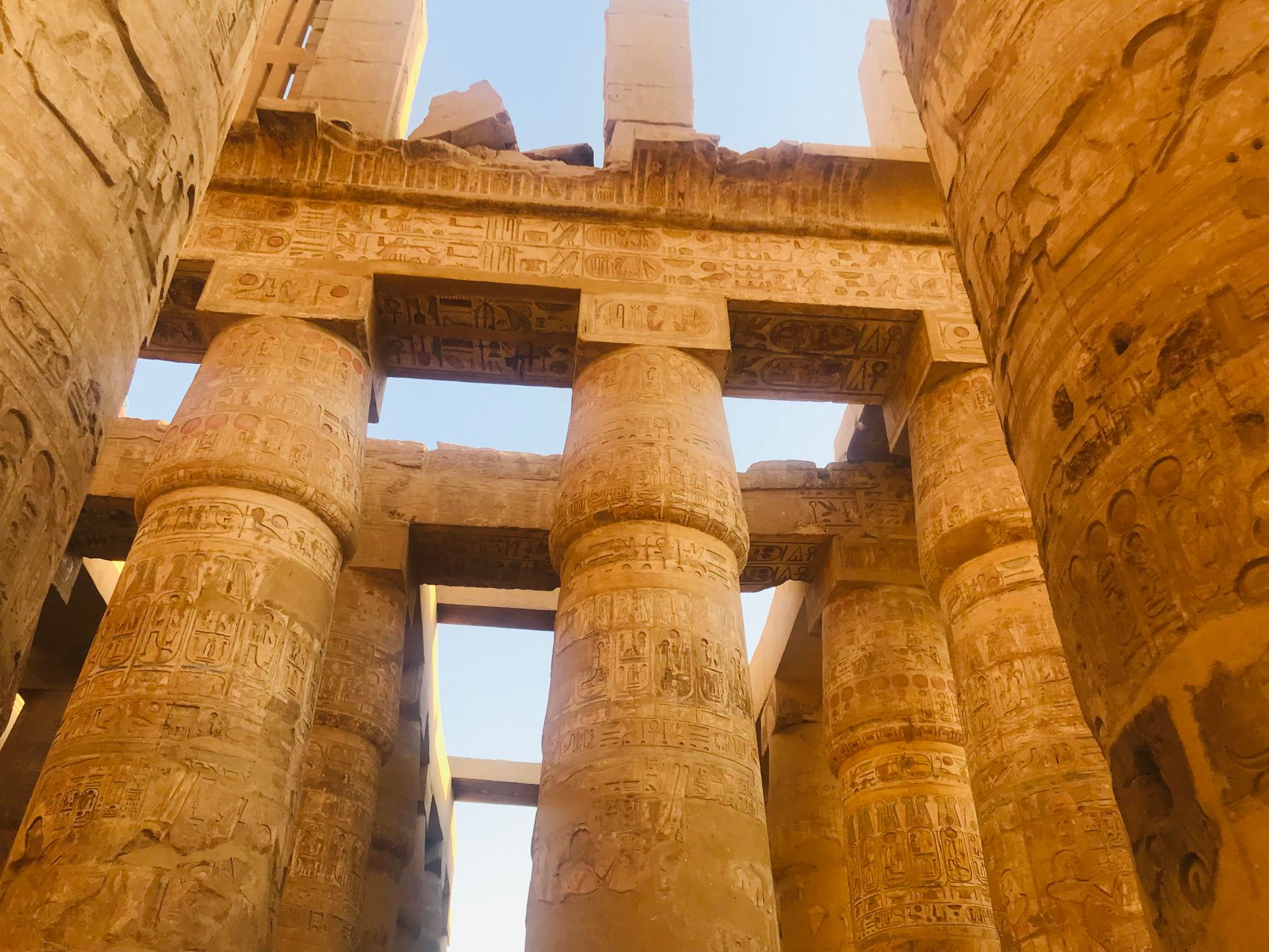
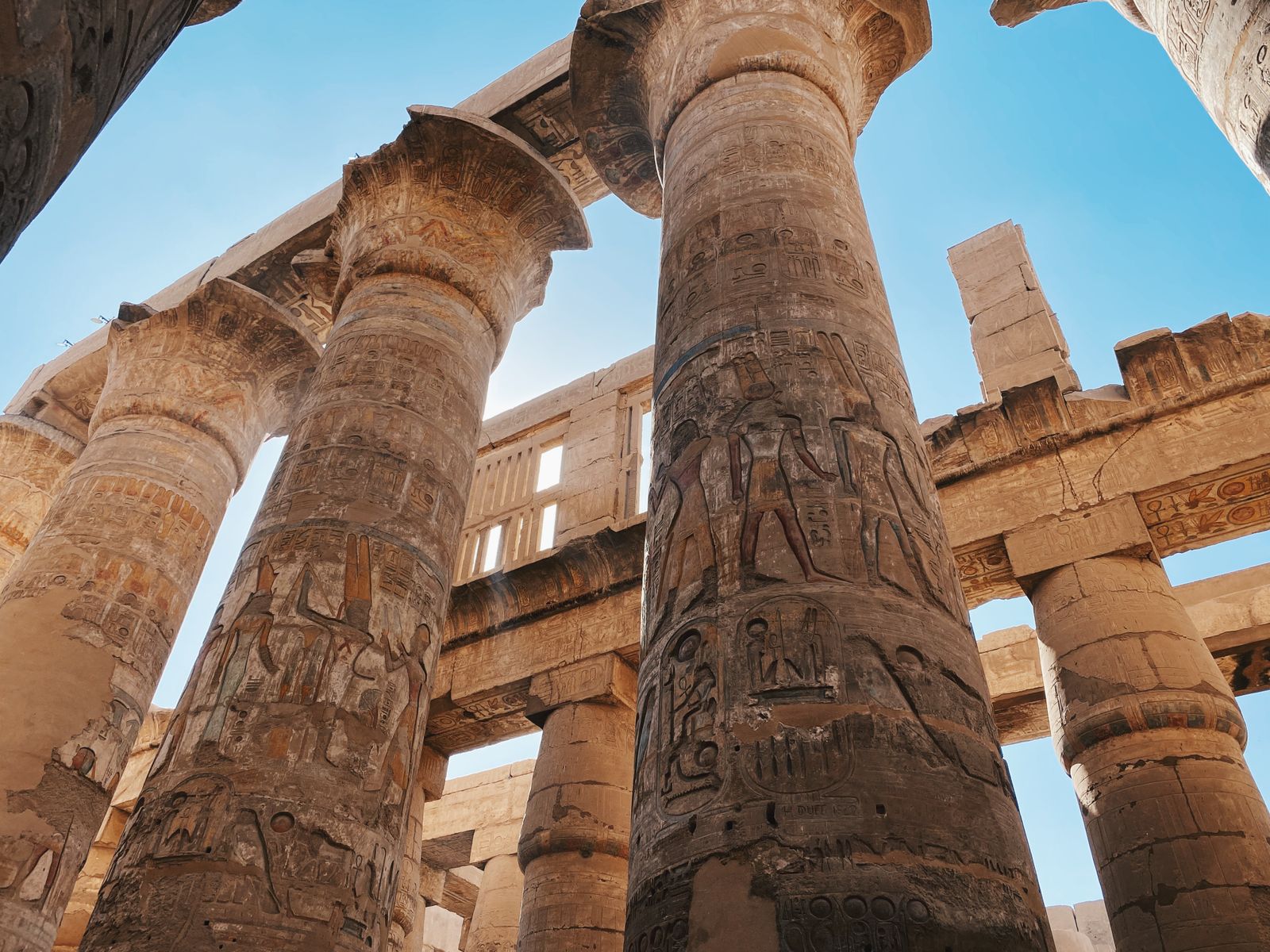
Karnak is the largest religious building complex ever constructed — 250 acres of temples, pylons, obelisks, and sacred lakes built by every pharaoh from the Middle Kingdom to the Roman period. The Great Hypostyle Hall (134 columns of 23m height in 16 rows) is the finest single interior space in Egyptian architecture.
💡 Karnak at 6am opening — the Great Hypostyle Hall (134 columns, 23m high) in the morning light before the tour groups arrive at 8am is the finest single architectural experience in Egypt.

The Valley of the Kings contains 64 royal tombs cut into the limestone cliffs on the west bank of Luxor — the burial place of the pharaohs from the 18th to 20th Dynasties (1539–1075 BC). The finest tombs are KV9 (Ramesses VI; the finest astronomical ceiling), KV17 (Seti I; the deepest and most painted), and KV62 (Tutankhamun; historically the most significant).
💡 Valley of the Kings ticket office opens at 6am — three tombs included in the LE 450 entry. Choose KV9 (Ramesses VI; the finest astronomical ceiling) and KV11 (Ramesses III; the longest tomb) as your main picks.

Luxor Temple (built by Amenhotep III; expanded by Ramesses II; originally 1400 BC) is the finest lit monument in Egypt — the obelisk at the entrance, the colonnades of Amenhotep III, and the inner sanctuary are brilliantly illuminated after dark. The Avenue of Sphinxes (3km; uncovered 2021) connects it to Karnak.
💡 Luxor Temple after 8pm (open until 10pm; LE 200) is crowd-free, fully lit, and reflected in the Nile — the finest hour of any Luxor evening, free of the daytime tour circuit.
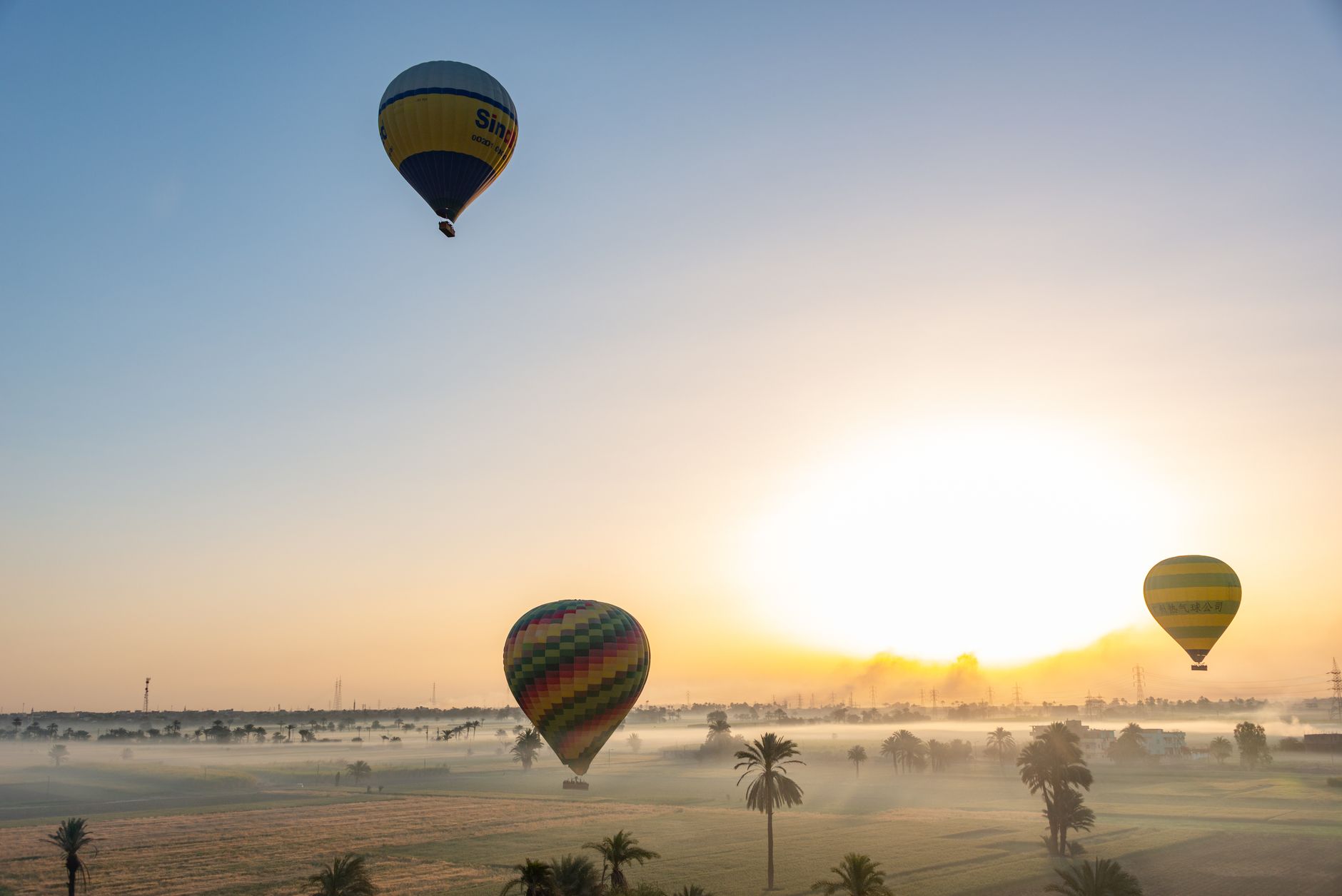
The hot air balloon over the west bank of Luxor at sunrise (LE 700–1,200; operators depart from 5am; October–May season) gives the finest aerial view of any archaeological landscape on earth — the Valley of the Kings below, the Ramesseum and Medinet Habu pylons, and the Nile bend with Karnak on the far bank.
💡 The west bank bicycle circuit (LE 40–60/day) from Deir el-Medina to Medinet Habu to the Colossi of Memnon covers the finest unpaid monuments in Luxor in 4 flat hours.
Luxor is not a culinary destination — the food culture is functional Upper Egyptian cooking rather than the variety of Cairo or Alexandria. The staples: the ful and ta’amiya breakfast (the fava bean puree with the olive oil and the deep-fried bean fritter; EGP 10–25 from any morning cart near the Corniche), the kofta and kebab (the minced meat on skewer, grilled over charcoal; EGP 80–150 at any of the Luxor town restaurants on the Corniche or in the market area), the local Egyptian bread (aish baladi; the pita; fresh from the clay oven; bought from the bakeries for EGP 2–5 per piece; still warm; eaten with the ful), and the sugarcane juice (the asab; the freshly pressed sugarcane juice; EGP 5–10 from the street press carts; the most refreshing drink in the 40-degree Luxor heat; the most specifically Upper Egyptian street refreshment). The Winter Palace hotel restaurant and terrace are the only fine dining option in Luxor (EGP 300–600 pp for the set menu dinner); the authentic local eating is from the restaurants in the market area behind the train station (the Sofra restaurant — EGP 50–120 per dish; the most consistent quality local Egyptian cooking in Luxor).
The Luxor bicycle (EGP 30–50/day; available from the hotels and the bicycle shops near the Corniche; the most atmospheric and the most practical West Bank transport for the morning temple circuit; the road from the West Bank ferry landing to the Valley of the Kings is 5km of flat desert road; the bicycle gives the freedom to stop at Medinet Habu, the Hatshepsut temple and the Ramesseum without a taxi schedule) is the correct West Bank approach. The public Nile ferry (EGP 2 each way; the wooden ferry from the East Bank dock near the Luxor Temple to the West Bank; the most authentically local crossing; runs 6am to sunset continuously) connects the two banks. For the East Bank, the horse carriage (caleche; EGP 30–50 per hour; negotiate firmly before boarding) or walking (Karnak is 3km north of Luxor Temple along the East Bank Corniche; the 45-min walk along the river; the most pleasant walking route in Luxor) are the primary options.
Karnak Temple Complex (LE 450; opens 6am) is best in the first hour &mdash.
The Valley of the Kings (LE 450; includes 3 tombs; ticket office opens 6am) is best before 8am when the painted walls of KV9 (Ramesses VI) and KV17 (Seti I; the finest painted tomb in the Valley) are cool and uncrowded.
The hot air balloon (LE 700–1,200; Oct–May; west bank operators depart at 5am) rises over the Valley of the Kings at sunrise &mdash.
The west bank is entirely flat and bicycle-able — rent from west bank village shops (LE 40–60/day) and ride from Deir el-Medina to the Medinet Habu temple (the finest painted external walls in the Valley), then north to the Colossi of Memnon.
Luxor Temple (LE 200; open until 10pm; lit at night) is the finest monument in Egypt after dark &mdash.
Deir el-Medina (LE 180; the village of the tomb workers who painted the Valley of the Kings) has the finest painted private tomb walls in Egypt &mdash.
Oct–Apr is the comfortable season (18–32°C; the Valley of the Kings at dawn is magical in the winter light). May–Sep is extreme (35–47°C; manageable only with 5am starts; significantly cheaper). Oct is the finest single month. Avoid the July–August midday heat at the West Bank sites entirely.
Three days: Karnak at dawn, Valley of the Kings at 6am, hot air balloon sunrise, the Hatshepsut temple, Medinet Habu, and the Luxor Temple illuminated at night.
Karnak Temple at 6am (the Great Hypostyle Hall in the morning light; the Sacred Lake; the obelisks of Hatshepsut). Luxor Temple at night (after 8pm; the lit colonnades; the Avenue of Sphinxes).
💡 Luxor in two days: east bank (Karnak at 6am + Luxor Temple at night) on day 1, west bank (hot air balloon + Valley of the Kings + bicycle circuit) on day 2.
Hot air balloon at 5am (west bank; sunrise over the Valley; LE 700–1,200). Valley of the Kings by 8am (KV9, KV62; the painted tombs). West bank bicycle: Medinet Habu, the Ramesseum, Deir el-Medina.
💡 The KV17 (Seti I) tomb requires a special LE 1,200 additional ticket from the ticket office — the deepest and most completely painted tomb in the Valley is worth every pound.
Dendera day trip (65km north; Uber LE 200–250 return; the finest complete Ptolemaic temple in Egypt; the Zodiac ceiling; 2h visit).
💡 The Luxor to Aswan overnight sleeper (departs 10:20pm; arrives 5:30am; LE 60–100 1st class; book at egyptrail.gov.eg) is the finest train journey in Egypt.
Entry fees add up quickly in Luxor (EGP 450 Karnak + EGP 500 Valley of the Kings + EGP 300 Hatshepsut = EGP 1,250/day for the main sites) but the local food and transport are extremely cheap. Per person per day.
The West Bank bicycle day (EGP 40 bicycle + EGP 500 Valley of the Kings + EGP 300 Hatshepsut + EGP 200 Medinet Habu = EGP 1,040)
The Karnak Sound and Light Show (EGP 200; Tues–Sun evenings; the Hypostyle Hall and the Sacred Lake illuminated from the audience side; the commentary in English; the most atmospheric Egypt evening after the Luxor Temple night visit)
The Tomb of Seti I (KV17; EGP 1,500 surcharge; the finest carved reliefs in the entire Valley of the Kings; the most technically accomplished artistry of any royal tomb; the astronomical ceiling of the burial chamber; the largest tomb in)
Uber Egypt for transfers between the Luxor temples, the airport, and the west bank ferry dock.
Free
Egypt rail ticket booking for the Luxor–Aswan and Luxor–Cairo overnight sleeper routes.
Free
Arabic translation with camera OCR — essential for reading hieroglyphic captions in the Valley of the Kings.
Free
Luxor restaurant and riverboat dinner discovery with Nile-view and east/west bank filtering.
Free
Hot air balloon over Luxor booking — compare operators and check safety certificates before paying.
Free
Download the Luxor offline map before arrival — the Valley of the Kings has no mobile signal inside the cliffs.
Free
Quick answers to the questions travellers most often ask before visiting Luxor.
October to April, when the weather is cooler, is by far the best time to explore the temples and tombs. Summers are extremely hot, often over 40°C.
Two to three days for the East Bank (Karnak and Luxor temples) and the West Bank (the Valley of the Kings, Hatshepsut’s temple and the Colossi of Memnon), plus time on the Nile.
The sights straddle the Nile, so you cross between the East and West Banks by taxi or boat; hiring a guide and driver, or a felucca, makes exploring the spread-out sites easy.
Often called the world’s greatest open-air museum — the vast Karnak and Luxor temples, the royal tombs of the Valley of the Kings (including Tutankhamun’s), Hatshepsut’s temple, ancient Thebes, and Nile cruises.
Explore more of Egypt’s extraordinary cities and landscapes.