UZ
Samarkand
The blue-domed jewel of the Silk Road
The blue-domed jewel of the Silk Road
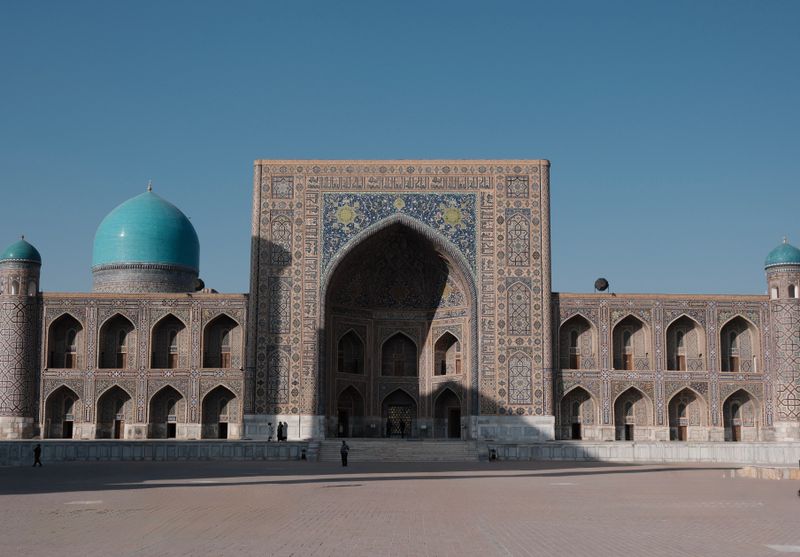
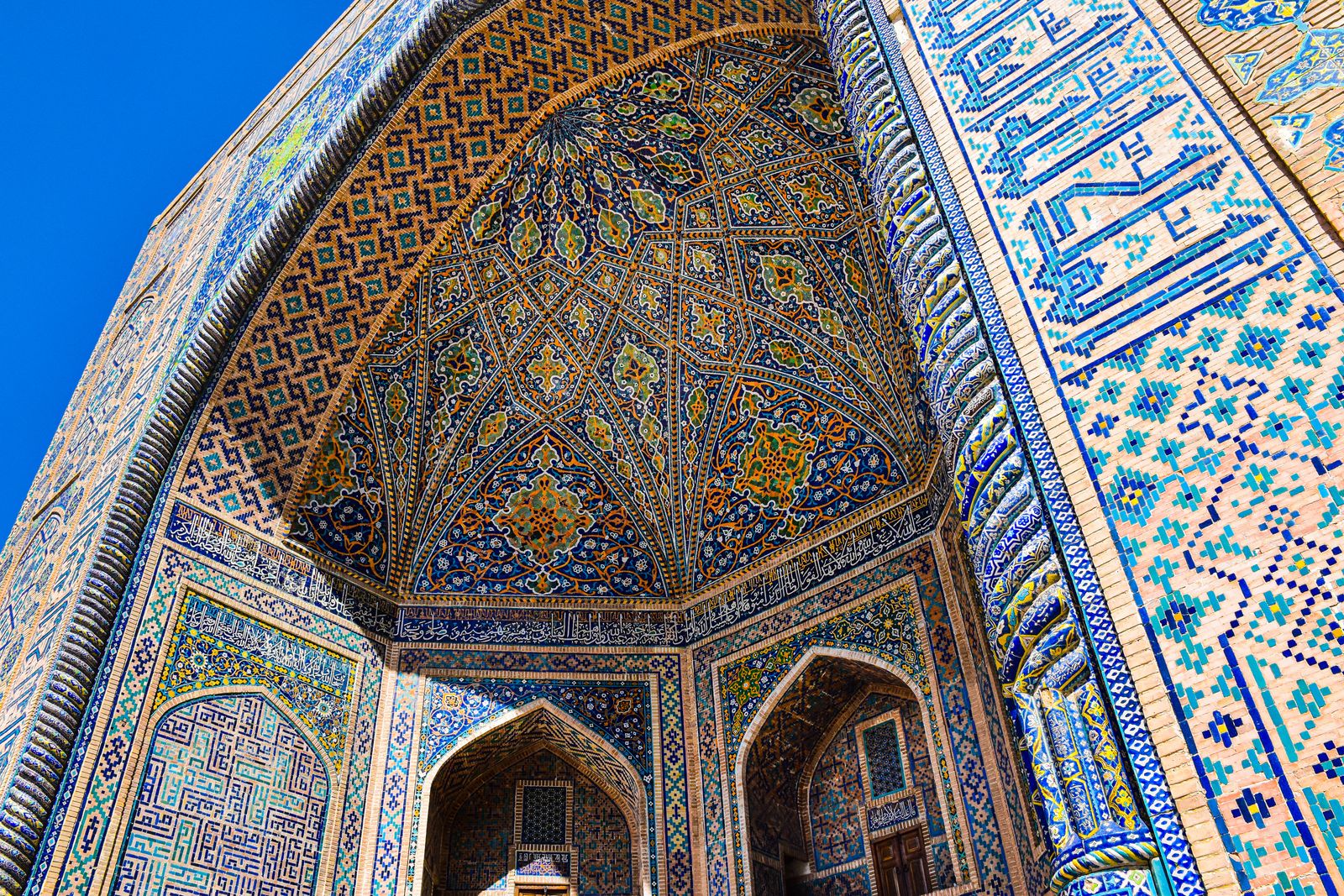
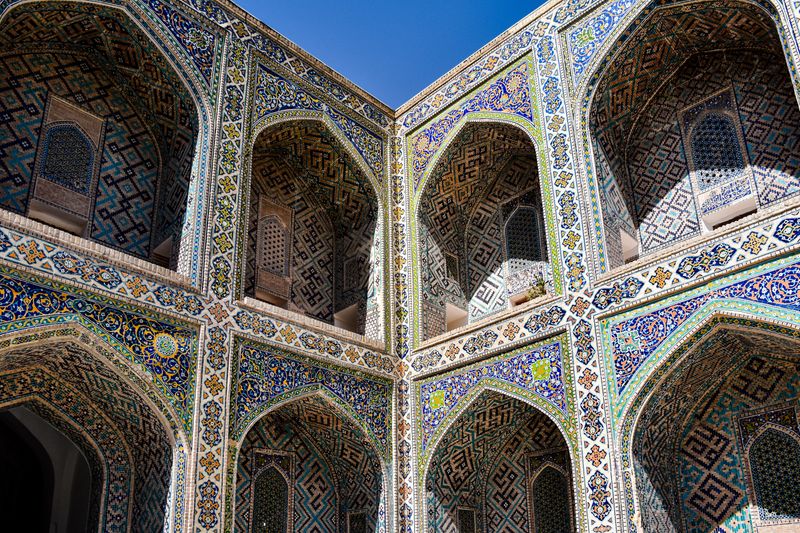
The heart of Samarkand and one of the most magnificent public squares in the world — three colossal madrasas (Ulugh Beg, Sher-Dor and Tilya-Kori) facing each other across a plaza, their portals and minarets sheathed in dazzling turquoise, blue and gold tilework and mosaic. The Tilya-Kori’s gilded prayer hall is breathtaking, and the whole ensemble is even more magical when floodlit at night.
💡 Visit in the soft morning or late-afternoon light and again after dark when it’s floodlit; a small tip may get you up a minaret for the aerial view.
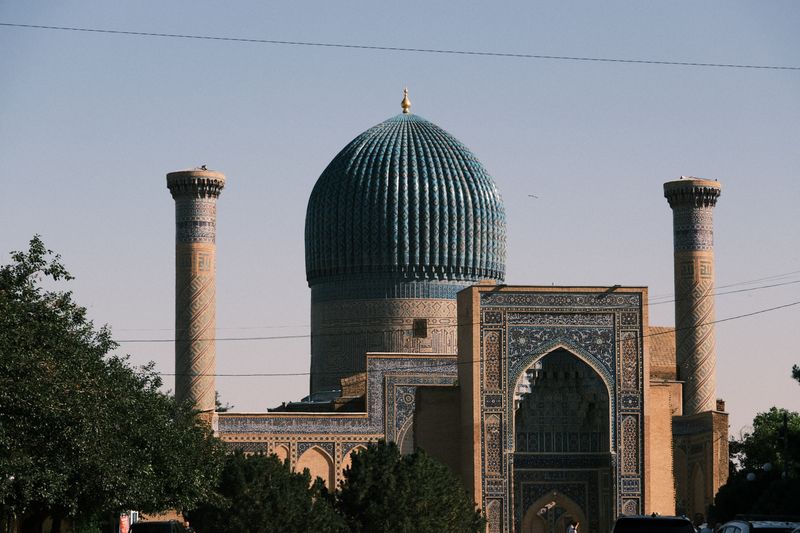
The tomb of Tamerlane (Amir Timur) himself — a jewel-box mausoleum crowned by a fluted azure dome, its interior a shimmering vault of gold and blue over the dark jade cenotaph of the great conqueror. It’s intimate, sumptuous and deeply atmospheric, and its architecture directly inspired the great Mughal tombs of India, including the Taj Mahal.
💡 The gilded interior is the highlight — go when it’s quiet; the legend of the curse said to be unleashed when Tamerlane’s tomb was opened in 1941 adds a frisson.
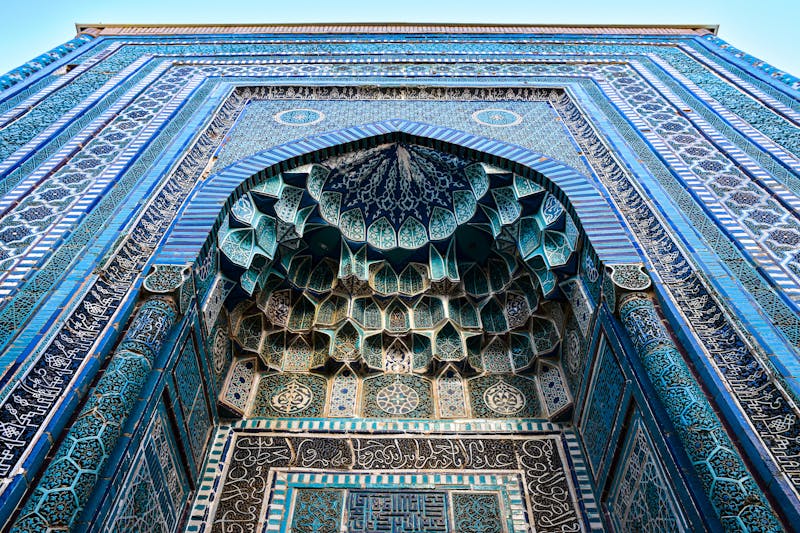
A breathtaking avenue of mausoleums — a narrow, stepped street lined with tombs of Tamerlane’s family and nobles, each faced in the most exquisite tilework in Samarkand, in a symphony of blues that changes with the light. This ‘Street of the Living King’, a pilgrimage site around the supposed tomb of a cousin of the Prophet, is many visitors’ favourite corner of the city.
💡 Go early for the light and to have the narrow avenue to yourself; it’s a working pilgrimage site, so dress modestly and be respectful of worshippers.
The colossal Bibi-Khanym Mosque, built by Tamerlane to be the grandest in the empire, still awes with its scale even part-ruined, beside the bustling Siyob Bazaar. On a hill nearby, the remains of Ulugh Beg’s Observatory preserve the giant sextant with which his 15th-century astronomers measured the stars with astonishing accuracy — Samarkand’s golden age of science.
💡 Pair the giant Bibi-Khanym mosque with the neighbouring Siyob Bazaar for melons, bread and spices; the observatory and its museum are a short taxi ride and worth it for the science story.
Samarkand has its own proud version of Uzbekistan’s cuisine — locals will insist Samarkand plov, layered rather than mixed and studded with chickpeas and raisins, is the country’s finest. The city is also famous for its non bread, the round, patterned Samarkand loaf so prized it’s said to never go stale and is carried home as a gift across the country. Feast on shashlik, lagman, manti and samsa at the lively Siyob Bazaar beside Bibi-Khanym, and try the local halva and dried fruits. Modern restaurants and teahouses around the centre serve it all with green tea and, increasingly, Uzbek wine and cognac from the Samarkand vineyards (a legacy of Soviet winemaking). It’s cheap, generous and delicious — buy a stamped Samarkand non as a souvenir, and eat plov at lunchtime when it’s freshest.
Beat the crowds to the Shah-i-Zinda avenue of blue-tiled mausoleums in the morning light — many visitors’ favourite corner — then the giant Bibi-Khanym mosque and Siyob Bazaar.
Lunch on the city’s celebrated layered plov and a stamped Samarkand non loaf, then rest through the midday heat with green tea in a teahouse.
Visit the sumptuous gold-and-blue Gur-e-Amir, tomb of Tamerlane, and — for the science story — Ulugh Beg’s hilltop observatory with its giant star-measuring sextant.
Save the Registan for late afternoon and after dark, when its three tiled madrasas are floodlit — one of the great sights of the Islamic world, at its most magical by night.
The high-speed Afrosiyob train links Tashkent and Samarkand in about two hours — comfortable and cheap; book ahead as popular services sell out.
Visit the Registan in daylight for the tilework detail and again after dark when it’s floodlit — two completely different, unforgettable experiences.
Shah-i-Zinda and the monuments are magical and crowd-free in early morning — start early for the best light and photographs.
Many sites are working mosques and pilgrimage places — cover shoulders and knees, and women may want a scarf for the shrines.
Samarkand’s stamped non bread is famous nationwide — buy a fresh loaf at Siyob Bazaar as a snack and a classic, cheap souvenir.
World-class monuments, cheap guesthouses and plov lunches for a few dollars make Samarkand one of the great-value wonders of world travel.
Walking directions between Samarkand’s monuments (Yandex Maps also works well locally).
Free
The dominant ride-hailing app in Uzbek cities — cheap, metered taxis at a tap.
Free
Convert Uzbek som prices — handy given the large denominations.
Free
Multi-currency card with strong rates — useful for the region; carry som cash for bazaars.
Free
Soviet-grand Tashkent, blue-domed Samarkand, living-museum Bukhara, walled Khiva and the craft valley of Fergana — Uzbekistan is the beating heart of the Silk Road.