UZ
Tashkent
Soviet grandeur and Silk Road gateway
Soviet grandeur and Silk Road gateway
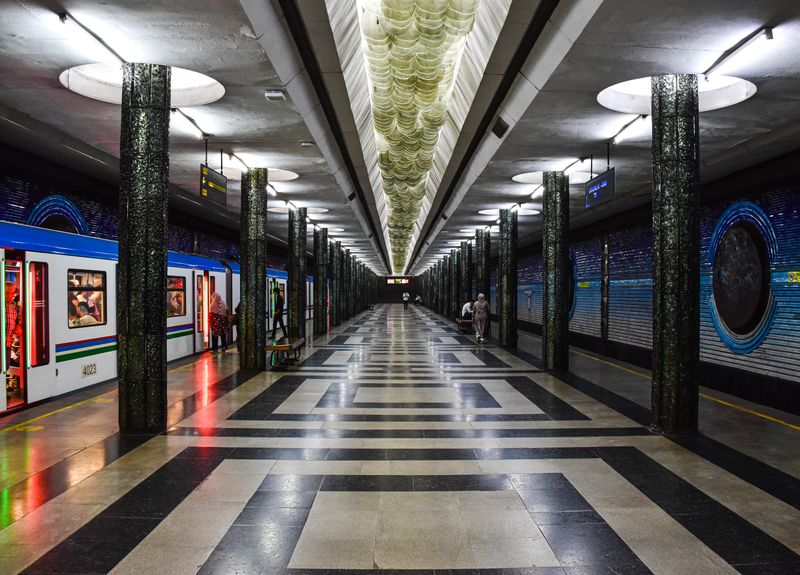
One of the most beautiful metro systems on earth — opened in 1977 and, until recently, forbidden to photograph, so its splendour is a revelation. Each station is a themed palace of marble, carved ganch plaster, chandeliers and mosaics, from cosmonaut-themed Kosmonavtlar to the blue-tiled Alisher Navoi. Riding it between stations is a sightseeing attraction in itself, and dirt cheap.
💡 Buy a token and simply ride between the grandest stations (Kosmonavtlar, Alisher Navoi, Pakhtakor) — photography is now allowed; it’s the best-value ‘museum’ in the city.
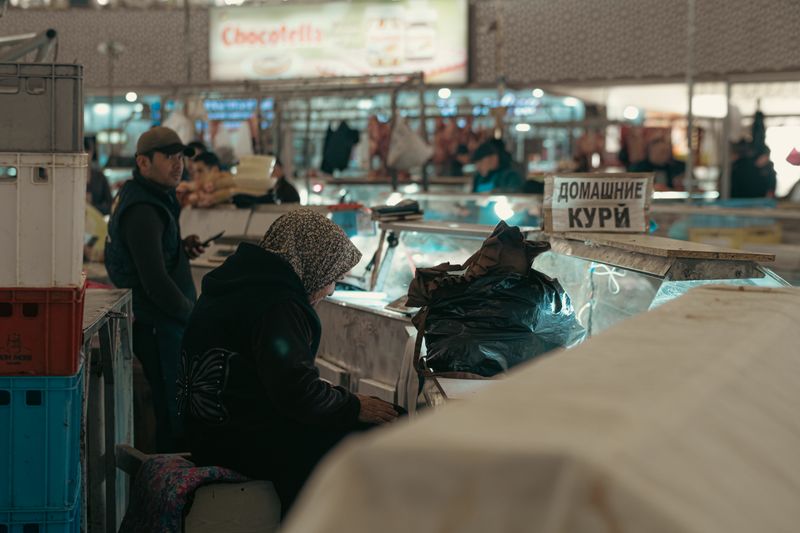
Under a huge turquoise dome, Chorsu Bazaar is a riot of Central Asian abundance — mountains of dried fruit and nuts, spices, fresh non bread, meat and mounds of melons, the sensory heart of Tashkent. Around it, the old town’s mud-brick lanes, the Kükeldash Madrasa and small mosques preserve the pre-Soviet city that the earthquake mostly spared.
💡 Go in the morning for the freshest produce and full bustle; try the samsa (baked meat pastries) and fresh non bread, and wander the old-town lanes around the Kükeldash Madrasa.
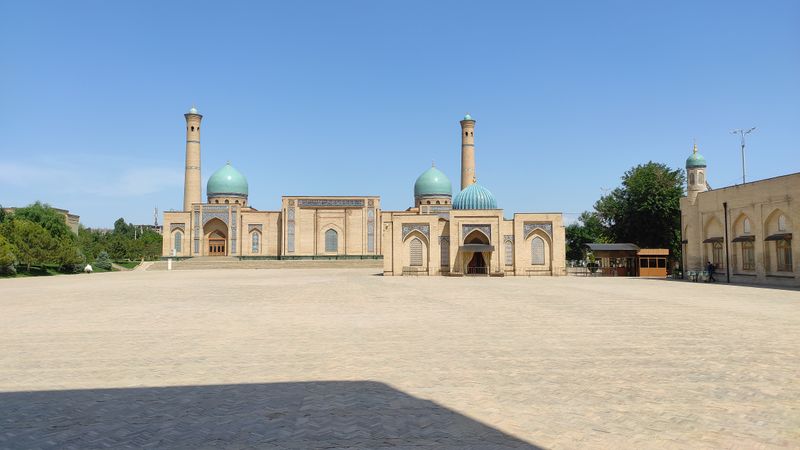
Tashkent’s spiritual centre — a serene square of madrasas, mosques and a mausoleum around a leafy courtyard, beautifully restored with blue-tiled portals. Its library holds the Uthman Quran, believed to be one of the oldest in the world, stained (legend says) with the blood of the caliph Uthman — a profound relic for Muslims and a highlight for any visitor.
💡 The Uthman Quran in the library is the treasure — quietly astonishing; the whole complex is a peaceful, blue-tiled contrast to the Soviet city around it.
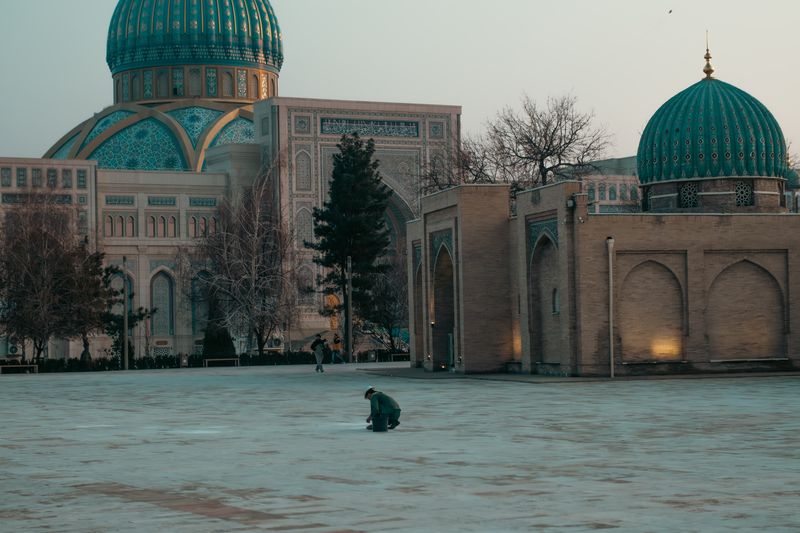
Tashkent’s rebuilt centre is a showcase of monumental planning — vast Independence Square (Mustaqillik Maydoni), the grand Amir Timur Square with its statue of Tamerlane, tree-lined boulevards and imposing public buildings. Excellent museums — the State Museum of History, the Museum of Applied Arts in a gorgeously decorated mansion — fill in the country’s deep and recent past.
💡 Stroll Amir Timur Square and the boulevards, and don’t miss the Museum of Applied Arts — its carved-and-painted interior is as much a sight as its craft collection.
Uzbek food is hearty, meaty and delicious, and Tashkent is the place to sample its full range — above all plov (osh), the national dish of rice slow-cooked with lamb, carrots, onions and cumin in a giant cauldron, best eaten at a dedicated ‘plov centre’ where it’s made by the tonne. Add shashlik (grilled skewers), lagman (hand-pulled noodles), samsa and manti (dumplings), fresh non bread stamped in patterns, and shurpa soup, all washed down with green tea. The Chorsu Bazaar and plov centres serve the authentic, cheap versions, while Tashkent’s fast-growing cafe and restaurant scene adds modern Uzbek, Korean (from the Koryo-saram community), Georgian and international options. Melons, grapes and dried fruit are superb. Prices are very low, portions huge, and hospitality warm — come hungry, and try the plov at lunchtime, when it’s freshest.
Start under the great dome of Chorsu Bazaar amid the melons, spices and non bread, then the old-town lanes and the Kükeldash Madrasa — the pre-Soviet city.
Lunch on plov at a bustling plov centre — the national dish at its best — then the serene Khast Imam complex and its ancient Uthman Quran.
Ride the ornate metro between its grandest marble-and-mosaic stations, surfacing at Amir Timur Square and the boulevards of the monumental Soviet centre.
Stroll Independence Square and the leafy boulevards as the fountains light up, then a shashlik-and-lagman dinner in the modernising city centre.
Tashkent’s metro is a genuine sight — gorgeous stations, photography now allowed, and rides for pennies; use it to get around and to sightsee at once.
The Yandex Go app is the cheap, easy way to get taxis in Tashkent (and Uzbek cities) — far simpler than negotiating; fares are tiny.
Plov is traditionally a midday dish, freshest and best at a plov centre around noon — go then; it often sells out by afternoon.
The som comes in large denominations — you’ll handle thick wads; cards work in hotels and modern spots, but carry cash for bazaars and taxis.
Uzbekistan is now visa-free or e-visa for most, safe and very welcoming; hotels handle the required registration slips — keep them for departure.
Tashkent is very cheap — huge plov lunches, cheap metro and rides, and low hotel prices make it superb value; it’s the easy gateway to the Silk Road cities.
Reliable metro and walking directions across Tashkent (Yandex Maps also works well locally).
Free
The dominant ride-hailing app in Uzbek cities — cheap, metered taxis at a tap.
Free
Convert Uzbek som prices — handy given the large denominations.
Free
Multi-currency card with strong rates — useful for the region; carry som cash for bazaars.
Free
Soviet-grand Tashkent, blue-domed Samarkand, living-museum Bukhara, walled Khiva and the craft valley of Fergana — Uzbekistan is the beating heart of the Silk Road.