PL
Poznań
Poland's Most Polish City
Poland's Most Polish City

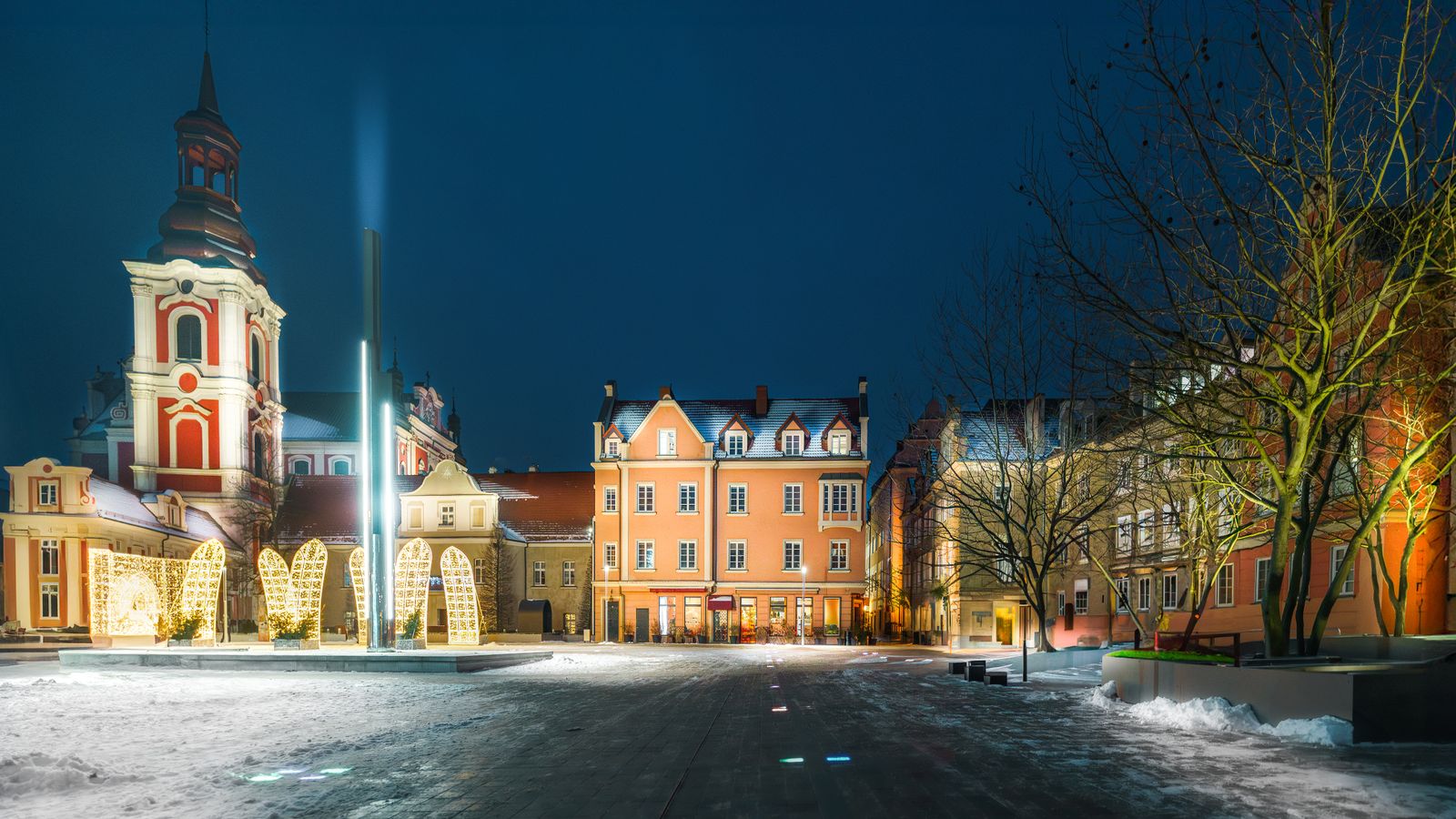
The Stary Rynek (the Old Market Square; 140×140m; the finest Renaissance-Baroque market square in Poland; the Gothic Town Hall (the Mechanical Goats at noon; the Town Hall Museum 10 zł; the gilded Renaissance Hall) at the centre; the Baroque merchant houses on three sides; the Fontanna Prozerpiny fountain) is the finest single square in Poland outside Kraków.
💡 Mechanical Goats of Poznań Town Hall at noon (free; the Stary Rynek fills at 11:55am; the Town Hall Museum (10 zł; the gilded Renaissance Hall) best visited immediately after when the crowd disperses).

Ostrów Tumski (Cathedral Island; the oldest part of Poznań (settled 8th century); the Cathedral of St Peter and St Paul (free to the nave; the Golden Chapel — the most ornate funerary chapel in Poland; the crypt with the sarcophagi of Mieszko I and Bolesław the Brave — the first two Polish kings)) is the most historically significant church in Poland. The founding site of the Polish state, dating to the 10th century.
💡 Ostrów Tumski (Cathedral Island; the Cathedral of St Peter and St Paul; the Golden Chapel; the sarcophagi of the first two Polish kings) is the most historically significant church in Poland — free to the nave; 15 min walk from the Stary Rynek.

The Dzielnica Cesarska (the Imperial District; the 1890–1910 Neo-Romanesque and Neo-Gothic buildings east of the Old Town; the Kaiser Wilhelm Memorial Church; the Imperial Castle (Zamek Cesarski; the last palace built by Kaiser Wilhelm II; 1910; free to walk the courtyard; museum 15 zł)) is the most unusual architectural quarter in Poland and the most coherent Wilhelmine architecture outside Germany.
💡 Croissant Museum (Stary Rynek; 25 zł; the 45-min tour ending with making your own rogal świętomarcnśski — the EU PDO croissant unique to Poznań) is the finest food experience in the city.
💡 Imperial District walk (the Dzielnica Cesarska; the Kaiser Wilhelm Memorial Church; the Imperial Castle courtyard; free to walk; the most coherent Wilhelmine architecture outside Germany) takes 45 min from the Stary Rynek.

The rogal świętomarcnśski (the EU PDO St Martin’s croissant; filled with white poppy seed cream, nuts, and raisins; 8–12 zł; from licensed Poznań bakeries year-round) and the Croissant Museum (Stary Rynek; 25 zł; the 45-min guided tour ending with making and eating your own rogal) are the defining food culture of Poznań.
Poznań cuisine is the most specifically regional of any Polish city — the Wielkopolska food culture is stubbornly local and resists national standardisation: the pyry z gzikiem (the boiled potatoes with the white farmer’s cheese, chives and cream — the most humble and the most specifically Poznań dish; 10–18 PLN; the most popular single dish in traditional Poznań restaurants), the &Zarr;urek (the sourdough rye soup in a carved bread bowl with the boiled egg and the white sausage; the most satisfying and the most theatrical Polish soup; 18–28 PLN), the Rogal Świêtomarciński (the Saint Martin’s croissant; 6–12 PLN at any certified bakery; the most important Poznań food purchase; eat one warm from the bakery and take a box home for 4–5 rogale at 25–40 PLN), and the Poznań craft beer scene (the Browar Fortuny, the PRL Pub, and the Bierhalle — the three most characterful beer establishments in the city; 10–16 PLN per 0.5L of craft beer). The Brovaria brewpub (the Old Market Square; the house-brewed beer; the Polish regional food menu; the most atmospheric brewpub in the Stary Rynek; 40–70 PLN pp) and the Gospoda Pod Pretekstem (the traditional Wielkopolska cuisine; the finest pyry z gzikiem in Poznań) define the food scene.
The Mechanical Goats of Poznań Town Hall (the two metal goats that emerge from the Town Hall tower at noon every day and butt heads twelve times).
Ostrów Tumski (Cathedral Island; the Cathedral of St Peter and St Paul; the Poznań Baptistery where Poland was Christianised in 966; free to enter; 10 minutes from the Old Market Square) is the essential first stop.
The St Martin’s Day parade (Święty Marcin street; November 11; the largest annual celebration in Poznań; free; the rogal Świętomarcinski stands set up the entire week before) combines national holiday and signature food culture.
The Dzielnica Cesarska (the Imperial District; the 1890–1910 Neo-Romanesque and Neo-Gothic buildings east of the Old Town; the Kaiser Wilhelm Memorial Church).
May–Jun for the best weather and the Malta Festival. September: the POLAGRA food fair and the most animated cultural calendar. November 11: St Martin’s Day — the most specifically Poznań single day of the year.
Croissant Museum at 10am. Goats at noon. Cathedral Island afternoon. Imperial District evening.
Stary Rynek for the 11:55am Mechanical Goats (free). Town Hall Museum immediately after (10 zł; the Renaissance Hall). Ostrów Tumski (the Cathedral; the Golden Chapel; the royal crypt; free to nave). Croissant Museum in the afternoon (25 zł; make your own rogal).
💡 Poznań is 2.5h by IC Express from Warsaw (from 59 zł) and 3h from Wrocław (from 39 zł) — the finest 1-night stopover on the Warsaw–Berlin train route.
Imperial District walk (the Dzielnica Cesarska; the Kaiser Wilhelm Memorial Church; the Imperial Castle; free). Lake Malta (2km east; the rowing course; free bathing in summer). Stary Rynek café in the evening.
💡 The Mechanical Goats spectacle (daily at noon; free; the Stary Rynek fills 5–10 min before noon) — combine the viewing with the Town Hall Museum (10 zł) immediately after when the square empties.
Poznań is the most affordable city-break in the list. The mechanical goats are free; the Cathedral Golden Chapel is € 2; the Croissant Museum with the tasting is € 8. Per person per day.
The mechanical goats (free; the most beloved single daily event in western Poland; in operation since 1551; 90 seconds at noon; the single most immediately rewarding free tourist activity in any Polish city outside Kraków’s hejnał)
The Croissant Museum (€ 8; the live baking demonstration; the warm freshly baked Rogal tasting at the end; the most delicious single museum experience in Poland; the only museum in the world where the entrance ticket includes eating)
The Malta Festival (the international theatre and performing arts festival held on Lake Malta in June)
Poznań public transport (ZTM) for tram real-time departures and 24h ticket purchase.
Free
Croissant Museum (roegalmuseum.pl) guided tour booking — book ahead as tours fill quickly.
Free
Poznań restaurant discovery with Stary Rynek, the Old Town, and Greater Polish cuisine (rogal, gzik, pyra z gzikiem) filtering.
Free
PKP Intercity for the Warsaw–Poznań IC Express train (2.5h; from 59 zł) and the Poznań–Berlin Eurocity connection.
Free
Kórnik Castle and Gniezno Cathedral guided tour booking for the day trip circuit from Poznań.
Free
Download the Poznań offline map before arrival — the Old Town lanes, Ostrów Tumski, and the Imperial District require offline navigation.
Free
Explore more of Poland’s extraordinary cities and landscapes.