BW
Botswana
Okavango Delta, Chobe elephants & Kalahari wilderness
Okavango Delta, Chobe elephants & Kalahari wilderness
Botswana is Africa’s premier safari destination for discerning travellers — a stable, prosperous, well-governed democracy that has chosen quality over quantity in its approach to wildlife tourism, making it the home of some of Africa’s most exclusive and immersive wildlife experiences. The Okavango Delta — the world’s largest inland delta, a UNESCO World Heritage Site — fans across the Kalahari as the Okavango River disappears into the desert sands, creating a seasonal labyrinth of channels, lagoons and papyrus islands that concentrate extraordinary wildlife. The Chobe National Park has Africa’s densest elephant population; the Central Kalahari Game Reserve is a vast wilderness of fossil valleys and Bushman heritage.
A UNESCO World Heritage Site and one of the natural wonders of Africa — an inland delta where the Okavango River fans across 15,000 square kilometres of Kalahari sands. Explored by traditional mokoro (dugout canoe) or light aircraft, the delta’s waterways concentrate lions, leopards, wild dogs, buffalo, hippos and elephants at extraordinary density. The annual flood pulse (May–August) brings the ecosystem to its peak.
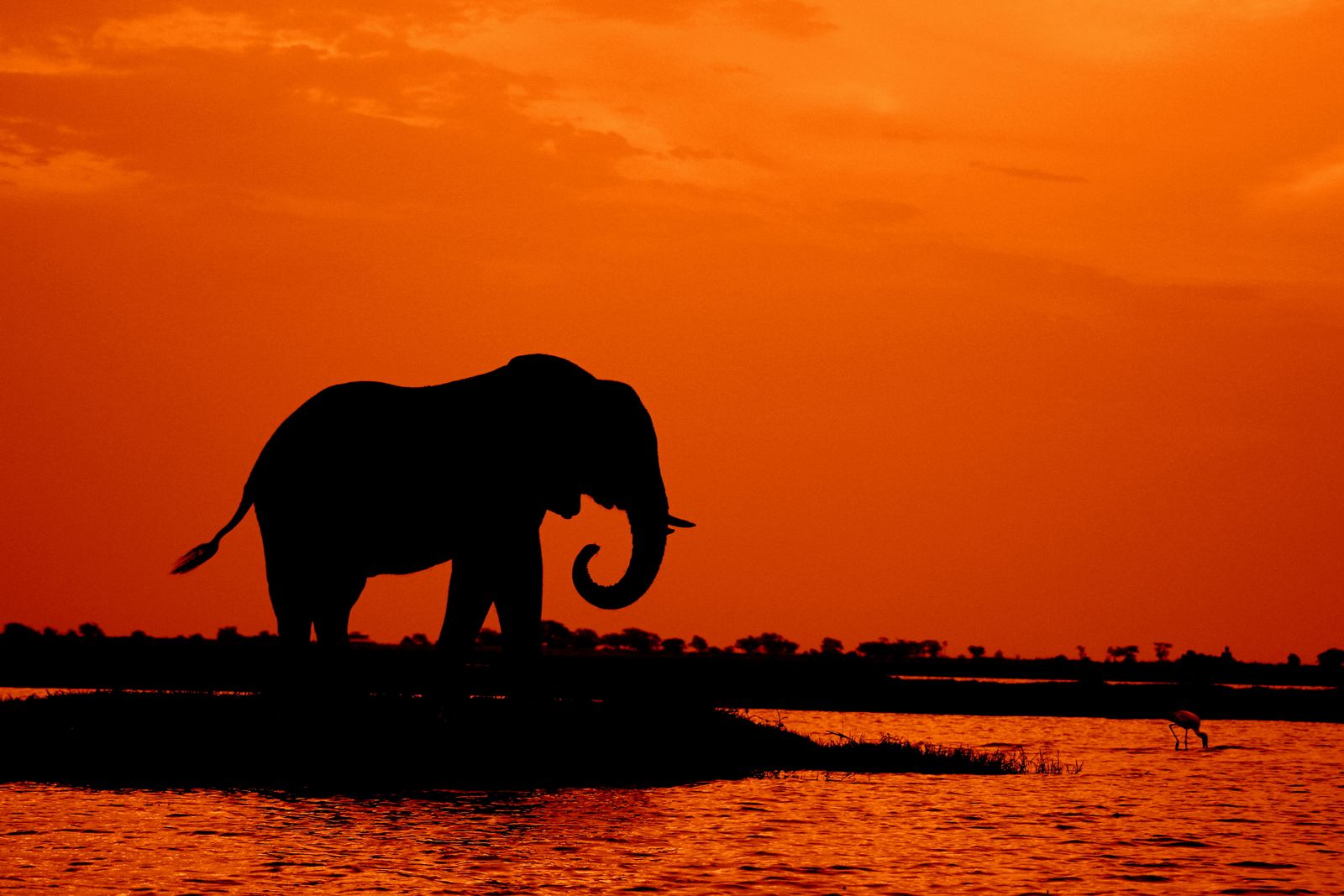
Home to Africa’s largest elephant population — estimated at 120,000 animals — Chobe’s riverfront at sunset, when hundreds of elephants come to drink and bathe in the Chobe River, is one of the continent’s great wildlife spectacles. Lion, leopard, wild dog and exceptional birdlife complete what is one of Africa’s most accessible and rewarding national parks, 80 km from Victoria Falls.
The reserve at the heart of the Okavango Delta is considered one of Africa’s finest — a combination of floodplains, woodland and permanent water that supports exceptional predator density. Chief’s Island, accessible only by air or boat, is the most remote and rewarding section, with legendary leopard and wild dog sightings.
The world’s largest salt pans — ancient lake beds left when a vast Pleistocene lake evaporated — create a landscape of hallucinatory flatness that stretches to every horizon. In the dry season they are white and empty; after rains they fill and attract one of Africa’s great wildlife spectacles: thousands of flamingos, zebra herds and wildebeest migration.
slow-cooked beef or goat, pounded and shredded — the national dish) is served with
Slow-cooked beef or goat, boiled then pounded until shredded, served with pap (maize porridge) — the national dish of Botswana, eaten at all celebrations.
Wild leafy greens (often wild spinach or purslane) stewed with onion and tomato — the side dish eaten throughout Botswana alongside any main course.
An opaque traditional sorghum beer sold in cartons and shaken before drinking — deeply traditional, low-alcohol and widely drunk throughout southern Africa.
sorghum porridge) at any traditional gathering.
barbecue) culture dominates — the evening fire is the social centre of every camp and household. Bush-prepared game meat — springbok, kudu — is excellent.
a thick sorghum beer sold in cartons) is the traditional local drink; quality South African wines are universally available.
There are no direct flights from Europe to Botswana. Johannesburg (JNB) and Cape Town (CPT) in South Africa are the primary gateways. Sir Seretse Khama (GBE) in Gaborone is the main international airport; Maun (MUB) is the safari hub. For trip planning, see the official Botswana Tourism portal.
💡 Johannesburg is the standard gateway — fly Heathrow–JNB (11h) then connect with Airlink or Fly Safair to Maun (1h30). Book the Maun leg separately through Airlink.sa.
💡 Maun is the correct airport for the Okavango Delta and Chobe — not Gaborone. Airlink operates the most reliable JNB–MUB service with multiple daily departures.
💡 All Delta lodges include charter transfers from Maun in their rates — a small Cessna collecting you from Maun’s light aircraft apron and landing on a bush airstrip is the defining arrival experience of Botswana.
💡 Self-drive in Botswana requires a genuine 4WD with high clearance and sand tyres — the roads inside Moremi and the Makgadikgadi are deep sand and flooded in the wet season. Maun operators rent fully equipped camping vehicles from US$80/day.
May to October is the dry season and the prime safari window — wildlife concentrates around permanent water as the landscape dries, making game viewing exceptional. June–August is peak season. The wet season (November–April) transforms the Okavango Delta into a flood plain and the Chobe River levels drop; the landscape turns green and migratory birds arrive.
Botswana deliberately positions itself as a low-volume, high-value destination. Budget and independent travel is genuinely difficult; the country is designed for quality safari lodges. The Botswana Pula (BWP) is relatively stable.
Self-drive safari in Moremi in a hired 4WD is the most affordable way to experience Botswana — campsite fees within the park are US$15–30/night and the game viewing is comparable to lodge experiences.
Most mid-range lodges in Botswana are fully all-inclusive (accommodation, meals, game drives, park fees) — the daily rate appears high but covers everything.
Wilderness Safaris, &Beyond and Great Plains Conservation operate Botswana’s finest camps — Mombo (Moremi, from US$2,000pp/night) is consistently ranked among the top 3 safari lodges in the world.
The Okavango Delta for three days, Chobe National Park for two, the Makgadikgadi Pans for one, Moremi Game Reserve to close. Botswana is the finest pure wildlife destination in Africa — low volumes, high standards, extraordinary ecosystems.
Maun is the gateway to the Okavango Delta — a 15,000km² inland river delta formed by the Okavango River flowing into the Kalahari desert and disappearing into the sand. Light aircraft transfers (15–45 min) to the lodges inside the Delta; the aerial view of channels, islands and wildlife is the first extraordinary thing.
💡 The Okavango Delta floods annually from Angolan snowmelt — the water arrives in April–June, sometimes 1,000km and 4–6 months after the rainfall that caused it. The delay means the Delta floods during Botswana’s dry season, creating a year-round wildlife paradise.
A mokoro (a dugout canoe, poled standing by a local guide through the papyrus channels) is the defining Delta experience — silent, intimate, 30cm above the waterline, passing sleeping hippos, water lilies and African fish eagles. Walking safari on Delta islands for predator tracking.
💡 The mokoro guides are San Bushmen descendants from local villages — they can identify animal tracks, bird calls and medicinal plants with a precision developed over thousands of years of living in the Delta ecosystem. A 2-hour walking safari with a Bushman guide is irreplaceable.
4WD game drive in the Moremi section of the Delta — the only fenced wildlife area, with lion, leopard, elephant, buffalo and wild dog. The Okavango has the world’s largest concentration of African wild dogs — a population of approximately 1,000 individuals in the greater Delta ecosystem.
💡 African wild dogs (Lycaon pictus) have a 72–80% hunt success rate — the highest of any large predator, compared to 25–30% for lions. Their packs are highly social (no dominant male eats first — the entire pack feeds together, then regurgitates food for pups and sick members).
30-min flight from Maun to Kasane. Chobe National Park (11,700km²) has the highest concentration of elephants on earth — an estimated 130,000 individuals, visible in herds of hundreds at the Chobe River at dawn and dusk. Boat safari on the Chobe River for close-range elephant and hippo encounters.
💡 The Chobe elephant population has grown from approximately 8,000 in 1960 to 130,000 today — a conservation success story that has also created human-wildlife conflict in surrounding communities. The elephants seen from boats on the Chobe River are entirely habituated to boats and approach within 10–20m.
Full-day game drive in Chobe’s Savuti and Linyanti areas — the dry season concentrations of giraffe, zebra and buffalo attract lion prides. The Savuti channel (which mysteriously stopped flowing in 1982 and restarted in 2009, controlled by tectonic activity) area has one of the densest lion populations in Africa.
💡 The Savuti lion prides of Chobe are among the most studied in Africa — they are documented killers of adult elephants, behaviour normally only seen when lions are unusually large or the elephants unusually vulnerable. The prides here average 20–30 individuals.
4h drive from Kasane. The Makgadikgadi Pans (Ntwetwe and Sua Pans combined: 12,000km², the remnant of an ancient lake larger than Switzerland that dried 10,000 years ago) is one of the most surreal landscapes in Africa — an absolutely flat salt plain extending to the horizon, completely empty.
💡 The Makgadikgadi migration (October–April, when rains fill the pans): 35,000 zebra and wildebeest move north to graze the new grass — the second-largest migration in Africa after the Serengeti. Baobab Island (a cluster of ancient baobabs on a small rise in the pans) is the most photographed single location in Botswana.
Return to Maun through Moremi Game Reserve — the most rewarding self-drive safari in the Delta, with elephants on the road, reed frogs in the puddles and fish eagles overhead. Fly from Maun Airport (MUB) to Johannesburg (JNB) for international connections.
💡 Moremi’s Third Bridge (a log bridge across a papyrus channel, driveable by 4WD) is at the heart of the best self-drive circuit in Botswana — a 3–4 hour loop where elephant, buffalo and lion are commonly seen within metres of the vehicle.
Botswana is deliberately expensive for safari tourism — high-cost, low-volume policy preserves the wilderness. Budget safaris are possible by self-drive camping.
Botswana deliberately restricts visitor numbers through expensive permits and lodges. Budget camping and self-drive are possible in most national parks but the famous Okavango concessions are exclusive (USD 1,000+/night).
Maun Airport (MUB) handles charter flights into the Delta. Most visitors fly Johannesburg to Maun then a small aircraft into the concession.
Malaria is present in the Okavango Delta and Chobe year-round. Prophylactics recommended.
4WD essential for all national parks. The road from Maun to Moremi is rough and deep sand in sections. Hire from Maun or Kasane.
Malaria prophylaxis essential for all wildlife areas. Take precautions with repellent and long sleeves at dawn and dusk.
— Wildlife sighting and trip planning app for Botswana’s national parks.
Free— Offline maps essential for the Okavango and Kalahari where mobile coverage is absent.
Free— Species identification invaluable for Botswana’s extraordinary wildlife and birdlife.
FreeDownload offline maps before you travel so navigation works without mobile data — essential for walking, driving and finding local spots.
FreePoint your camera at menus, signs or street text for instant translation. Download the language pack offline before you arrive for full use without data.
FreeReal-time and offline exchange rates for all world currencies — converts prices instantly so you always know what you are paying in your home currency.
FreeBotswana sits within easy reach of several other destinations — each with a completely different character.
