MZ
Mozambique
Indian Ocean coral islands, piri-piri prawns & Portuguese forts
Indian Ocean coral islands, piri-piri prawns & Portuguese forts
⚠️ Travel advisory: check before you go
Governments advise against travel to parts of northern Mozambique, particularly Cabo Delgado, because of an insurgency. The south and main beach areas are visited regularly; check the latest advice.
Latest official advice: UK FCDO · US State Department · Reviewed September 2026
Mozambique stretches 2,500 kilometres along the southern African Indian Ocean coast — one of the world’s longest and least-developed tropical coastlines, with coral reefs, mangrove estuaries, undeveloped island archipelagos and beaches of beauty that remain largely unknown to international travellers. Mozambique Island (Ilha de Moçambique), the former Portuguese colonial capital, is a UNESCO World Heritage Site — a small island linked to the mainland by a narrow bridge, its northern half packed with 16th-century Portuguese forts, churches and mosques, its southern half a living macuti town of thatched houses and dhow-building yards. The Quirimbas and Bazaruto archipelagos offer excellent diving and snorkelling in water of startling clarity.
A UNESCO World Heritage Site of historical density: the 16th-century Fort of São Sebastião (one of the oldest Portuguese military buildings in sub-Saharan Africa), the Church of the Misericordia, the Palace of São Paulo and the mosques and bazaars of the macuti town crowd onto an island 3km long. The island served as the Portuguese capital of East Africa for 400 years.
A National Park of six islands off the coast of Vilankulo, the Bazaruto Archipelago has some of the finest diving in the Indian Ocean — healthy coral reefs, manta rays, whale sharks and the last population of dugongs in East Africa. Vilankulo’s lagoon, accessible by traditional dhow, is a protected marine area of beauty.
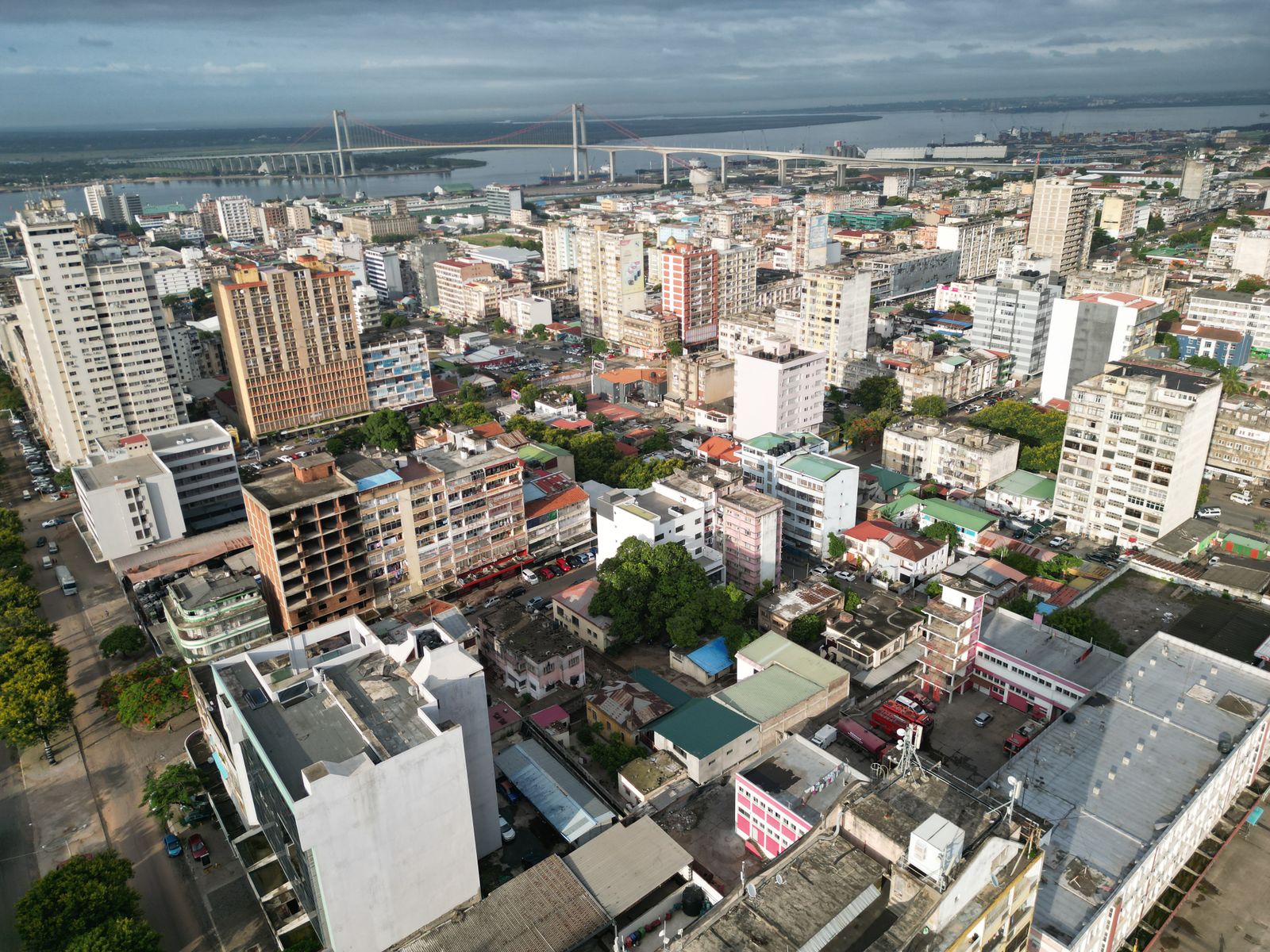
The Mozambican capital is one of southern Africa’s most architecturally interesting cities — a fusion of Portuguese colonial grandeur (the Central Market, the Cathedral, the Central Train Station designed by Gustave Eiffel) and African dynamism. The seafood restaurants of the Baixa and the National Art Museum are highlights.
Forty coral islands strung along the northern Mozambican coast form the Quirimbas Archipelago — remote, little-visited and home to extraordinary marine life including whale sharks and humpback whales (June–November). Ibo Island, with its 18th-century Portuguese fort and silver-working artisans, is the archipelago’s cultural jewel.
Large prawns grilled with fiery piri-piri sauce — Mozambique’s best-known dish.
Cassava leaves cooked with coconut milk, peanuts and often shrimp or crab.
Stiff maize porridge served with fish or meat stew — the daily staple.
Portuguese influence left a strong café culture: a bica (espresso) and a pastel de nata are cheap and easy to find in Maputo.
A grilled beef steak in a crusty Portuguese roll smeared with garlic and piri-piri butter — a Mozambican street food brought from Lisbon and naturalised completely, sold at beach stalls and backstreet cafés throughout Maputo.
Mozambique’s flagship lager, brewed in Maputo since 1932. Available everywhere in a tall cold bottle; Laurentina Preta (dark) and Laurentina Clara (light) are both staples of the country’s social drinking culture.
Maputo International (MPM) is the main hub. Ethiopian Airlines, Kenya Airways and South African Airways serve major routes. Pemba (POL) and Vilankulo (VNX) are the island gateways. For trip planning, see the official Mozambique tourism portal.
Johannesburg (2h from Maputo) and Nairobi (4h) are the primary hubs. South African Airways, Airlink and Fastjet connect JNB to Maputo multiple times daily.
Johannesburg is the most practical gateway for southern Mozambique (Maputo, Bazaruto). Nairobi connects better to northern Mozambique (Pemba, Quirimbas).
Internal charter flights are the most practical way to reach Gorongosa and the islands from Maputo. LAM (Linhas Aéreas de Moçambique) covers the main domestic routes; specialist operators charter to park airstrips.
The EN1 coastal highway runs the length of Mozambique and is paved between Maputo and Pemba, with variable quality in northern sections. A 4WD is essential for any off-main-road driving.
June to October is the dry season — Bazaruto Archipelago and Quirimbas at their finest, Gorongosa National Park game viewing excellent, the Mozambique coast warm and clear. July and August are the coolest and driest months. November to April brings rains; the Quirimbas and Bazaruto remain beautiful but Indian Ocean swells can affect diving.
📅 Mozambique is in its best season in April, May, June, July, August, September, October, November. See where else is good to go in those months, or browse where to go by month.
Mozambique is a mid-range to expensive destination — the island destinations (Bazaruto, Quirimbas) are premium, but Maputo and Gorongosa are accessible at moderate prices. The Mozambican Metical (MZN) is the currency; USD widely accepted in tourist areas.
Piri-piri chicken (frango grelhado com piri-piri — spatchcocked chicken marinated in the African bird’s eye chilli, garlic, lemon and oil, grilled over charcoal) is the national dish of Mozambique and the origin of the international.
The Bazaruto archipelago boat transfer from Vilankulo (30–45 min motorboat, US$40–80 return) or charter light aircraft (15 min, US$80–150 return) are both options — the boat is more atmospheric;.
Benguerra Island Lodge (on the largest island of the Bazaruto Archipelago, directly above the dugong seagrass beds, with a resident marine biologist) and Ibo Island Lodge (a restored 19th-century colonial mansion in the UNESCO-listed fort)
Maputo for one day, Bazaruto Archipelago for two, Gorongosa National Park for two, the Quirimbas Archipelago for two. Mozambique has the longest coastline in southern Africa, the finest diving on the continent and wildlife recovering from decades of war at speed.
Maputo — one of the most architecturally distinctive capitals in Africa, with an Art Deco and Portuguese colonial grid overlaid with tropical gardens, cashew trees on the boulevards and the finest seafood in southern Africa — the Central Market, the Iron House (designed by Gustave Eiffel’s workshop, 1892, a prefabricated iron building shipped from Portugal), and the prawn restaurants of the Marginal waterfront.
The Mozambique prawn (Penaeus indicus — the large Indian Ocean tiger prawn) is considered the finest in the world by Portuguese-speaking food culture. Grilled with garlic butter and piri-piri chilli over charcoal, they are eaten at Maputo’s waterfront restaurants. The piri-piri pepper (Capsicum frutescens, introduced from South America by the Portuguese via Cape Verde) is integral to Mozambican cooking.
1h flight from Maputo to Vilankulo, then boat. The Bazaruto Archipelago (five islands in the Mozambique Channel, a marine national park since 1971, with the last viable population of dugong in the Indian Ocean — approximately 250 individuals) — the finest beach island destination in Africa.
The dugong (Dugong dugon — the marine mammal that inspired the mermaid legend, a slow-grazing relative of the elephant that feeds on seagrass in shallow tropical water) is critically endangered globally, with Bazaruto holding one of the last viable populations. They are visible on early morning boat trips in the seagrass beds between the islands.
Two-Mile Reef (Bazaruto) — one of the finest reef dives in the Indian Ocean, with manta rays, whale sharks (October–December), dolphins, green and hawksbill turtles and a wall coral system of great biodiversity. The sandbank between Benguerra and Santa Carolina Islands at low tide — a 1km white sand bank in clear turquoise water with no other land visible in any direction.
Bazaruto’s marine park was established in 1971 during the final years of Portuguese colonial rule — one of the earliest protected marine areas in Africa. The relative absence of human pressure during the 1977–1992 civil war allowed the reef to recover; the result is a system in better health than most Indian Ocean reefs.
2h flight from Vilankulo to Chitengo. Gorongosa National Park — the scene of one of the greatest conservation recoveries in history. By 1994 (after 15 years of civil war in which soldiers ate the wildlife) fewer than 100 buffalo, 15 lions and 5 elephants remained. By 2023: 600+ lions, 1,600+ elephants, 66,000+ buffalo — the most successful large mammal recovery in Africa.
The Carr Foundation (an American philanthropic organisation led by Greg Carr) invested US$100 million in Gorongosa from 2004 onward, rebuilding park infrastructure, training rangers and reintroducing species. The elephant population recovery (5 to 1,600+ in 20 years) is unique in wildlife conservation history. Sapi the elephant, born 2004, was the first documented calf of the recovery.
Dawn boat safari on the Urema floodplain (the seasonal lake at the heart of the park, ringed by hippos and the source of the park’s great mammal concentrations in the dry season) and a walking safari in the Cheringoma limestone plateau (baobab forest, leopard tracks, rare birds). The Cheringoma area for the park’s most striking bird diversity (600+ species).
Gorongosa is one of the most biodiverse parks in Africa by bird species count — 600+ species recorded in a 4,000km² area. The park sits in the Great Rift Valley floor and receives both East African and southern African bird species; this ecological overlap produces an avifauna unique in the continent.
2h flight to Pemba, then boat. The Quirimbas Archipelago (32 islands in the northern Mozambique Channel, a UNESCO biosphere reserve, with the ancient Swahili trading town of Ibo Island — inhabited since the 10th century, with Portuguese forts from 1507 — and the finest fringing coral reefs in East Africa).
Ibo Island was one of the most important Arab-Portuguese trading posts in the Indian Ocean — a hub for ivory, gold and slaves from the 10th to the 19th century. The 16th-century Fort São João Baptista (the oldest complete Portuguese fort on the East African coast) still stands; silversmiths who were here before the Portuguese are still working in the fort courtyard today.
A final morning dive on the Quirimbas reef (undisturbed by tourism, with Napoleon wrasse, bumphead parrotfish and manta rays in the passages between islands) and a visit to the Ibo silversmiths (artisans who have been working silver in the fort since before Portuguese arrival, using techniques unchanged for 500 years). Fly from Pemba (POL) to Maputo, then international connections.
The Ibo Island silver tradition traces to Arab trading contact before Portuguese arrival — the silversmiths produce intricate filigree work using silver wire wound around a core, a technique brought via the Indian Ocean trade routes. They work in the shadow of the Portuguese fort their predecessors watched being built in the 16th century.
Visa on arrival available for many nationalities; e-visa also available. Confirm requirements for your passport nationality.
Maputo International (MPM) covers the south. Pemba (POL) for the Quirimbas. Direct flights from Johannesburg, Nairobi and Lisbon.
The MZN is the currency. USD widely accepted in tourism businesses. Cards work in Maputo; carry cash for most other areas.
The far north (Cabo Delgado Province, Mocimboa da Praia) has an active insurgency. Check current advisories; the Quirimbas Islands and Pemba may be accessible depending on conditions.
Maputo has cheap chapas (minibuses); hiring a 4WD is essential for northern Mozambique’s unpaved roads.
Malaria prophylaxis essential. Drink bottled water only. Ensure travel health vaccinations are up to date before visiting.
Quick answers to the questions people most often ask before visiting Mozambique.
Fly into Maputo (MPM) for the south, or Vilankulo (VNX) for the Bazaruto Archipelago and Pemba (POL) for the Quirimbas. Most international routes connect via Johannesburg, Addis Ababa or Nairobi.
Many nationalities can now visit visa-free or get a visa on arrival or e-visa, though rules have changed in recent years. Confirm the requirements for your passport before travel.
Most tourist areas in the south and centre, including Maputo, Tofo, Vilankulo and Bazaruto, are visited without problems, but the far northern province of Cabo Delgado has an ongoing insurgency and is subject to travel warnings. Check current advice.
April to November, the dry season, with June to October best for the islands, diving and Gorongosa National Park.
The Mozambican metical (MZN). US dollars are widely accepted by tourism businesses, and cards work in Maputo; carry cash elsewhere.
— Reasonable in Maputo and coastal towns; limited in the interior.
FreePoint your camera at menus, signs or street text for instant translation. Download the language pack offline before you arrive for full use without data.
FreeReal-time and offline exchange rates for all world currencies — converts prices instantly so you always know what you are paying in your home currency.
FreeFind and book hotels, guesthouses and apartments with free cancellation on most rates — one of the widest selections of accommodation worldwide.
FreeBrowse millions of traveller reviews for restaurants, attractions and hotels — helps identify the best local spots and avoid tourist traps.
FreeMozambique sits within easy reach of several other destinations — each with a completely different character.


