AR
Argentina
Steak at midnight, glaciers by noon
Steak at midnight, glaciers by noon

The city of tango: San Telmo’s cobblestone streets and milongas (tango halls), Palermo’s restaurants and Soho boutiques, La Boca’s Caminito painted houses and the 18km Reserva Ecologica.

The Devil’s Throat (Garganta del Diablo): 150m wide, 82m drop, visible from both the Argentine and Brazilian sides. More water volume than Victoria or Niagara Falls.

The granite towers of Torres del Paine (shared with Chile) and El Chalten’s Mount Fitz Roy: the two defining Patagonian mountain landscapes.

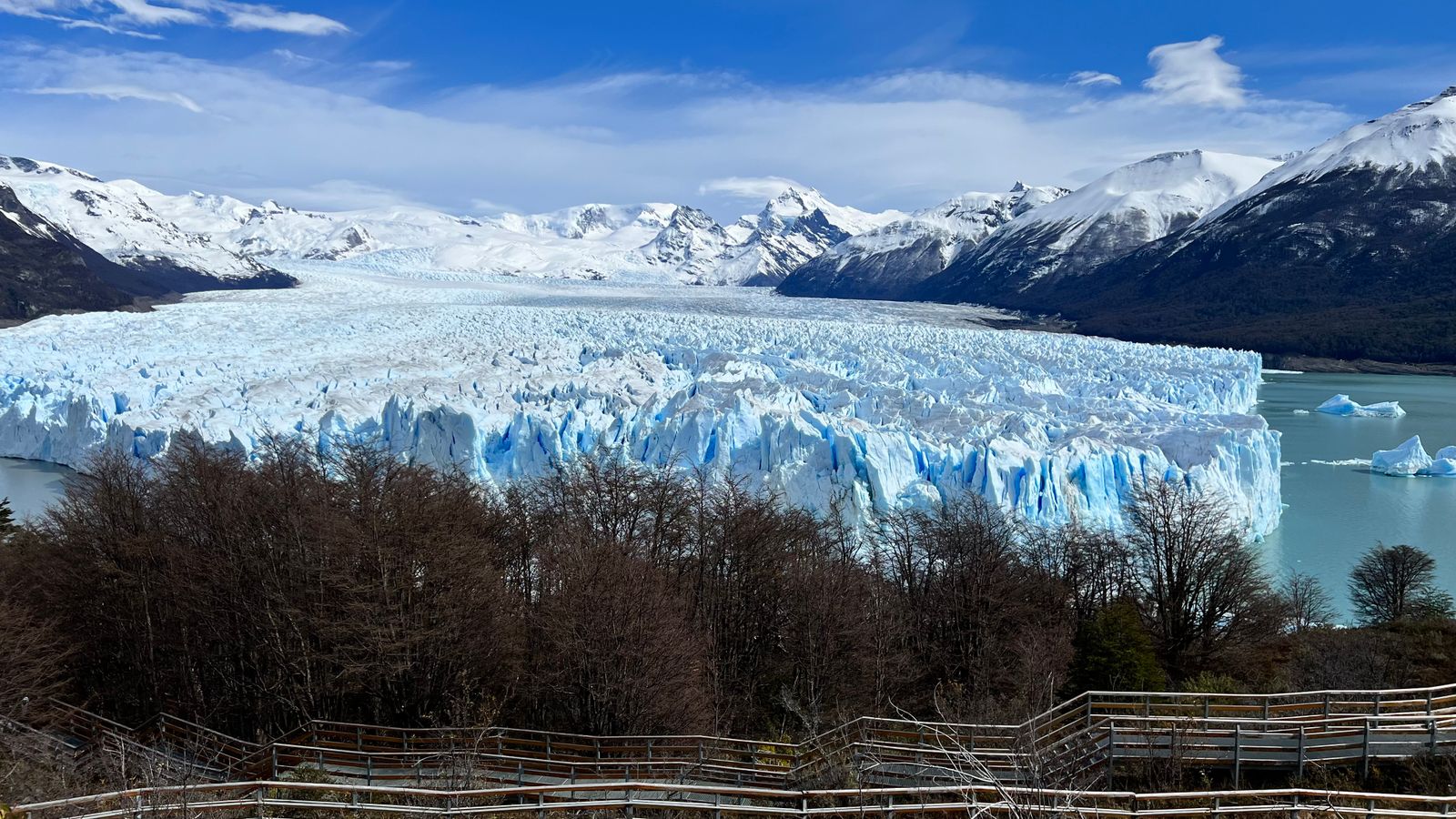
A 250km² glacier that advances 2m per day and calves (crashes) into Lake Argentino with dramatic regularity. Accessible on boardwalks from the lake shore.

The world’s highest-altitude wine production (Lujan de Cuyo at 1,000m): Malbec and Torrontes grapes in the Andes foothills, with bodegas from Achaval-Ferrer to Clos de los Siete.

A UNESCO-listed Andean valley of painted hills, indigenous Quechua villages, the Tilcara pucara (pre-Inca fortress) and the Hill of Seven Colours near Purmamarca.

A UNESCO-listed peninsula with the world’s largest breeding colony of southern right whales (June-December), orca attacks on sea lions (March-April) and elephant seals on the beach.

The world’s southernmost city: the Beagle Channel, the Martial Glacier above the city and the Tierra del Fuego National Park’s lenga beech forest.
Argentine barbecue: beef ribs, chorizo, morcilla (black pudding) and sweetbreads (mollejas) cooked slowly over wood embers. The most important social ritual in Argentina.
Small pastry turnovers filled with spiced beef (picante), cheese and onion, or chicken. Baked or fried. Each Argentine province has its own spice mix.
A breaded and fried veal or chicken cutlet served with mashed potato and a fried egg (milanesa a la napolitana). Italian-Argentine cuisine at its most honest.
Two shortbread biscuits sandwiching dulce de leche (milk caramel) and dipped in chocolate. Eaten by every Argentine from childhood to old age.
Malbec from Mendoza’s Lujan de Cuyo is the world’s finest expression of the grape: deep purple, with plum, dark chocolate and tobacco notes. Achaval-Ferrer and Catena Zapata are the prestige producers.
Fernet-Branca (an Italian bitter spirit) with Coca-Cola over ice: the unofficial national cocktail of Argentina. Drunk at every asado.
Milk slowly reduced with sugar until caramel: used in every Argentine pastry, spread on toast, eaten from the jar. Not to be confused with condensed milk.
A bitter green herbal infusion drunk from a hollow gourd through a metal straw (bombilla): shared communally, passed around a circle. The social ritual of Argentina.
Buenos Aires Ezeiza (EZE) is the main international hub; Jorge Newbery (AEP) handles domestic and regional flights. LATAM, Aerolineas Argentinas and Flybondi serve the domestic network. For trip planning, see the official Argentina tourism portal.
💡 Iberia via Madrid is generally the best-value and most direct European routing to Buenos Aires. Air Europa also flies Madrid–EZE direct at competitive fares.
💡 Miami is the most convenient US departure point for Buenos Aires — American and LATAM both fly direct in ~9 hours.
💡 Flybondi and JetSMART are Argentina’s budget carriers — significantly cheaper than Aerolineas on domestic routes when booked 4+ weeks ahead.
💡 Use Cabify or Uber (both operate in Buenos Aires) rather than unmarked taxis — pricing is transparent. Exchange dollars at a cueva (informal exchange) or via the Satoshi Tango app for the best rate.
Argentina’s seasons are the reverse of the Northern Hemisphere. Buenos Aires is best March–May (autumn) and September–November (spring) — temperate, uncrowded. Patagonia is best November–March (Southern Hemisphere summer). Iguazú Falls is good year-round but best August–November (lower water, easier access).
Argentina is extremely good value when using the parallel (blue) exchange rate — among the cheapest countries in the world for foreign visitors. The official rate gives far less.
A medialunas con crema (Argentine croissants with cream) and a café con leche at a Buenos Aires café costs ARS 2,000–4,000 (≈US$2–4 at blue rate) and is one of the great cheap breakfasts in South America.
Argentine Malbec at the winery in Mendoza costs ARS 5,000–20,000 (≈US$5–20) per bottle — wines that sell for $40–80 in European restaurants. Buy from the cellar door.
An estancia (working cattle ranch) stay in the Pampas or Patagonia — horseback riding, asado under the stars, gauchos — costs US$150–350/night and is one of the defining Argentina experiences.
Buenos Aires for three days, Iguazú Falls for one, Mendoza wine country for two, Patagonia (El Calafate & Perito Moreno) to finish.
The Plaza de Mayo and the Casa Rosada (the famous pink presidential palace, from whose balcony Evita addressed the crowds). San Telmo — the oldest neighbourhood, cobblestone streets, antiques, tango on Sunday. La Boca’s Caminito for the coloured corrugated-iron houses.
💡 The San Telmo Sunday market (Feria de San Telmo) fills the entire neighbourhood and is the best market in Buenos Aires. It runs from 10am to sunset. Arrive hungry.
Palermo — Buenos Aires’s most elegant neighbourhood — for its Japanese gardens, the MALBA (Museum of Latin American Art), and the restaurants. A proper Argentine asado (parrilla): Cabraí, Don Julio or La Carniceria for dinner. Order the ribeye.
💡 Argentine beef is genuinely different — grass-fed cattle on the Pampas, aged 21–28 days, grilled over hardwood coals (quebracho wood). A complete steak dinner at a top parrilla costs ARS 15,000–25,000 (≈US$15–25 at blue rate).
The Recoleta Cemetery — a walled city of marble mausoleums where Evita, presidents and military generals are buried side by side in extraordinary funerary architecture. The MNBA (National Museum of Fine Arts, free). A milonga (tango salon) in the evening — Café de los Angelitos or El Beso.
💡 The Recoleta Cemetery is the most visited tourist site in Buenos Aires — a genuinely extraordinary place, more like a miniature city than a cemetery. Entry is free.
2h flight from Buenos Aires (EZE or AEP). The Iguazú Falls: 275 falls over 2.7km, straddling the Argentine–Brazilian border. The Argentine side (Iguazú National Park) puts you on boardwalks directly over the falls. Devil’s Throat from the upper walkway is the highlight.
💡 The Devil’s Throat (Garganta del Diablo) walkway takes you to a platform directly at the top of the most powerful section — a 150m-wide horseshoe of water falling 80m. Waterproof gear recommended.
2h flight from Iguazú (IGR) to Mendoza (MDZ). The Mendoza wine region produces Argentina’s finest Malbec — the high-altitude vineyards (800–1,200m) of the Uco Valley are some of the most dramatic in the world, with snow-capped Andes as backdrop.
💡 The Uco Valley (2h south of Mendoza city) is the premium wine-growing zone — Achaval Ferrer, Zuccardi Valle de Uco, Clos de los Siete. Book ahead; many require reservations.
The classic Mendoza experience: rent a bike or join a wine tour, cycling between wineries in the Lujan de Cuyo or Maipu zones. Aconcagua (6,961m — the highest peak in the Western Hemisphere) is visible on a clear day from Mendoza.
💡 The best wine in Mendoza is not in the bodegas on the tourist circuit. Ask at your hotel which small family producer they recommend — often the best visits are unannounced.
3h flight from Mendoza to El Calafate. The Perito Moreno Glacier is one of the most accessible and active glaciers in the world — 5km wide, 60m above the water, and calving (collapsing) almost constantly. The boardwalk across from the glacier face is free and extraordinary.
💡 Perito Moreno advances 2m per day on average and loses roughly the same amount through calving. The sound of the ice cracking and collapsing into the lake is audible from 2km away.
Both work in BA. Local app DiDi is also available.
Argentina’s peso is volatile. Bring USD; exchange at official cambios or via Wise at the market rate.
Buenos Aires restaurants fill at 10pm. Arriving at 8pm marks you as a tourist.
Aerolineas Argentinas and FlyBondi connect Buenos Aires to Bariloche, Mendoza, Ushuaia and Iguazu.
The BA culture of cafes, bookshops, psychoanalysis and fashion is genuinely Parisian in some districts.
The Patagonian wind (el viento) is a physical force. Windproof gear is essential even in summer.
Attending a Boca Juniors or River Plate match in Buenos Aires requires advance booking and a guide.
Greetings involve cheek kisses even on first meeting.
Ride-hailing in Buenos Aires and major Argentine cities — legally operating despite taxi union opposition.
FreeAlternative ride-hailing across Argentina — licensed and widely used in Buenos Aires.
FreeArgentina’s dominant food delivery app — covers Buenos Aires and major Argentine cities.
FreeArgentine national railway app — buy long-distance train tickets between Buenos Aires and Rosario, Córdoba and beyond.
FreeBook Iguazú Falls tours, Perito Moreno glacier hikes, Buenos Aires tango shows and Patagonian adventures.
FreeArgentina’s primary messaging platform — essential for contacting accommodation and local services.
FreeExplore Argentina’s top city destinations — from Mendoza to Buenos Aires, each with its own distinct character.
Argentina sits within easy reach of several other destinations — each with a completely different character.