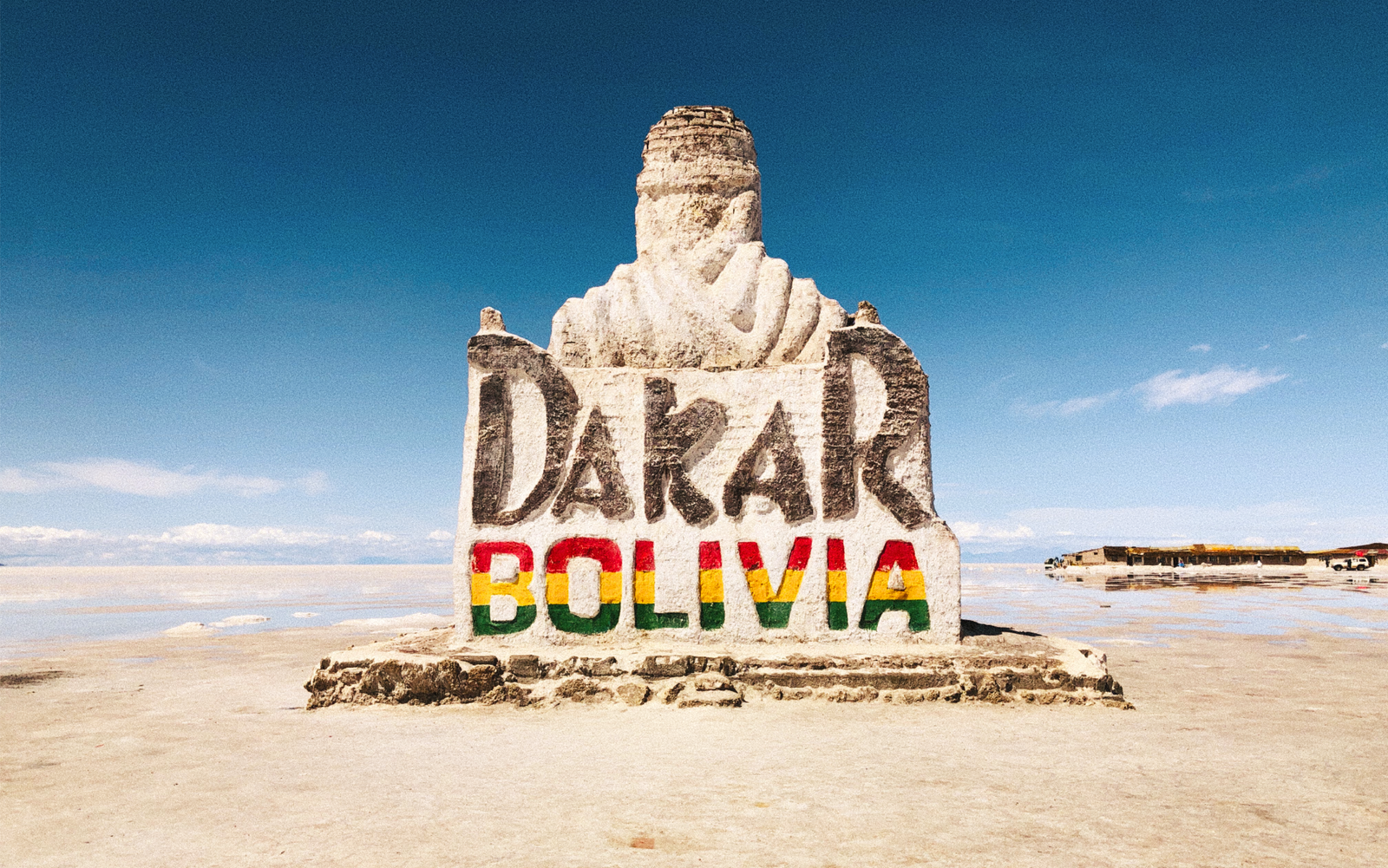
BO
Bolivia
Salt flats, Inca ruins and Amazon headwaters
Salt flats, Inca ruins and Amazon headwaters
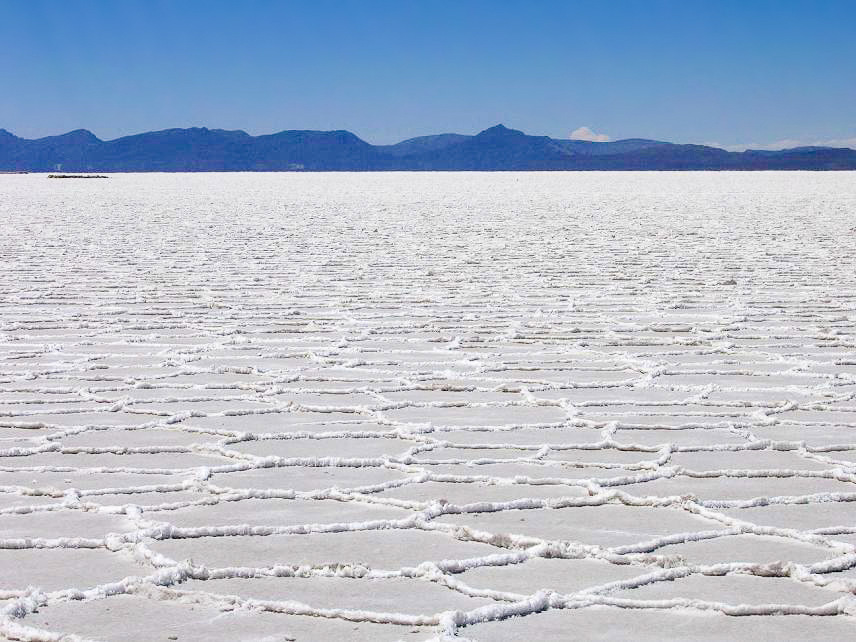
The world’s largest salt flat (10,582km²): the mirror-of-sky effect after rain, the Incahuasi island cactus garden in the centre, and a horizon so flat it is used to calibrate satellites.
Photo: Anouchka Unel, FAL

The world’s highest seat of government at 3,640m: the Mi Teleferico cable car network over the city (the longest urban cable car in the world), the Valle de la Luna’s eroded clay spires and the Witches’ Market.
Photo: PsamatheM, CC BY-SA 4.0

The highest navigable lake in the world (3,812m): Isla del Sol (the Inca creation myth island), the floating Uros reed islands and the town of Copacabana.
Photo: Bob Ramsak, CC BY-SA 4.0

The city that funded the Spanish Empire: Cerro Rico’s silver mines still actively worked by cooperatives, the Mint (Casa Nacional de Moneda) and a UNESCO colonial city.
Photo: Christophe Meneboeuf, CC BY-SA 2.5

The “World’s Most Dangerous Road”: a 64km mountain bike descent from 4,700m to 1,200m on a cliff-edge dirt road through cloud forest. The 18 white crosses mark where vehicles went over the edge.
Photo: Pavel Špindler, CC BY 3.0

The constitutional capital: a UNESCO city of white-washed colonial buildings and the birthplace of Bolivian independence (the Declaration of Independence was signed here in 1825).
Photo: No lo sé, CC BY-SA 4.0

One of the world’s most biodiverse national parks: accessible from Rurrenabaque by boat into the Amazon basin, with jaguars, giant otters, macaws and 1,000+ bird species.
Photo: Gareth Fabbro, CC BY-SA 3.0

A flamingo-filled red lagoon at 4,278m: the Laguna Colorada’s red mineral colour, the Laguna Verde’s turquoise and the Sol de Mañana geothermal field’s geysers at dawn.
Photo: Bob Ramsak, CC BY-SA 4.0
Baked empanadas filled with a juicy stew of chicken or beef with peas, egg, olives and a sweet-spicy sauce: eaten for breakfast at street stalls throughout Bolivia.
A breaded beef cutlet over rice and fried potatoes, topped with a fried egg and tomato-onion salsa: the Cochabamba speciality and Bolivia’s most popular plate.
French fries piled with beef, chorizo, boiled egg, peppers and mustard: La Paz’s late-night bar food.
Highland quinoa (which originates in the Bolivian Andes) in a thick vegetable broth: the most Bolivian of all soups.
Hot coca leaf tea: the universal altitude remedy throughout the Andean highlands, legal throughout Bolivia and essential at Uyuni (3,656m) and La Paz.
A Bolivian grape brandy (the national spirit): distilled in the Cinti Valley at 1,600m+, smoother and lighter than pisco. Mixed with ginger ale as a Chuflay.
Paceña is the national lager. The La Paz craft beer scene (Saya Brew) has grown rapidly.
Beef heart skewers marinated in cumin and aji panca, grilled on street corners: La Paz street food with the same tradition as Peru’s anticuchos.
La Paz (3,640m) causes altitude sickness in many visitors. Rest the first 24 hours; avoid alcohol; drink coca tea.
A set lunch: BOB 15-25 (EUR 2-3). A restaurant meal: BOB 50-100 (EUR 7-15).
The classic 3-day tour from Uyuni covers the Salar, Laguna Colorada and Eduardo Avaroa Reserve.
Initial formality gives way to genuine warmth. Aymara culture values quietness.
Bolivia’s geography makes flying necessary: La Paz to Santa Cruz: 1h by plane vs 12h by bus.
Flying directly to Uyuni (3,656m) without acclimatisation causes severe altitude sickness.
Both give reasonable coverage; Tigo is better in major cities.
Offering a salteña at 9am is one of the purest expressions of Bolivian hospitality.
El Alto (LPB) serves La Paz at 4,061m altitude — the highest international airport in the world. Viru Viru (VVI) in Santa Cruz is the main domestic hub. Boliviana de Aviación (BoA) is the national carrier.
Madrid is the most convenient European gateway — Iberia and LATAM connect via Lima or direct to Santa Cruz. Lima (Peru) is the primary hub for onward connections to Bolivia.
Lima is the most frequent connection hub for Bolivia — LATAM operates multiple daily Lima–La Paz flights in 2 hours. The Bolivia–Peru overland crossing via Puno and Copacabana is also a classic route.
Domestic flights in Bolivia are worth taking — the alternative road times are enormous (La Paz to Uyuni is 10h by overnight bus). BoA connects all major cities at affordable prices.
The Mi Teleferico cable car (BOB 3 per trip) from El Alto Airport to the city centre takes about 1 hour but is a ride over the city canyon. Taxis are BOB 80–120 and take 30–50 minutes in traffic.
May to October is the dry season — the best time for the Salar de Uyuni (crust firm, mirror effect after October rains), Lake Titicaca and Sucre. June and July are the peak months. The wet season (November–April) floods part of the salt flat, creating the famous infinite mirror reflection — one of the most beautiful natural phenomena on earth.
📅 Bolivia is in its best season in May, June, July, August, September, October. See where else is good to go in those months, or browse where to go by month.
La Paz for two days, the Salar de Uyuni for two, Sucre for one, Lake Titicaca for two. Bolivia is the highest and most dramatic country in South America — allow extra time for altitude acclimatisation.
La Paz sits at 3,640m in a canyon of the Altiplano — the world’s highest seat of government, surrounded by 6,000m peaks. The cable car system (Mi Teleferico, 11 lines, 30km, the largest urban cable car network in the world) for the view over the city. The Witches’ Market (Mercado de las Brujas) for llama foetuses, dried frogs and herbal remedies.
Take the first day slow at 3,640m — altitude sickness (soroche) is real. Drink coca tea (served everywhere), avoid alcohol and heavy meals, walk slowly. Most people acclimatise within 48 hours.
Valle de la Luna (Moon Valley, 10km south of La Paz): eroded clay pinnacles in a badlands landscape formed by rain on the Altiplano. Cholita wrestling — Aymara indigenous women in traditional dress (bowler hats, layered skirts) performing theatrical wrestling bouts — is a genuine cultural phenomenon, not a tourist construct.
Cholita wrestling began as informal entertainment in the 1990s and has evolved into a serious spectacle. The bouts (Sunday evenings at the Multifuncional de Villa El Carmen) involve theatrical storytelling, reversals of fortune and crowd participation. Entry costs BOB 30–50.
40-min flight or 10h overnight bus to Uyuni. The Salar de Uyuni — 10,582km² of salt at 3,656m, the remnant of a prehistoric lake that dried 40,000 years ago — is the largest salt flat in the world and the flattest natural surface on earth (elevation variation: less than 1m across the entire surface).
NASA uses the Salar de Uyuni to calibrate the altimeters of satellites in orbit — the flatness and reflectivity make it the most precise reference surface on earth for remote sensing. The salt crust is 2–10m thick.
Sunrise on the salt flat from a 4WD in silence, 100km from any building. Incahuasi Island (a cactus-covered rocky island in the middle of the salt flat, with cacti up to 12m high, 1,200 years old, no soil — only salt). The Train Cemetery on the edge of Uyuni town: abandoned British steam locomotives rusting in the Altiplano since the 1940s.
The mirror effect on the Salar (November–April after rain) requires a thin layer of water over the salt — typically 5–20cm. It creates a perfect reflection of the sky and clouds with no visible horizon. The most striking natural photography subject in South America.
1h flight from Uyuni to Sucre. Sucre (2,790m, UNESCO World Heritage City) is Bolivia’s most beautiful city — whitewashed colonial architecture from the 16th–18th centuries, Baroque churches, the Recoleta viewpoint above. The Casa de la Libertad where Bolivian independence was signed in 1825.
Sucre is the constitutional capital of Bolivia — La Paz is the seat of government, but Sucre retains the Supreme Court. The distinction goes back to a civil war in 1899. Sucre is noticeably more liveable and pleasant than La Paz at 850m lower altitude.
2h30 flight from Sucre to La Paz, then 3h30 bus to Copacabana on Lake Titicaca. Lake Titicaca (3,812m, 8,372km², the highest navigable lake in the world, shared with Peru) has a deep blue that seems impossible at altitude. The floating Uros reed islands on the Peruvian side are 1h by boat.
The Uros are an indigenous people who have lived on man-made floating reed islands on Lake Titicaca for centuries — originally to escape Inca and Aymara raids. The islands are rebuilt continuously from totora reeds; the oldest layers at the bottom slowly rot away.
2h boat from Copacabana to Isla del Sol — the island in Lake Titicaca where, according to Inca mythology, Manco Capac and Mama Ocllo emerged from the water to found the Inca Empire. The Inca Staircase (206 steps), the Fountain of Youth spring and the ridge walk with Bolivian and Peruvian peaks on both sides.
Isla del Sol has no motorised vehicles — the island is reached by boat and traversed entirely on foot. The 12km north–south ridge walk passes through Quechua villages with the lake on both sides.
Bolivia is South America’s cheapest country for travellers — significantly cheaper than Peru, Chile or Argentina, with excellent food, huge landscapes and very affordable tours.
Salteñas — baked meat and potato pastries with a slightly sweet, juicy filling eaten as a mid-morning snack — are Bolivia’s most distinctive street food and cost BOB 5–10 each from street vendors throughout the country.
A private 4WD Uyuni salt flat tour (1–3 days, driver + guide + cook) costs BOB 600–1,200 compared to BOB 200–350 for a shared tour — worth it for photography and flexibility on the mirror-effect days.
Hotel de Sal Luna Salada and the Palacio de Sal — hotels built from salt blocks on or near the Salar — are unique accommodation experiences from BOB 800–2,500/night.
Quick answers to the questions people most often ask before visiting Bolivia.
Fly into El Alto (LPB) for La Paz — at about 4,060 m, one of the world's highest international airports — or Viru Viru (VVI) in Santa Cruz. Most long-haul routes connect via São Paulo, Lima, Bogotá or Madrid.
May to October, the dry season, for firm salt crust and access to the whole circuit. From about January to March, rain floods parts of the flat, creating the famous mirror effect, though some areas become inaccessible.
La Paz sits at around 3,640 m and altitude sickness is common. Rest for the first day, avoid alcohol, drink plenty of water and coca tea, and speak to a doctor about medication before you go.
The classic tour from Uyuni lasts three days, covering the salt flat, Laguna Colorada and the Eduardo Avaroa reserve, with basic accommodation. One-day tours of the salt flat alone are also available.
Yes — it's South America's most affordable country for travellers. Expect around BOB 150–280 per day on a budget and BOB 500–900 mid-range. The currency is the boliviano (BOB).
Negotiate fares directly with drivers — the most popular ride-hailing option across La Paz, Santa Cruz and Cochabamba.
FreeRide-hailing available in La Paz and Santa Cruz — useful backup when InDriver is busy.
FreeBook Salar de Uyuni salt flat tours, Amazon basin trips, Death Road cycling and Bolivian experiences.
FreeFood delivery across Bolivian cities — the most widely used delivery platform in Bolivia.
FreeBolivia’s primary messaging platform — essential for contacting accommodation and local guides.
FreeBook hotels and hostels across Bolivia — Uyuni, Sucre and La Paz get booked up in peak season.
FreeThe world’s highest capital, the infinite Salar de Uyuni, colonial silver cities, ancient Tiwanaku ruins, and Bolivia’s extraordinary Andean wilderness.
Bolivia sits within easy reach of several other destinations — each with a completely different character.


