CO
Colombia
Coffee, salsa and Caribbean coast
Coffee, salsa and Caribbean coast
⚠️ Travel advisory: check before you go
Governments advise against travel to some regions of Colombia, mainly border and rural areas affected by armed groups, and the US asks travellers to reconsider travel. The main cities and tourist areas are widely visited; check the latest regional advice.
Latest official advice: UK FCDO · US State Department · Reviewed September 2026

A UNESCO-listed 16th-century walled city with Spanish colonial architecture in pastel yellows, pinks and blues: the finest preserved colonial city in South America and the most atmospheric Caribbean port.
Photo: Leon petrosyan, CC BY-SA 4.0

The city’s transformation from murder capital to innovation hub: the cable car system connecting hillside comunas to the metro, the outdoor escalator in Comuna 13 (formerly the most dangerous neighbourhood), the street art and the Botero sculptures in Plaza Botero.
Photo: Bernard Gagnon, CC BY-SA 4.0

UNESCO-listed coffee landscape of steep mountain farms, colourful willy (Jeep) culture and coffee fincas where you can follow the bean from tree to cup.
Photo: Wikimedia Commons contributor, CC BY 2.5

Cloud forest hiking among the world’s tallest palm trees (wax palms, up to 60m, Colombia’s national tree) in a valley of horses and cattle farms above Salento.
Photo: Ricardo Gonzalez Arango, CC BY-SA 4.0

A Caribbean national park of jungle-backed beaches (Cabo San Juan, Playa Cristal), accessible only on foot through the forest. Camping in hammocks on the beach, howler monkeys in the trees.
Photo: David Shankbone, CC BY-SA 3.0

A 5-6 day jungle trek to Teyuna (City of the Gods): terraces built by the Tairona people 650 years before Machu Picchu, currently inhabited by Kogi and Arhuaco indigenous communities.
Photo: Fotografía oficial de la Presidencia de Colombia, Public domain

The Museo del Oro (55,000 pre-Columbian gold objects, the finest collection in the world), the colonial La Candelaria district and the Monserrate cable car to 3,152m above the city.
Photo: Bernard Gagnon, CC BY-SA 4.0

A remote Caribbean island 800km north of the mainland with the third-largest barrier reef in the world, no mass tourism and a Creole English-speaking culture.
Photo: Juandareina, CC BY 4.0
A massive plate of red beans, rice, chorizo, chicharron (crispy pork rind), black pudding, fried egg, plantain and avocado. The signature plate of the Antioquia paisa culture.
Flat grilled or fried corn cakes: the daily bread of Colombia. Arepa de choclo (sweet corn) with butter and cheese for breakfast; arepa con huevo (fried egg inside) on the Caribbean coast.
A thick Bogota soup of three types of potato (papa criolla, pastusa and sabanera), chicken and guascas herb. The definitive Bogota dish, eaten on cold highland mornings.
A whole pig stuffed with rice, yellow peas, onion and spices, slow-roasted for 10-12 hours. Served at celebrations in the Tolima region.
Colombia produces more high-quality Arabica coffee than any other country: the Juan Valdez mountain farmer figure has been the national icon since 1958. The Huila and Nariño regions produce the finest single-origins.
A sugar cane anise-flavoured spirit (29% alcohol): the national spirit of Colombia, drunk in shots at any celebration.
The premium Colombian lager: light, clean and the correct beer at any Cartagena rooftop bar.
A hearty broth of chicken, yuca, corn, plantain and potato: the most Colombian of comfort foods, eaten after a night of dancing or on a Sunday family gathering.
Bogotá El Dorado (BOG) is the main hub; Medellín (MDE), Cartagena (CTG), Cali (CLO) and Pereira (PEI) all have direct European and US connections. Avianca and LATAM Colombia serve domestic routes. For trip planning, see the official Colombia tourism portal.
Avianca and Iberia both fly Madrid–Bogotá direct in ~10h30 — the most convenient European route. The Avianca hub in Bogotá connects well to other Colombian cities.
Miami is the closest US gateway to Colombia — Avianca, American and LATAM all fly direct in under 4 hours. Cartagena has its own direct Miami connection.
Viva Colombia is the budget carrier — significantly cheaper than Avianca on domestic routes when booked ahead. Colombia’s domestic air network is extensive and reliable.
Medellín’s integrated transit system (Metro + Metrocable + Tranvía) is the best in Colombia — clean, safe and cheap. Use InDriver or Uber for point-to-point in any city.
Colombia is near the equator and warm year-round, but rainfall varies by region. December to March and July to August are the driest months — the best time for most destinations. Medellín and the Coffee Region are good year-round. Cartagena’s coast is best December–April (dry season).
📅 Colombia is in its best season in January, February, March, December. See where else is good to go in those months, or browse where to go by month.
Colombia is one of the best-value destinations in South America — excellent food, accommodation and cultural experiences at prices significantly below Peru or Brazil.
A menú del día — soup, main (usually bandeja paisa elements: rice, beans, chicharrón, egg, avocado), dessert and juice — costs COL$12,000–25,000 (≈US$3–6). The national lunch format and entirely excellent.
A meal at El Cielo (Medellín, molecular Colombian cuisine) costs COL$250,000–350,000pp (≈US$60–84) — excellent food at prices 40–50% below equivalent restaurants in Europe.
Casa San Agustín in Cartagena’s walled city (a restored 16th-century convent, rooftop pool, 35 rooms) is the finest hotel in Colombia — from US$400/night, in a UNESCO World Heritage building.
Bogotá for two days, the Coffee Region for one, Medellín for two, Cartagena for two. The classic Colombia circuit covers the country’s urban energy, coffee culture and Caribbean coast.
La Candelaria — Bogotá’s colonial historic centre, brightly painted facades, narrow streets. The Museo del Oro (Gold Museum): 55,000 pre-Columbian gold objects, the largest such collection in the world, including the ceremonial raft that gave rise to the El Dorado legend.
The Gold Museum is the finest pre-Columbian collection in the world. The Muisca ceremonial raft (the original El Dorado artefact — a gold figure of a chief on a raft, casting gold objects into a lake) is in Room 3 and is impressive.
The Museo Botero (free): Fernando Botero’s paintings and sculpture — the inflated, voluminous figures that are the most recognised Colombian art internationally — plus works by Picasso, Dalí and Monet from his personal collection. Monserrate (the mountain above Bogotá, 3,152m, cable car or hike) for the city view.
The cable car to Monserrate runs until 11:45pm on weekends — the view of Bogotá’s city lights spread across the Andean plateau at night is the best view of the city.
5h drive or 1h flight to Pereira or Armenia (gateway to the Zona Cafetera). The Coffee Cultural Landscape is a UNESCO World Heritage Site — steep Andean hillsides of coffee plants, traditional fincas (farms) with brightly painted wooden architecture, the best Colombian coffee grown at 1,500–2,000m.
A coffee farm tour at Hacienda Venecia or Finca El Ocaso near Salento shows the full coffee process — picking, wet and dry processing, roasting — and ends with a cupping. Book ahead.
1h flight from Pereira to Medellín. The city that Escobar’s cartel once made the most dangerous in the world has undergone one of the most celebrated urban transformations in Latin America — the Métro Cable and Urban Acupuncture projects, the Parque de las Luces, the Museum of Antioquia.
The Metrocable (cable car over the hillside comunas) is both transport and tourism — it was built to connect poor hillside communities to the city and transformed them. Ride to the top for the view over the valley.
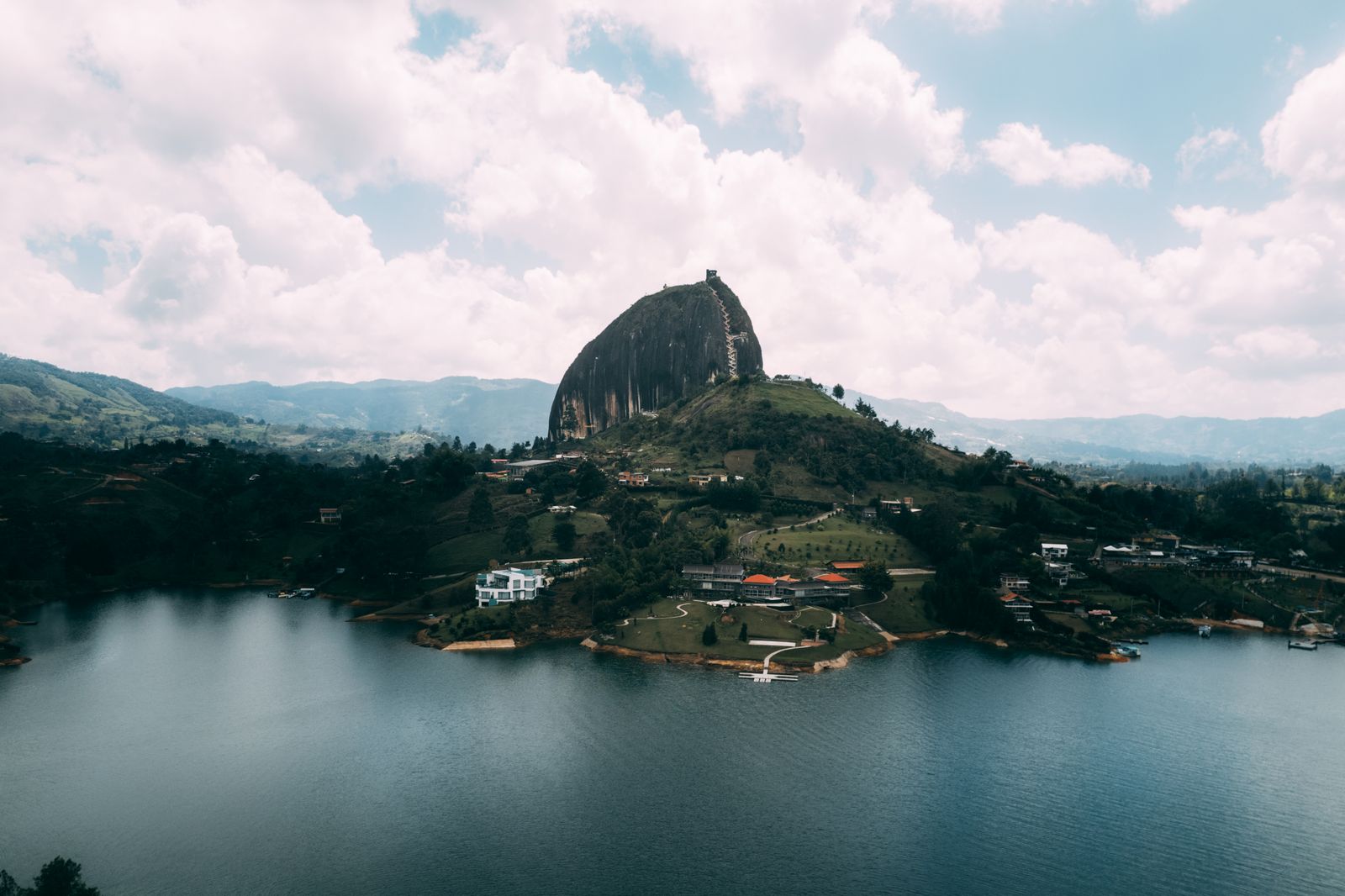
2h from Medellín: Guatapé is a village of colourful houses and the Piedra del Peñol — a 200m granite monolith rising from a reservoir, with 649 steps to the top and a view of 69 islands and inlets below. One of the most dramatic viewpoints in Colombia.
The Piedra del Peñol climb (649 steps, SOL 28,000 entry) takes 20–30 minutes. The view from the top — the fractured reservoir landscape spreading to the horizon — is impressive.
1h flight from Medellín. Cartagena’s walled city — a UNESCO World Heritage Site of colonial Spanish architecture, bougainvillea over balconies and cannons facing the Caribbean — is the most complete colonial city in South America. The Castillo de San Felipe de Barajas (1700, still the largest Spanish colonial fort in the Americas).
Cartagena’s old city is best at 7am before the cruise ship tourists arrive, and at 8pm when the heat lifts and the restaurants fill. Avoid midday in July–August.
1h fast boat to the Islas del Rosário — a coral reef archipelago in crystal-clear Caribbean water, with snorkelling, sea turtles and a marine park. Return to Cartagena Rafael Núñez Airport (CTG) for your flight.
The Islas del Rosário day trip (boat + park entry + snorkel) costs COL$80,000–120,000 (≈US$20–30) — one of the best-value beach experiences in the Caribbean.
Both work in Colombian cities. Safer than unmetered taxis.
A set lunch (almuerzo del dia): COP 10,000-15,000 (EUR 2-3). Cartagena hotels are the main exception.
Colombians are among the most socially open and welcoming people in South America.
Both available at airports. Claro has the best national coverage.
The security situation varies significantly by region. Tourist areas are generally safe; rural border areas require more care.
Cali is the salsa capital of the world. A salsa class at a local school in Cali is a genuine cultural exchange.
Colombia is mountainous; long distances require flying. VivaAir and Latam offer cheap domestic fares.
A proper coffee finca tour takes 3-4 hours. The farmer’s pride in their crop deserves that time.
Quick answers to the questions people most often ask before visiting Colombia.
Colombia is near the equator and warm year-round, but rainfall varies by region. December to March and July to August are the driest months — the best time for most destinations.
Bogotá El Dorado (BOG) is the main hub; Medellín (MDE), Cartagena (CTG), Cali (CLO) and Pereira (PEI) all have direct European and US connections. Avianca and LATAM Colombia serve domestic routes.
Expect roughly COL$80–150k (about US$19–36) a day on a budget and COL$300–550k (about US$72–132) mid-range, or COL$800k+ (about US$192+) for a more luxurious trip, per person and excluding flights.
Colombia uses the COP.
Governments advise against travel to some regions of Colombia, mainly border and rural areas affected by armed groups, and the US asks travellers to reconsider travel. The main cities and tourist areas are widely visited; check the latest regional advice. Always check current official travel advice before booking.
Negotiate fares directly with drivers — popular across Colombia; often cheaper than Uber.
FreeAvailable in Bogotá, Medellín and Cartagena — legal and widely used across Colombia.
FreeColombia’s dominant food delivery and grocery app — founded in Bogotá and strongest there.
FreeBook Cartagena walking tours, coffee farm visits, Ciudad Perdida treks and Colombian experiences.
FreeColombia’s primary messaging platform — essential for contacting accommodation, drivers and local services.
FreeExplore Colombia’s top city destinations — from Medellín to Bogotá, each with its own distinct character.
Colombia sits within easy reach of several other destinations — each with a completely different character.


