NA
Swakopmund
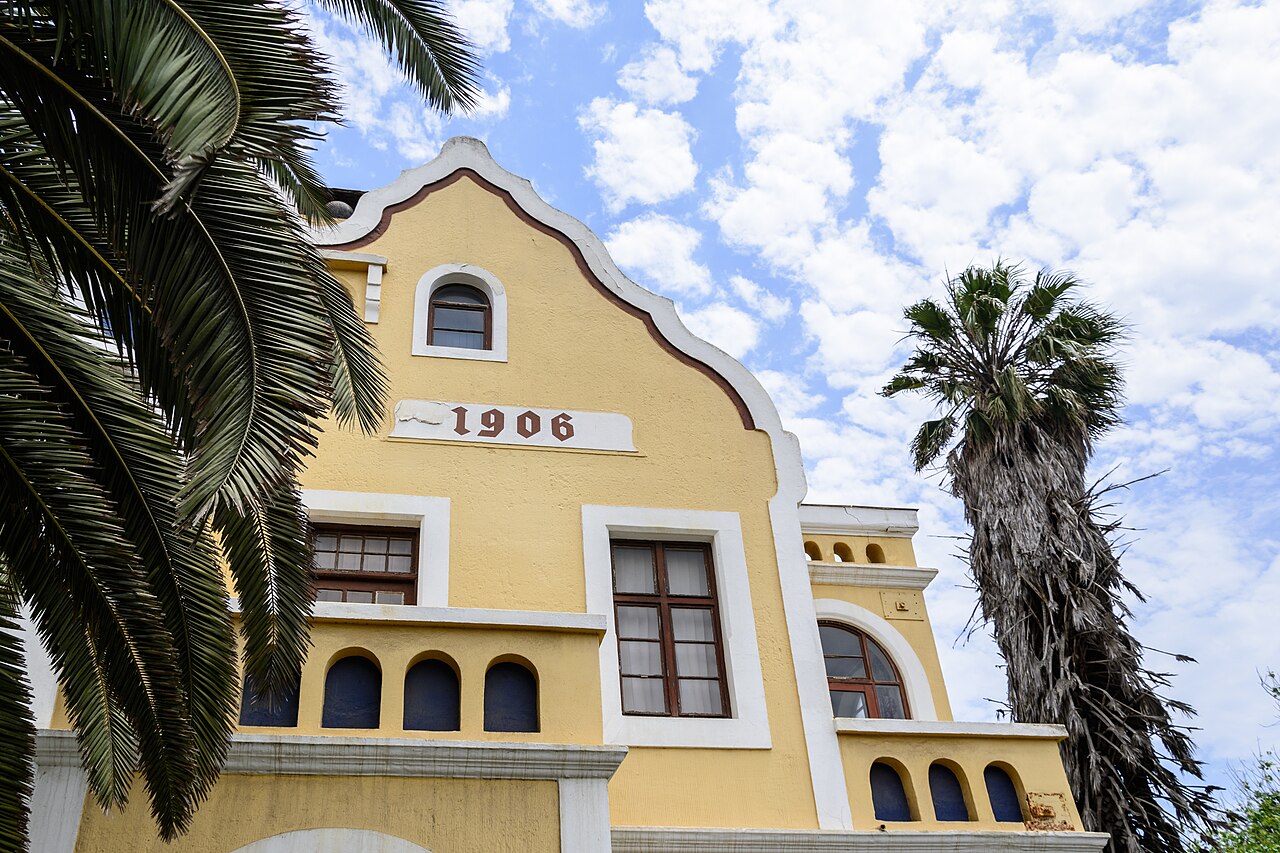
A cool, foggy seaside town between the desert and the Atlantic, with adventure sports and German-era buildings
A cool, foggy seaside town between the desert and the Atlantic, with adventure sports and German-era buildings

Walk the restored jetty over the Atlantic and along the beachfront promenade to the lighthouse and the Mole, an old breakwater.
Sunset on the jetty is a local favourite.
Photo: Olga Ernst, CC BY-SA 4.0

About 30km south, Walvis Bay’s lagoon is one of southern Africa’s most important wetlands for birds. Thousands of flamingos often feed there, and boat trips look for seals, dolphins and pelicans.
Photo: Diego Delso, CC BY-SA 4.0

South of Walvis Bay, giant dunes drop straight into the Atlantic. Access is by guided 4×4 tour along the beach, timed with the tides.
Go with a licensed operator; tides make it dangerous.
Photo: Lidine Mia, CC BY-SA 4.0

Inland, the Welwitschia Drive passes the Moon Landscape and some of these strange desert plants, which can live for more than a thousand years. A park permit is needed.
Photo: Nanosanchez, CC BY-SA 3.0
Try fresh oysters from Walvis Bay, kingklip, German pastries and kudu or oryx steak.
Cafés and beer halls reflect the town’s German heritage.
Swakopmund is about 4 hours’ drive from Windhoek on a tarred road. Walvis Bay airport, about 40km away, has flights from Windhoek and Cape Town.
Buses and shuttles also run from Windhoek.
Namibia uses the Namibian dollar (NAD), pegged 1:1 to the South African rand, which is also accepted.
Sea, dunes and desert life.
Walk the jetty, the old town and the beachfront; dinner on the seafront.
Take a Living Desert tour or go sandboarding in the morning.
Take a boat trip on the lagoon, then a 4×4 tour to Sandwich Harbour.
Bring a jacket; mornings are cool and grey.
The Atlantic here is cold, with strong currents.
Coastal salt roads are slippery when wet.
The Welwitschia Drive and Sandwich Harbour need park permits.
Quick answers for planning time in Swakopmund.
About 4 hours by car on a tarred road.
Sandboarding, desert tours, boat trips, Sandwich Harbour and the old town.
Yes, often in large numbers at Walvis Bay lagoon.
It is mild and often foggy, especially in winter mornings.
Any time; September to April has less fog.
Download offline maps; there is no signal on long stretches of road.
Free
English is widely spoken; Afrikaans and German are common too.
Free
Planning a wider trip? Our Namibia travel guide covers getting there, costs, when to go and more.