JP
Japan
Quiet shrines, glowing streets
Quiet shrines, glowing streets

The world’s largest city: Shibuya crossing, the Shinjuku neon grid, the Tsukiji outer market, the Senso-ji temple in Asakusa, the teamLab digital art installations and the finest collection of everything from 10-seat ramen counters to three-Michelin-star kaiseki restaurants on earth.
Photo: Basile Morin, CC BY-SA 4.0

The Arashiyama bamboo grove, the Fushimi Inari thousand torii gates, the Kinkaku-ji Golden Pavilion reflected in its pond, the Gion geisha district at dusk: 17 UNESCO sites in one city.
Photo: Martin Falbisoner, CC BY-SA 4.0

The Hiroshima Peace Memorial Museum and the A-Bomb Dome (the only structure to survive the 1945 explosion), combined with the floating torii gate of Miyajima Island accessible by 15-minute ferry.
Photo: Balon Greyjoy, CC0

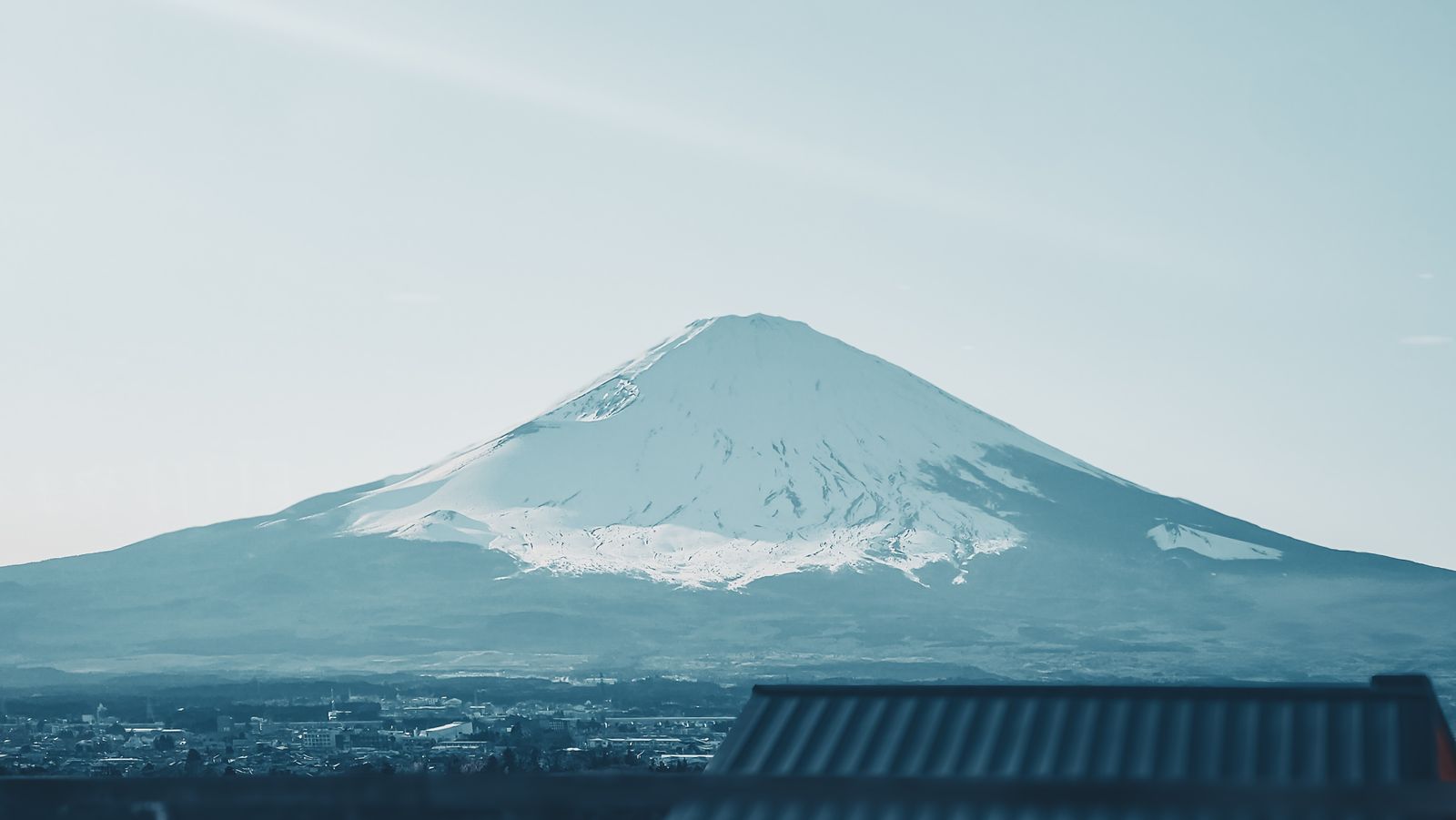
Japan’s national symbol: a 3,776m perfectly symmetrical volcano visible from Tokyo on clear days. The climbing season (July-August) allows anyone to reach the summit in 6-7 hours. The view from Lake Kawaguchiko is the most photographed angle.
Photo: U.S. Navy photo by Lt. j.g. Andrew Leatherwood, Public domain

Hakone’s ryokan (traditional inn) onsen culture with views of Fuji over the valley, and Kamakura’s 13m bronze Great Buddha in a coastal forest setting.
Photo: Gilles Desjardins, CC BY-SA 4.0

Japan’s food capital: the Dotonbori canal district of neon signs, takoyaki stalls and every type of Japanese food. Osaka Castle above the Namba entertainment district.
Photo: 663highland, CC BY 2.5

The free-roaming sacred deer of Nara Park and the Todai-ji Great Buddha Hall (the world’s largest wooden building, housing the world’s largest bronze Buddha) are accessible as a day trip from both Kyoto and Osaka.
Photo: Immanuel Giel, CC0

Japan’s northernmost island: Sapporo Snow Festival (February), the Furano lavender fields (July), excellent powder skiing at Niseko and the intact wilderness of Daisetsuzan National Park.
Photo: User:SElefant, CC BY-SA 3.0
Wheat noodles in a broth (tonkotsu, shoyu, miso or shio) with chashu pork, soft-boiled egg and nori. Each region has its own style. The best is eaten at a 10-seat counter where the chef is also the owner.
Fresh fish served over vinegared rice (nigiri) or as slices without rice (sashimi). The quality difference between supermarket sushi and a specialist sushi counter in Tokyo is as large as the price difference suggests.
Vegetables and seafood battered in light flour and egg, fried in refined sesame oil at 180C, eaten immediately with grated daikon and tentsuyu dipping sauce.
Japanese Black cattle raised on a regime of carefully controlled diet and minimal stress. The marbling is unlike any other beef; it melts at body temperature. Kobe, Matsuzaka and Ohmi are the premium brands.
A savoury pancake of cabbage, egg and batter, customised with pork, seafood or cheese, topped with Worcestershire-based sauce and mayonnaise. The Osaka version (mixed) and the Hiroshima version (layered) are rivals.
Powdered green tea whisked with hot water: the tea ceremony (chado) is a 400-year-old ritual. Matcha is also in every dessert from ice cream to Kit Kats.
Japanese whisky has won more international awards than Scotch in recent decades. Suntory (Yamazaki, Hibiki) and Nikka (Yoichi, Miyagikyo) are the two great distilling houses.
A multi-course meal of 8-15 small dishes, each representing the current season’s finest ingredients prepared with maximum technical skill and minimum ostentation. Japan’s highest culinary form.
Tokyo Narita (NRT) and Tokyo Haneda (HND) are Japan’s main international gateways. Osaka Kansai (KIX) is the key western hub. The Shinkansen bullet train network is the fastest and most practical way to travel between cities. For trip planning, see the official Japan tourism portal.
JAL and ANA are consistently well-regarded for long-haul. Finnair’s Helsinki–Tokyo polar route is the shortest Europe–Japan flight at around 9.5–10h.
LA and San Francisco are the shortest transatlantic routes to Tokyo — under 11h direct on JAL or ANA from LAX/SFO.
The JR Pass (7/14/21-day options) must be purchased before arriving in Japan. Note: JR Pass holders must use the Hikari, not the faster Nozomi Shinkansen, between Tokyo and Kyoto.
Haneda is much closer to central Tokyo than Narita — 25 minutes vs 55 minutes. If you have a choice of airports, Haneda is significantly more convenient.
March to May (cherry blossom season, especially late March–early April) and October to November (autumn foliage) are the most striking times to visit. Both are popular — book accommodation months ahead. Summer is hot and humid; winter is cold but clear.
📅 Japan is in its best season in March, April, May, October, November. See where else is good to go in those months, or browse where to go by month.
Japan has a reputation for being expensive that is largely undeserved at the street food and transport level. The cheapest food is often the best. Hotels are expensive; capsule hotels and business hotels are excellent value.
Japanese convenience stores (7-Eleven, FamilyMart, Lawson) sell good prepared food — onigiri, hot noodles, fresh sandwiches — 24 hours a day. Breakfast from ¥300.
The JR Pass (7-day) costs around ¥50,000 (~$330) and covers all Shinkansen journeys between Tokyo, Kyoto and Osaka — worth it for a week-long trip covering all three cities.
A top omakase sushi meal in Tokyo (Sushi Saito, Sushi Yoshitake) costs ¥30,000–60,000 per person — impossible to book without Japanese contacts. The best accessible sushi is at Sushi Sora or Harutaka, from ¥15,000.
Tokyo for the full sensory experience of modern Japan, Kyoto for temples and traditional culture, Osaka for food and nightlife. The Shinkansen bullet train connects them all in hours.
Get your Suica card at Narita/Haneda. Walk Shinjuku at night — the neon, the izakayas, the department store food halls (depachika). The Shibuya Crossing is best at rush hour from above (Starbucks on the corner has a view).
The JR Pass (unlimited Shinkansen + JR trains, 7 days) is worth buying before you leave home if you’re covering Tokyo, Kyoto and Osaka. Activate it on arrival.
Senso-ji temple in Asakusa at 6am — the lantern-lit approach before the crowds arrive. Harajuku for fashion and the Meiji Shrine. Akihabara in the evening for electronics, anime and the cultural spectacle of it all.
TeamLab Planets or Borderless (digital art installations) requires advance booking weeks ahead — do it before you travel.
Nikko (2h north): the ornate Tosho-gu mausoleum complex in cedar forest — the most elaborate shrine architecture in Japan. Or Hakone: views of Mt Fuji (weather-dependent), the open-air museum, the ryokan onsen experience.
A stay in a traditional ryokan in Hakone — tatami floors, yukata robe, multi-course kaiseki dinner — is the best single overnight experience in the Tokyo area.
2h15 by Shinkansen from Tokyo. Kyoto has 1,600 Buddhist temples and 400 Shinto shrines — don’t try to see them all. The Fushimi Inari thousands-of-torii trail (go at 6am) and Ginkaku-ji (Silver Pavilion) are the starting points.
The Arashiyama bamboo grove is beautiful — and overwhelmed by 9am. Go at 7am for photographs that look like the postcards.
Nishiki Market (the kitchen of Kyoto) for breakfast. Nijo Castle — the shogun’s Kyoto residence, with nightingale floors designed to creak when walked on (a security measure against assassins). Gion in the evening for the chance to see geiko.
The Philosopher’s Path — a canal-side walk between two temples — is lined with cherry trees in spring and maple in autumn. Both seasons are worth planning around.
Dotonbori for takoyaki (octopus balls), okonomiyaki, ramen and the general spectacle of Osaka eating. Osaka Castle in the morning. The covered Kuromon Market for the freshest sashimi at market stalls.
Osaka people are, by general consensus, the friendliest in Japan. The local saying is kuidaôre — eat until you drop. This is not ironic.
Nara is 45 min from Osaka — a small city where 1,200 semi-wild deer roam freely among 8th-century temples, including Tōdai-ji, which houses the world’s largest bronze Buddha. Return to Osaka for your flight from KIX.
The deer in Nara will bow their heads if you bow to them first. This is a learned behaviour and it is completely surreal.
The Japan Rail Pass (7, 14 or 21 days) covers all shinkansen (bullet trains) and most JR regional trains. Must be purchased outside Japan.
Japan is still primarily a cash economy outside major hotels. ATMs at 7-Eleven and Japan Post accept international cards.
Data roaming is unreliable in rural Japan. Download maps offline. A pocket Wi-Fi or eSIM is essential.
Every interaction, from convenience store checkout to luxury hotel, is conducted with a formality and care that consistently surprises visitors.
Look for the step (genkan) and the rack of slippers. If you see slippers, remove your shoes.
A Suica or Pasmo card works on every train, subway and bus in Japan and can be loaded on an iPhone.
Check sakura forecast sites in February for the current year’s bloom predictions by region.
7-Eleven, FamilyMart and Lawson in Japan sell excellent food, ATMs and almost anything else you might need.
Quick answers to the questions people most often ask before visiting Japan.
March to May (cherry blossom season, especially late March–early April) and October to November (autumn foliage) are the most striking times to visit. Both are popular — book accommodation months ahead.
Tokyo Narita (NRT) and Tokyo Haneda (HND) are Japan's main international gateways. Osaka Kansai (KIX) is the key western hub. The Shinkansen bullet train network is the fastest and most practical way to travel between cities.
Expect roughly ¥5,000–9,000 (about $33–60) a day on a budget and ¥15,000–25,000 (about $100–165) mid-range, or ¥50,000+ (about $330+) for a more luxurious trip, per person and excluding flights.
Japan uses the Japanese Yen (¥).
Plug types: Type A (US flat-pin, 100V – Japan uses 100V, not 110V).
Load this digital IC transit card for all Tokyo, Osaka and Kyoto metro, bus and local train journeys — no ticket queues.
FreeJapan’s most comprehensive restaurant guide with millions of reviews, photos and operating hours.
FreeJapan’s dominant messaging app — essential for communicating with accommodation, restaurants and local contacts.
FreeBook bullet train passes, Disneyland tickets, day tours and skip-the-line entries across Japan.
FreeExplore Japan’s most striking destinations.
Japan sits within easy reach of several other destinations — each with a completely different character.


