PT
Portugal
Fado, pastéis and Atlantic light
Fado, pastéis and Atlantic light

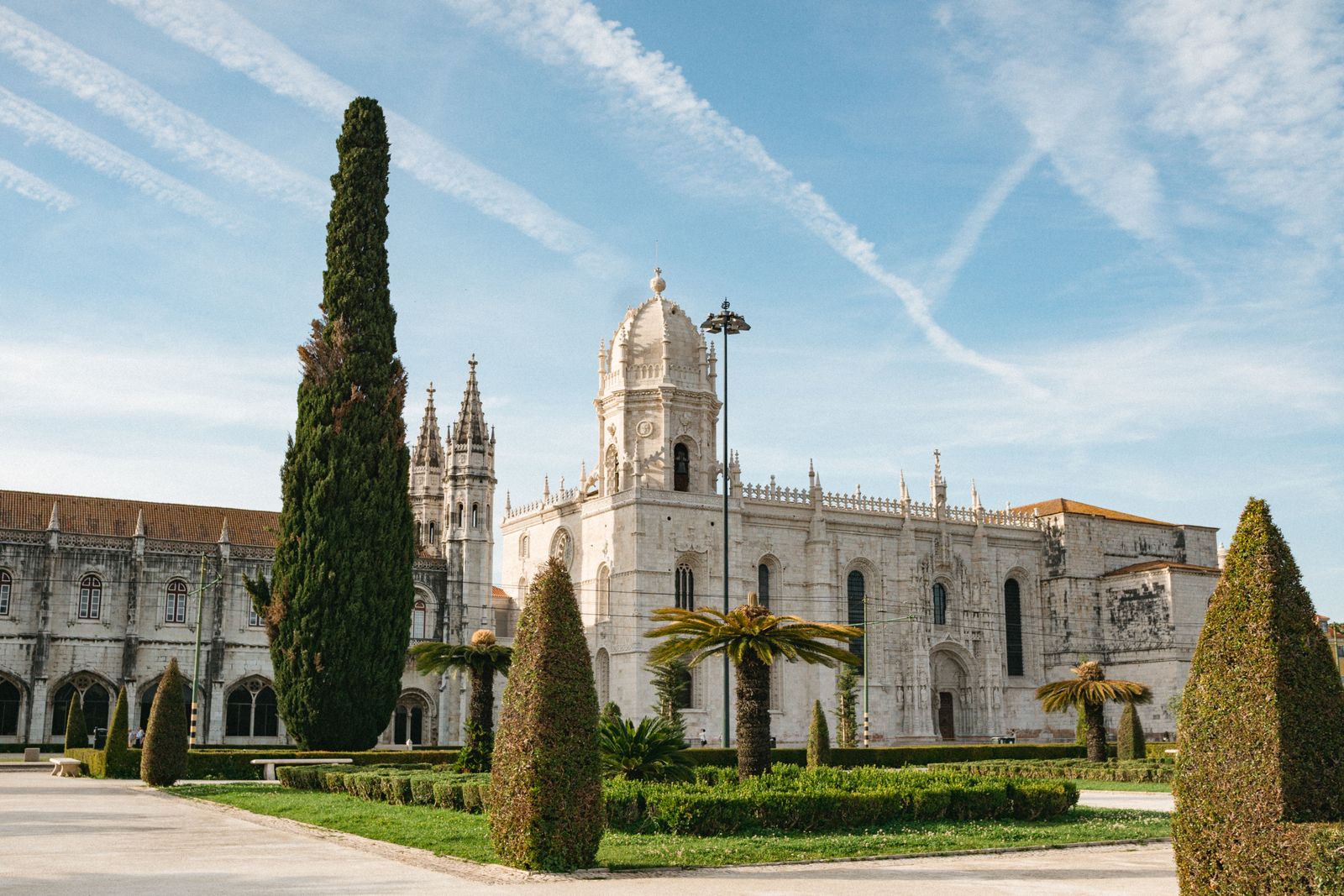
The Belem Tower (UNESCO), the Jeronimos Monastery’s Manueline Gothic cloister, the Alfama district’s fado houses and the 28 tram through the Estrela hills.
Photo: Daniel Sparing from Budapest, Hungary, CC BY 2.0

The UNESCO Ribeira waterfront, the Livraria Lello bookshop, the azulejo (blue tile) covered Sao Bento station and the Douro Valley’s Port wine quintas.
Photo: Patrycja Rosa (ptrcnull), CC BY 4.0

The Pena Palace (a Romantic-era confection of turrets and coloured facades above the forest), the Moorish Castle ruins and the Quinta da Regaleira (with its initiation well).
Photo: Ввласенко, CC BY-SA 3.0

The golden limestone sea arches, grottos and beaches of Lagos and Praia da Marinha: the most photographed coastline in Europe.
Photo: Peter Broster, CC BY 2.0

Terraced vineyards above the Douro River producing Port wine, the Quintas Cruz and Fonseca (with tastings) and the steam train from Porto to Pinhao.
Photo: mat's eye, CC BY 2.0

A UNESCO-listed Roman city (Temple of Evora, 1st century AD) amid the cork oak forests, wine estates and white villages of the Alentejo.
Photo: Ingo Mehling, CC BY-SA 4.0

The island of Sao Miguel: the Sete Cidades twin lakes in a volcanic crater, whale watching (year-round), hot springs and the finest hiking in the Atlantic.
Photo: Diego Delso, CC BY-SA 4.0

The most authentic Algarve town: a Roman bridge, white-domed churches and a ferry to the intact Ilha de Tavira barrier island.
Photo: Vitor Oliveira from Torres Vedras, PORTUGAL, CC BY-SA 2.0
A custard tart with a flaky pastry shell and caramelised top, eaten warm from the oven, dusted with cinnamon. The Pasteis de Belem original recipe (1837) is the benchmark. Eaten at every Portuguese breakfast.
Portugal has “365 ways” to prepare salt cod. The most classic: Bacalhau a Bras (shredded with scrambled egg and olives), Bacalhau com Natas (with cream in a baked casserole) and Bacalhau a Lagareiro (grilled with olive oil).
Kale and potato soup with a slice of chorizo. The definitive Portuguese soup, eaten from Minho to the Algarve as a first course at every traditional dinner.
Pork slices marinated in white wine, garlic and paprika, served in a roll. The Portuguese street food staple, eaten at every motorway cafe and city snack bar.
A fortified wine from the Douro Valley: Ruby (young and fruity), Tawny (barrel-aged, nutty), Vintage (the prestige category). Drunk before dinner as an aperitif or after as a dessert wine.
A light, slightly sparkling white wine from the Minho: Alvarinho (the finest single variety), Loureiro and Trajadura. The most refreshing Portuguese wine, drunk young and cold.
Portuguese espresso: stronger, darker and more intense than Italian espresso. Drunk standing at a cafe counter (a bica, in Lisbon; a cafe, in Porto) for under EUR 1.
A Porto sandwich of ham, chourico and steak in bread, covered in melted cheese and a spiced tomato-beer sauce with fried egg on top. Porto’s most beloved and most challenging dish.
Lisbon Humberto Delgado (LIS) is the main hub; Porto (OPO) serves the north. TAP Air Portugal’s Lisbon base makes it an excellent transatlantic stopover, particularly for Brazil and African connections. For trip planning, see the official Portugal tourism portal.
Fly into Porto, out of Lisbon (or reverse) — open-jaw tickets let you travel the country top to bottom without backtracking, usually at no extra cost.
TAP’s Lisbon hub is one of the best-positioned for North America — JFK–Lisbon at 7 hours is one of the shortest transatlantic routes in Europe.
Book on cp.pt. The Alfa Pendular (fastest) is worth the small premium over InterCity for the Lisbon–Porto route.
Lisbon’s Metro connects directly from the airport to the city centre — fast, clean, air-conditioned and €1.80. The obvious choice.
April to June and September to October are ideal: warm, uncrowded, prices still reasonable. July and August pack the Algarve coast and Lisbon’s main sights. Winter is mild and quiet — green hills, empty beaches, the real country.
📅 Portugal is in its best season in April, May, June, September, October. See where else is good to go in those months, or browse where to go by month.
Portugal is among the most affordable Western European destinations. A glass of local wine costs €2–3 in a neighbourhood restaurant. A fresh pastel de nata is €1.20.
A bica (Lisbon espresso) and fresh pastel de nata costs €1.50–2.50 at a traditional pastelaria — one of the great cheap pleasures of European travel.
A grilled sea bass with potatoes, salad and a half-bottle of Vinho Verde in a Lisbon neighbourhood restaurant runs around €18–25. This is everyday mid-range eating in Portugal.
Belcanto (two Michelin stars, Lisbon) and Alma offer tasting menus at €120–180pp — excellent food at 30–40% below equivalent Paris prices.
Lisbon for three days, Sintra for an afternoon, Porto for two days, the Douro Valley for one. All connected by comfortable trains — no car needed.
Walk the Alfama — Lisbon’s oldest quarter, Moorish in origin, a maze of steep lanes and tiled facades. Sunset from the Portas do Sol miradouro with a glass of vinho verde.
Tram 28 runs through the Alfama but is often packed with tourists. Walk the route instead — you can actually stop when something catches your eye.
Take the tram west to Belém: the Jerónimos Monastery (Manueline Gothic, funded by the spice trade, 70 years in the building). The original Pastel de Belém custard tart bakery is directly opposite. LX Factory on Sunday for markets and lunch.
The Jerónimos cloister is the most beautiful room in Portugal. Go at opening time — 10am — and take your time with it.
45 minutes by train from Rossio station. Pena Palace sits in pine forest above the town — a 19th-century Romantic fantasy in yellow and red. Book tickets online. The mystical Quinta da Regaleira and its 27-metre spiral well are nearby.
Sintra is overwhelmed on summer weekends. Go on a weekday, arrive by 9am, and the paths are largely empty.
3 hours by Alfa Pendular from Lisboa Oriente. Porto’s Ribeira waterfront — crumbling baroque palaces above the river — is a UNESCO World Heritage Site. The Livraria Lello bookshop (extraordinary Art Nouveau interior) — queue or book ahead.
Walk across the upper deck of the Dom Luís I Bridge — the views of the Ribeira and Gaia wine lodges are the best in Porto. Free.
Morning at the Bolão Market for cheese, fish and produce. Afternoon: Vila Nova de Gaia across the river — Graham’s, Taylor’s and Sandeman cellars for free or cheap guided tours ending in a port tasting.
You can’t leave Porto without trying a Francesinha — a meat sandwich under a spiced tomato-beer sauce with a fried egg on top. Indescribable in a good way.
The Linha do Douro from Porto–São Bento follows the river through terraced vineyards — one of the most beautiful rail journeys in Europe. Take the morning train to Péso da Régua for lunch and a quinta tasting.
Book a wine estate tasting along the Douro — many are open without appointment. The Peso da Régua railway wine bar (on the platform) is a good start.
Train back to Lisbon (3h) for your flight — or extend to the Algarve: Lagos and the cliffs of Sagres are 3h30 from Lisbon by train. Cabo de São Vicente, the southwest tip of Europe, at sunset is worth the detour.
The best Algarve beaches are west of Lagos: Praia da Marinha, Ponta da Piedade. Rental car needed to reach the best ones.
🛂 Entry rules: EES and ETIAS
Portugal is in the Schengen area, which has two EU border systems for non-EU visitors.
EES (in force): since 10 April 2026 the EU’s Entry/Exit System registers non-EU visitors’ passport details, fingerprints and a photo the first time they enter the Schengen area, replacing passport stamps. Allow extra time at the border on your first trip; later crossings are quicker. EU, EEA and Swiss citizens are not registered.
ETIAS (not yet running): a €20 online travel authorisation for visitors who don’t need a visa, such as UK, US, Canadian and Australian citizens. It hasn’t started and no start date has been confirmed, so nobody can apply yet; ignore websites that offer to “pre-register” you for a fee.
Visa-free visitors can stay up to 90 days in any 180-day period across the whole Schengen area, not per country.
Official information: EU: Travel to Europe (EES & ETIAS) · Reviewed September 2026
Both work well in both cities.
A pastel de nata: EUR 1.20. A restaurant meal: EUR 12-20. Accommodation is correspondingly cheap outside peak tourist season.
The 28 tram through Alfama costs EUR 3 and is worth it for the views, though very crowded.
The Alfa Pendular train (Lisbon to Porto: 2h30; Lisbon to Faro: 3h) is the best intercity option.
The street-level tourist fado shows are a pale shadow of the intimate fado vadio (traditional amateur fado) in Alfama’s residential casas de fado.
The saudade (melancholic longing) of the national psyche makes Portuguese people warmer than their reserve initially suggests.
The Pena Palace receives bus-tours from Lisbon from 10am onwards. The 8am opening gives you the palace almost alone.
The Algarve in July-August reaches 40C. The sea breeze makes it bearable; the UV does not care about the breeze.
Quick answers to the questions people most often ask before visiting Portugal.
April to June and September to October are ideal: warm, uncrowded, prices still reasonable. July and August pack the Algarve coast and Lisbon's main sights.
Lisbon Humberto Delgado (LIS) is the main hub; Porto (OPO) serves the north. TAP Air Portugal's Lisbon base makes it an excellent transatlantic stopover, particularly for Brazil and African connections.
Expect roughly €50–70 a day on a budget and €100–150 mid-range, or €250+ for a more luxurious trip, per person and excluding flights.
Portugal uses the euro (€).
Plug types: Type C / F (two-pin, 230V).
Portugal’s official train app — book intercity, Alfa Pendular and suburban rail tickets.
FreeThe dominant ride-hailing app in Lisbon and Porto — cheaper and more available than Uber.
FreeReserve tables at Portuguese restaurants in Lisbon, Porto and the Algarve with instant confirmation.
FreeSkip-the-line tickets and tours for Sintra, Jerónimos Monastery, Douro Valley and Lisbon.
FreeBudget intercity buses across Portugal — good coverage of routes not served by rail.
FreeExplore Portugal’s top city destinations — from Porto to Lisbon, each with its own distinct character.
Portugal sits within easy reach of several other destinations — each with a completely different character.


