GR
Greece
Whitewashed islands and ancient stones
Whitewashed islands and ancient stones

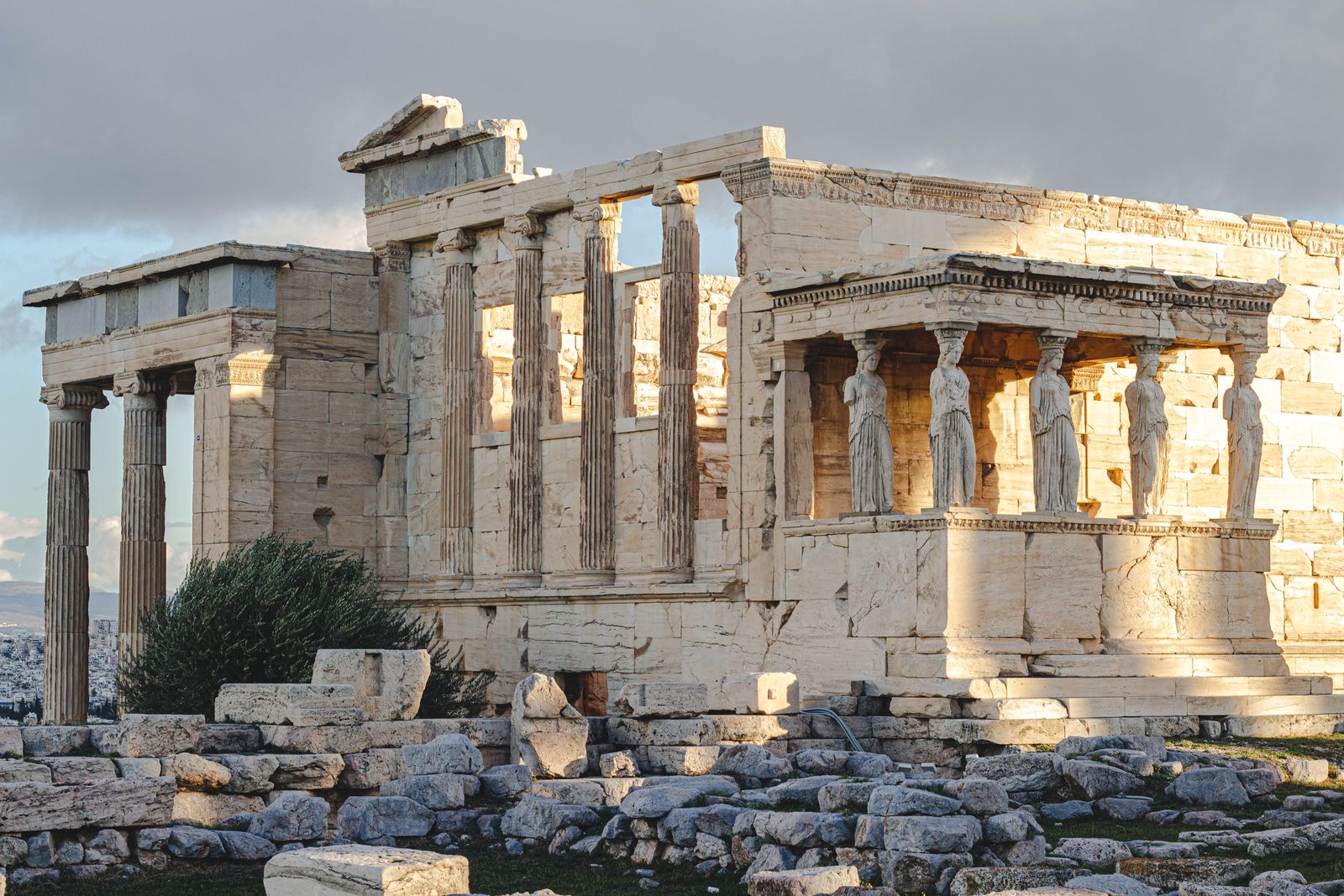
The Acropolis at dawn before the crowds: the Parthenon (447 BC), the Erechtheion with its Caryatid porch, the Propylaea gateway. The Acropolis Museum at the foot of the hill houses the friezes in chronological order.
Photo: A.Savin, CC BY-SA 3.0

The flooded caldera of a Bronze Age volcano: white cube buildings with blue domes on a cliff 300m above the sea. Oia’s sunset is the most photographed in the Mediterranean.
Photo: Norbert Nagel, CC BY-SA 3.0

Six Byzantine-era monasteries perched on top of towering natural rock pillars in central Greece. Still inhabited by monks and nuns. The sunrise from the valley when mist fills the base of the pillars is impressive.
Photo: Jolovema, CC BY 4.0

The sanctuary of Apollo and the Oracle of Delphi, where the ancient world came for guidance. A theatre, stadium and sanctuary complex on the slopes of Mount Parnassus, with the most dramatic setting of any Greek ruin.
Photo: Berthold Werner, CC BY-SA 3.0

The hilltop windmills, the labyrinthine white streets of Chora and Little Venice above the sea. One of the Mediterranean’s premier party destinations; also beautiful in the mornings before the crowds.
Photo: Zde, CC BY-SA 4.0

The Minoan Palace of Knossos (2700 BC, the oldest palace in Europe), the Samaria Gorge (the longest gorge in Europe, 16km on foot) and some of the finest food in Greece.
Photo: Wolfgang Staudt from Saarbruecken, Germany, CC BY 2.0

The sanctuary where the Olympic Games were held every four years for over 1,000 years: the stadium, the Temple of Zeus and the Hermes of Praxiteles in the museum.
Photo: Édouard Manet, Public domain

A UNESCO-listed medieval city built by the Knights of St John in the 14th century: the Street of the Knights, the Palace of the Grand Masters and a completely intact city wall.
Photo: TravelingOtter, CC BY 2.0
Layers of minced lamb, aubergine and bechamel sauce baked in a ceramic dish. The definitive Greek main course, eaten at every family lunch throughout Greece.
Pork or chicken grilled on a skewer and served in a pita with tomato, onion and tzatziki. The most eaten street food in Greece, consumed at any time of day.
Fresh octopus hung to dry in the sun, then grilled over charcoal and dressed with olive oil and lemon. The definitive Greek taverna starter.
Filo pastry filled with spinach and feta cheese. Eaten as a snack at any bakery in Greece.
Assyrtiko from Santorini (volcanic, mineral, the finest white in Greece) and Xinomavro from Naoussa (deep, tannic red) are the two great indigenous varieties.
Tomato, cucumber, pepper, onion, olives, capers and a whole slab of feta. Dressed with olive oil only. No lettuce in a real horiatiki.
Ouzo (anise-flavoured spirit, turns white when water is added) and Tsipouro (grape marc spirit, stronger and purer) are the traditional Greek spirits. Drunk slowly with small snacks (mezes).
Thick, unfiltered, drunk from a small cup with the grounds at the bottom. Ordered glyko (sweet), metrio (medium) or sketo (unsweetened). Never stirred after it arrives.
Greece’s main hub is Athens Eleftherios Venizelos (ATH), one of Southern Europe’s busiest airports. Thessaloniki (SKG) is the northern gateway. Ferries from Piraeus connect the mainland to all major islands. For trip planning, see the official Greece tourism portal.
easyJet and Ryanair serve Athens from multiple UK airports year-round. Island airports (Santorini JTR, Mykonos JMK, Heraklion HER) have direct summer seasonal flights from the UK.
Delta flies New York JFK–Athens direct in summer. Year-round, the Gulf carriers (Qatar via Doha, Emirates via Dubai) offer good connections from North America.
Book ferries on ferryhopper.com or directferries.com. Book at least 2–3 weeks ahead in July–August — routes fill completely. Fast ferries are worth the premium.
Aegean Airlines is Greece’s main domestic carrier — good service, often competitive with ferry prices once you factor in time saved. Sky Express serves smaller island routes.
May, June, September and October give the best combination of good weather and manageable crowds. July and August are hot, busy and expensive — the islands are overwhelmed by late July. Athens is fine year-round; the islands are largely seasonal.
📅 Greece is in its best season in May, June, July, August, September, October. See where else is good to go in those months, or browse where to go by month.
Greece is mid-range for Western Europe — cheaper than France or Italy but more expensive than the Balkans. The islands (especially Santorini and Mykonos) are significantly pricier than the mainland.
A souvlaki pita in Athens costs €3–4 and is the best €3 you’ll spend in Greece. On the islands, expect to pay double for the same quality.
A Santorini cave house with a caldera view costs €150–250 at mid-range — the view from your terrace at breakfast justifies every euro.
Grace Santorini and Canaves Oia are two of Europe’s most celebrated boutique hotels — both start around €500/night, both worth it for a special occasion.
Athens for antiquity, Santorini for the drama, Mykonos for the last two nights. Seven days covers the essentials — but Greece rewards taking longer.
Get up for the Acropolis at 8am (it opens then) — the light is right and the crowds haven’t arrived. The Parthenon from the Propylaea. Then walk down through the Plaka neighbourhood for lunch under a mulberry tree.
Book Acropolis tickets online at etickets.tap.gr. Entry is €30 with a timed slot; the old combined ticket for the other ancient sites was discontinued in 2025, so budget separately for the Ancient Agora and Temple of Olympian Zeus.
The National Archaeological Museum is one of the great antiquity collections in the world — the bronze Poseidon, the Minoan Thera frescoes, the Antikythera Mechanism. Afternoon bus to Cape Sounion — Poseidon’s temple on a cliff above the sea, 65km from Athens.
The cape at sunset — the marble columns above the Aegean turning gold — is one of the finest views in Greece. The last bus back leaves around 8pm.
Morning ferry from Piraeus (8h) or short flight (45 min). Santorini is an exploded volcanic caldera — the cliffs drop 300m to the sea. Check into Fira or Oia. Walk the caldera rim path from Fira to Oia (10km, 3 hours).
The caldera rim walk is the best way to understand Santorini’s landscape. Start at Fira and walk north towards Oia — the views improve with every step.
Up before dawn for the Oia sunrise (most people come for sunset — the sunrise is better and entirely alone). Afternoon boat trip: volcanic hot springs and the pumice island at the caldera centre.
The Oia sunset is famous but extremely crowded. The Imerovigli viewpoint 3km south gives an identical view with a fraction of the people.
2h30 high-speed ferry from Santorini to Mykonos. Mykonos Town — the windmills above Little Venice, the pelicans on the quayside, the labyrinthine whitewashed lanes. The beaches on the south coast are among the best in the Aegean.
Book ferry tickets ahead in high season — Hellenic Seaways and SeaJets. The fast ferries fill up. The slow ferry is cheaper and also fine.
Psarou or Platis Gialos beach for the day. Mykonos Town comes alive after 9pm — dinner at a harbourside taverna, then the bars in the Little Venice area. The atmosphere is impressive.
Mykonos has a well-deserved reputation for expense. The town centre restaurants are overpriced; walk 200m back from the waterfront for the same food at half the price.
Morning ferry or flight back to Athens. If your flight allows, one last frappe in the shadow of the Acropolis.
Piraeus port is 30 minutes from central Athens by Metro (Line 1). Don’t take a taxi from the port — it’s slower and costs five times as much.
🛂 Entry rules: EES and ETIAS
Greece is in the Schengen area, which has two EU border systems for non-EU visitors.
EES (in force): since 10 April 2026 the EU’s Entry/Exit System registers non-EU visitors’ passport details, fingerprints and a photo the first time they enter the Schengen area, replacing passport stamps. Allow extra time at the border on your first trip; later crossings are quicker. EU, EEA and Swiss citizens are not registered.
ETIAS (not yet running): a €20 online travel authorisation for visitors who don’t need a visa, such as UK, US, Canadian and Australian citizens. It hasn’t started and no start date has been confirmed, so nobody can apply yet; ignore websites that offer to “pre-register” you for a fee.
Visa-free visitors can stay up to 90 days in any 180-day period across the whole Schengen area, not per country.
Official information: EU: Travel to Europe (EES & ETIAS) · Reviewed September 2026
ANEK, Blue Star and Seajets connect all Cycladic, Dodecanese and Ionian islands from Piraeus.
Santorini and Mykonos in August are at the limits of what tourism can absorb. May, June and September are significantly better.
A taverna meal with local wine: EUR 15-25. Accommodation is correspondingly affordable outside Santorini and Mykonos.
Peak season ferries (July-August) sell out. Book at ferries.gr or direct with operators.
Free food, offered drinks and spontaneous invitations are common.
The Mediterranean UV in July-August is extreme. Reapply sunscreen every 90 minutes.
Uber (using licensed taxis), FREENOW (formerly Beat) and Bolt all work in Athens.
The Greek-Turkish maritime border is occasionally tense. Normal travel is unaffected.
Quick answers to the questions people most often ask before visiting Greece.
May, June, September and October give the best combination of good weather and manageable crowds. July and August are hot, busy and expensive — the islands are overwhelmed by late July.
Greece's main hub is Athens Eleftherios Venizelos (ATH), one of Southern Europe's busiest airports. Thessaloniki (SKG) is the northern gateway. Ferries from Piraeus connect the mainland to all major islands.
Expect roughly €60–80 a day on a budget and €130–180 mid-range, or €300+ for a more luxurious trip, per person and excluding flights.
Greece uses the euro (€).
Plug types: Type C / F (two-pin, 230V).
Book ferry tickets between Greek islands — real-time schedules, seat selection and price comparison.
FreeHail licensed taxis across Athens and major Greek cities — legally metered fares guaranteed.
FreeBook skip-the-line tickets for the Acropolis, Delphi, Meteora and Santorini boat tours.
FreeRide-hailing available in Athens; always confirm price upfront before accepting.
FreeFind hotels across Greek islands — book early as summer demand far exceeds supply.
FreeExplore Greece’s top city destinations — from Santorini to Athens, each with its own distinct character.
Greece sits within easy reach of several other destinations — each with a completely different character.


