NP
Kathmandu
Temples, Chaos and the Gateway to the Himalaya
Temples, Chaos and the Gateway to the Himalaya
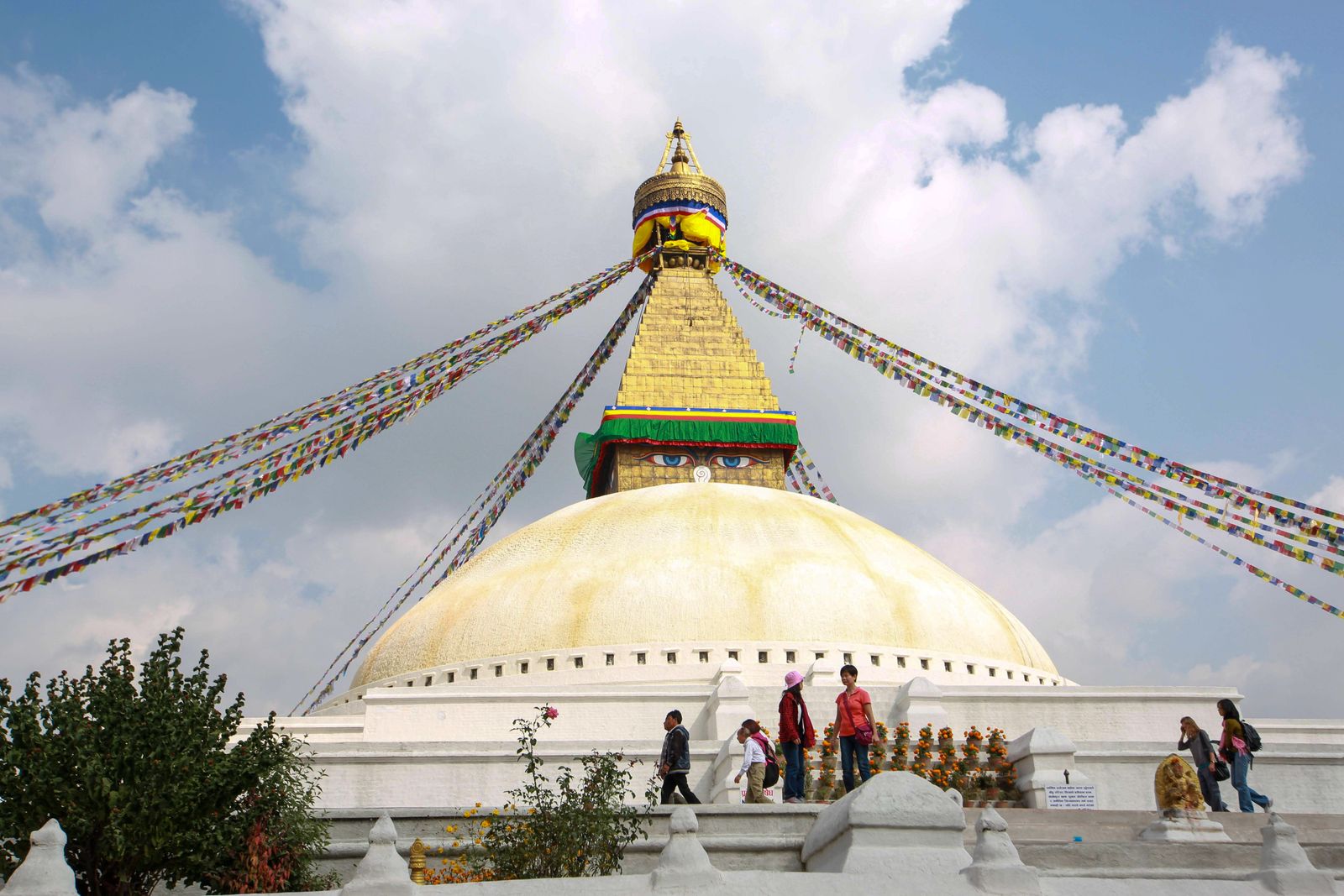
Boudhanath (Boudha; entry NPR 400; 7am–9pm; 4km from Thamel by taxi; the largest stupa in Nepal and one of the holiest Tibetan Buddhist sites in the world) is a massive white dome rising 36 metres above the valley floor, ringed by 108 butter lamp niches and prayer wheels, and surrounded by 50+ Tibetan Buddhist monasteries. The all-seeing eyes of the Buddha painted on the four sides of the central spire are the most widely reproduced image of Nepal.
Walk the circular kora (clockwise circumambulation; the white marble path around the base of the stupa) at dawn (5:30–7am) when Tibetan monks and pilgrims spin prayer wheels and prostrate in the half-light before the tourist crowds arrive. The rooftop cafe directly above the stupa entrance (Stupa View Restaurant; NPR 300–600 for breakfast; opens 7am) provides the finest elevated view of the stupa circumambulation.

Swayambhunath (Monkey Temple; NPR 200 entry; 2km west of Thamel on a hill; 365 steps up; sunset is the finest time to visit; open all day) is a 2,500-year-old stupa on the finest hilltop vantage point over the Kathmandu Valley — offering a 360-degree panorama of the valley, the city below, and on clear mornings (October–November and March–April) the Himalayan peaks on the northern horizon including Langtang, Ganesh Himal, and Manaslu.
Visit at sunset (5–6:30pm; enter 1.5h before) for the finest light on the city below. The resident rhesus monkeys (dozens; semi-tame; harmless but will steal anything edible) are most active at dawn and dusk. The 365 steps climb takes 10–15 minutes; loose trousers and shoes that can be slipped off for the stupa platform entry.
Photo: Markus Koljonen (Dilaudid), CC BY-SA 3.0

Kathmandu Durbar Square (Hanuman Dhoka; NPR 1,000 for foreign visitors; 10am–5pm; 10 minutes walk from Thamel) is the medieval royal palace complex of the Malla and Shah dynasty kings — a dense concentration of pagoda-roofed temples, stone-carved courtyards, the Kumari Bahal (the living goddess courtyard; the Kumari makes occasional public appearances from the upper floor window), and the old royal palace. The 2015 Gorkha Earthquake severely damaged several structures; reconstruction is ongoing but the square remains one of the finest medieval city centres in Asia.
Visit early morning (10am opening or just after) for the best light on the pagoda roofs. The Kumari (the living goddess; a pre-pubescent girl selected from the Newar Buddhist community who is worshipped as a manifestation of the goddess Taleju) appears at her window at irregular intervals; watching for her appearance is not guaranteed but the courtyard is always worth visiting regardless.
Photo: Original: Anton Gutmann Derivative work: Aristeas, CC BY-SA 4.0

Pashupatinath Temple (Pashupatinath; Hindus only in the main temple; foreign visitors allowed on the ghats and the eastern bank; NPR 1,000 for foreigners; 4km from Thamel; dawn and dusk are the most atmospheric times) is the most sacred Hindu temple in Nepal — a 5th-century complex dedicated to Shiva as Pashupati (Lord of Animals) on the banks of the Bagmati River. Open-air cremations take place at the riverside ghats throughout the day; the sight of families performing the Hindu funeral rites is one of the most profoundly moving experiences available to visitors in Nepal.
Visit Pashupatinath at dawn (open from 4am for Hindus; foreign visitors from sunrise) for the morning puja rituals and the first cremations of the day in the orange light. The eastern bank (accessible to all; free) provides the finest viewing point for the ghats. Dress respectfully; maintain distance from cremation ceremonies; do not photograph mourning families directly without clear permission.
Photo: Baldersdod, CC BY 3.0
Kathmandu eating spans: Newari cuisine (the indigenous food of the Kathmandu Valley; buff momos, bara, and kwati bean soup at any Newari thakal restaurant), the Thamel tourist restaurant strip (global food at inflated prices; Dal Bhat at any local restaurant is significantly better value), and the growing Patan and Lazimpat neighbourhoods which have the city’s finest international restaurants. The essential meals: Dal Bhat (lentil soup, rice, seasonal vegetables, and pickle; NPR 250–400 at any local restaurant; the national meal; always includes refills) is the finest daily food value in Nepal. Momos (steamed dumplings; buff or vegetable; NPR 150–250 for a plate of 10; best at Boudhanath’s market stalls) are the essential Kathmandu street food. The Newari restaurant Old House (Bhaktapur road; NPR 500–800; the most authentic high-quality Newari meal in Kathmandu) is the finest food experience in the valley.
5:30am: Boudhanath Stupa kora at dawn (NPR 400; monks and pilgrims at dawn; most atmospheric time; 45 mins). Breakfast at Stupa View Restaurant rooftop (NPR 300–500; Himalaya views on clear mornings). Taxi to Pashupatinath (NPR 300; 15 mins; sunrise cremations on the Bagmati ghats; NPR 1,000 foreign entry; 2h). Taxi back to Thamel. Lunch: Dal Bhat at any local restaurant (NPR 300). Kathmandu Durbar Square (10am–5pm; NPR 1,000; Kumari Bahal courtyard; old royal palace; 1.5h with guide). Thamel evening walk and dinner.
9am: Swayambhunath Stupa (NPR 200; 365 steps; Kathmandu Valley panorama; monkeys; 1h). Taxi to Patan (30 mins; Patan Durbar Square, the finest medieval palace square in the valley; NPR 1,000; Patan Museum — the best museum in Nepal; 2h). Lunch in Patan (Newari restaurant; NPR 400–600). Taxi to Bhaktapur (30 mins; NPR 1,500 foreign entry; the finest preserved medieval city in Nepal; Nyatapola Temple; 2h). Return to Kathmandu before dark. Trek permit office if departing on a trek within 2 days.
Nepal tourist visa (15 days USD 30; 30 days USD 50; 90 days USD 125) is obtained on arrival at Tribhuvan International Airport.
All major trekking routes (Everest Base Camp, Annapurna Circuit, Langtang) require a TIMS card (Trekkers’ Information Management System; NPR 2,000 for free individual trekkers) and a Conservation Area or National Park permit (NPR 3,000–4,000 depending on the route).
Dal Bhat (lentil soup + rice + vegetables + pickle + sometimes a curry; NPR 250–400 at any local restaurant; always includes unlimited refills) is the safest and most nutritious meal available in Nepal, prepared fresh for each service.
Altitude sickness can develop from 2,500m. Kathmandu (1,400m) provides the first acclimatisation stage.
Thamel has 200+ trekking gear shops selling both original equipment and high-quality replicas (down jackets, sleeping bags, trekking poles, headtorches) at 30–70% of European prices.
A licensed guide for Durbar Square and Pashupatinath (NPR 800–1,500 for a half-day; identifies iconography invisible to unguided visitors; required inside the Pashupatinath cremation ghats) transforms both sites.
Best offline trekking map for Nepal. Download Himalaya packs before departure. Works without any signal — essential above Pokhara on any trek.
Free
Download Kathmandu and Pokhara offline. GPS works well in cities but Maps.me is better for trekking routes.
Free
GPS track recording and community trekking routes for Nepal. Useful for day hikes around Pokhara and the Nagarkot ridge.
Free
Multi-currency card. Best exchange rate for NPR from USD/EUR. Withdraw at Himalayan Bank or NIC Asia ATMs for the best rates.
Free
Quick answers to the questions travellers most often ask before visiting Kathmandu.
Autumn (October-November) and spring (March-May) are best, with clear skies ideal before or after treks. Avoid the June-September monsoon; winter is cold but often clear.
Two to three days for the Durbar Square, the Swayambhunath and Boudhanath stupas, Pashupatinath and the Thamel district — and as the gateway to the Himalayan treks.
Thamel and the old city are walkable (if chaotic and dusty), with taxis and rickshaws for longer trips; flights and buses reach the trailheads and other cities.
Nepal’s chaotic, captivating capital in the Himalayan foothills — UNESCO temples and Durbar Squares, the Swayambhunath and Boudhanath stupas, the Thamel travellers’ hub, and as the gateway to the Everest and Annapurna treks.
Himalayan kingdoms, jungle reserves, Buddhist pilgrimage, and the world’s finest trekking.
Planning a wider trip? Our Nepal travel guide covers getting there, costs, when to go and more.