LB
Byblos
The world’s oldest town, on a Crusader harbour
The world’s oldest town, on a Crusader harbour
⚠️ Travel advisory: most governments advise against travel
The US advises against all travel to Lebanon, and other governments advise against travel to large parts of the country, especially the south and the Bekaa, because of the risk of conflict. Check the latest advice before planning a visit.
Latest official advice: UK FCDO · US State Department · Reviewed September 2026

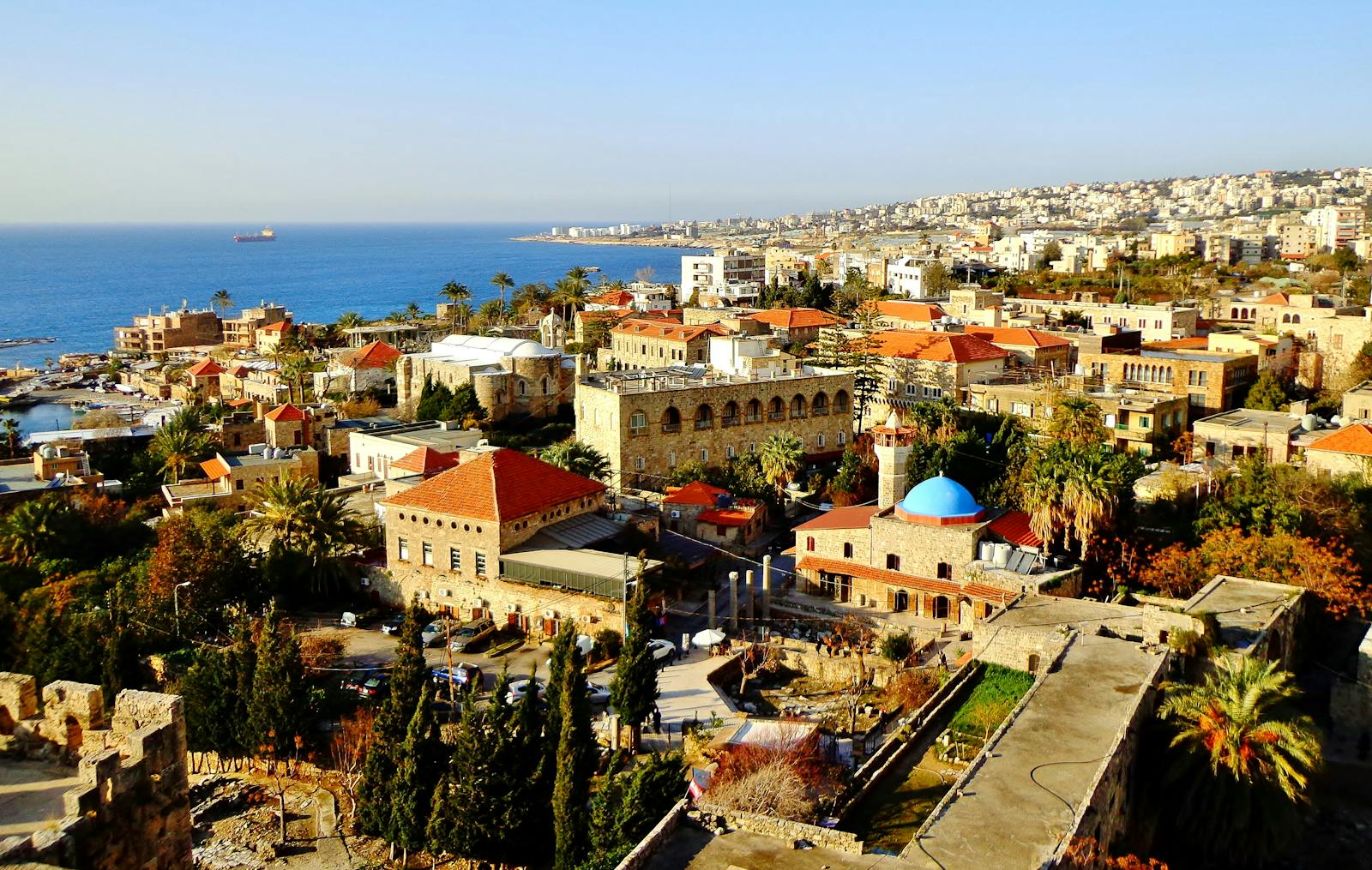
A 12th-century fortress the Crusaders built from stones the Romans left behind, standing guard over the archaeological site. Climb its ramparts for the best overview of the ruins running down to the sea.
The rooftop gives the postcard view over the whole ancient city.

Seven millennia in one field: Phoenician temple foundations, Roman colonnades, a restored amphitheatre perched above the water. The famous L-shaped Temple of the Obelisks sits at the heart of it.
Buy the combined ticket — it covers the castle and the whole site.

The little fishing port that made Byblos rich, still ringed with boats and seafood restaurants. This is where cedar and papyrus once shipped across the ancient world; now it is the town’s most relaxed corner.
Time a late lunch here as the fishing boats come in.

A restored warren of honey-stone lanes selling everything from fossils and antiques to soap and souvenirs. Compact, atmospheric and made for aimless wandering.
Look for the fossil shops — Lebanon’s ancient fish fossils are a local specialty.

A weathered Romanesque church begun by the Crusaders in 1116, blending Arab and Italian influences in its arches and open-air baptistery. A quiet counterpoint to the pagan ruins nearby.
It is a short walk from the souk; combine the two.
Byblos eats with its feet in the sea. The old harbour restaurants — Pepe’s Fishing Club chief among them, a haunt of 1960s film stars — serve the day’s catch grilled simply with lemon, garlic and a mountain of mezze. Order sultan ibrahim (red mullet) or a plate of fried samke harra, spiced fish in tahini and chilli. The town does a fine arak-soaked long lunch, and the souk hides bakeries turning out knefeh for breakfast. In the evening the wine bars fill; Lebanon’s Bekaa vintages travel the short distance here well.
Byblos is small enough to cover entirely on foot — the ruins, castle, harbour and souk sit within ten minutes of one another. Getting to Byblos is the only planning needed: it is about 40km north of Beirut, reachable by a service taxi or minibus from Charles Helou or Dora stations for a few dollars, or a metered Bolt ride if you prefer the door-to-door ease. Many visitors come on a half-day trip from the capital, often paired with the Jeita Grotto or Harissa on the way.
Start early at the archaeological site and Crusader castle before the heat — the ruins, the Temple of the Obelisks and the ramparts for the view.
A long seafood lunch at the old port, then coffee as the fishing boats drift in and out.
Wander the old souk for fossils and antiques, visit the Church of St John-Mark, and stay for sunset over the water.
The site entry covers both the ruins and the Crusader castle — keep the stub, you will pass between them.
Byblos pairs naturally with the Jeita Grotto and Harissa, all on the coast road north of Beirut.
The souk sells genuine local fish fossils from Lebanon’s mountains — a better memento than the mass-made trinkets.
The ruins and castle are uneven old stone; sandals will fight you on the ramparts.
Quick answers to the questions travellers most often ask before visiting Byblos.
About 40km north along the coast — roughly 45 minutes to an hour by car or service taxi, depending on traffic. It is one of the easiest and most popular day trips from the capital.
Very much so. It combines one of the world’s oldest archaeological sites, a Crusader castle, a picturesque fishing harbour and an atmospheric old souk in a compact, walkable town — arguably Lebanon’s most charming coastal destination.
A half to full day covers it comfortably. Morning for the ruins and castle, lunch at the harbour, and an afternoon in the souk. Stay overnight if you want the town to yourself after the day-trippers leave.
Yes — there are beach clubs and rocky swimming spots around the town and along the coast nearby, busiest from June to September. The harbour itself is for boats, not bathing.
Book tours, day trips and skip-the-line tickets in and around Byblos.
Free
Mediterranean Beirut, ancient Byblos, the Roman temples of Baalbek, the caves of Jeita and Mamluk Tripoli — five faces of Lebanon, coast to mountain.
Planning a wider trip? Our Lebanon travel guide covers getting there, costs, when to go and more.