
LB
Baalbek
The Roman Empire’s grandest temples, in the Bekaa
The Roman Empire’s grandest temples, in the Bekaa
⚠️ Travel advisory: most governments advise against travel
The US advises against all travel to Lebanon, and other governments advise against travel to large parts of the country, especially the south and the Bekaa, because of the risk of conflict. Check the latest advice before planning a visit.
Latest official advice: UK FCDO · US State Department · Reviewed September 2026

The best-preserved Roman temple in the world, larger than the Parthenon and astonishingly intact — its ornate portal, columns and carved ceiling still standing after two thousand years.
Walk right inside; the scale only registers from within the cella.

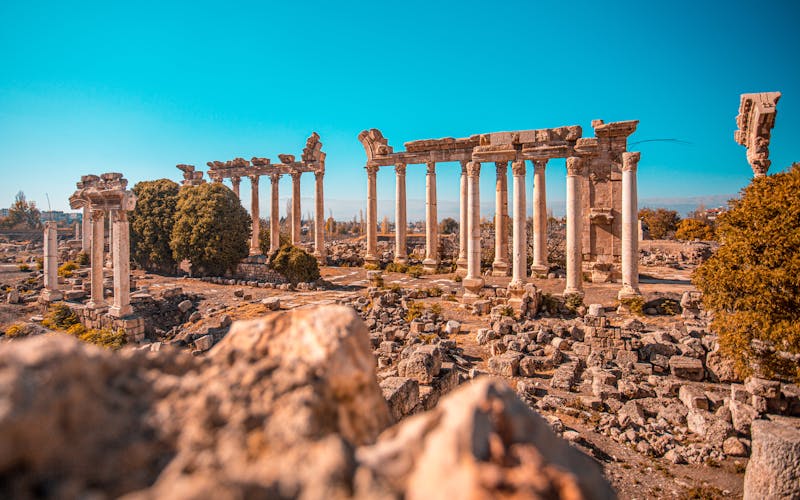
Six colossal columns are all that remain of what was the largest temple in the Roman Empire — but at 22 metres tall, they are the tallest Roman columns anywhere on earth.
Go early or late; the low sun turns the stone gold.
The vast ceremonial courtyard leading to the temples, ringed by column bases, altars and niches where the ancient rituals of Heliopolis played out.
Look for the carved lion-head waterspouts along the edges.

The foundation stones that defy explanation — single blocks of 800 tonnes, and a nearby quarry stone larger still, among the biggest ever cut by human beings.
The Stone of the Pregnant Woman sits in the quarry, a short walk away.

An easy add-on: the only major Umayyad-era city in Lebanon, an 8th-century ruin of arcades and palaces unlike anything else in the country, 30 minutes south.
Combine Baalbek and Anjar in one Bekaa day trip.
Baalbek itself is a working town, and eating here is simple and hearty: sfiha (the small open-topped lamb pies the town is famous for), fresh flatbread, grilled meats and mezze at family restaurants near the ruins. The real culinary reward is the surrounding Bekaa Valley, the heart of Lebanese wine — the Château Ksara, Kefraya and Massaya estates run tastings and cellar tours, and most day trips from Beirut fold at least one in on the way back. Pair a long valley lunch with a bottle grown in the fields around you.
The ruins are a single walkable site — allow two to three hours to do them justice on foot. Reaching Baalbek is the planning part: it is about 85km from Beirut over the mountains into the Bekaa, roughly 90 minutes by car. Vans run from Beirut’s Cola station to the town, but the easiest and most common approach is an organised day tour or a hired driver, usually combining Baalbek with Anjar and a Ksara wine tasting. Check current travel advice before going, as the Bekaa near the Syrian border can be sensitive.
Arrive as the site opens: the Great Court, the Temple of Bacchus and the towering columns of Jupiter before the day-tour buses.
Lunch on Baalbek’s famous lamb pies, then walk to the quarry to stand beside the Stone of the Pregnant Woman.
Head south to the Umayyad ruins of Anjar, then a Château Ksara tasting on the road back to Beirut.
The Bekaa near the Syrian border can be sensitive; read current government advice and prefer a reputable tour or driver.
The site is vast, open and shadeless; summer sun on the stone is fierce with nowhere to hide.
You are in the Bekaa — the great Lebanese wineries are minutes away and worth building into the day.
Baalbek is a conservative town; covering shoulders and knees is respectful and draws less attention.
Quick answers to the questions travellers most often ask before visiting Baalbek.
Baalbek itself is generally visited safely on organised tours, but it lies in the Bekaa Valley near the Syrian border, an area some governments advise caution about. Check your current official travel advice and go with a reputable driver or tour rather than independently.
It is about 85km east over the mountains — roughly 90 minutes by car. Most visitors take an organised day tour or hire a driver, usually combining Baalbek with the Anjar ruins and a Bekaa winery. Vans also run from Beirut’s Cola station.
It holds the largest Roman temple complex ever built, including the best-preserved Roman temple in the world (the Temple of Bacchus) and the tallest Roman columns anywhere. Its foundation megaliths are among the heaviest stones ever quarried.
Two to three hours covers the main temple site thoroughly. A full day works best if you combine it with Anjar and a Bekaa wine tasting, which is how most trips from Beirut are structured.
Book tours, day trips and skip-the-line tickets in and around Baalbek.
Free
Mediterranean Beirut, ancient Byblos, the Roman temples of Baalbek, the caves of Jeita and Mamluk Tripoli — five faces of Lebanon, coast to mountain.
Planning a wider trip? Our Lebanon travel guide covers getting there, costs, when to go and more.