
UG
Bwindi & Gorilla Trekking
Half the world’s mountain gorillas
Half the world’s mountain gorillas
⚠️ Travel advisory: check before you go
The US raised its advice for Uganda to do not travel in May 2026 during an Ebola outbreak, also citing crime, terrorism and the Anti-Homosexuality Act; other governments mainly advise against travel to specific border areas. Uganda has reported no active Ebola cases since July 2026, but the outbreak continues in neighbouring DR Congo. Gorilla trekking and safaris continue; check the latest health and travel advice for your route.
Latest official advice: UK FCDO · US State Department · Reviewed September 2026
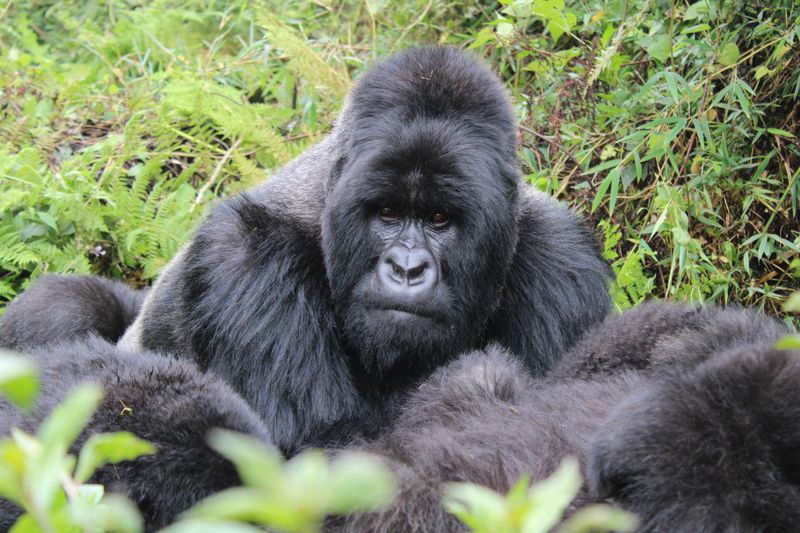
The heart-stopping highlight — coming face to face with a massive silverback, the powerful, dignified leader of a gorilla family, calmly presiding over his group in the forest.
Stay calm and quiet, keep the required distance, and let the guides lead.

Each trek visits a habituated family — mothers cradling infants, juveniles tumbling and playing, all going about their day utterly unbothered by their human visitors.
Watching a mother and baby interact is often the most moving moment.

You’re permitted one precious hour with the gorillas once found — time enough for unforgettable, intimate eye contact with one of our closest living relatives.
Bring a camera, but also just watch — the hour passes fast.
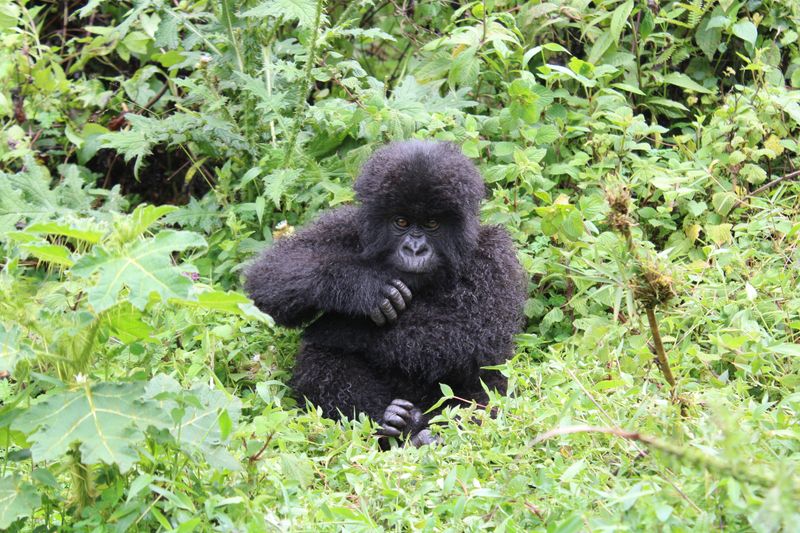
Young gorillas are endlessly entertaining, swinging through vegetation, wrestling and showing off — a joyful reminder of how closely their behaviour mirrors our own.
The juveniles often come closest, curious about their visitors.

Bwindi itself is magical — a dense, dripping, ancient rainforest of tangled greenery, birdsong and butterflies, one of the most biodiverse places in all of Africa.
Hire a porter — it supports the community and eases the steep, muddy climb.
Around Bwindi, meals are hearty, wholesome and local, served at the lodges and guesthouses that ring the forest. Ugandan cuisine centres on filling staples: matoke (steamed green banana mash), posho (maize meal), rice, sweet potatoes, beans, groundnut (peanut) sauce and fresh tropical fruit. Look for rolex — Uganda’s famous street snack of eggs and vegetables rolled in a chapati — and grilled chicken, tilapia or goat brochettes. Lodge dining is typically generous set menus of soups, stews and vegetables, often with lovely forest or valley views. Uganda grows excellent coffee and tea, so start the day with a locally grown brew, and try a cold Nile Special or Bell lager after the trek. Many lodges cater well to dietary needs with notice.
Bwindi is remote — reaching it is part of the adventure. Most visitors fly into Entebbe (near Kampala), then either take a scenic but long drive (8-10 hours, usually broken over two days with stops) or a domestic flight to an airstrip near the park (Kihihi or Kisoro), followed by a short transfer. A sturdy 4×4 with a driver-guide is the standard way to travel Uganda’s parks, and most people visit Bwindi as part of an organised safari. The forest has several trailhead sectors (Buhoma, Ruhija, Rushaga, Nkuringo), and you’re assigned one based on your gorilla permit. On the trek itself you go entirely on foot with rangers, over steep, often muddy terrain, so good boots and reasonable fitness are essential.
Note: a Uganda gorilla trekking permit is a separate, significant fixed cost per person and must be booked well in advance through the Uganda Wildlife Authority or a tour operator.
Book your gorilla permit months ahead — numbers are strictly limited daily.
Morning briefing, then hours of hiking with rangers to find your gorilla family.
Pair Bwindi with a savanna safari and the Nile for a complete Uganda trip.
Gorilla permits are limited and sell out — reserve months ahead of travel.
The hike is steep and muddy — good boots, gaiters and basic fitness help hugely.
It eases the climb and directly supports the local community around the forest.
Gorillas share our diseases — don’t trek if ill, and follow all ranger rules.
Quick answers to the questions travellers most often ask about gorilla trekking in Bwindi.
Bwindi Impenetrable National Park is a UNESCO World Heritage Site in southwest Uganda that is home to roughly half of the world’s mountain gorillas. It’s the premier destination for gorilla trekking, letting visitors spend an hour with habituated wild gorilla families in an ancient, biodiverse rainforest.
Yes — it is strictly managed by trained rangers who know each gorilla family well. Groups are small, distances are kept, and the habituated gorillas are used to brief human visits. The main challenges are the steep, muddy terrain and altitude, not the gorillas themselves.
Yes — every trekker needs a gorilla permit, a separate and significant fixed cost issued in limited numbers each day by the Uganda Wildlife Authority. Permits should be booked well in advance, usually through a tour operator, especially in the busy dry seasons.
The drier seasons — roughly June to September and December to February — offer easier, less muddy trekking and are the most popular. Trekking runs year-round, though; the wetter months are greener, quieter and cheaper, but the trails are more challenging.
Download the Bwindi & Gorilla Trekking area for offline navigation, walking directions and public transport routes.
Free
Uganda’s three great wildlife experiences — gorilla trekking in Bwindi, classic savanna safari in Queen Elizabeth, and the thunder of Murchison Falls on the Nile.
Planning a wider trip? Our Uganda travel guide covers getting there, costs, when to go and more.