ST
São Tomé and Príncipe
World’s finest chocolate, volcanic peaks & Africa’s most pristine island
World’s finest chocolate, volcanic peaks & Africa’s most pristine island
São Tomé and Príncipe is Africa’s smallest and most delicious country — two volcanic islands in the Gulf of Guinea, straddling the Equator, that were uninhabited when Portuguese sailors arrived in 1470 and became the world’s first major sugar-producing colony. Today the islands are one of the world’s finest origins for single-estate dark chocolate (Claudio Corallo and Saté chocolate are international benchmarks), and the combination of dense equatorial rainforest, dramatic volcanic peaks, undeveloped beaches, coral reefs and a unique Creole culture of musical richness makes this Africa’s most underrated island destination. Príncipe island, in particular, with only 8,000 inhabitants and a UNESCO Biosphere Reserve designation, offers an experience of tropical island perfection almost entirely without tourist infrastructure.
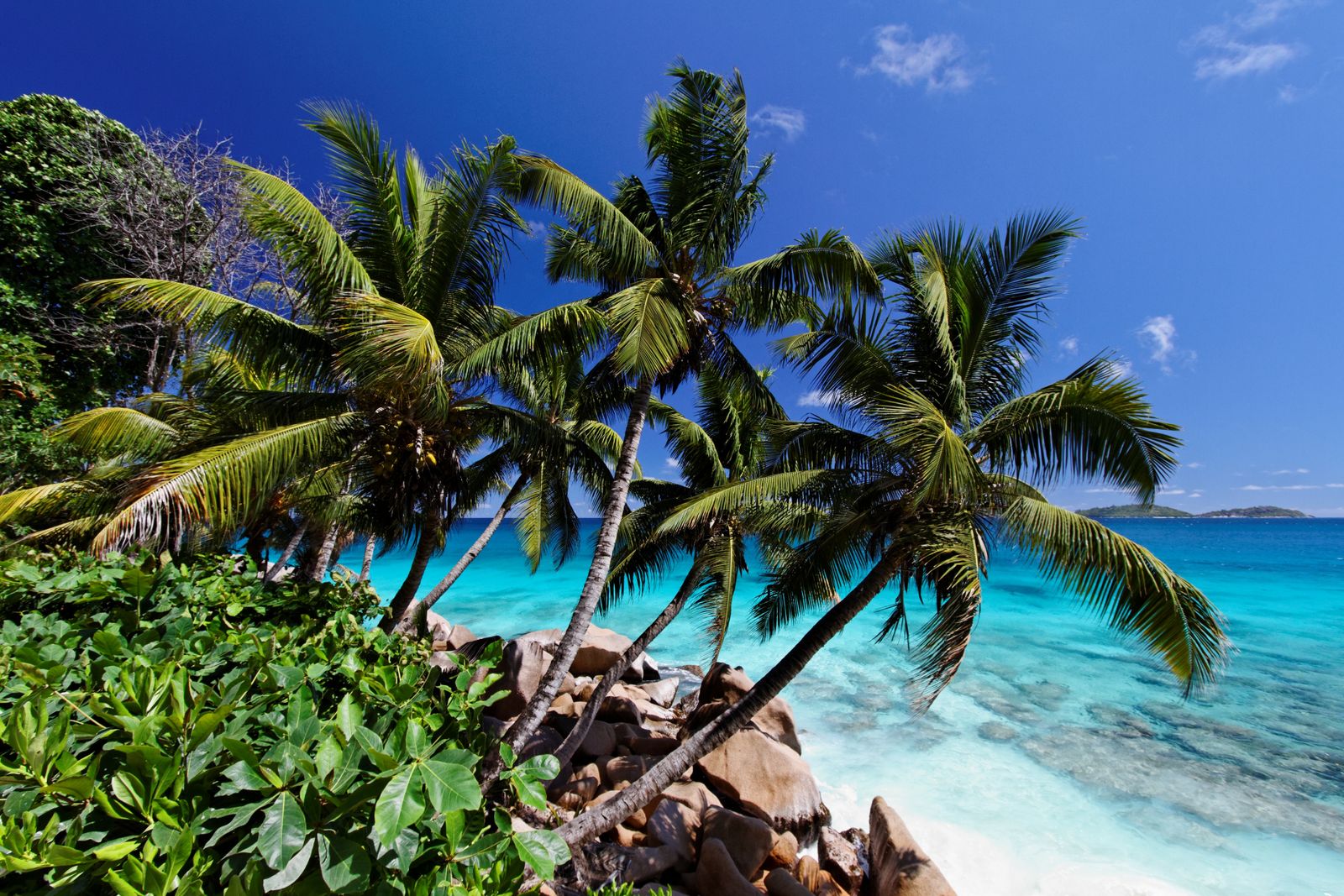
Africa’s least disturbed tropical island — 8,000 inhabitants, a UNESCO Biosphere Reserve, equatorial jungle covering volcanic peaks, and beaches of beauty (Baia das Agulhas, Praia Banana) almost entirely undeveloped. The island’s endemic species (Príncipe sunbird, Príncipe golden weaver), its coral reefs and its deep-water sport fishing make it a paradise for naturalists.
A 663-metre volcanic plug (a needle of solidified magma) rising from the rainforest of São Tomé’s southern peninsula — one of Africa’s most dramatic natural landmarks, visible from miles at sea and at close range in the forest of the São Tomé Obró Natural Park.
The abandoned colonial cocoa and coffee plantations (rocas) of the colonial era — grand plantation houses, workers’ villages and processing buildings now being slowly reclaimed by the forest — are the most distinctive architectural heritage of the islands. Many have been converted into small hotels or chocolate-production facilities (Roca Agostinho Neto, Roca São João).
S%C3%A3o Tom%C3%A9 and Pr%C3%ADncipe (Wikipedia) →Smoked fish (usually dried barracuda) cooked with okra, aubergine, palm oil and malagueta pepper — the national dish of São Tomé, eaten with rice or funge (cassava paste).
Single-origin dark chocolate from island cacao, made by Claudio Corallo and other small producers.
A thick peanut broth with plantain, sweet potato and fish or chicken — one of the most important dishes of São Tomé, reflecting the Cape Verdean and Angolan influence on the island’s cuisine. Eaten as a main course ladled over rice.
A Portuguese-style bean stew with meat, cooked for celebrations.
Fresh sap tapped from oil palm trees — milky-white, slightly sweet and gently fizzing when fresh; gently alcoholic after a day of fermentation. Tapped and sold in plastic bottles at roadside stalls throughout both islands, central to village social life.
São Tomé International Airport (TMS) is the gateway. TAP Air Portugal, Ethiopian Airlines and TAAG Angola serve the main routes. For trip planning, see the official Sao Tome tourism portal.
Lisbon (6h direct, TAP — most frequent connection) is by far the most connected gateway from Europe, reflecting the Portuguese-speaking connection. Other Europeans connect via Lisbon.
Lagos (1h30) and Libreville (1h) are the closest mainland connections. Combining São Tomé with Gabon or Nigeria on a West/Central Africa circuit is a practical option.
The domestic flight to Príncipe (35 min, US$80–150 return with STP Airways) is the only reliable way to reach the smaller island. The ferry is available but has irregular schedules.
A car hire (US$45–75/day) or guided tour is recommended for visiting the rocças and Obo National Park — the roads are paved on the main circuit but can be rough to more remote plantation estates. Local guides add significant context.
June to September is the main dry season (24–28°C) — best for the beaches and hiking. December to February is the short dry season, also pleasant. October to November and March to May are the two rainy seasons; the forest is lush but the roads can be challenging.
📅 São Tomé and Príncipe is in its best season in June, July, August, September. See where else is good to go in those months, or browse where to go by month.
São Tomé uses the Dobra (STN, approx 24 STN = 1 USD). It is moderately priced — relatively affordable compared to Gabon, but logistics can add costs.
Calulu (a rich stew of dried or fresh fish, okra, palm oil, tomato and São Toméan herbs — the national dish of São Tomé and Príncipe, adapted from both Portuguese and Central African culinary)
Carabineiros (the deep-water scarlet shrimp caught in the Gulf of Guinea — a large, intensely flavoured prawn available in São Tomé restaurants for US$15–40, grilled in garlic butter or baked with lemon and)
Bom Bom Island Resort (a small luxury ecolodge on a private island just off Prí)
São Tomé City for one day, rocças for one, Obo Cloud Forest for one, Lagoa Azul and whale watching for one, Príncipe for one, chocolate tour for one, turtle monitoring for one. São Tomé — the world’s finest single-origin chocolate, the most endemic-rich island group in Central Africa and the site of the first proof of general relativity.
São Tomé City — the capital of São Tomé and Príncipe (two volcanic islands in the Gulf of Guinea, population 230,000 — one of the smallest and least-visited countries in Africa, straddling the equator 300km off the Gabon coast, the world’s second-smallest Portuguese-speaking country after Macau) with the Museu Nacional (in the 17th-century colonial fortress, covering the slave trade era that built São Tomé’s plantation economy) and the 16th-century Cathedral.
São Tomé and Príncipe was uninhabited when Portuguese explorers arrived in 1470 — the islands had no indigenous human population. Portugal immediately established slave-worked sugar plantations, making São Tomé the world’s largest sugar producer by 1580. The islands then served as the primary transit point for the Atlantic slave trade for 300 years, with an estimated 1 million enslaved Africans passing through São Tomé between the 1500s and 1800s. Independence came in 1975 at the collapse of the Portuguese Empire.
The rocças (the abandoned plantation estates that cover much of São Tomé — enormous colonial-era cocoa and coffee estates built by the Portuguese from the 1870s, worked by contract labourers imported from Angola, Cape Verde and Mozambique in conditions close to slavery until 1975 — now largely abandoned, the plantation buildings in various states of romantic decay in the jungle, several restored as boutique hotels) including Rocça Agostinho Neto and Rocça Sundy.
Rocça Sundy (a colonial cocoa plantation estate on the northwest coast of São Tomé — and the site of one of the most important scientific experiments in history: on 29 May 1919, during a total solar eclipse, Arthur Eddington photographed the stars near the sun’s edge and confirmed Einstein’s prediction that gravity bends light — the first experimental confirmation of general relativity). A plaque marks the spot where Eddington set up his instruments.
Obo Natural Park (UNESCO Biosphere Reserve — covering 30% of the island, the volcanic interior cloud forest from 500m to the Pico de São Tomé summit at 2,024m — one of the most biodiverse small islands in the world, with 28 bird species found only on São Tomé and Príncipe, including the giant weaver, the São Tomé fiscal and the São Tomé white-eye, and the forest giant earthworms 60cm long).
São Tomé Island has 28 endemic bird species — the highest number of endemic bird species per unit area of any island in mainland Africa’s continental shelf. This extraordinary endemism is the result of the island’s isolation (300km from the mainland), its volcanic origin (no land bridge with mainland Africa for 13 million years) and the survival of its cloud forest. The São Tomé grosbeak (Crithagra concolor — the world’s largest canary at 20cm) is the most sought-after endemic.
Lagoa Azul (the finest snorkel beach on São Tomé — a sheltered bay on the northwest coast with a coral reef at 2–5m, hawksbill turtles, triggerfish and sergeant majors visible from shore) and humpback whale watching (July to September, when humpback whales from the Southern Hemisphere pass through the Gulf of Guinea on their northern migration — morning boat tours from São Tomé City).
São Tomé sits at the centre of the Atlantic humpback whale migration corridor — humpback whales from the Southern Ocean travel through the Gulf of Guinea each July to September on their way to their North Atlantic feeding grounds. The density of humpbacks in these waters in peak season is among the highest in the Atlantic; whale watching from São Tomé city by small boat is a genuine and undervisited experience.
35 min flight. Príncipe (the smaller island, 142km², population 7,500 — UNESCO Biosphere Reserve, designated a World Heritage tentative site, with cloud forest rising to 948m, the finest beaches in São Tomé and Príncipe at Baia das Agulhas and Praia Sundi, the only breeding colony of Gulf of Guinea sea turtles — loggerheads, leatherbacks and greens — on the same beach, and the critically endangered Príncipe thrush).
Príncipe has been called the “Galápagos of Africa” by conservation biologists for the density of endemic wildlife per unit area: the island has its own species of sunbird, speirops, starling, thrush and weaver found nowhere else, plus giant earthworms, endemic geckos and skinks. Unlike the Galápagos, Príncipe receives almost no visitors — there is one luxury resort (Bom Bom Island Resort) and very little other accommodation.
A chocolate tour of São Tomé — the Claudio Corallo plantation and factory (the world’s most acclaimed specialty chocolate maker, producing single-origin chocolate from 80-year-old Forastero cacao trees on a rocça south of São Tomé City, the most coveted origin-specific chocolate in the world, available for tasting and purchase at the factory — the bar with cacao nibs embedded in the chocolate is the signature product).
Claudio Corallo (an Italian agronomist who moved to São Tomé in 1993 and established a single-origin chocolate operation using heirloom cacao varieties from the abandoned plantation estates) is considered by many chocolate professionals to produce the finest dark chocolate in the world — his single-origin São Tomé bars, available in small quantities from the island factory and a handful of specialist retailers worldwide, are the Romanee-Conti of the chocolate world.
A nocturnal turtle monitoring walk on Praia Jalmé (one of the most important leatherback sea turtle nesting beaches in the Gulf of Guinea — active August to February, with guided night walks organised by the conservation organisation MARAPA, the volunteers who monitor and protect the nests against poaching) before flying from São Tomé (TMS).
MARAPA (Marine Resources and Artisanal Fisheries — a local São Toméan NGO established in 1990) runs one of the most effective sea turtle conservation programmes in Central Africa, turning former turtle poachers into conservation monitors paid to protect nests. The programme has reduced poaching by over 90% on monitored beaches; the São Toméan model of community-based conservation is studied by marine biologists worldwide.
Visa on arrival for most nationalities at São Tomé International Airport.
TAP Air Portugal serves São Tomé from Lisbon (5.5h). The island chain is in the Gulf of Guinea on the equator.
São Tomé and Príncipe produces some of the finest single-origin dark chocolate in the world. Chocolate tourism (plantation visits, tasting tours) is a growing part of the industry.
The STN is pegged to the Euro at 24.5:1. Cards accepted in the capital; carry cash elsewhere.
Daily propeller flights from São Tomé city (30 min); accommodation very limited — book months in advance at the Bom Bom Island Resort or smaller guesthouses.
Vaccination certificate required for entry.
Quick answers to the questions people most often ask before visiting São Tomé and Príncipe.
Fly into São Tomé International Airport (TMS). The main route is direct from Lisbon (about 6 hours), with connections via Addis Ababa and regional African hubs.
Small propeller planes fly from São Tomé to Príncipe in about 30 minutes. Accommodation on Príncipe is very limited, so book it and the flight well in advance.
Many nationalities, including EU and US citizens, can visit visa-free for a short stay; others can obtain a visa. Check the current rules for your passport, and note that a yellow fever vaccination certificate is required.
June to September, the main dry season (24–28°C), is best for beaches and hiking. December to February is a shorter dry spell; the other months bring rain.
Its cocoa — the islands produce some of the world's finest chocolate, and old colonial plantations (roças) can be visited — as well as rainforest, dramatic volcanic peaks and empty beaches.
Point your camera at menus, signs or street text for instant translation. Download the language pack offline before you arrive for full use without data.
FreeReal-time and offline exchange rates for all world currencies — converts prices instantly so you always know what you are paying in your home currency.
FreeFind and book hotels, guesthouses and apartments with free cancellation on most rates — one of the widest selections of accommodation worldwide.
FreeBrowse millions of traveller reviews for restaurants, attractions and hotels — helps identify the best local spots and avoid tourist traps.
FreeSão Tomé and Príncipe sits within easy reach of several other destinations — each with a completely different character.
São Tomé and Príncipe is one of the world’s least-visited places. See all 90 in our guide to the world’s least-visited countries & territories.
