The world wine capital

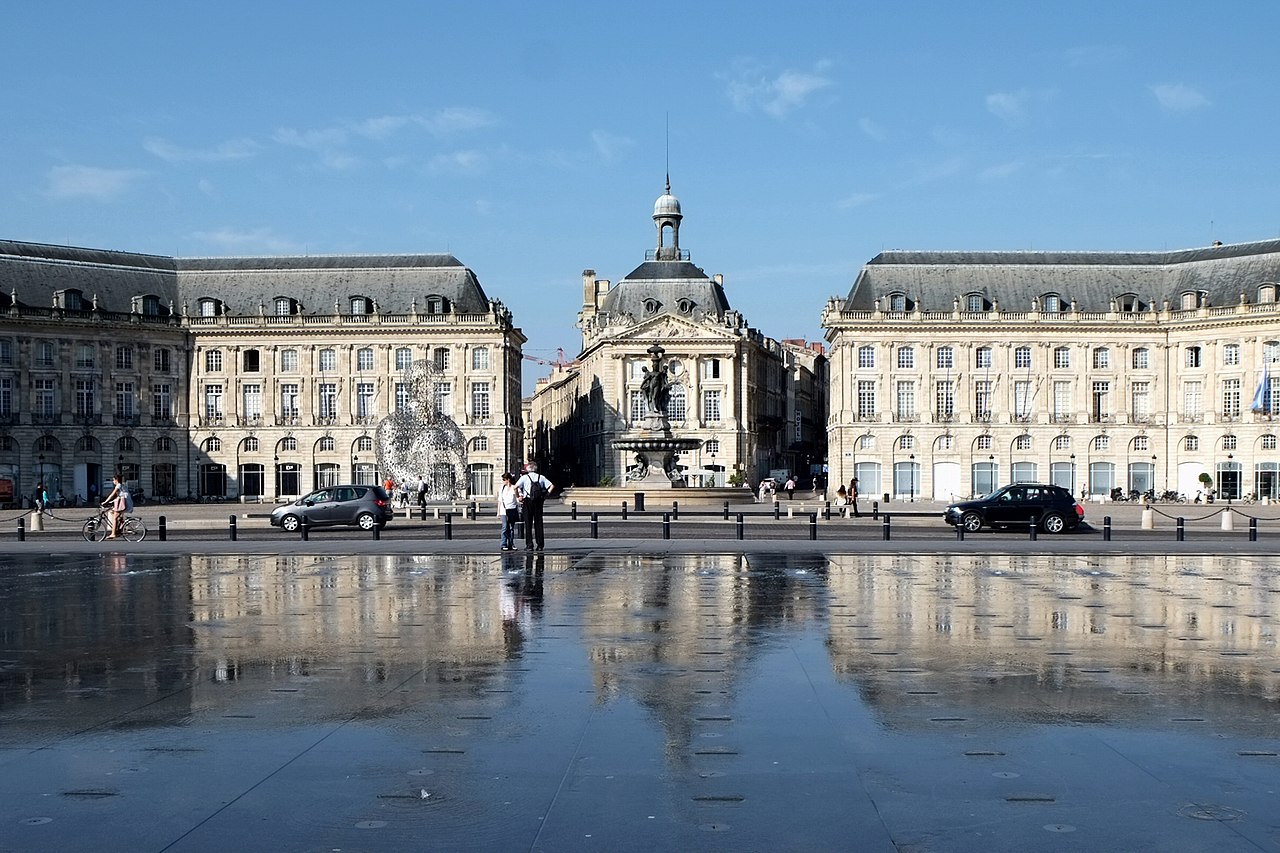
The 18th-century Place de la Bourse facing the Garonne is one of the more photographed squares in France for good reason. In front of it: the Miroir d’Eau, a 3,450m² reflecting pool that alternates between a perfect mirror and a light mist, depending on the pump cycle. Get here around 6pm when the golden stone glows.
💡 The Miroir d’Eau works best at dawn or after rain when the water layer is thinnest. In summer children use it as a water park from 10am — arrive before 9am for the photograph.

The wine museum (€22, includes a tasting glass of wine at the top floor Belvédère) is architecturally ambitious and educationally serious. Give it three hours. The permanent collection covers 3,000 years of wine culture; the view from the top floor is one of the better vantage points over the city. Book online to skip the queue.
💡 La Cité du Vin includes a tasting glass at the top-floor Belvédère with panoramic views over the Garonne. Book online (€22.50) and go at opening time to avoid queues at the tasting stations.

The neighbourhood north of the Esplanade des Quinconces is where the wine merchants built their warehouses in the 17th century. The warehouses are now antique shops, wine bars and small restaurants. Rue Notre-Dame is the main street; the Sunday market along the Garonne quay here is the best morning in Bordeaux.
💡 The antiques market on the Chartrons quayside runs on Sundays. Best combined with wine-cave hopping along Rue Notre-Dame — five excellent independent négociants within 200 metres.

The medieval wine village is 45km by road (or 35 min by TER train from Saint-Jean station). The Monolithic Church, carved into the cliff, and the underground catacombs require a guided tour (book at the tourist office on arrival). The surrounding vineyards — Cheval Blanc, Ausone, Pomerol estates — accept visitors by appointment.
💡 The Saint-Émilion Monolithic Church underground tour (€9) is the most unusual thing in the village — carved entirely from rock, 12th century, only accessible with a guide. Book at the tourist office on arrival.
The canélé is the thing you will eat in every pastry shop in Bordeaux and will miss immediately when you leave: a small fluted cylinder, dark caramelised crust, soft custardy rum-and-vanilla interior. Buy them from Baillardran (original recipe, multiple shops) or Chez Juliette in the covered market. Fresh oysters from the Arcachon basin (available at most market stalls, around €1 each) are what you eat before wine. The entrecote bordelaise — rib-eye with shallot and wine butter sauce — is the classic restaurant main course. The wine list writes itself.
Bordeaux’s restaurant scene beyond the wine tourism is underrated. The Saint-Pierre and Saint-Paul quarters have several serious bistrots where the cooking is contemporary and the wine list is taken seriously. The Sunday Marche des Quais along the Chartrons waterfront (€0 entry, 9am–1pm) is the weekly event — oysters, charcuterie, local cheese, wine tasting — and worth planning your departure date around.
Bordeaux is one of the best-connected European cities by tram — three lines (A, B, C) run on ground-level power tracks through the historic centre. A TBM day pass is €4.40 and covers trams, buses and the river shuttle. The city is flat and serious about cycling: V3 city bikes (day pass €1.70, first 30 minutes free per ride) are the best way to reach the Chartrons, the Miroir d’Eau and points north. Saint-Emilion is a 35-minute TER train from Saint-Jean station; Arcachon (oysters, the Great Dune) is 45 minutes, roughly €8.40 return. Both are easy day trips without a car.
September is the wine harvest and probably the best single month to visit: warm, the vineyards are active, the Marche des Quais is at its best. May, June and October are also excellent. The city works year-round — it rains more than the wine-country image suggests.
Bordeaux is mid-range in the French city hierarchy — cheaper than Paris or Nice, more expensive than Marseille. The wine is the main variable: a decent bottle in a restaurant can be €25 or €250, and the gap between those two is genuinely worth thinking about. Numbers are per person per day, couple travelling.
The V3 bike day pass (€1.70) makes getting around essentially free. The first 30 minutes of each ride is included, which covers most journeys within the centre.
The Sunday Marche des Quais is free and has the best oysters and charcuterie in the city. Build an afternoon around it.
A bottle of Petrus in a Bordeaux restaurant lists at €3,000–5,000. Nobody is suggesting you order one. But the concentration of wine expertise in this city means the mid-range wine list in an ordinary restaurant is exceptional.
Bordeaux plus Saint-Emilion plus Arcachon is the natural three-unit trip. The city itself takes two days to do properly; the day trips are worth one day each.
Arrive. Walk directly to the Miroir d’Eau (it’s on the way from most hotels). Lunch at the covered Marche des Grands Hommes or a bistrot in Saint-Pierre. Afternoon in the Chartrons — the antique dealers and wine bars on Rue Notre-Dame. Evening: a proper entrecote bordelaise with a Pomerol.
💡 The Bordeaux tram is free for the first 30 minutes on the TAM app — useful for the 20-min ride from Saint-Jean station to the centre. Validate on the tram with the app.
La Cité du Vin opens at 10am; book online in advance. Allow three hours. Take the tram back and rent a V3 bike for the afternoon. Ride the river south to the Pont de Pierre and back north past the waterfront. Afternoon oysters from any stall near the Quai des Chartrons. Evening: explore the wine list at a Chartrons bar.
💡 The VCub cycling scheme (€3/day unlimited 30-min hops) is the best way to see Bordeaux. The city centre is flat, the cycle lanes are well-marked and the Garonne quayside cycle path runs 4km.
TER train from Saint-Jean (35 min, €8 return). Walk the medieval village — the Monolithic Church underground tour is worth the €6. Visit one or two wine producers on the edge of the village. Buy a bottle to open that evening. Return in time for dinner in Bordeaux.
💡 The TER train to Saint-Émilion (35 min from Saint-Jean; €8 return) drops at a quiet station 2km from the village. The walk in through the vineyards is the best introduction to the wines you’re about to taste.
Train to Arcachon (45 min, €8.40 return). Oysters at the port for €12–15 with bread and wine. Bus to the Grande Dune du Pilat (10 min) — it takes 20 minutes to climb the 110-metre sand dune and the view of the Atlantic from the top is worth it. Return mid-afternoon.
💡 The Dune du Pilat (the tallest sand dune in Europe; 106 metres) is a 10-min bus ride from Arcachon station. Climb it at 8am before the midday crowd. The view over the bay and pine forest is extraordinary.
The wine shops aimed at tourists around the quays and the Port de la Lune have a 30–40% premium.
Bordeaux is pancake-flat and has 300km of cycle lanes. A V3 day pass (€1.70) makes most journeys free (first 30 min of each ride is included).
The €22 entry includes a glass of wine in the Belvedere at the top. Online booking skips the queue.
The Great Dune of Pilat is the headline but the real reason to go to Arcachon is to eat oysters at one of the port-side stalls with bread, butter and a glass of Entre-Deux-Mers.
The Bordeaux wine festival (late June, even years only) takes over the waterfront for four days with tastings from hundreds of chateaux.
The ideal time to eat a canélé is within two hours of it leaving the oven, when the crust is at maximum caramel crunch.
Official Bordeaux tram and bus app. Journey planner, real-time tram tracking and ticket purchase. Essential for airport connections.
Free
Bordeaux city bike-share: station map, dock availability and day pass purchase. Best way to navigate the flat city and riverfront.
Free
TGV to Paris (2h), Lyon (3h20) and the TER to Saint-Emilion (35 min) and Arcachon (45 min). Book day trip tickets here.
Free
Not a bank app — the Bordeaux wine trade app tracking en primeur releases, chateau visits and tasting notes for the Bordeaux region.
Free
Restaurant reservations across Bordeaux. Useful for the better bistrots in Saint-Pierre that fill on weekend evenings.
Free
Download offline before arriving. Useful for cycling routes and navigating the Saint-Emilion village lanes without signal.
Free
Discover more of France’s great destinations.