AT
Hallstatt
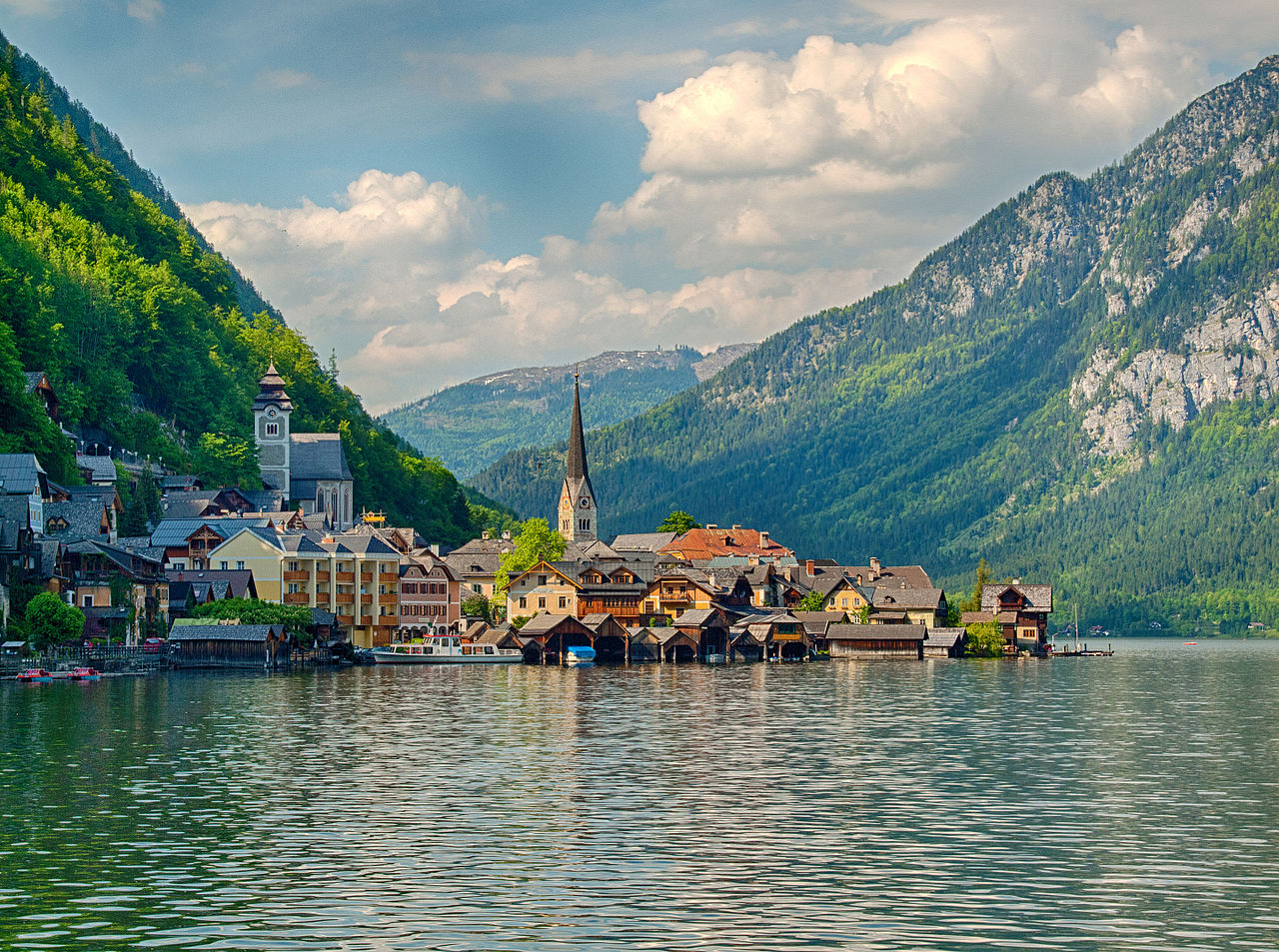
A tiny lakeside village below steep mountains, with the world’s oldest known salt mine
A tiny lakeside village below steep mountains, with the world’s oldest known salt mine

The small square is surrounded by painted houses and has a Holy Trinity column. Lanes lead from here to the lakeshore and the churches.
Photo: Andrew Bossi, CC BY-SA 2.5

Boats and the passenger ferry cross the lake, and you can hire small electric boats or rowing boats to see the village from the water.
Photo: Andrew Bossi, CC BY-SA 2.5

A funicular climbs to the salt mine, where tours include wooden miners’ slides. Next to the upper station, the Skywalk viewing platform overlooks the village and lake.
Photo: Andrew Bossi, CC BY-SA 3.0

At the southern end of the lake, cable cars from Obertraun lead to the Dachstein ice and mammoth caves and the Five Fingers viewing platform.
The caves are cold; bring a warm layer.
Photo: Andrew Bossi, CC BY-SA 2.5
Try fresh Reinanke (whitefish) and char from the lake, often smoked or grilled.
Restaurants are few and busy at lunchtime; book dinner if you are staying overnight.
Trains from Salzburg (via Attnang-Puchheim) or Bad Ischl stop at Hallstatt station on the opposite side of the lake; a ferry meets the trains. Buses run from Bad Ischl.
The village centre is closed to non-resident cars; park at the car parks outside it. Austria is in the Schengen area. Non-EU visitors are registered in the EU Entry/Exit System on arrival, and visa-exempt travellers will need an ETIAS travel authorisation once it launches, expected from late 2026. Drivers need a motorway vignette (digital or sticker), sold by ASFINAG and at petrol stations. Check current rules before you travel.
Austria uses the euro. Prices are similar to Germany; museums and concerts are moderately priced, and city cards can save money on transport and entries. Accommodation in the village is limited and expensive.
Prices are approximate.
Village, salt mine and caves.
Walk through the village early, visit the charnel house with its painted skulls, then go up to the salt mine and Skywalk.
Take the cable car from Obertraun to the ice caves and the Five Fingers platform.
🛂 Entry rules: EES and ETIAS
Austria is in the Schengen area, which has two EU border systems for non-EU visitors.
EES (in force): since 10 April 2026 the EU’s Entry/Exit System registers non-EU visitors’ passport details, fingerprints and a photo the first time they enter the Schengen area, replacing passport stamps. Allow extra time at the border on your first trip; later crossings are quicker. EU, EEA and Swiss citizens are not registered.
ETIAS (not yet running): a €20 online travel authorisation for visitors who don’t need a visa, such as UK, US, Canadian and Australian citizens. It hasn’t started and no start date has been confirmed, so nobody can apply yet; ignore websites that offer to “pre-register” you for a fee.
Visa-free visitors can stay up to 90 days in any 180-day period across the whole Schengen area, not per country.
Official information: EU: Travel to Europe (EES & ETIAS) · Reviewed September 2026
Visit before 9am or after 5pm to avoid the busiest hours.
Hallstatt is a lived-in village; keep off private property and keep noise down.
Car parks fill up early in summer.
The ferry from the station is timed to meet trains.
Quick answers for planning time in Hallstatt.
Take a train to Hallstatt station on the other side of the lake, then the ferry that meets each train.
No, the village centre is closed to non-resident cars; use the car parks outside.
Yes, it is the oldest known salt mine in the world, with tours that include miners’ slides.
Yes, as part of the Hallstatt-Dachstein/Salzkammergut Cultural Landscape.
May to June and September to October, early or late in the day.
German is spoken; English is widely understood in tourist areas.
Free
Planning a wider trip? Our Austria travel guide covers getting there, costs, when to go and more.