
CH
Lucerne
Gateway to the Swiss Alps
Gateway to the Swiss Alps

The Kapellbrücke (Chapel Bridge; the 1333 wooden covered bridge; 204m; the finest surviving medieval wooden covered bridge in the world; the 111 17th-century triangular paintings in the rafters; the Water Tower (13th century) at the bend; free to walk; the finest dawn photograph from the Rathaussteg bridge) is the most photographed structure in Switzerland.
Kapellbrücke at dawn (6am; free; the 1333 medieval wooden covered bridge; the 111 17th-century paintings; the finest dawn photograph from the Rathaussteg bridge (the bridge reflected in the still morning Reuss)).

The Löwendenkmal (Lion Monument; the dying lion by Bertel Thorvaldsen (1820); dedicated to the 786 Swiss Guards who died on August 10, 1792; free; in the Löwenplatz park 10 min from the Chapel Bridge; Mark Twain: “the most mournful and moving piece of rock in the world”) is the finest 15-minute free experience in Lucerne.
Löwendenkmal (Lion Monument; free; 10 min walk from the Kapellbrücke; the dying lion by Thorvaldsen; Mark Twain’s “most mournful and moving piece of rock in the world”; 15 minutes).

Mount Rigi (the 1,798m “Queen of the Mountains”; the rack railway from Vitznau (52 CHF return; 35 min; the first rack railway in Europe, opened 1871); the finest panoramic mountain in Central Switzerland) and Mount Pilatus (the 2,128m peak; the world’s steepest cogwheel railway at 48% from Alpnachstad; 32 CHF; the Golden Round Trip 95 CHF) are the two essential mountain excursions from Lucerne.
Mount Pilatus (the world’s steepest cogwheel railway at 48%; from Alpnachstad; 32 CHF return; or the Golden Round Trip (95 CHF; lake boat + cogwheel + cable car + bus)) — book at pilatus.ch.
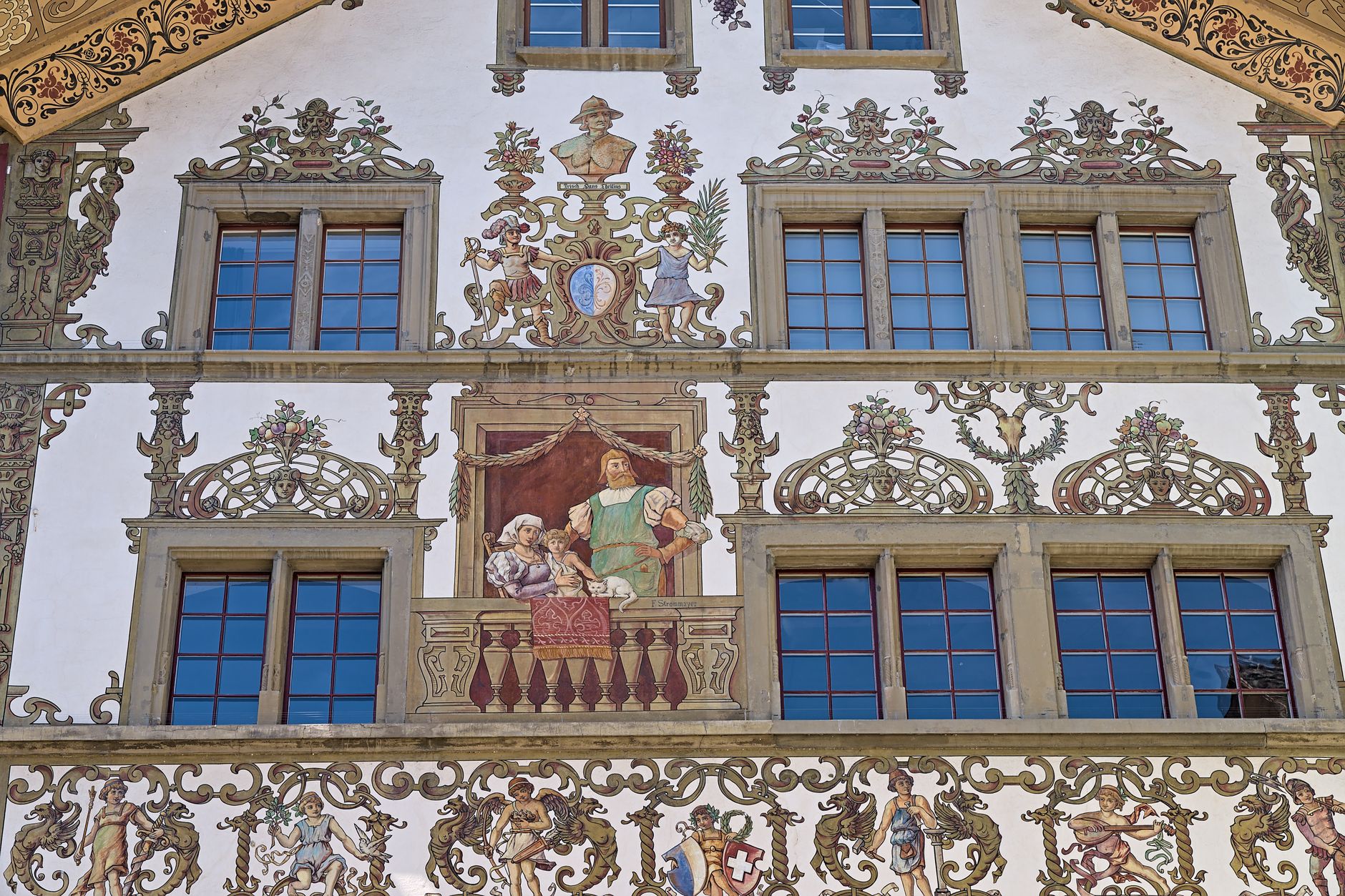
The Old Town (Altstadt; the finest preserved medieval city centre in Central Switzerland; the Kornmarkt; the Weinmarkt; the Kapellgasse; the Hirschenplatz; the Musegg Wall (the 14th-century city wall; 9 of the 10 towers standing; the walkable section free; open March–November)) is the finest 1-hour walk in Lucerne.
Musegg Wall (the 14th-century city wall; 9 of the 10 towers standing; the walkable section free Mar–Nov; the finest view of Lucerne from the wall top) — 900m walk between the Schirmerturm and the Männliturm.
Lucerne cuisine is Central Swiss: the Käseschnitten (toasted bread with melted Gruyère, egg and ham; the most specifically Central Swiss comfort food; 15–22 CHF), the Gerstensuppe (barley soup with bacon; 10–16 CHF), fondue year-round (28–42 CHF pp), and the Weinmarkt terrace restaurants (the most atmospheric outdoor dining in any Swiss city; 30–55 CHF pp). The Migros restaurant at the Lucerne Schödler branch (8–14 CHF; the mandatory cost-saving lunch option in Switzerland’s most expensive country) is the best-value complete meal in the city.
The Kapellbrücke (Chapel Bridge; 1333; 204m; the finest surviving medieval wooden covered bridge in the world; the 111 17th-century triangular paintings in the rafters).
The Golden Round Trip (boat from Lucerne to Alpnachstad; Pilatus cogwheel railway up; cable car down; bus back; CHF 109 full circuit; depart 8:30am; check the Pilatus.ch webcam the evening before for cloud-free conditions).
Mount Pilatus (the 2,128m mountain above Lucerne; the world’s steepest cogwheel railway (48% gradient) from Alpnachstad (32 CHF return)).
The Musegg Wall (the 14th-century city wall above the Old Town; 9 of the 10 original towers still standing; the finest surviving medieval city wall in German-speaking Switzerland).
Lucerne is compact and superbly connected. The medieval Old Town is entirely walkable, and the city has trolleybuses and buses, but the real joys are the lake boats that ply Lake Lucerne to lakeside villages and mountain bases, and the cogwheel trains, funiculars and cable cars that climb Mount Pilatus, Rigi and Stanserhorn. Lucerne is a rail hub with frequent, scenic SBB trains to Zurich (under an hour), Interlaken and beyond; a Swiss Travel Pass covers trains, boats and buses, with discounts on the mountain railways. A car isn’t needed (Switzerland drives on the right). Switzerland uses the Swiss franc (CHF), not the euro.
Kapellbrücke at dawn (free; the medieval wooden covered bridge; the 17th-century paintings; the finest dawn photograph from the Rathaussteg). Löwendenkmal (Lion Monument; free; 10 min walk). Musegg Wall (free Mar–Nov). Lake Lucerne ferry (from 3.60 CHF) in the afternoon.
The Swiss Travel Pass (from 254 CHF for 3 days; includes all SBB trains, the Pilatus and Rigi lake boat approaches, the Lake Lucerne ferry, and 50% discount on the Pilatus cogwheel railway and Rigi rack railway) is the best-value for a Lucerne-based Swiss alpine circuit.
The Chapel Bridge, the Lion Monument, and the Musegg Wall are all free — and the three most important sights in Lucerne.
The Swiss Travel Pass (254 CHF/3 days; covers SBB rail Zurich–Lucerne, the Lake Lucerne boats (Vitznau ferry for Rigi, Alpnachstad ferry for Pilatus return), the Rigi rack railway, the Transport Museum, and 30% off Pilatus gondola)
The Lucerne Festival (August; the most important classical music festival in Switzerland; the KKL Luzern by Jean Nouvel — the concert hall cantilevered over the lake; 200–500 CHF pp for the major programme; conductors of)
🛂 Entry rules: EES and ETIAS
Switzerland is in the Schengen area, which has two EU border systems for non-EU visitors.
EES (in force): since 10 April 2026 the EU’s Entry/Exit System registers non-EU visitors’ passport details, fingerprints and a photo the first time they enter the Schengen area, replacing passport stamps. Allow extra time at the border on your first trip; later crossings are quicker. EU, EEA and Swiss citizens are not registered.
ETIAS (not yet running): a €20 online travel authorisation for visitors who don’t need a visa, such as UK, US, Canadian and Australian citizens. It hasn’t started and no start date has been confirmed, so nobody can apply yet; ignore websites that offer to “pre-register” you for a fee.
Visa-free visitors can stay up to 90 days in any 180-day period across the whole Schengen area, not per country.
Official information: EU: Travel to Europe (EES & ETIAS) · Reviewed September 2026
SBB (Swiss Federal Railways) for the Zurich–Lucerne IC train (45 min; from 12 CHF) and the Lucerne–Alpnachstad (Pilatus) and Lucerne–Vitznau (Rigi) connections.
Free
Download the Lucerne offline map before arrival — the Old Town lanes, the Musegg Wall walk, and the lakefront promenade require offline navigation.
Free
Download the German offline pack and use camera mode for menus and signs.
Free
Book tours, day trips and skip-the-line tickets in and around Lucerne.
Free
Quick answers to the questions travellers most often ask before visiting Lucerne.
A beautifully preserved medieval town on Lake Lucerne, framed by mountains — famous for its covered wooden Chapel Bridge (Kapellbrücke), the Lion Monument, and as the gateway to Mount Pilatus and Rigi.
Cruise Lake Lucerne, climb Mount Pilatus (by the world’s steepest cogwheel railway) or Rigi, wander the Old Town and Chapel Bridge, see the Lion Monument, and visit the Swiss Museum of Transport.
Frequent, fast SBB trains connect it with Zurich in under an hour, and with Interlaken via the scenic Luzern-Interlaken Express. Zurich airport is about an hour away, and no car is needed.
Late spring to early autumn (May-September) is best for the lake, boats and clear mountain views, and December brings Christmas markets. Winters are cold and peaks can be cloudy, so pick a clear day for the mountains.
Explore more of Switzerland’s extraordinary cities and landscapes.
Planning a wider trip? Our Switzerland travel guide covers getting there, costs, when to go and more.