CH
Switzerland
Trains with the best views on Earth
Trains with the best views on Earth

The Jungfraujoch railway to 3,454m: a cog railway through the Eiger’s interior, emerging at the Top of Europe station above the Aletsch Glacier. The Grindelwald valley below has the finest hiking in Switzerland.

The Matterhorn (4,478m): the most recognised mountain in the world. Zermatt is car-free; the Gornergrat rack railway gives the finest view. The Klein Matterhorn cable car reaches 3,883m year-round.

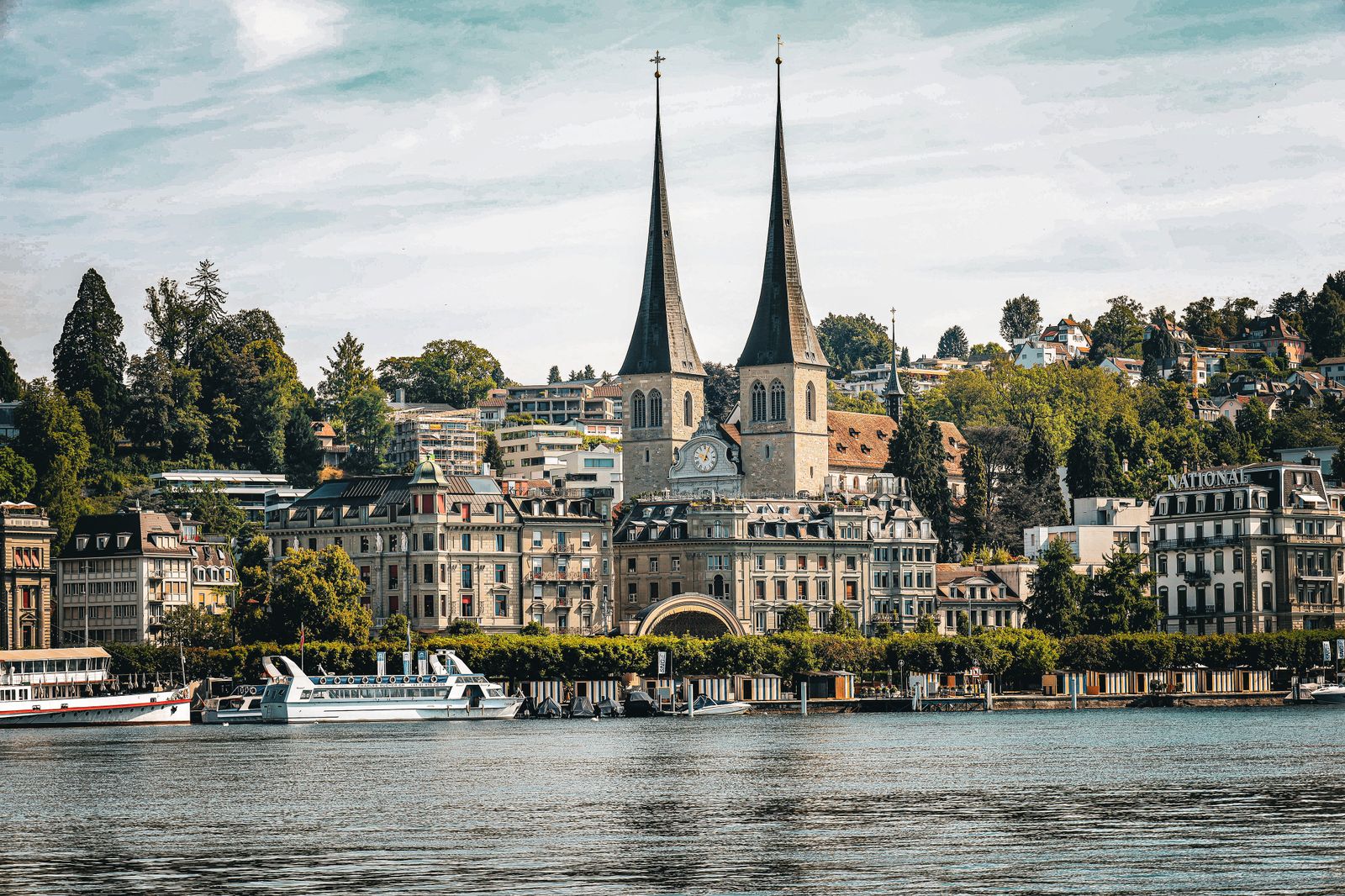
A medieval city on Lake Lucerne with the 14th-century covered wooden Kapellbrucke bridge, the Lion Monument (Thorvaldsen’s dying sandstone lion) and the Rigi and Pilatus mountains accessible by cog railway.

Lausanne’s UNESCO-listed Lavaux wine terraces above Lake Geneva, the Olympic Museum and the Chillon Castle (a 13th-century island fortress on the lake shore).

Basel has more museums per capita than any city in the world: the Kunstmuseum (largest public art collection in Switzerland), the Fondation Beyeler and the Vitra Design Museum.

A valley of 72 waterfalls dropping from sheer cliff walls: Staubbach Falls (297m, one of the highest in Europe) and the Trummelbach Falls (the only accessible glacial waterfall inside a mountain).

Switzerland’s only national park: no trails except designated paths, no picking, no leaving the paths. The densest concentration of ibex, chamois and red deer in the Alps.

The birthplace of Alpine winter tourism (1864): St Moritz’s frozen lake is used for ice polo, horse racing on snow and kite-sailing. The Engadin valley in summer has extraordinary cycling.
Switzerland (Wikipedia) →Gruyere and Emmental cheese melted in white wine and kirsch in a ceramic pot: bread cubes dipped on long forks. The national dish of Switzerland. The correct technique is a figure-8 stirring motion.
A wheel of Raclette cheese melted under a heating element and scraped over potatoes, gherkins and pickled onions. Eaten in winter. The smell is powerful; the taste is extraordinary.
Veal strips in a cream and mushroom sauce, served with Rosti (grated potato cake). The definitive Zurich restaurant dish.
Lindt was founded in 1845; Toblerone in 1908; Cailler in 1819. Swiss milk chocolate has more cocoa butter and fewer cocoa solids than Belgian: creamier, milder.
Chasselas from the Lavaux terraces above Lake Geneva (mineral, low acid, very Swiss) and Pinot Noir from Valais are the two great Swiss wine varieties – rarely exported.
Swiss domestic lagers. Feldschlosschen (Basel) is the market leader; Cardinal (Fribourg) has a slightly more complex character.
The Kaffeebar in a Swiss train station and the coffee-and-croissant at a lakeside terrace in Lugano are the two poles of Swiss coffee culture.
Oats soaked overnight in apple juice with grated apple, lemon, condensed milk and nuts. Invented by Maximilian Bircher-Benner at his Zurich sanatorium in 1900.
Zurich Airport (ZRH) is Switzerland’s main hub; Geneva (GVA) is the second gateway. Basel (BSL/EAP) serves the tri-border region. Switzerland’s rail network (SBB) is one of the finest in the world — frequent, punctual and covering almost every destination. For trip planning, see the MySwitzerland tourism portal.
💡 easyJet and Swiss both fly Gatwick/Heathrow to Geneva and Zurich from under £60 booked ahead. The Eurostar + TGV to Geneva or Zurich is competitive in time (and considerably more comfortable) for those near London.
💡 Swiss International Air Lines (SWISS) is the national carrier — well regarded, particularly in Business Class. Zurich is a convenient hub for connections into Eastern Europe and Africa.
💡 Swiss trains run to the second — 97% punctuality. The Swiss Travel Pass (4–15 days, unlimited SBB travel) is worth buying for any trip covering multiple cities.
💡 Geneva Airport gives every departing passenger a free 80-minute public transport ticket (Geneva Transport Card) — the train to the city centre takes 6 minutes and costs nothing.
Summer (June–September) is hiking season in the Alps — clear paths, cable cars running, wildflowers above the treeline. Winter (December–March) is ski season: Zermatt, Verbier, St Moritz, Davos. Spring and autumn are quieter and good for cities. July and August are the busiest months.
Switzerland is the most expensive country in Europe — regularly the most expensive in the world for some categories. Budget travel requires discipline but is possible.
Migros and Coop supermarkets have in-store restaurants with hot food for CHF 12–18 — by far the cheapest hot meal in Switzerland and surprisingly good.
The Swiss Travel Pass (unlimited trains, trams, buses and lake steamers) is good value for 4+ days of travel — CHF 244 for 4 days or CHF 312 for 8 days. Mountain railways are 50% off with it.
The Badrutt’s Palace in St Moritz and The Chedi Andermatt are Switzerland’s most celebrated mountain hotels — from CHF 700/night in peak season.
Zurich for a day, the Bernese Oberland (Grindelwald, Jungfraujoch) for two, Geneva and Lake Geneva for one, Zermatt and the Matterhorn to finish.
Zürich’s Altstadt (Old Town) is built on two hills above the Limmat river — the Grossmünster and Fraumünster churches face each other across the water. Bahnhofstrasse is one of the world’s most expensive shopping streets. The Kunsthaus Zurich houses the finest art collection in Switzerland.
💡 The Kunsthaus Zurich extension (2021) contains the world’s largest Giacometti collection. The original building has the Monet water lilies and an exceptional Impressionist room.
2h by train from Zürich HB. Grindelwald sits below the Eiger’s north face — the sheer 1,800m wall that killed more climbers than any other Alpine route. The First Cliff Walk: a circular hike above Grindelwald with views of the Eiger, Mönch and Jungfrau.
💡 Grindelwald-First gondola (from the village) reaches 2,168m in 25 minutes. The First Cliff Walk cantilever path over the cliff face is free with the gondola ticket.
The Jungfraujoch (3,454m) is the highest railway station in Europe — reached by two train changes through the mountain. The Aletsch Glacier (23km long, the longest in the Alps) from the observation deck above. The Ice Palace inside the glacier itself.
💡 The Jungfraujoch round trip costs CHF 225 (European citizens) from Grindelwald — expensive but genuinely extraordinary. Book online to guarantee a time slot. Morning is clearer.
2h30 from Grindelwald. Geneva is the UN’s European headquarters, home to 180+ international organisations, and sits on the largest lake in the Alps. The Jet d’Eau (140m water fountain, 500kg/s), the Flower Clock, the Old Town and the Reformation Wall. Day cruise on Lake Geneva.
💡 The Red Cross and Red Crescent Museum (free entry) in Geneva covers the history of humanitarian law from Henri Dunant to the present day — one of the most affecting museums in Switzerland.
3h from Geneva. Zermatt is car-free — only electric vehicles and horse-drawn carriages. The Matterhorn (4,478m) is visible from almost everywhere in the village. The Gornergrat cogwheel railway (3,089m) gives the best accessible view of the summit and the Monte Rosa massif.
💡 The best Matterhorn view from Zermatt is from the Findeln meadow above the village at 2,050m — accessible in 2 hours on foot or by gondola. The mountain is most dramatic in early morning light.
The Five Lakes Walk (Fünfseenweg): 5 Alpine lakes at 2,400m, each reflecting the Matterhorn at a different angle. The Schwarzsee (2,583m, the highest) is the most dramatic. 3–4 hours in good conditions.
💡 The best photograph of the Matterhorn reflected in a lake is from the Riffelsee (2,757m — reached by Gornergrat railway). Early morning, calm wind.
2h from Zermatt. Lucerne is Switzerland’s most visited city — the Chapel Bridge (1333, the oldest covered wooden bridge in the world), the Lion Monument (a sandstone dying lion carved into rock, “the most mournful piece of rock in the world” — Mark Twain), Lake Lucerne by paddle steamer.
💡 The paddle steamers on Lake Lucerne (Uri, Unterwalden, Rütli) date from the Belle Époque and are genuinely working vessels. Buy a day pass on the lake — the scenery improves with every hour.
The Swiss Travel Pass covers all trains, buses, boats and most mountain railways. Worth it for any stay of 4+ days.
A restaurant lunch: CHF 20-40 (EUR 21-43). Accommodation: CHF 100-300/night. Budget accordingly.
Popular routes (Jungfraujoch, Gornergrat) are crowded in summer. Book at sbb.ch.
Trains leave to the second. If yours is 30 seconds late, the conductor will apologise.
Lightning on ridges is common. Check MeteoSwiss (app or website) before any alpine walk.
Migros and Coop supermarkets sell excellent food at reasonable prices. A picnic above a glacier costs less than a restaurant.
Sunrise and Salt offer good data rates. Alternatively, buy a data eSIM before arriving.
Written Swiss German (Schriftdeutsch) is standard German; spoken Swiss German (Schweizerdeutsch) is incomprehensible to almost all German speakers.
Swiss Federal Railways official app — buy tickets for all trains, trams and buses; includes half-fare and day-pass options.
FreeRide-hailing in Zurich, Geneva and Basel; taxis in Switzerland are among Europe’s most expensive.
FreeBook Jungfraujoch tickets, Matterhorn day trips, chocolate factory tours and Swiss experiences.
FreeReserve tables at Swiss restaurants in Zurich, Geneva, Lucerne and Bern.
FreeTrack CHF (Swiss Franc) rates — Switzerland is one of the world’s most expensive countries.
FreeExplore Switzerland’s top city destinations — from Geneva to Zurich, each with its own distinct character.
Switzerland sits within easy reach of several other destinations — each with a completely different character.


