AL
Gjirokastrër
The Stone City of a Thousand Steps
The Stone City of a Thousand Steps
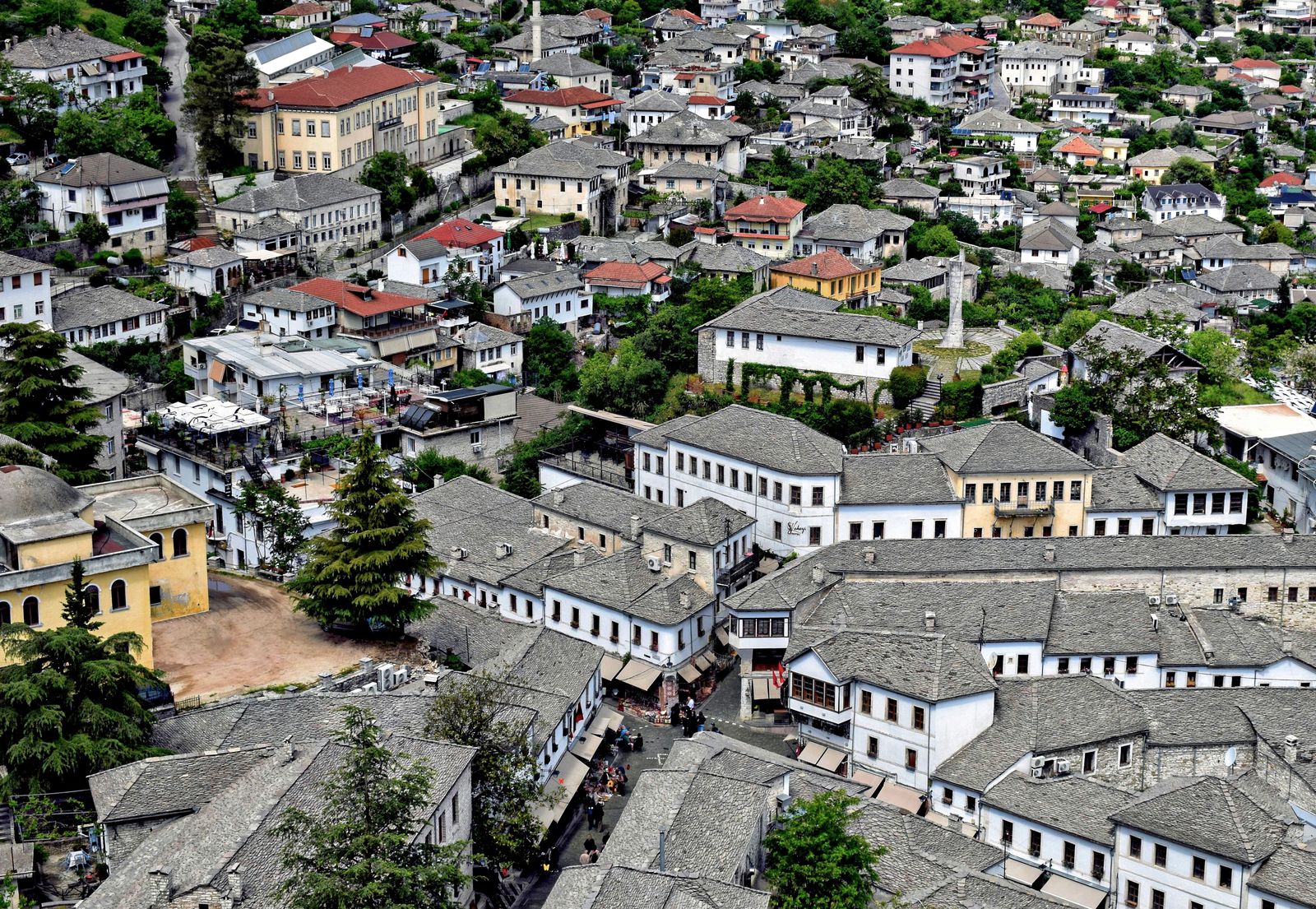
Gjirokastrër Castle (Kalaja; €3; above the old town; 30-minute walk up from the bazaar or taxi) is a 12th-century Ottoman fortress expanded over centuries, now housing the National Museum of Weapons with 2,000+ artefacts including a captured American reconnaissance plane (an explanation of how it got there is part of the museum story). The castle terrace offers the finest panoramic view of the grey-roofed Ottoman town below.
💡 The Gjirokastrër Festival (folk music and dance) takes place inside the castle courtyard every 5 years (last held 2023); if the next one coincides with your visit, it is a remarkable experience. Check VisitAlbania.al for schedule.
The Old Bazaar (˙ free; below the castle; walking distance from all guesthouses) is a steep, cobblestone Ottoman street of traditional stone-building workshops, craft shops, and teahouses that has survived largely intact since the 17th century. The bazaar’s distinctive grey limestone buildings with slate roofs and overhanging upper stories are unlike anything else in the Balkans.
💡 Wear proper walking shoes — the bazaar cobblestones are steep and uneven, particularly after rain. The best photographs are taken from the upper bazaar looking down towards the valley, especially in morning light (8–9am).
Skenduli House (€3; 18th-century Ottoman mansion; city centre) is an extraordinarily preserved traditional Albanian dwelling with 28 rooms arranged around a central courtyard — wooden ceilings, hand-carved decorations, and period furnishings intact. The Ethnographic Museum opposite (€2) was originally the birthplace of Enver Hoxha (Communist dictator 1944–1985) and covers traditional Albanian domestic life.
💡 Skenduli House gives the best sense of how the Ottoman Albanian merchant class actually lived. The owner’s family still occupies part of the building and often gives personal tours. Allow 45 minutes for both sites; they are next to each other.
The Osum Canyon (2h north of Gjirokastrër by car via Berat; entry €3 for the suspension bridges) is an 8-kilometre river gorge of 100-metre limestone walls carved by the Osum River — one of the finest canyon landscapes in Europe. Boat tours run upstream from Çorovoda (€10 per person; 1.5h). The canyon is best visited May–September when the river level allows boat access.
💡 Combine the Osum Canyon with a stop in Berat (2h north of Gjirokastrër) on the same road trip. This Berat–Osum Canyon combination is the finest single-day road trip from Gjirokastrër.
Gjirokastrër food is traditional Albanian highland cuisine: qofte (spiced meatballs; 500 ALL), fergese (beef stewed with roasted peppers, tomato, and white cheese; 600 ALL), and tavë gjirokastriti (lamb baked with yogurt, similar to tavë kosi; 700 ALL) are the local specialities. Raki (home-distilled from grapes or plums) is offered freely in traditional stone-house restaurants. The Gjirokastrër bazaar has several teahouses (200 ALL for tea) that serve as the social hub of the old town. For the finest atmosphere, eat in one of the traditional Ottoman guesthouses where dinner is served in the main room of a 300-year-old mansion.
Ethnographic Museum (30 min; €2). Walk the Old Bazaar from south to north (45 min; buy raki and local cheeses from the craft shops). Skenduli House (45 min; €3). Lunch at a bazaar restaurant (qofte or lamb; 800 ALL). Castle + Weapons Museum (2h; €3; panoramic terrace views). Sunset from the castle ramparts. Dinner in an Ottoman guesthouse dining room (reserve at the guesthouse front desk).
Morning: drive 12km to Libohova Castle (free; dramatic ruined hilltop fortress with valley views; 45 min). Return for a late morning walk to Labova e Kryqit monastery (4km walk; 1.5h each way or taxi; free). Alternatively: drive north to Berat (2h) via the Antigone archaeological site and the Vjosa Valley — both on the same road. Return to Gjirokastrër or continue south to Sarandë.
The entire old town navigates via Ottoman-era cobblestoned lanes and stairways. The incline is significant (the castle is 100 metres above the bazaar).
Most visitors come from Tirana (3h north) or Sarandë (1.5h south) and do the castle + bazaar in a 3–4 hour visit before continuing south to the Riviera.
The Zagoria road (SH75 east from Gjirokastrër; 1 hour) passes through the Zagori river gorges and connects to Permet, a small town in the Vjosa Valley National Park known for hot springs.
The Ethnographic Museum (Enver Hoxha’s birthplace; €2; Tue–Sun 9am–5pm) covers pre-communist Albanian domestic life across 3 floors. Visit before the castle — it contextualises the architecture you’ll see there.
The Labova e Kryqit Church (4km from Gjirokastrër; the oldest surviving church in Albania; 6th century AD) is walkable via a 1.5-hour trail from the old town.
The finest guesthouses (Gjirokastrër has 8–10 excellent stone-house options; from €30/night for a double) fill quickly in June–September.
The reliable taxi alternative to overcharging street taxis. Available in Tirana, Gjirokastër, and Sarandë. Download before arrival.
Free
Download offline Albania map before arrival. Covers mountain tracks, the Ionian Riviera, and rural roads not found on Google Maps.
Free
Download Albanian offline pack. Camera translation handles menus and signs. Albanian is phonetically readable.
Free
Best exchange rate for Albanian Lek at local ATMs. The Lek is not widely exchangeable outside Albania.
Free
From Tirana’s painted boulevards to Ionian beaches, Ottoman citadels, and limestone canyons — explore the rest of Albania.