AL
Albania
The Ionian coast before the crowds
The Ionian coast before the crowds

A UNESCO city of white Ottoman houses with their characteristic double windows: the Berat Castle above the Osum River gorge and the Onufri Museum of Byzantine icons.
Photo: Bärbel Miemietz, CC BY-SA 4.0

Ksamil’s three tiny islands with turquoise water: and Dhermi’s beach below a mountain village, accessible down a winding road with views of Corfu.
Photo: Pudelek, CC BY-SA 3.0

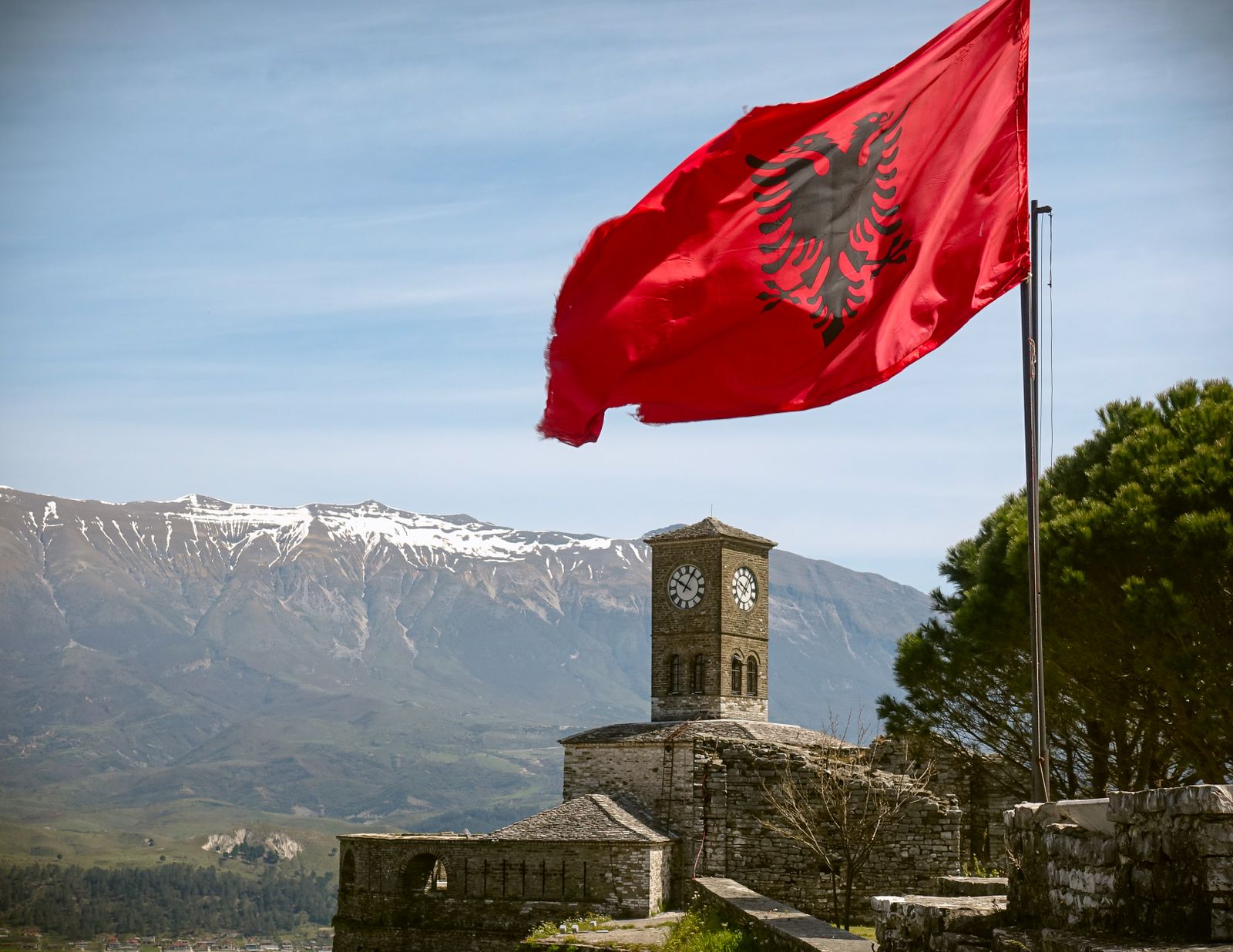
UNESCO Gjirokastra: a city of stone-roofed Ottoman houses on a hillside, birthplace of Ismail Kadare (Albania’s greatest novelist) and Enver Hoxha (its most notorious dictator).
Photo: ViolaCiv, CC BY-SA 4.0

A capital of energy: the Blloku district (the communist elite’s forbidden quarter, now the city’s hippest neighbourhood), the National History Museum’s mosaic facade and the House of Leaves spy museum.
Photo: Albinfo, CC BY-SA 3.0

The Peaks of the Balkans trail: the Valbona Valley and the Theth National Park connected by the 1,765m Valbona Pass, with stone-tower guesthouses.
Photo: Wikimedia Commons contributor, CC BY 3.0

A UNESCO archaeological site: a Greek, Roman, Byzantine and Venetian city on a lake peninsula, abandoned in the 9th century and now entirely forested.
Photo: Julianruizp, CC BY-SA 4.0

The UNESCO lake (shared with North Macedonia): the Albanian shore has Lin’s 9th-century Byzantine church remains and Pogradec’s beach promenade.
Photo: NASA/METI/AIST/Japan Space Systems, and U.S./Japan ASTER Science Team, Public domain

The Syri i Kalter (Blue Eye): a natural spring of 6m³/second of cold blue water emerging from underground. Saranda is a 45-minute ferry from Corfu.
Photo: David Stanley from Nanaimo, Canada, CC BY 2.0
Clay pot-baked white beans with peppers, tomatoes and herbs: the national dish of Albania (shared with North Macedonia). Every family version is different.
A Tirana speciality of fried peppers, tomatoes and cottage cheese baked together in a clay pan: the quintessential Tirana street food.
Baked lamb and rice in a yogurt and egg custard sauce: one of Albania’s most beloved main courses, eaten at celebrations.
A filo pastry pie filled with spinach, cheese or minced meat: the street food of every Albanian city, sliced from a large round tray.
Albania has been making wine for 4,000 years: Kallmet (red, tannic) from the Shkodra region and Shesh i Zi (black root) are the finest indigenous varieties.
Albanian grape or mulberry raki: the most widely drunk spirit in Albania. Home distillation is universal.
Albania’s finest lager from the Korce brewery (est. 1928): malt-forward, clean and drunk at every outdoor cafe.
Espresso culture is strong in Tirana: small, strong and drunk standing at a bar.
Tirana Rinas (TIA) is the main hub; Vlora Airport opened in 2023 for the south. Wizz Air, Ryanair and Air Albania serve European routes. The furgon network connects all major towns. For trip planning, see the official Albania tourism portal.
Wizz Air has made Albania one of the most accessible Balkan destinations from the UK — direct London–Tirana flights from under £40 one-way with advance booking.
The Corfu–Saranda ferry (FastFerries Albania, 45 min, €19 one-way) is the most useful border crossing — combining a Greek island stay with the Albanian Riviera circuit.
Use the Nani Taxi app for reliable metered taxis in Tirana — significantly cheaper than unmetered taxis outside the airport. Agree a price before getting in any taxi without the app.
The SH8 Riviera road from Vlore to Saranda is one of the most striking coastal drives in the Mediterranean — hairpin bends over the Ionian Sea, undeveloped coves visible 300m below. Allow 4h for the full route.
May to October is the best window — the Albanian Riviera warm and accessible, Butrint and the archaeological sites pleasant, Berat and Gjirokaster at their most atmospheric. July–August the coast is packed with domestic tourists. April–June and September–October are ideal.
📅 Albania is in its best season in June, July, August, September. See where else is good to go in those months, or browse where to go by month.
Albania is one of the cheapest countries in Europe — cheaper than Bosnia, Romania or Bulgaria for most categories. It is the best value beach destination in the Mediterranean.
Furgons — privately operated shared minibuses running fixed routes between towns — are the main long-distance transport for Albanians and foreigners alike.
Albanian seafood on the Riviera — grilled sea bass, octopus, fresh mussels, the koran trout from Lake Ohrid — is superb and costs ALL 600–1,200 for a full meal.
The Riviera House hotel in Himara and Rapo’s Resort in the Drymades area represent Albania’s emerging premium hospitality.
Tirana for two days, Berat for one, the Albanian Riviera for two, Gjirokaster and Butrint for two. Albania is the most underestimated country in Europe and rewards visitors who arrive without expectations.
Tirana was one of Europe’s most isolated cities until 1990 — a communist state sealed from the outside world for 45 years, with 750,000 concrete bunkers built across the country (one for every four people). Skanderbeg Square, the National History Museum, and the colourful painted apartment blocks that Edi Rama (the current Prime Minister) painted as mayor. The Blloku district for the evening — formerly reserved for the communist elite, now Tirana’s cafe and bar quarter.
The National History Museum mosaic facade (1981) shows Albanian history in a socialist realist montage — the largest mosaic in the Balkans and an inadvertently excellent work of art. The museum inside covers Albania from Illyrian antiquity through the communist period with surprising candour.
Bunk’Art 1: a 5-storey nuclear bunker built for Enver Hoxha beneath Mount Dajti, converted to a museum of Albanian communist history and Cold War paranoia (1,000 rooms, designed to survive an atomic attack, now entirely surreal). Bunk’Art 2: a smaller central Tirana bunker covering the history of the interior ministry and the Sigurimi (secret police).
The Albanian communist era (1944–1990) under Enver Hoxha was one of Europe’s most extreme — the country was simultaneously anti-Soviet, anti-Chinese and anti-Western. The 750,000 bunkers (still visible everywhere in the landscape) were built in the 1970s–80s at enormous national expense against an attack that never came.
2h from Tirana. Berat is UNESCO World Heritage Site — a 13th-century Ottoman city with whitewashed houses stacked on a hillside, each with large windows (hence the name), overlooking the Osum River gorge below. The Byzantine church of the Holy Trinity above the castle.
The Berat Castle (Kalaja) is still inhabited — a living neighbourhood of 200 people within the medieval walls. The 13th-century churches inside (St Mary, the Dormition of St Mary, the Evangelista) retain fragments of fresco painting.
3h from Berat. The Albanian Riviera — 120km of coastline between Vlore and Saranda — was entirely closed to foreigners until 1990 and is still largely undeveloped. The beaches at Drymades, Gjipe (accessible only by boat or a steep 45-min hike) and Borsh are among the finest and least-visited in the Mediterranean.
Gjipe beach is accessible via a 45-minute hike down a limestone canyon from the road above, or by boat from Himara. It has no facilities, no umbrellas and no entry fee. In June and September it is almost entirely empty.
Himara — a former Greek minority village on a cliff above the sea, with a medieval castle and good fresh seafood — is the best base on the southern Riviera. The Blue Eye (Syri i Kaltert): a freshwater spring of blue colour bubbling from underground at 6m depth, surrounded by beech forest 30km inland from Saranda.
The Blue Eye spring is at 18.5°C year-round — so cold it is painful to swim in after more than 30 seconds. The colour comes from the depth and purity of the water. The site is a natural park; entry is free.
1h30 from Saranda. Gjirokaster is UNESCO World Heritage Site — a steep hillside of grey slate-roofed Ottoman mansions and the largest castle in Albania, with captured American aircraft and a bronze bust of Enver Hoxha stored inside. Ismail Kadare (Albania’s greatest novelist) was born here.
Gjirokaster’s castle was built in the 4th century, expanded by Ali Pasha of Ioannina and later used by Enver Hoxha as a prison. Inside: a captured 1957 USAF Lockheed T-33 aircraft, apparently shot down in Albanian airspace (contested), and a view over the stone city.
1h from Gjirokaster. Butrint (UNESCO World Heritage Site) is the most important archaeological site in Albania — a peninsula with layers of Greek, Roman, Byzantine and Venetian occupation from the 8th century BCE to the 19th century CE, surrounded by a lagoon and mature forest. Fly back from Tirana or cross to Corfu (45-min ferry from Saranda).
Butrint is one of the rare sites where you can walk from a Greek theatre (3rd century BCE) through a Roman forum and basilica, a 6th-century Byzantine baptistery (the finest mosaic floor in Albania), Venetian towers and a 19th-century Venetian castle in a single 2h visit.
Uber and Bolt don't operate in Albania. Use local taxi apps such as Speed Taxi, or agree the fare before getting in.
A byrek: ALL 50-80 (EUR 0.50). A restaurant meal: EUR 5-10. Guesthouse: EUR 20-40.
Besa: the obligation of sacred protection to a guest. Being fed beyond capacity is normal.
Cheap, frequent and sometimes very full.
The head-nod convention is the opposite of Western Europe. A source of initial confusion.
Both give good 4G coverage.
July-August is very crowded. May and September: warm, clear, quiet.
Thank you in Albanian: very warmly received.
Quick answers to the questions people most often ask before visiting Albania.
May to October is the best window — the Albanian Riviera warm and accessible, Butrint and the archaeological sites pleasant, Berat and Gjirokaster at their most atmospheric. July–August the coast is packed with domestic tourists.
Tirana Rinas (TIA) is the main hub; Vlora Airport opened in 2023 for the south. Wizz Air, Ryanair and Air Albania serve European routes. The furgon network connects all major towns.
Expect roughly ALL 1,500–2,500 a day on a budget and ALL 4,000–7,000 mid-range, or ALL 15,000+ for a more luxurious trip, per person and excluding flights.
Albania uses the ALL.
Plug types: Type C / F (two-pin, 230V).
Ride-hailing available in Tirana — growing in popularity alongside Bolt.
FreeBook Albanian Riviera tours, Gjirokastër castle visits, Berat day trips and Balkans adventures.
FreeAlbania’s primary messaging platform — contact guesthouses and tour operators.
FreeBook hotels along the Albanian Riviera and in Tirana — popular beach towns book out in summer.
FreeExplore Albania’s most striking cities — each one a world apart.
Albania sits within easy reach of several other destinations — each with a completely different character.


