EC
Ecuador
Galapagos wildlife and Andean cloud forests
Galapagos wildlife and Andean cloud forests

The world’s finest wildlife encounter: giant Aldabra tortoises, marine iguanas (the world’s only sea-going iguana), blue-footed boobies, sea lions and Darwin’s finches — species that exist nowhere else on earth.

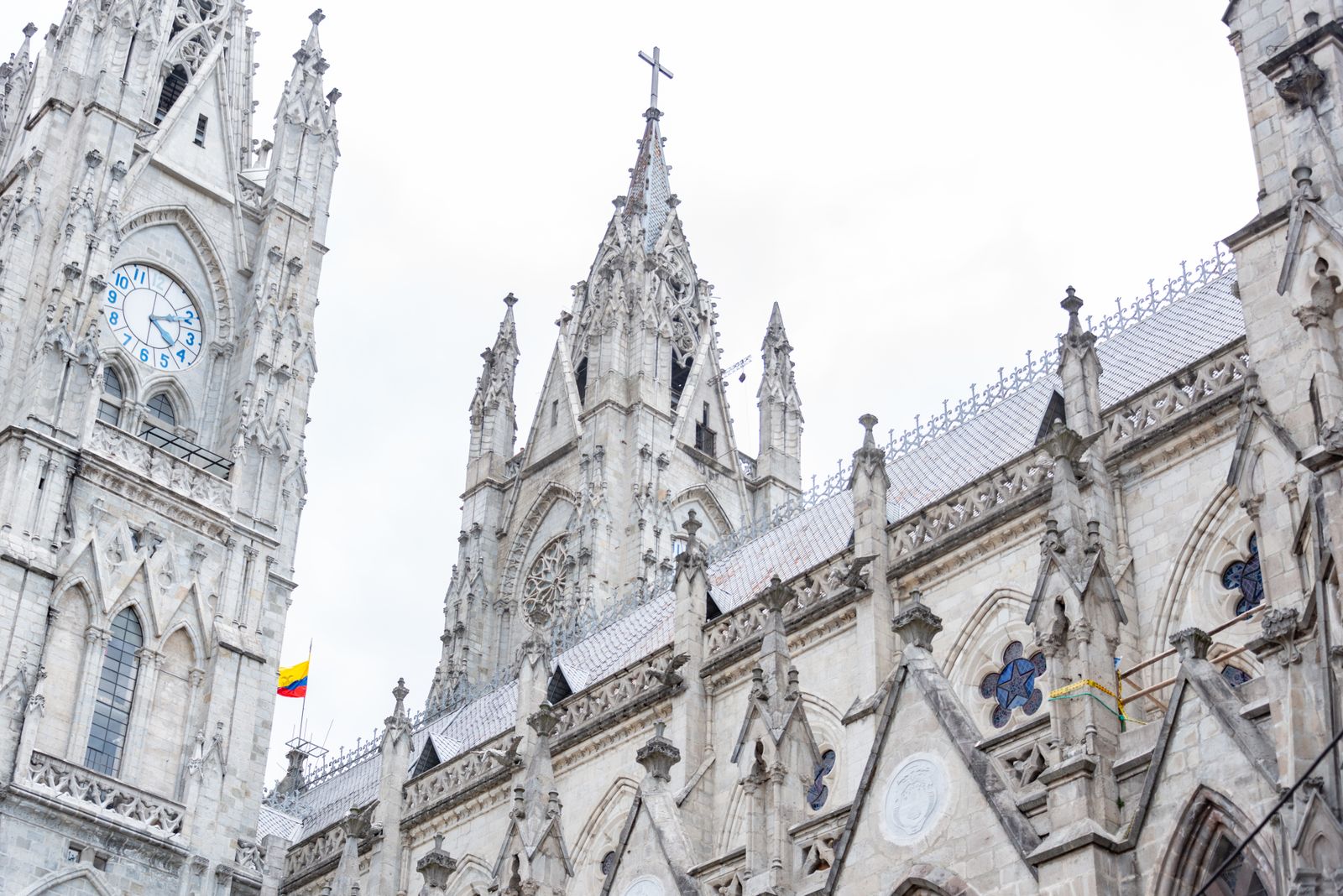
A UNESCO-listed colonial city at 2,850m: the San Francisco Church (the largest colonial building in the Americas), the Compania de Jesus (“the most ornate church in the world” according to UNESCO), and the city’s location directly on the equator.
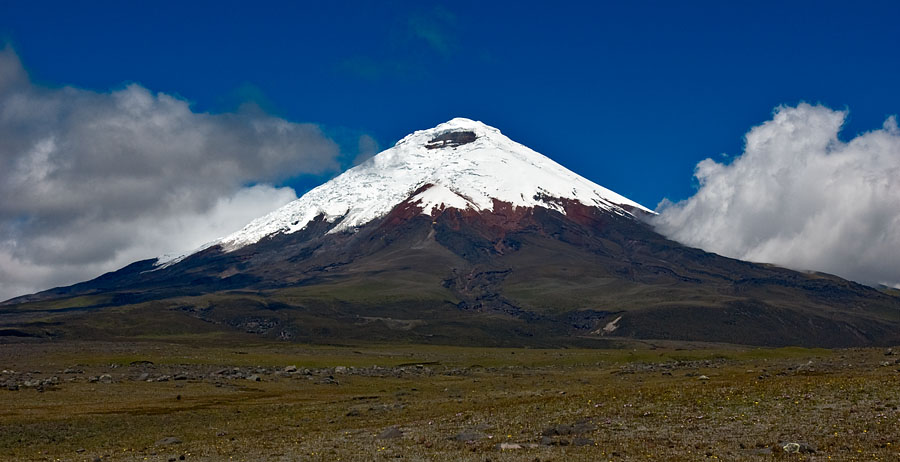
One of the world’s highest active volcanoes (5,897m) and the most symmetrical: the Refugio Jose Ribas at 4,864m is accessible by 4WD and foot. Llamas graze the páramo below the glacier line.

Ecuador’s most graceful city: the Panama hat (which was made in Ecuador, not Panama) woven here by fourth-generation hatmakers, the Tomebamba River’s canal promenade and the blue-domed New Cathedral.

The most biodiverse place on earth (UNESCO): Yasuni National Park’s 100,000 insect species, 600 bird species and uncontacted Waorani communities in a patch of Amazon jungle the size of Connecticut.

A turquoise volcanic crater lake at 3,914m: the 14km Quilotoa Loop trekking circuit through Quechua indigenous villages.

A cloud forest 2 hours from Quito with 500+ bird species (the world’s most accessible birdwatching per species count), butterfly farms and orchid greenhouses.

The finest Inca ruins in Ecuador: the Temple of the Sun aligned to solstice sunrise, built by the Canari people before Inca conquest.
Raw seafood cured in citrus with tomato, onion and coriander: Ecuador’s coastal ceviche uses tomato juice and is eaten with popcorn and plantain chips.
Pan-fried potato patties stuffed with cheese, served with a peanut sauce, fried egg, chorizo and avocado: highland Ecuadorian comfort food.
Chicken stewed with chicha (fermented corn), cilantro, tomatoes and spices: served with rice, beans and avocado. Ecuador’s most common restaurant dish.
A whole pig slow-roasted in a wood-fired oven over 6 hours: sold from large trays at weekend markets throughout the highlands.
Canelazo: hot sugarcane spirit with cinnamon and naranjilla fruit juice. Colada morada: a thick purple-corn drink with blackberries and guanabana, drunk on the Day of the Dead.
Quito’s craft beer scene (Bandido Brewing) and the Vinas Pajan coastal winery: Ecuador produces more wine than most visitors know.
Ecuador’s national lager since 1913: clean, light and cold from a street vendor at a highland market.
Large-kernel highland corn with fresh white cheese: the simplest and most Ecuadorian of all snacks, sold from buckets at every mountain market.
Uber works in both cities. Always agree a fare before entering taxis outside app coverage.
Rest the first day in Quito. Ascending to Cotopaxi same day as arrival is inadvisable.
A set lunch (almuerzo): USD 2.50-5. Restaurant meal: USD 8-20.
Liveaboard spaces for the best Galapagos routes sell out 6-12 months ahead.
Among the most patient and softly-spoken people in South America.
Best coverage in the highlands and Amazon.
The Galapagos National Park entrance fee is paid on arrival at the airport.
Quito at 2,850m dehydrates faster than at sea level.
Quito Mariscal Sucre (UIO) is the main hub; Guayaquil (GYE) is the coast and commercial hub. Galápagos: Baltra (GPS) and San Cristóbal (SCY) are the island entry points. LATAM and Avianca serve domestic routes. For trip planning, see the official Ecuador tourism portal.
💡 Bogotá and Lima are the primary South American hubs for Ecuador — Avianca connects Bogotá–Quito in 2h and LATAM connects Lima–Quito in 2h.
💡 Miami is the closest US gateway to Ecuador — LATAM operates direct Miami–Quito flights in 4 hours. American, United and JetBlue all connect to Ecuador from US hubs.
💡 The US$200 Galápagos park fee (paid at the airport) is mandatory and separate from flight and accommodation costs. Budget an additional US$200–300pp for island transfers and day trips.
💡 Ecuador has one of South America’s best intercity bus networks — air-conditioned coaches between all major cities for US$3–15. Terminal Terrestre Quitumbe in Quito handles southbound routes; Carcelen handles northbound.
Ecuador sits on the equator and has year-round accessibility. The Galapagos is best June to December (cool, dry — sea lions, penguins, whale sharks). The coast and jungle are best December to May (warm and drier in some areas). Quito and the Andes are pleasant year-round. There is no true bad season.
Quito for two days, Cotopaxi for one, the Quilotoa Loop for one, the Amazon for one, the Galapagos for two. Ecuador is genuinely extraordinary for the density of different ecosystems within a small country.
Quito’s historic centre (UNESCO World Heritage Site, the first ever designated in 1978) is the best-preserved in Latin America — Baroque and Renaissance churches, monasteries and palaces on a grid of cobblestone streets at 2,850m altitude. The Basilica del Voto Nacional (1892, Gothic with Ecuadorian fauna as gargoyles instead of European ones) and the Plaza de la Independencia.
💡 The Baroque interior of La Compañia de Jesús church in Quito is entirely covered in gold leaf — an estimated 7 tonnes, applied over 160 years of construction (1605–1765). It is the most ornate church in the Americas and possibly the world.
El Panecillo hill (an Inca ceremonial site, now crowned with a 41m aluminum statue of the Virgin of Quito) for the panoramic city view and the Cotopaxi volcano on the southern horizon. The Mitad del Mundo monument marking the equator, 22km north of Quito — where you can stand with one foot in each hemisphere.
💡 The true equator (as calculated by GPS) is actually 240m north of the official Mitad del Mundo monument — an 18th-century French expedition’s measurement error. The Intinan Museum at the actual equator conducts experiments demonstrating the Coriolis effect, which is genuine at the exact line.
1h30 from Quito. Cotopaxi (5,897m) is one of the world’s highest active volcanoes and one of its most perfectly conical — the symmetry from the approach road is genuinely improbable. The refuge at 4,864m is accessible by 4WD then a 45-min walk for the crater rim view on a clear day.
💡 Cotopaxi’s last major eruption was in 2015, when it erupted after 73 years of inactivity. It has erupted over 50 times since the 16th century. The volcano is monitored continuously by Instituto Geofísico; check the status before attempting the upper trail.
3h from Cotopaxi. The Quilotoa Loop is a series of indigenous Quechua villages connected by a walking path through the Andean highlands. The highlight is the Quilotoa crater lake — a turquoise-green lake 3km across in the caldera of an extinct volcano at 3,914m.
💡 The Quilotoa crater hike (3h descent, 2h return climb) gives close access to the water at the lake floor. The lake colour changes with light — electric turquoise in morning sun, dark green in cloud. The rim walk (3h circuit) has the widest views.
1h flight from Quito to Coca or Lago Agrio. The Ecuadorian Amazon (the Napo River basin) is part of the western Amazon — the highest biodiversity zone on earth. Cuyabeno Wildlife Reserve or Yasuní National Park for piranha fishing, canoe rides and night walks for frogs, caimans and tarantulas.
💡 Ecuador’s Amazon has over 500 species of bird in Yasuní alone — more than in all of North America. The Napo River section near Coca allows lodge-based wildlife tours with day and night canoe excursions from US$80–200pp/night all-inclusive.
2h flight from Quito to Baltra (Galápagos). The Galápagos Islands — the remote volcanic archipelago 970km off the Ecuadorian coast where Charles Darwin developed his theory of natural selection in 1835 — have wildlife that is entirely fearless of humans. Giant tortoises at the Charles Darwin Research Station, blue-footed boobies, marine iguanas.
💡 Darwin spent 5 weeks in the Galápagos in September–October 1835. The finches he collected, with 13 differently evolved beak shapes for different food sources on different islands, provided the key evidence for On the Origin of Species, published 24 years later.
A day trip to Española Island (albatrosses, blue-footed boobies performing their courtship dance, marine iguanas, waved albatross — found only here) or North Seymour (frigate birds with inflated red throat pouches, sea lions, swallow-tailed gulls). Return flight to Quito for connections.
💡 The Galápagos wildlife does not flee or hide from humans — sea lions sleep on the path, boobies stand 30cm away while performing courtship rituals. This is not because the animals are tame but because they evolved with no mammalian predators. Darwin noted it in 1835.
Ecuador uses the US dollar and is moderately priced — cheaper than Peru for mainland travel, with the Galápagos adding a significant premium. The Galápagos requires a dedicated budget line.
The menú del día (set lunch) is one of the best deals in South America — soup, a hearty main (seco de pollo, llapingachos, seco de carne), juice and sometimes dessert for US$2.50–4 at a local restaurant.
Ceviche in Guayaquil or on the Ecuadorian coast — fresh shrimp or white fish marinated in lime, with toasted corn and popcorn — is different from the Peruvian version (less acid, no tiger’s milk) and equally excellent at US$5–12.
Mashpi Lodge — a glass-and-steel lodge in the Chocó cloud forest 2h from Quito, with a species observation cable car — is South America’s most awarded eco-lodge at US$500–700pp/night all-inclusive.
Ride-hailing in Quito and Guayaquil — legal and widely used across Ecuador.
FreeAlternative ride-hailing with fare negotiation across Ecuadorian cities.
FreeBook Galápagos island tours, Cotopaxi volcano hikes, Amazon jungle lodges and Ecuadorian adventures.
FreeEcuador’s primary messaging platform — contact hotels, guides and local transport.
FreeBook hotels and ecolodges across Ecuador and the Galápagos Islands.
FreeFrom Darwin’s Galápagos and UNESCO Quito to the Otavalo textile market, Baños adventure roads, colonial Cuenca, and Guayaquil’s Pacific Malecón.
Ecuador sits within easy reach of several other destinations — each with a completely different character.


