MX
Mexico
Pyramids, tacos and two coastlines
Pyramids, tacos and two coastlines
⚠️ Travel advisory: check before you go
Governments advise against travel to several Mexican states because of violent crime, while most tourist areas are widely visited. Check the state-by-state advice for your route.
Latest official advice: UK FCDO · US State Department · Reviewed September 2026

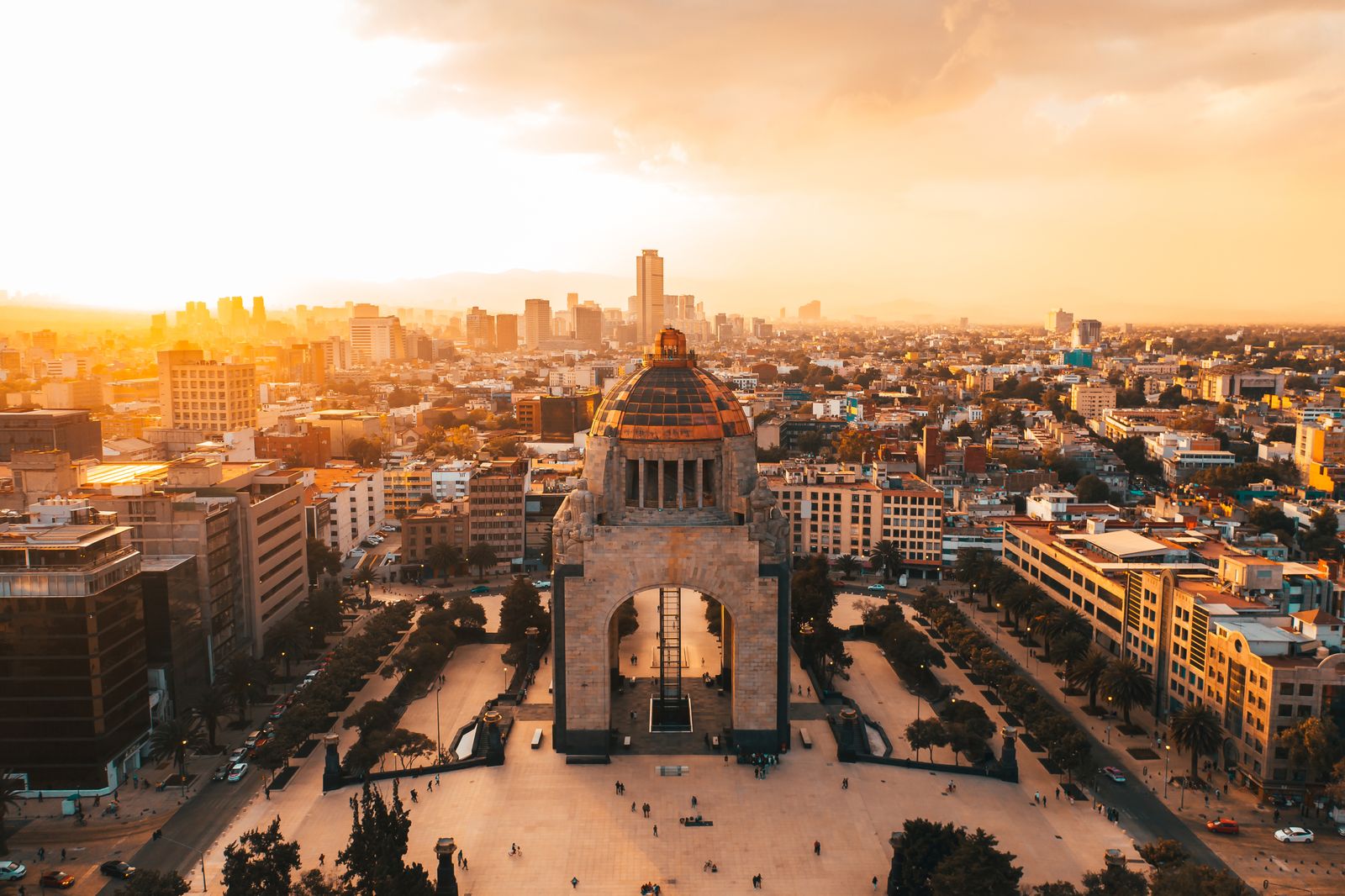
The Zocalo (the world’s second-largest public square, with the Metropolitan Cathedral and the Aztec Templo Mayor excavation), the Palacio de Bellas Artes and the pyramids of Teotihuacan (50km north, accessible as a day trip).
Photo: Jeses, CC BY-SA 2.5

One of Mexico’s finest colonial cities with Monte Alban (Zapotec ruins above the valley), the Day of the Dead (October 31 – November 2) celebrations and the Mercado Benito Juarez for the finest mole in Mexico.
Photo: Prsjl, CC BY-SA 4.0

The Pyramid of Kukulcan (the Feathered Serpent descends the steps at the equinox), the Sacred Cenote and the Great Ball Court. The Yucatan Peninsula has 7,000+ cenotes (sinkholes) for swimming.
Photo: Daniel Schwen, CC BY-SA 4.0

A Mayan city emerging from the jungle in Chiapas: the Temple of the Inscriptions (the tomb of Pakal the Great, 7th century), surrounded by forest with howler monkeys visible from the ruins.
Photo: Ljuba brank at Slovenian Wikipedia, CC BY-SA 3.0

A canyon system four times the size of the Grand Canyon in the Sierra Madre, traversed by the Chihuahua al Pacifico (El Chepe) railway: one of the great train journeys of North America.
Photo: JensUhlenbrock~commonswiki, Public domain

A highland colonial city surrounded by Tzotzil and Tzeltal Maya villages: the Mercado de Artesanias, the Sumidero Canyon and the indigenous textile tradition of San Juan Chamula.
Photo: Didier Descouens, CC BY-SA 4.0

A Mayan fortified city on a cliff above the Caribbean: the most photographed Maya ruin, with turquoise water below it. Cenotes accessible by bicycle from town.
Photo: Chuck Homler, Focus On Wildlife, CC BY-SA 4.0

The birthplace of mariachi music, charreadas (Mexican rodeo) and tequila. The Tequila express train from Guadalajara to the blue agave fields (UNESCO) and distilleries takes a day.
Photo: terri_bateman, CC0
Pork marinated in dried chilli and achiote, cooked on a rotating spit (trompo), shaved into corn tortillas with pineapple, onion and coriander. The most eaten street food in Mexico City.
A sauce of more than 30 ingredients – dried chillies, chocolate, pumpkin seeds, spices and charred ingredients – slow-cooked for days. Oaxaca’s mole negro served over turkey is Mexico’s most complex dish.
Masa (corn dough) filled with pork, chicken, cheese or beans, wrapped in corn husks or banana leaves and steamed. Made for celebrations, sold from street carts and carried on journeys.
A pre-Columbian hominy corn and pork stew with dried chilli, served with shredded cabbage, dried oregano and lime. Eaten at celebrations, especially on September 15 (Independence Eve).
Tequila (from blue agave, Jalisco region) and mezcal (from various agave species, smoked in underground pits, primarily Oaxacan) are Mexico’s two great spirits. Mezcal is more complex; tequila is the global export.
A large toasted tortilla topped with black bean paste, asiento (pork fat), quesillo (string cheese) and choice of protein. Oaxaca’s version of pizza, eaten at market stalls and by the Zapotec people for generations.
Poblano chilli stuffed with picadillo (spiced minced meat, raisins, almonds, peach), covered in walnut cream sauce and pomegranate seeds. The colors of the Mexican flag; eaten in August-September when pomegranates are in season.
Coffee brewed in a clay pot (olla) with cinnamon and piloncillo (raw cane sugar). The traditional Mexican coffee preparation, distinct from the espresso culture of the cities.
Mexico’s main international hub is Mexico City (MEX). Cancún (CUN) in the Yucatán and Guadalajara (GDL) are important secondary gateways. Aeroméxico and Volaris are the main domestic carriers.
US carriers run very cheap fares to Cancún — often under $200 return from East Coast cities. Flying into MEX and out of CUN (open-jaw) is practical for a Mexico City + Yucatán itinerary.
Iberia has the most extensive Europe–Mexico network from Madrid. Spanish is the shared language — useful for onward connections.
Volaris and VivaAerobús offer very cheap domestic fares — Mexico City to Oaxaca from MX$800 (~$45). Book at least 2 weeks ahead.
Mexico City’s Metro is one of the world’s best-value transport systems — 5 pesos a ride, clean and frequent. Use Uber for trips where the metro doesn’t reach.
November to April is the dry season and the best time for most of Mexico. May to October brings heat and rain across the country; the Pacific and Caribbean coasts are hurricane-risk areas June–November.
📅 Mexico is in its best season in January, February, March, April, November, December. See where else is good to go in those months, or browse where to go by month.
Mexico is excellent value at every level. Food from markets and street stalls is outstanding and cheap. Even luxury hotels and restaurants are significantly cheaper than their European equivalents.
The comida corrida — a set 3-course lunch served from noon–4pm — costs $4–8 and is how Mexico eats its main meal of the day.
Mexico City’s Uber is extremely affordable — a 30-minute ride rarely exceeds $8. ADO long-distance buses are comfortable, air-conditioned and safe.
Pujol (Mexico City) charges around MX$3,200 (~$180) for the tasting menu — good value for a restaurant routinely listed among the world’s best 50.
Mexico City for culture, Oaxaca for food and festivals, the Yucatán for Maya ruins and Caribbean water. Three very different Mexicos in one week.
The Zócalo is the second-largest plaza in the world — the Metropolitan Cathedral on one side, the Templo Mayor ruins on the other. Aztec foundations under a Spanish colonial city. Dinner in Roma Norte.
The Chapultepec Castle free on Sundays. The Museo Nacional de Antropología is one of the world’s great museums — allow 3 hours.
La Casa Azul (Frida Kahlo Museum) — book ahead. The Coyoacán neighbourhood is one of the most pleasant in the city. Afternoon: walk Roma Norte and Condesa. Mezcal in a bar that doesn’t have a sign.
Mexico City’s food scene is excellent. Pujol and Quintonil are among the best restaurants on earth — book months ahead for dinner, or go for their lunch menus.
1-hour drive north of Mexico City: Teotihuacan, the largest pre-Columbian city in the Americas. Climb the Pyramid of the Sun (65m). Then fly to Oaxaca (1h).
The pyramid complex is best at opening (8am). Guides are available at the entrance and worth the cost for historical context.
Oaxaca’s covered Mercado 20 de Noviembre: tlayudas, chapulines (fried grasshoppers), mole negro, mezcal de barro. Walk the Andador and the city’s colonial churches. Mezcal tasting in the evening.
Oaxaca has more varieties of mole than anywhere in Mexico. Order the mole negro at any traditional comedor and you’ll understand why it took the cook three days to make it.
The Zapotec ruins of Monte Albán (30 min drive) sit on a levelled mountaintop above the valley — engineering from 500 BC. Afternoon in one of the surrounding textile villages.
The Día de los Muertos celebrations in Oaxaca (October 31–November 2) are among the most striking festival experiences in the Americas. Plan well ahead if visiting then.
Morning flight to Cancún or Mérida (2h). The ruins of Chichén Itzá (the most visited archaeological site in Mexico) are best at opening — arrive at 8am before the tour buses. The cenote at Ik Kil nearby for a swim.
Chichén Itzá is impressive but very crowded after 10am. The less-visited Uxmal is architecturally more refined and usually far quieter.
2h drive from Chichén Itzá to Tulum — the cliff-top Mayan ruins above the Caribbean (the only Mayan site on the coast). Swim in a cenote. Fly home from Cancún.
Cenote Dos Ojos and Gran Cenote near Tulum are among the finest freshwater dive and snorkel sites in the Americas — crystal clear, cool water, stalactites.
Uber is reliable, safe and significantly better than metered taxis in CDMX.
A street taco: MXN 15-30. A restaurant meal: MXN 100-250. Accommodation follows the same pattern.
The Oaxacan Dia de los Muertos (not Halloween) is the most significant cultural event in Mexico. Book accommodation months ahead.
Drink bottled or purified water throughout Mexico.
Both available at the airport. Telcel has the best rural coverage.
Some Mexican states have elevated security advisories. Tourist destinations are generally safe; check your government’s current guidance.
An interest in Mexican history, food and indigenous cultures is received with warmth.
ADO’s first-class bus network connects all major Mexican cities in comfort.
Quick answers to the questions people most often ask before visiting Mexico.
November to April is the dry season and the best time for most of Mexico. May to October brings heat and rain across the country; the Pacific and Caribbean coasts are hurricane-risk areas June–November.
Mexico's main international hub is Mexico City (MEX). Cancún (CUN) in the Yucatán and Guadalajara (GDL) are important secondary gateways. Aeroméxico and Volaris are the main domestic carriers.
Expect roughly $30–55 a day on a budget and $80–130 mid-range, or $250+ for a more luxurious trip, per person and excluding flights.
Mexico uses the MXN.
Governments advise against travel to several Mexican states because of violent crime, while most tourist areas are widely visited. Check the state-by-state advice for your route. Always check current official travel advice before booking.
Negotiate fares directly with drivers across Mexico — popular alternative to Uber in most Mexican cities.
FreeRide-hailing in Mexico City, Guadalajara and major Mexican cities; safer than hailing street taxis.
FreeMexico’s premier intercity bus network — book first-class seats between major cities online.
FreeMexico’s dominant food delivery and grocery app — operates in all major Mexican cities.
FreeBook Teotihuacán tours, Chichen Itzá day trips, cenote snorkelling and Oaxacan cooking classes.
FreeMexico’s primary messaging platform — essential for contacting accommodation, drivers and local services.
FreeExplore Mexico’s top city destinations — from Cancún to Mexico City, each with its own distinct character.
Mexico sits within easy reach of several other destinations — each with a completely different character.


