BA
Mostar
The city of the famous old bridge
The city of the famous old bridge
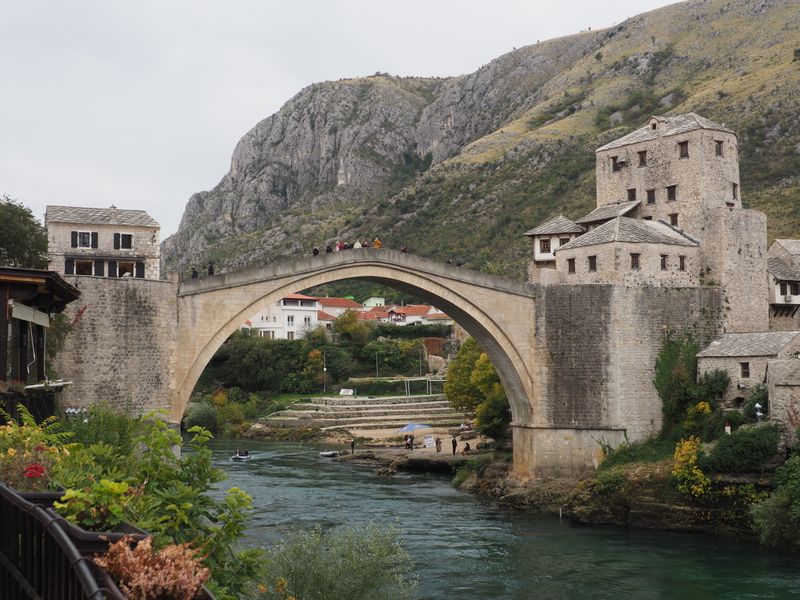
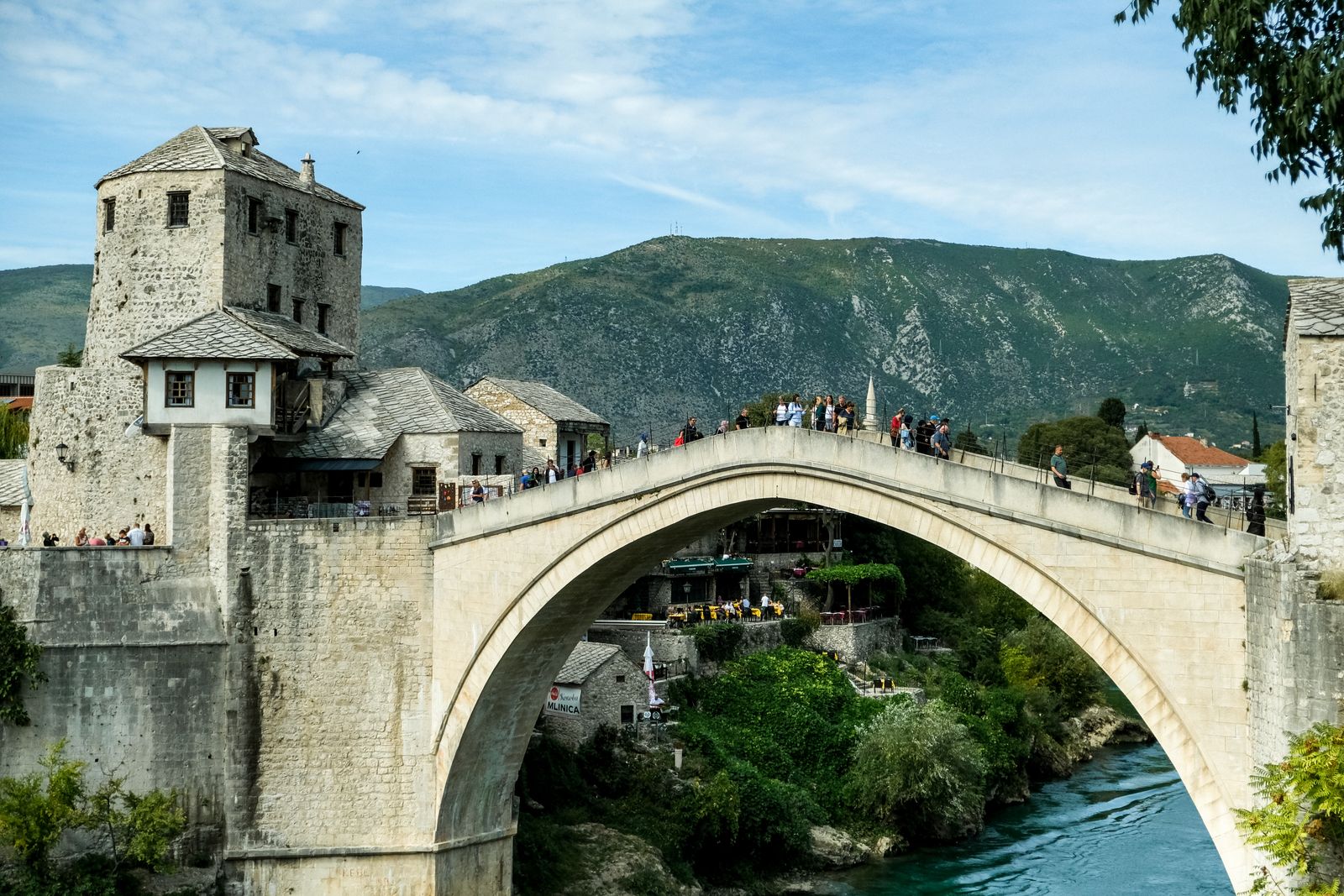
The soul of the town — a single soaring stone arch built by the Ottomans in 1566, blown up in 1993 and rebuilt with original techniques and stone by 2004. Crossing its slippery, stepped hump between the two halves of the old town is a rite of passage, and the views up and down the Neretva gorge are unforgettable. It is a UNESCO World Heritage Site and a powerful emblem of a divided city healed.
💡 Photograph it from the Neretva bank or the Crooked Bridge for the classic view; the stone is genuinely slippery — tread carefully on the arch.
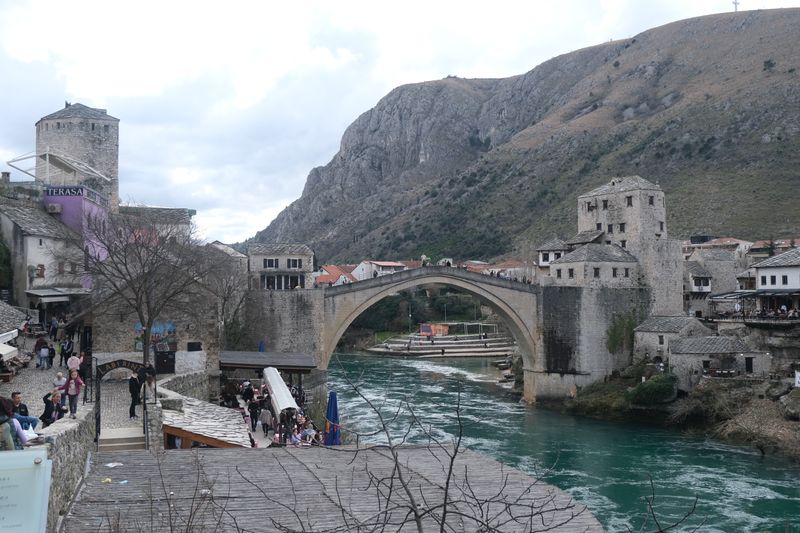
For centuries young men of Mostar have proved their mettle by diving 24 metres from the parapet of the Stari Most into the frigid Neretva — a tradition dating to at least 1664, now both a local rite and a summer spectacle. Divers of the local club collect donations before leaping, and an annual competition each July draws crowds and international cliff-divers.
💡 Divers only jump once enough tips are gathered — be patient and generous for the show; never attempt it yourself, as the cold and depth are dangerous.
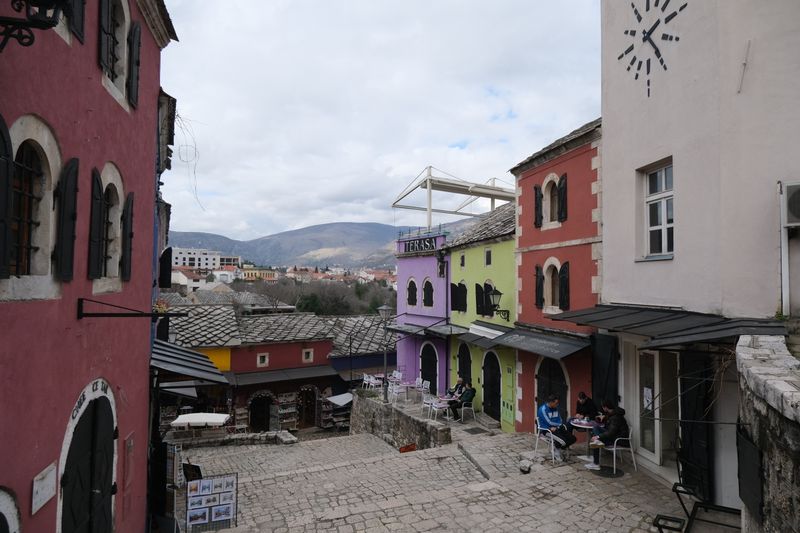
The cobbled Ottoman bazaar spilling from the bridge — Kujundžiluk — is a lane of coppersmiths, carpet and craft stalls, sweet shops and cafes in stone houses, hammered copper glinting in the sun. Nearby, the Koski Mehmed-Pasha Mosque’s minaret can be climbed for a superb view over the bridge and river, and the old Turkish houses open as museums.
💡 Climb the Koski Mehmed-Pasha Mosque minaret for the best elevated view of the bridge; the bazaar is touristy but the copperwork and Turkish-house museums are genuine.
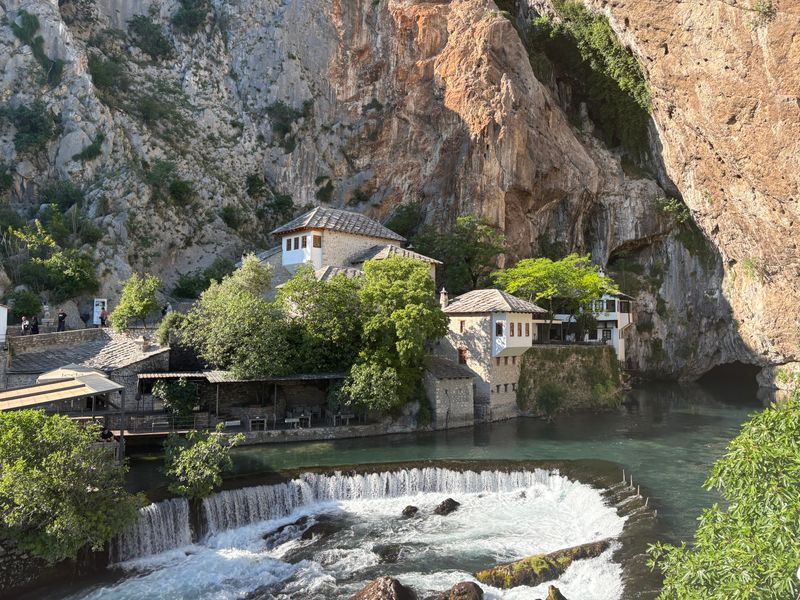
Mostar is the base for sun-drenched Herzegovina: the whirling-dervish tekke and turquoise spring at Blagaj, the perfectly preserved Ottoman fort-town of Počitelj tumbling up a hillside, the thundering Kravice Waterfalls for a summer swim, and the pilgrimage town of Međugorje. All are short drives, and many combine on a single day tour.
💡 The classic day trip loops Blagaj, Počitelj and Kravice — book a small-group tour or hire a car; Kravice is glorious for a hot-day swim.
Mostar’s food is Herzegovinian and sunny — a shade different from Sarajevo’s. Ćevapi and burek are here too, but so are grilled Neretva trout, japrak, do… and the region’s wines: Herzegovina’s limestone hills grow the indigenous žilavka white and blatina red, poured cheaply in old-town konobas. Eat ćevapi or a mixed grill in the bazaar, try the sweet, syrupy baklava and tufahija, and take a table over the water for the bridge view. Bosnian coffee is the ritual pause, served with lokum in the shade of a stone cafe. Prices are low and portions generous. For the full effect, a riverside terrace with a plate of grilled meat or trout, a glass of žilavka, and the Stari Most arching over the turquoise Neretva is one of the Balkans’ loveliest meals — and it costs very little.
Cross the Stari Most before the day-trip crowds arrive, wander the waking Kujundžiluk bazaar, and climb the Koski Mehmed-Pasha minaret for the classic view over bridge and river.
Lunch of ćevapi or Neretva trout on a riverside terrace, watching the local divers gather tips before their 24-metre leap from the parapet into the turquoise water.
Head out to the dervish tekke and spring at Blagaj and the Ottoman hill-town of Počitelj — or cool off in the Kravice Waterfalls on a hot day.
Return for the floodlit Stari Most at dusk, a glass of local žilavka on a terrace over the water, and baklava as the old town empties of day-trippers.
Mostar is mobbed by day-trippers from the coast midday — stay over to have the floodlit bridge and quiet bazaar to yourself in the evening and early morning.
The bridge divers are professionals — tip generously and enjoy the spectacle, but never jump yourself; the cold, deep Neretva is genuinely dangerous.
Herzegovina’s žilavka white and blatina red are excellent and rarely exported — old-town konobas pour them cheaply; a vineyard trip is a lovely add-on.
Blagaj, Počitelj, Kravice and Međugorje are all close — one day tour or a hire car ties them together; Kravice is a summer swimming highlight.
Herzegovina bakes in July and August — do the old town early, seek shade and water midday, and the shoulder months are more comfortable for sightseeing.
Like the rest of Bosnia, Mostar is superb value — riverside grills, wine and rooms all cost a fraction of Western Europe.
Reliable walking and driving directions in Mostar and around Herzegovina.
Free
How guesthouses, guides and tour operators communicate and take bookings.
Free
Multi-currency card with strong rates for convertible mark (KM) payments and ATM withdrawals.
Free
East-meets-West Sarajevo, the bridge city of Mostar, riverside Banja Luka, sun-warmed Trebinje and waterfall-town Jajce — Bosnia packs remarkable range into a small country.