Paro travel guide
BT

Paro

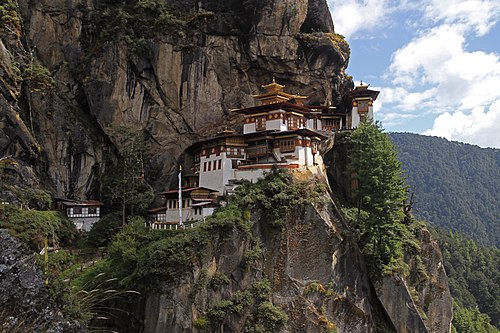
Home of the Tiger's Nest

Photo by Tenzing T on Pexels
🗣
LanguageDzongkha
💰
CurrencyBTN
☀️
Best Time to VisitMarch to May, September to November

Paro is where almost every Bhutan journey begins and ends — the country’s only international airport sits on the valley floor, its runway threading between Himalayan peaks in one of the world’s most dramatic landings. But Paro is far more than an arrival hall: a broad, beautiful valley of terraced rice paddies, whitewashed farmhouses and the finest dzong in the country, ringed by mountains and steeped in the deepest Buddhist history.

Above it all clings the image of Bhutan itself — the Tiger’s Nest, Taktsang monastery, glued impossibly to a sheer cliff 900 metres above the valley. The hike up to it is the pilgrimage every visitor makes and the country’s defining experience. Beyond that headline, Paro rewards slow days: the great fortress of Rinpung Dzong, the round watchtower housing the national museum, ancient temples said to pin down a demoness, and valley walks past prayer flags and farmhouses. It’s Bhutan’s most photogenic valley and its spiritual showpiece.

Top Sights in Paro

Tiger's Nest (Taktsang)

Tiger’s Nest (Taktsang)

Bhutan’s icon — a monastery clinging to a granite cliff 900 metres above the Paro valley, built where Guru Rinpoche is said to have flown on the back of a tigress to meditate in a cave in the 8th century. The pilgrimage to reach it is a steep two-to-three-hour climb through pine forest and past prayer flags, with the monastery revealing itself across a final gorge — an unforgettable sight.

💡 Start early to beat the heat and crowds; there’s a halfway cafeteria with the classic view, and hiring a walking stick or pony (part way) helps — allow 5–6 hours round trip.

Rinpung Dzong

Rinpung Dzong

The ‘fortress on a heap of jewels’ is arguably Bhutan’s most beautiful dzong — a massive whitewashed fortress-monastery above the river, reached across a traditional covered cantilever bridge. Its courtyards, galleries of religious murals and towering central utse are a masterclass in Bhutanese architecture, and it hosts the spectacular Paro Tsechu festival each spring.

💡 Cross the old wooden Nyamai Zam bridge for the classic approach and photo; if your visit hits the spring Paro Tsechu, the masked dances here are extraordinary.

The National Museum (Ta Dzong)

The National Museum (Ta Dzong)

Housed in the round former watchtower above Rinpung Dzong, the National Museum holds Bhutan’s treasures — thangka paintings, ritual objects, arms, textiles, stamps and natural history — in a building that is itself a spiralling architectural curiosity. It’s the best single primer on Bhutanese art, religion and history in the country.

💡 Combine it with the dzong just below — the walk down connects the two; the watchtower’s circular galleries are a highlight in themselves.

Kyichu Lhakhang & the Valley

Kyichu Lhakhang & the Valley

Kyichu Lhakhang is one of Bhutan’s oldest and holiest temples, said to be one of 108 built in a single day in the 7th century by a Tibetan king to pin down a giant demoness across the Himalayas. Beyond it, the Paro valley unfolds in terraced fields, farmhouses and gentle walks, with the ruined Drukgyel Dzong and views toward sacred Mount Jomolhari at its head.

💡 Kyichu’s orange trees are said to bear fruit year-round by miracle — a serene, deeply atmospheric temple; pair it with a farmhouse visit and a hot-stone bath.

Eating & Drinking

Paro eats like the rest of Bhutan — fiery and cheese-laden — with the valley’s own specialties. Ema datshi (chilli and cheese) anchors every meal, alongside red rice grown in the valley’s terraces, pork with radish, dried beef, and momos. A Paro treat is the traditional farmhouse meal: sitting on the floor of a painted timber farmhouse, eating a home-cooked spread and finishing with a hot-stone bath, where river stones heated in a fire are dropped into a wooden tub of water and artemisia herbs — the classic Bhutanese soak after the Tiger’s Nest climb. The town has cosy restaurants and cafes for visitors, butter and milk teas, and ara, the local spirit. Simple, hearty and warming — exactly what the altitude and the hiking call for.

Best Time to Visit Paro

Jan
5°C
Cold, clear; snowy peaks
Feb
8°C
Chilly, bright; quiet valley
Mar
11°C
Spring blossom; Paro Tsechu
Apr
15°C
Warm days, clear mountain air
May
18°C
Green terraces; pre-monsoon
Jun
20°C
Monsoon starts; some cloud
Jul
20°C
Wettest; misty valley
Aug
20°C
Monsoon; lush paddies
Sep
18°C
Skies clear; ideal hiking
Oct
14°C
Crisp autumn; best views
Nov
10°C
Cold and brilliantly clear
Dec
6°C
Cold; snow-dusted, serene

What Does Paro Cost?

Budget
$100 / day (SDF)
  • Sustainable Development Fee: $100/night
  • 3-star hotel (extra): $40–70
  • Guide & driver (extra): $50–80
  • Tiger’s Nest entry: ~$15
  • Local meals: $5–10
Mid-Range
$250–400 / day all-in
  • SDF + 4-star hotel: $150–200
  • Guide, driver & fuel: $60–90
  • Farmhouse meal & hot-stone bath: $25–40
  • Museum & site fees: $10–20
  • Restaurant meals: $20–30
Splurge
$700+ / day all-in
  • SDF + luxury lodge (Amankora, Six Senses): $1200+
  • Private premium guide: $100+
  • Helicopter to Tiger’s Nest base: on request
  • Fine dining & spa: $100+
  • Bespoke festival & blessing experiences: $100+

Two Days in Paro

Day 1 AM
The Tiger’s Nest

The big one: an early start for the steep pilgrimage climb through pine forest to Taktsang, glued to its cliff 900m up — Bhutan’s defining hike and view.

Day 1 PM
Farmhouse & soak

Descend to a traditional farmhouse lunch, then reward the legs with a hot-stone bath — river stones heated in fire, artemisia herbs, and total Himalayan bliss.

Day 2 AM
Dzong & museum

Cross the old covered bridge to the beautiful Rinpung Dzong, then up to the round watchtower National Museum for Bhutan’s art and history.

Day 2 PM
Ancient valley

Visit the 7th-century Kyichu Lhakhang, then a gentle valley walk past paddies and farmhouses toward Drukgyel Dzong, with Jomolhari on the horizon on clear days.

Travel Tips

🕋

Train for the Nest

The Tiger’s Nest is a steep 900m climb at altitude — take it slow, start early, carry water, and allow 5–6 hours; ponies help on the way up only.

The gateway landing

Paro has Bhutan’s only international airport and a famously dramatic approach — flights are weather-dependent and limited, so build in buffer time.

🌋

Acclimatise here

At 2,200m Paro is a good place to ease into the altitude before higher valleys — don’t schedule the Tiger’s Nest for your first morning off the plane.

🎋

Aim for a tsechu

The spring Paro Tsechu fills Rinpung Dzong with masked dances and pageantry — one of Bhutan’s greatest festivals; book far ahead if you want it.

Do the hot-stone bath

A traditional farmhouse hot-stone bath after the climb is a quintessential Paro experience — arrange it through your guide a day ahead.

🕊

Temple etiquette

Cover arms and legs, remove shoes and hats inside temples and dzongs, walk clockwise around sacred objects, and never photograph altars unless permitted.

Useful Apps

Bhutan travel is arranged through a licensed operator — a few apps still help with maps, currency and staying in touch on the ground.
🗺

Google Maps

Orient yourself in the valley and on the Tiger’s Nest trail — your guide leads the way.

Free

💬

WhatsApp

How operators and guides coordinate your itinerary and airport pickups.

Free

💰

XE Currency

Convert ngultrum for crafts, tips and farmhouse extras.

Free

💳

Wise

Multi-currency card useful for the region — Bhutan is largely cash on the ground.

Free

Content last reviewed: July 2026 by the Traveling To editorial team.
Explore More Destinations