BT
Bhutan
The last Shangri-la and happiness kingdom
The last Shangri-la and happiness kingdom
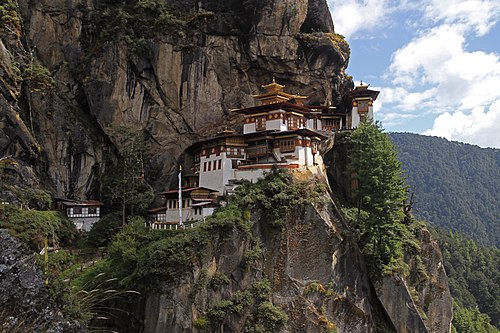
A 17th-century monastery complex clinging to a 3,000m cliff: a 3-hour hike through a pine forest of prayer flags to the four temples built around the cave where Guru Rinpoche meditated in 747 AD.
Photo: Gerd Eichmann, CC BY-SA 4.0

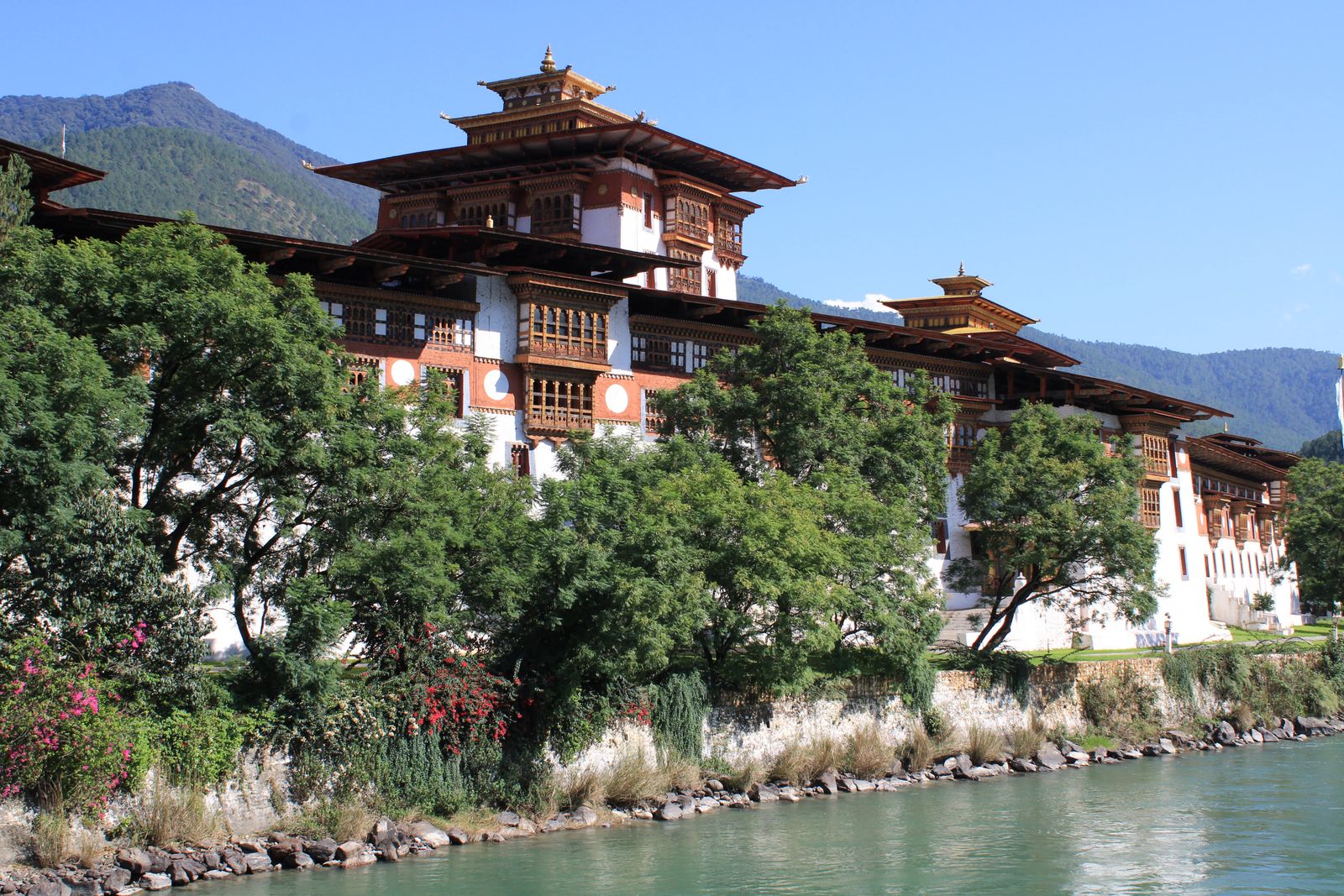
A 17th-century fortress at the confluence of two rivers: the most beautiful dzong in Bhutan, its whitewashed walls reflected in turquoise river water.
Photo: Bernard Gagnon, CC BY-SA 4.0

The most isolated and least-visited valley in western Bhutan: the highest motorable pass in Bhutan (Chele La, 3,988m) with prayer flags across the ridge.
Photo: User: (WT-shared) Shoestring at wts wikivoyage, CC BY-SA 4.0

A high glacial valley (3,000m) where 500+ black-necked cranes (a sacred bird in Bhutanese culture) winter from November to March.
Photo: Richapandkar, CC BY-SA 4.0

The world’s highest capital with no traffic lights: the Tashichho Dzong (seat of government), the Memorial Chorten (a stupa built in memory of the third king, circled by elderly Bhutanese all day) and the weekend market.
Photo: Bernard Gagnon, CC BY-SA 4.0
The spiritual heartland of Bhutan: four valleys of ancient temples (Kurjey Lhakhang where Guru Rinpoche left a body imprint in stone, Jambay Lhakhang founded in 659 AD).
Photo: Jean-Marie Hullot, CC BY-SA 2.0

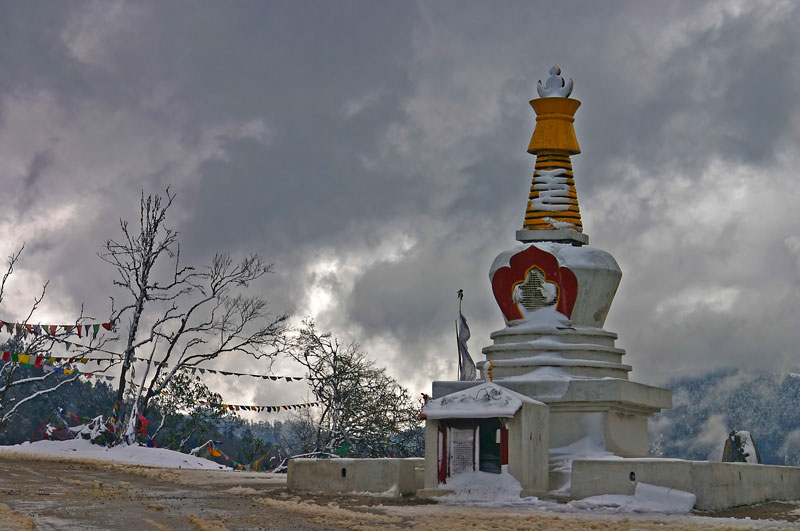
A mountain pass at 3,100m between Thimphu and Punakha: 108 chortens (stupas) on a ridge with a panorama of the Himalayan giants on a clear day.
Photo: Sukh1810, CC BY-SA 4.0

The world’s most difficult multi-day trek: a 25-day crossing of 11 mountain passes above 4,000m, through the most remote region of Bhutan.
Bhutan (Wikipedia) →Photo: Rik2608, CC BY-SA 4.0
Red and green chillies cooked in a cheese sauce: Bhutan’s national dish. The chilli is the primary vegetable, not a spice. Eaten at every meal.
A short-grain nutty red rice grown only in the Paro Valley: denser and earthier than white rice, served with butter at every Bhutanese meal.
Pork slow-cooked with dried red chillies and radishes: a standard Bhutanese winter dish.
Spiced minced chicken with onion, tomato and coriander: a lighter Bhutanese curry eaten across the country.
Black tea churned with yak butter and salt: served at every monastery, every home and every official welcome. Warming, fatty and unlike any other tea.
Home-distilled spirit from rice, wheat or corn: varying enormously in quality and strength. Offered at every farmhouse visit.
Two Bhutanese lagers: clean, cold and available at restaurants throughout the country.
Bhutanese fresh cheese made from yak or cow milk: semi-soft, mild and central to most cooked dishes.
Paro International (PBH) is Bhutan’s only commercial airport. Only Drukair and Bhutan Airlines are certified to land here. Tickets are often sold out weeks ahead. A licensed Bhutanese tour operator must arrange all travel. For trip planning, see the official Bhutan tourism portal.
The most common routings from Europe are via Delhi (Drukair connects Delhi–Paro in 2h, multiple weekly) or Bangkok (Drukair and Bhutan Airlines both serve BKK–PBH). Book well ahead as capacity is limited.
Delhi is the most convenient hub for Bhutan — Drukair operates multiple weekly Delhi–Paro flights in 2 hours. Kolkata is the shortest connection at 1h30.
Overland entry from India is possible at three official land borders. Indian nationals have different (easier) visa requirements and are exempt from the SDF — the land borders serve primarily the Indian market.
All internal transport is arranged by the licensed tour operator — independent taxis and buses are not available to foreign tourists. The road network is good between main towns; mountain passes can be snowed in December–February.
March to May and September to November are ideal — rhododendrons in bloom in spring, crystal-clear skies in autumn after the monsoon. The Paro Tshechu festival (spring) and the Thimphu Tshechu (autumn) are the most atmospheric times to visit. Summer (June–August) is wet and the mountain passes can be closed.
📅 Bhutan is in its best season in March, April, May. See where else is good to go in those months, or browse where to go by month.
Bhutan charges all foreign visitors a Sustainable Development Fee (SDF) of US$100 per person per night in addition to tour costs. This is by design — Bhutan controls visitor numbers as a deliberate environmental and cultural policy.
Independent travel is not permitted — all foreign visitors must book through a licensed Bhutanese tour operator.
Bhutanese cuisine — ema datshi (chillies and yak cheese stew, the national dish), red rice, dried yak meat, buckwheat pancakes — is unique in South Asia.
Amankora operates five lodges across Bhutan’s valleys — Paro, Thimphu, Punakha, Gangtey, Bumthang — at US$1,500–3,000/night fully inclusive (excluding SDF).
Paro for two days, Thimphu for two, the Punakha valley for two, the Tiger’s Nest Monastery to close. Bhutan cannot be visited independently — all visits require a licensed tour operator and the Sustainable Development Fee (SDF).
Paro Airport is one of the most challenging commercial airports in the world — a short runway in a narrow Himalayan valley at 2,235m, requiring visual approaches and permitting only specially trained pilots. Rinpung Dzong (the fortress-monastery overlooking the Paro valley, 17th century) in the afternoon.
Only Drukair and Bhutan Airlines are certified to land at Paro. The mountain approach — banking between peaks, the runway appearing suddenly in the valley floor — is one of the most memorable landings in commercial aviation.
The Tiger’s Nest (Paro Taktsang) is a monastery complex built into a granite cliff 900m above the Paro Valley floor. The 3h hike (each way) through pine forest ends at four temple buildings clinging to the rock face above a 300m vertical drop. Padmasambhava is said to have meditated here in a cave in the 8th century.
The Tiger’s Nest is one of the most dramatic architectural sites in Asia — not primarily for spiritual reasons but because the building’s position on the cliff is physically improbable. The walk through the rhododendron forest is excellent in April.
1h drive from Paro. Thimphu is the world’s only capital without a traffic light — a policeman directs traffic from a decorated booth at the main intersection. The National Memorial Chorten (a large white stupa circled by spinning prayer wheels and elderly pilgrims all day), the Tashichho Dzong (the government fortress), the National Museum of Bhutan.
Bhutan’s Gross National Happiness index — the official government metric by which policy is assessed, prioritising wellbeing over GDP — was created in 1972 by the 4th King and has influenced development economics globally. The Centre for Bhutan Studies tracks it with quarterly surveys.
The Folk Heritage Museum (a three-storey rammed-earth farmhouse showing traditional Bhutanese domestic life), the National Textile Museum (Bhutanese weaving — kishuthara silk, raw silk, cotton), the weekend market for yak cheese, red rice, dried chillies and local crafts. The Buddha Dordenma statue (51m bronze-and-gold Buddha above the valley).
The Buddha Dordenma (completed 2015) contains 125,000 smaller Buddha statues inside it — each one individually consecrated. The statue sits at 2,580m above the Thimphu valley and is visible from most of the city. Entry is free.
3h from Thimphu via the Dochula Pass (3,100m, 108 chortens, panoramic Himalayan views on clear days). Punakha Dzong (the “Palace of Great Happiness”, built in 1638, at the confluence of two rivers, the most beautiful dzong in Bhutan) in the afternoon.
The Dochula Pass panorama on a clear morning (typically before 10am before cloud builds) shows a 180-degree sweep of the eastern Himalayas including Masang Gang (7,194m) and Gangkhar Puensum (7,570m, the highest unclimbed peak in the world — Bhutan does not permit summit attempts above 6,000m).
Chimi Lhakhang — the Fertility Temple, dedicated to Drukpa Kunley (the “Divine Madman”, a 15th-century saint whose unconventional methods included using explicit imagery to subdue demons) — across the Punakha rice paddies. The phallus paintings on houses throughout Bhutan also derive from Drukpa Kunley’s tradition.
Drukpa Kunley is one of the most unusual figures in Tibetan Buddhism — a poet, saint and provocateur who deliberately violated social norms to challenge attachment. The painted phalluses on Bhutanese house walls are protective symbols, not decorative choices.
Drive back to Paro via Thimphu (total 3h). The Paro market for final purchases: handwoven textiles, thangka paintings, carved wooden bowls, red rice and buckwheat. The Paro valley in the late afternoon before the next morning’s flight departure.
Red rice (a nutty, slightly chewy variety grown at altitude in the Paro and Punakha valleys) is Bhutan’s staple grain and is available nowhere else in this quality. It keeps for months and makes an excellent edible souvenir.
Independent travel is not permitted in Bhutan. Book through a licensed tour operator.
This fee (plus basic package costs) funds free education and healthcare for all Bhutanese citizens.
Even in April or October, snow is possible above 3,000m. Pack warm layers.
The hospitality is not performative; it is a cultural value expressed in small gestures.
Legs and shoulders must be covered at all religious sites.
The mobile phone photo at Tiger’s Nest is taken by every visitor; the monastery itself requests phones are put away inside.
The Paro approach is one of the world’s most dramatic: only 8 pilots in the world are certified to fly it.
Even Thimphu (2,320m) causes mild altitude effects. The Tiger’s Nest hike gains 900m.
Quick answers to the questions people most often ask before visiting Bhutan.
March to May and September to November are ideal — rhododendrons in bloom in spring, crystal-clear skies in autumn after the monsoon. The Paro Tshechu festival (spring) and the Thimphu Tshechu (autumn) are the most atmospheric times to visit.
Paro International (PBH) is Bhutan's only commercial airport. Only Drukair and Bhutan Airlines are certified to land here. Tickets are often sold out weeks ahead.
Expect roughly US$200–300/day a day on a budget and US$350–500/day mid-range, or US$800+/day for a more luxurious trip, per person and excluding flights.
Bhutan uses the BTN.
Plug types: Type D / F (mixed, 230V).
Bhutan’s official taxi app — book licensed taxis in Thimphu and Paro for transparent, metered fares.
FreeBook Tiger’s Nest Monastery hikes, Punakha Dzong tours, archery experiences and Bhutanese cultural journeys.
FreeBhutan’s primary messaging platform — essential for communicating with licensed guides and accommodation.
FreeBook hotels and eco-lodges across Bhutan — all visitors must book through a licensed tour operator.
FreeTrack BTN/INR rates — Bhutan’s Ngultrum is pegged to the Indian Rupee; both are accepted.
FreeDownload offline topographic maps of Bhutan’s Himalayan terrain — cell coverage is very limited.
FreeThe Himalayan capital, the Tiger’s Nest, the great river-fortress, the spiritual heartland and the glacial crane valley — five valleys of the Dragon Kingdom.
Bhutan sits within easy reach of several other destinations — each with a completely different character.


