BG
Plovdiv
One of the oldest cities in Europe
One of the oldest cities in Europe
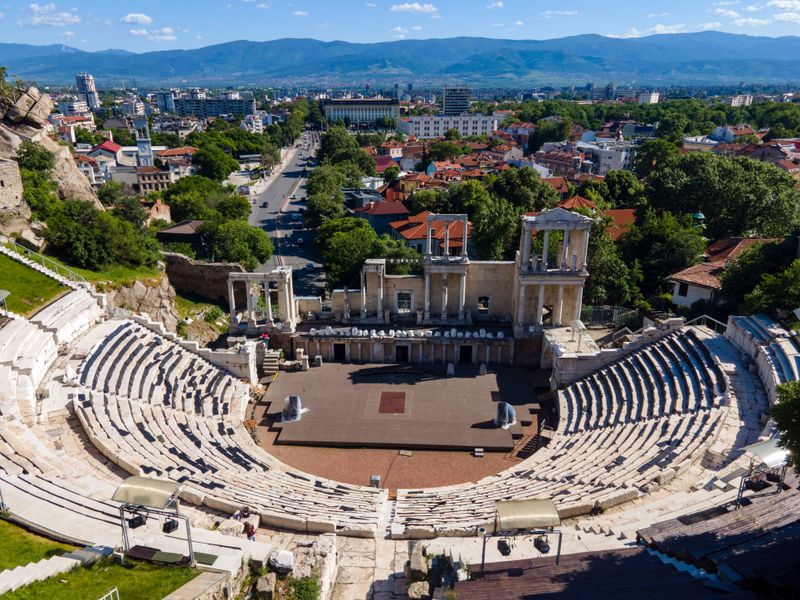
One of the best-preserved Roman theatres in the world — a 1st-century semicircle of marble seating for 5,000, dramatically sited on the saddle between two of Plovdiv’s hills with the city and mountains beyond. Rediscovered under a landslide in the 1970s, it’s not a dead ruin but a living venue, still hosting opera, concerts and plays under the stars each summer.
💡 Visit by day for the views and detail, but if you can, catch an evening performance — seeing a show in a 2,000-year-old theatre is unforgettable.
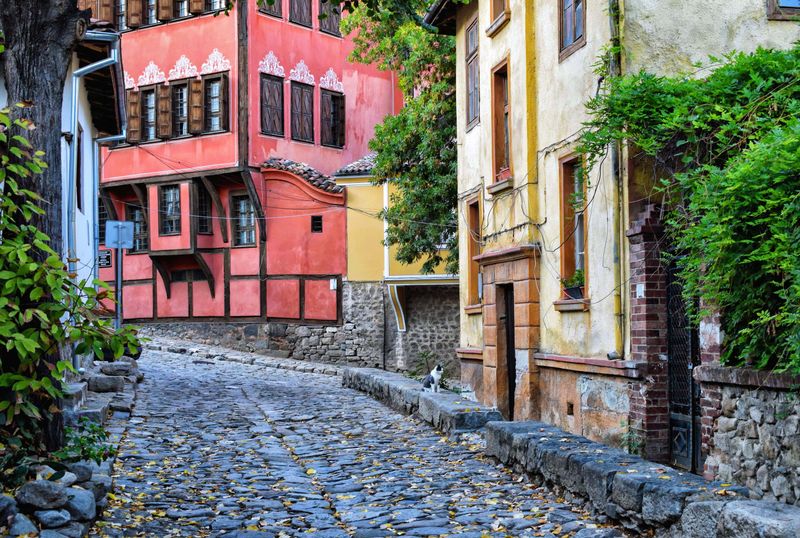
Plovdiv’s Old Town drapes over one of the hills in a maze of steep cobbled lanes and extravagant National Revival mansions — tall, painted, timber-framed merchant houses from the 19th century, many now house-museums, galleries and cafes. It’s one of the most beautifully preserved historic quarters in the Balkans, and simply wandering it is the city’s chief pleasure.
💡 The cobbles are steep and uneven — wear good shoes; visit a couple of the painted house-museums (Balabanov, Hindliyan) for their opulent interiors.
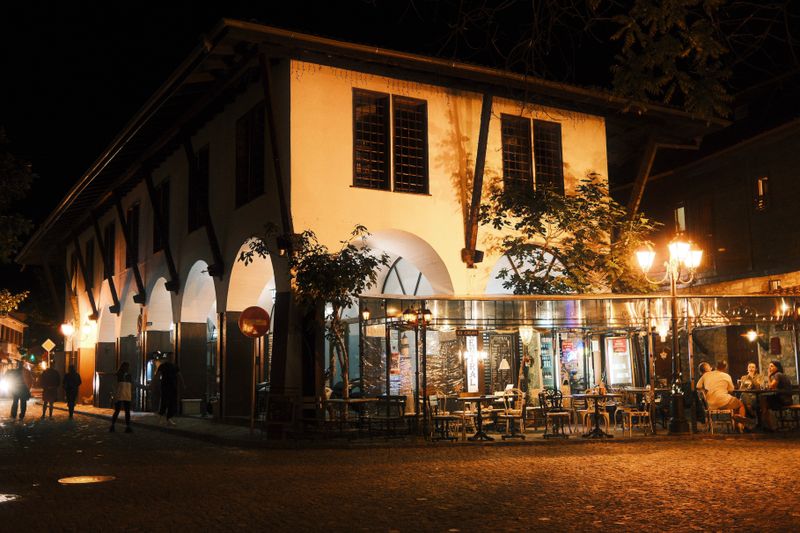
Just below the Old Town, Kapana — ‘the trap’, for its tangle of tiny streets — is Plovdiv’s arty, bohemian heart, a regenerated quarter of independent galleries, design shops, craft-beer bars, third-wave coffee and street art. It’s where the city’s young, creative energy concentrates, buzzing day and night, and the best place to eat, drink and feel Plovdiv’s modern pulse.
💡 Kapana is compact and made for grazing — hop between craft-beer bars, wine spots and cafes; it’s liveliest on warm evenings and during its festivals.
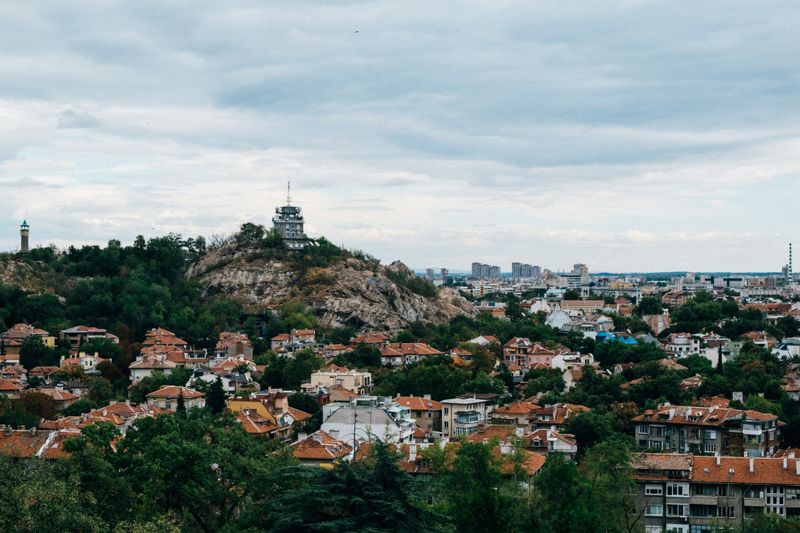
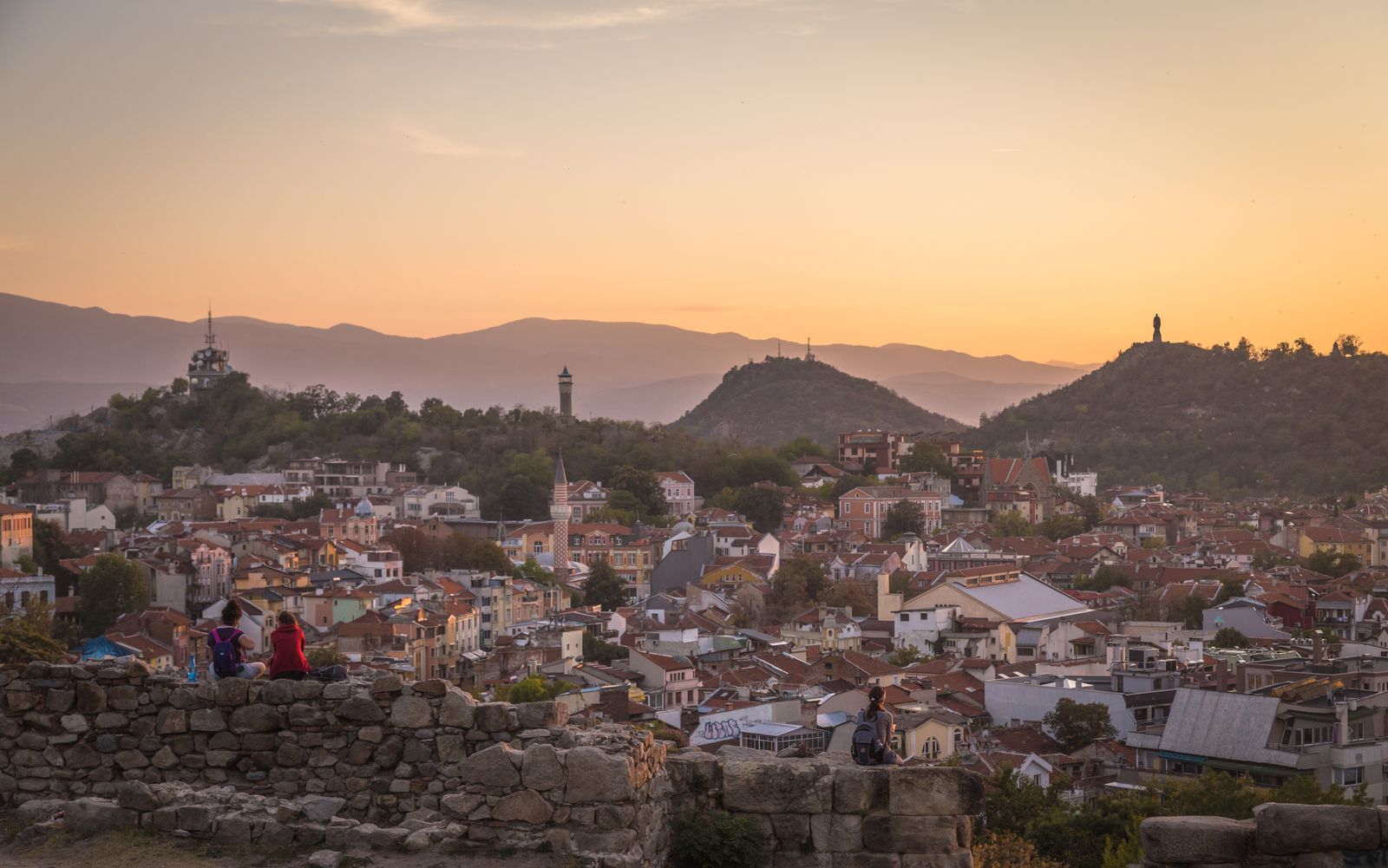
Plovdiv is built on hills (tepeta), and climbing them is part of its rhythm. Nebet Tepe, at the top of the Old Town, holds the Thracian and Roman ruins where the city began, with panoramic views over the rooftops and plain. The Bunardzhika hill’s giant Soviet ‘Alyosha’ monument and the tree-shaded slopes offer more views and green escapes across the city.
💡 Climb Nebet Tepe at sunset for the best panorama over the Old Town and the Thracian plain — the ancient acropolis where six millennia of Plovdiv began.
Plovdiv eats wonderfully and cheaply, and it’s the heart of Bulgaria’s best produce region — the Thracian plain grows the tomatoes and peppers that make the national shopska salad sing, and the surrounding hills produce excellent wine. Graze the classics: shopska salad, grilled kebapche and kyufte, banitsa, stuffed peppers and the yogurt-rich cold soup tarator in summer, in old mehana taverns or Kapana’s modern bistros. The creative district has driven a real food-and-drink renaissance — craft breweries, natural-wine bars, specialty coffee — alongside the cheap, hearty traditional places. Bulgarian wine is a highlight (the Thracian Valley is the country’s prime region), poured cheaply everywhere, and rakija toasts every meal. With top produce, a buzzing scene and rock-bottom prices, Plovdiv may be the most enjoyable place to eat and drink in the country.
Start at the magnificent Roman theatre for the views and detail, then climb to Nebet Tepe’s ancient acropolis at the top of the Old Town — six millennia of city below.
Wander the Old Town’s cobbled lanes and flamboyant painted Revival houses, ducking into a house-museum or two, then a shopska salad and grill lunch.
Drop into the arty Kapana district for galleries, street art and specialty coffee, feeling the creative energy that made Plovdiv a Capital of Culture.
Embrace the local aylyak (glorious idleness) — hop Kapana’s craft-beer and natural-wine bars, a modern Bulgarian dinner, and Thracian Valley wine as the night warms up.
The 2,000-year-old Roman theatre still hosts summer opera and concerts — seeing a performance there is a Plovdiv highlight; check the season’s programme.
Plovdiv is the gateway to Bulgaria’s prime wine region — drink local everywhere, and a Thracian Valley winery tour is a lovely, cheap day out.
The Old Town’s charm is steep, uneven cobbles — comfortable, grippy footwear makes exploring the hills far more pleasant.
Plovdivians prize aylyak — unhurried, carefree idling; slow down, sit in Kapana, and enjoy the city’s relaxed rhythm rather than rushing sights.
Plovdiv is under two hours from Sofia by frequent train or bus — an easy day trip, but far better as an overnight to enjoy the evenings.
Great produce, wine and a buzzing scene at some of the lowest prices in the EU — Plovdiv is one of Europe’s best-value city breaks.
Reliable walking directions around Plovdiv’s hills and old town.
Free
The main ride-hailing app in Plovdiv — cheap and easy for hops around the city.
Free
Cheap coaches to Sofia, the Black Sea coast and across the Balkans.
Free
Multi-currency card with strong rates for Bulgarian lev payments and ATM withdrawals.
Free
Ancient Sofia under its mountain, seductive Plovdiv, the tsars’ city of Veliko Tarnovo, the ski town of Bansko and Black-Sea Nessebar — Bulgaria spans mountains, history and coast.