XK
Gjakova
The Ottoman Bazaar Town of Kosovo
The Ottoman Bazaar Town of Kosovo
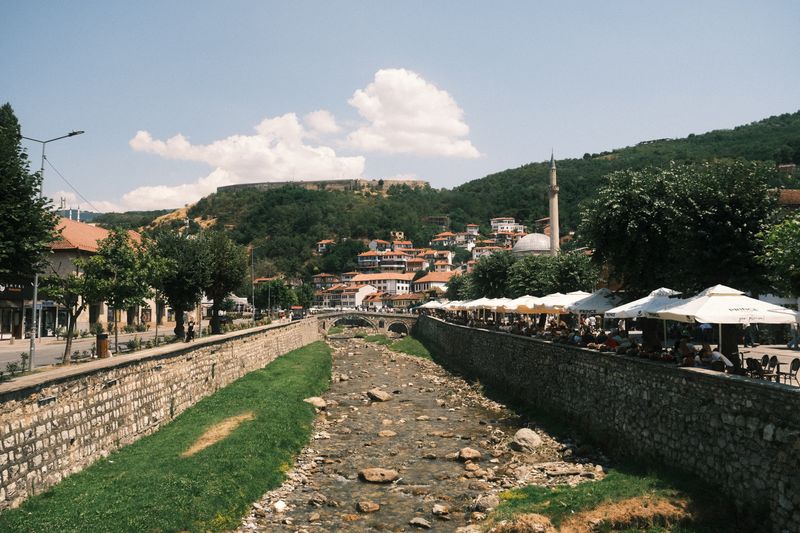
Gjakova’s old bazaar (Carshëja e Gjakoves; free; the area between Sheshi Zahir Pajaziti and the Hadum Mosque) is the finest and most intact Ottoman bazaar in the Western Balkans — 600+ years of continuous trading in the same stone-paved lanes, with the same family craft trades operating in the same locations across generations. Coppersmiths, silversmiths, leather workers, and traditional textile merchants occupy the same caravanserai buildings used since the 15th century.
💡 Walk the bazaar at 8am when the craftsmen are opening their workshops and the morning light catches the brass and copper in the market windows. The bazaar is pedestrianised for most of its length; the north end near the Hadum Mosque is the finest for photography.
The Hadum Mosque (1594; the most significant Ottoman monument in Gjakova; free entry outside prayer times) is a triple-domed structure in dressed limestone, built by the Hadum Agha (the eunuch of Sultan Suleiman the Magnificent) with a courtyard fountain still flowing after 430 years. The Great Hammam (Hamami i Madh; 16th century; adjacent to the mosque; partially restored; free to enter; open daytime) is one of the largest surviving Ottoman bathhouses in the Balkans.
💡 Visit the Hadum Mosque interior with the caretaker (free; knock at the caretaker’s house to the east of the mosque if the door is locked). The wooden ceiling inside (19th-century painted floral panels; almost unique in Kosovo) is the finest mosque interior detail outside Pristina.
The Emin Gjiku Ethnological Museum (Rr. Bajram Curri; €1; Tue–Sun 9am–5pm) is a 17th-century Albanian konak (large house) preserved intact with traditional domestic furnishings, weapons, embroidered textiles, and household objects of Gjakova’s Ottoman-era Albanian merchant class. The building itself — 3 storeys of carved wood and painted ceilings around an interior courtyard — is the finest domestic vernacular architecture in Kosovo.
💡 The museum caretaker will explain the objects and their significance in Albanian; if you have a smartphone with Google Translate camera mode, you can follow along. Allow 45 minutes and pay the €1 entry fee, which directly supports the museum’s maintenance.
The Bistrica River flows through Gjakova and the surrounding lowland plain, and the villages within 10–20km of the city preserve the finest kulla (tower houses) in Kosovo — 3–4-storey fortified clan houses built for defence in the Ottoman period, mostly 18th–19th century, still inhabited by descendants of the original families. A taxi circuit of the kulla villages (Junik, Doberdolan; €20–30 for a 3h round trip) is the most distinctive excursion from Gjakova.
💡 Ask your guesthouse to arrange a kulla village circuit with a local driver who knows which houses are accessible to visitors. Some families welcome visitors; others require advance notice through community connections. The village of Junik (20km north) has the highest concentration of intact kulla and a Prizren League monument.
Gjakova has Kosovo’s finest traditional Albanian urban food. Restaurant Tradita (Rr. UCK; traditional cuisine in a restored Ottoman house; €6–12) is the best restaurant in the city: slow-cooked lamb with rice, fli on advance order, and excellent baklava. The old bazaar coffee house (Kafe e Carshëjes; inside the bazaar market area; Albanian macchiato €0.80; open 6am) is the oldest continuously operating coffee establishment in Kosovo. Fresh baklava from the pastry shops on the north end of the bazaar (€0.50 per piece) is the non-negotiable Gjakova sweet. Gjakova’s evening beer culture (terraces on the main square, Sheshi Zahir Pajaziti) operates until midnight in summer.
Arrive by furgon from Prizren (45 mins; €2) or Peja (1h; €2). Old bazaar at 9am (copper workshops, silverwork, morning coffee at Kafe e Carshëjes; €0.80; 2h). Hadum Mosque interior (free; caretaker-guided; 30 mins). Emin Gjiku Ethnological Museum (€1; 1h; the finest vernacular interior in Kosovo). Lunch at Restaurant Tradita (€7–10). Afternoon: taxi to Junik village kulla circuit (€20 return; 2h; arrange through the restaurant). Return to Gjakova. Furgon to Prizren, Peja, or Pristina by evening.
The old bazaar at 8am has working craftsmen, warm light from the east through the lane openings, and almost no tourists.
The Ethnological Museum (€1; Tue–Sun 9am–5pm) in the 17th-century konak is one of the most extraordinary interiors in Kosovo &mdash.
Gjakova sits midway on the Prizren–Peja road and works well as a 4–6 hour stop between the two cities: bazaar in the morning, Hadum Mosque, lunch, Ethnological Museum, and then furgon to Peja (1h; €2) or back to Prizren (45 mins; €2).
The Kosovo furgon network connects Gjakova to Prizren (45 mins; several per hour) and Peja (1h; hourly) throughout the day.
Walking the bazaar and the surviving mosque, knowing that the residential neighbourhoods around it were burned block by block in April 1999, gives the survival of the Ottoman commercial architecture an additional emotional weight.
Traditional Albanian kulla (fortified tower houses; 18th–19th century; still inhabited) are found throughout the mountains of western Kosovo but the village of Junik (20km north of Gjakova; taxi €20 return) has the most accessible concentration.
Download Kosovo offline map. GPS works well in the mountains.
Free
Best multi-currency EUR card. Most Kosovo cities now accept cards at restaurants.
Free
Ride-hailing (like Uber) available in Peja and larger Kosovo cities.
Free
Explore Kosovo’s remarkable cities.