NE
Niger
Air Mountains, Tenere emptiness & Wodaabe beauty pageant
Air Mountains, Tenere emptiness & Wodaabe beauty pageant
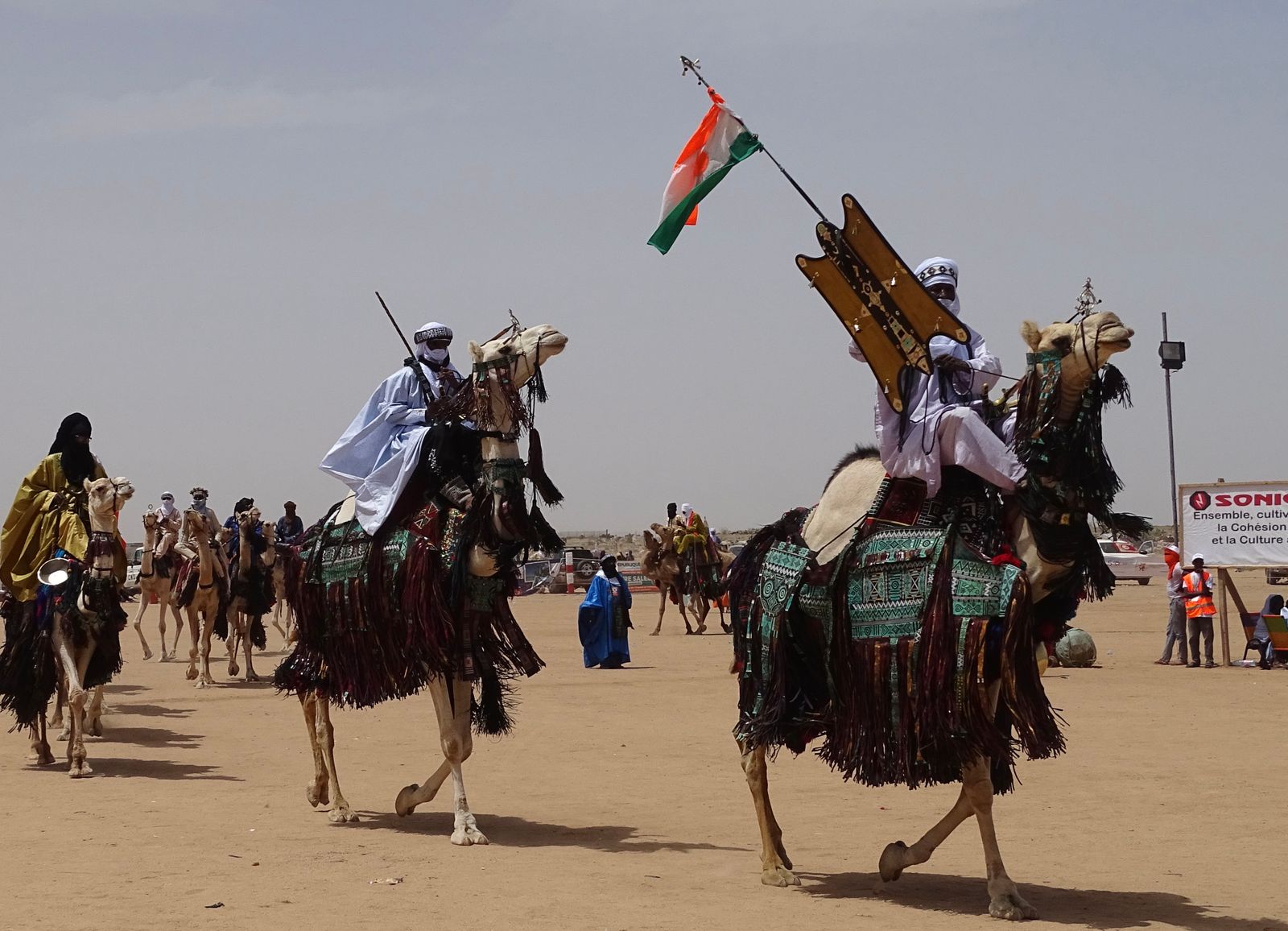
Niger is the gateway to the Sahara at its most sublime — a vast landlocked country where the Air Mountains and Tenere Desert form one of the world’s great desert wilderness landscapes. The Air and Tenere Natural Reserves form Africa’s largest protected area and a UNESCO World Heritage Site — the Air massif’s ancient volcanic peaks, prehistoric rock engravings, Tuareg camel caravans and the vast Tenere’s absolute emptiness (the loneliest landscape in the Sahara) create a desert experience of incomparable authenticity. Agadez, the Air’s gateway city and a former trans-Saharan trade capital, is a UNESCO-listed mud-brick city with the world’s tallest mud minaret. The Cure Salée festival — where Tuareg and Wodaabe nomads gather annually for the Gerewol beauty pageant (in which Wodaabe men display their beauty to prospective wives) — is one of Africa’s most extraordinary cultural events. Check current travel advisories for the north before planning visits.
A UNESCO-listed desert city that was the crossroads of trans-Saharan trade from the 14th century — the Sultan’s Palace, the Grand Mosque with its 27-metre mud minaret (the world’s tallest), the medieval Tuareg quarter and the artisan silver workshops are extraordinary. The surrounding Air Mountains are an ancient volcanic massif with dinosaur fossils, Tuareg villages and prehistoric rock art.
The Tenere is one of the most remote and awe-inspiring desert landscapes on earth — a vast sand sea of absolute emptiness, where the Arbre du Ténéré once stood as the world’s most isolated tree (struck by a truck in 1973; the metal sculpture now marks its spot). Camel caravans from Agadez to the Bilma salt mines still cross the Tenere on a thousand-year-old route.
A trans-boundary UNESCO World Heritage Site at the triple border of Niger, Burkina Faso and Benin — the W-shaped bend of the Niger River supports lions, elephants, hippos, leopards and over 350 bird species in an excellent and undervisited wildlife area.
millet couscous with a groundnut and vegetable sauce) is the national dish.
grilled lamb skewers with hot sauce) at Niamey’s riverside restaurants are outstanding.
Deep-fried sweetened dough balls sold from street stalls throughout Niger — eaten for breakfast with ginger juice or instant coffee, or as a mid-morning snack. The cheapest and most universal food in the country.
Fresh ginger steeped in water with sugar and sometimes lemon — the essential non-alcoholic street drink of a Muslim-majority Sahelian country, refreshing in the heat and available at every market stall alongside the fried food sellers.
tanggy, vitamin C-rich) is the distinctively Sahelian drink.
Diori Hamani International Airport (NIM) in Niamey is the main gateway. Air France, Ethiopian Airlines and ASKY serve the main routes.
💡 Paris (6h, Air France) and Istanbul (5h30, Turkish Airlines) are the most direct European connections. Royal Air Maroc via Casablanca (3h30) is efficient for UK and Spanish travellers.
💡 Abidjan (1h30, ASKY) is the most convenient West African hub. Ethiopian Airlines connects East Africa directly (Addis Ababa, 6h).
💡 Niamey centre is 10 minutes from the airport by taxi. The giraffe reserve (45km south) is the most popular day trip; Dosso (2h) and Zinder (12h) are reachable by bus.
💡 Bush taxis connect Niamey with Dosso and Zinder on reasonable paved roads. W National Park and Agadez require 4WD; independent travel in the northern Sahara is not advisable without a professional guide and current security briefing.
October to February is the only comfortable window — cool dry season in the Sahel (20–33°C in the south; cooler at night in Agadez). March to May brings extreme heat (40–50°C). The north requires security checks; Agadez and Air Mountains have had security incidents.
The West African CFA franc (XOF) is the currency. One of the most affordable countries in Africa.
Damba (mutton stew with groundnut sauce and millet fufu — the traditional celebratory dish of the Djerma people of southwestern Niger, served at weddings and festivals and available at good local restaurants for US$4–10)
The Niamey giraffe programme (driving to the community conservation area south of Niamey where 1,000+ West African giraffes roam freely on farmland &mdash)
Tuareg silver jewellery (the finest silversmithing tradition in the Sahel — the Tuareg of Agadez and Niger produce intricate geometric silver pendants (talisman crosses), rings, bracelets and headpieces using lost-wax casting)
Niamey for one day, West African giraffes for one, Dosso and Zarma culture for one, Zinder Hausa city for one, W National Park for one, Agadez (security permitting) for one, Niamey farewell for one. Niger — 80% Sahara — is home to the last West African giraffes, the world’s tallest mud minaret in Agadez and one of the most diverse craft traditions in the Sahel. Check current advisories for northern regions.
Niamey — the capital of Niger (the largest country in West Africa by area at 1.27 million km², 80% Sahara and Sahel, population 24 million, independent from France since 1960 — affected by a military coup in July 2023 that removed President Bazoum, with current ECOWAS and Western relations strained) with the National Museum of Niger (the finest ethnographic museum in the Sahel, with traditional Tuareg silver jewellery, Hausa embroidery and the extinct West African giraffe enclosure) and the Grand Marché.
💡 Niger’s July 2023 coup (the Presidential Guard detained President Mohamed Bazoum and declared General Abdourahamane Tiani as head of state — the fourth coup since independence in 1960 — provoked ECOWAS threats of military intervention and French and US suspension of military cooperation. The coup was part of a broader Sahel wave of military takeovers (Mali 2021, Burkina Faso 2022, Guinea 2021, Chad 2021) that has reshaped political alliances in the region. Always check current travel advisories.
The giraffe reserve near Niamey (the last remaining population of West African giraffes (Giraffa camelopardalis peralta — a subspecies adapted to the Sahel, now found only in Niger, with a population that grew from approximately 50 individuals in 1996 to over 1,000 today through a community conservation programme that protects the animals on unprotected farmland south of Niamey) accessible by car from Niamey with a local guide, the most remarkable giraffe conservation success story in Africa).
💡 The West African giraffe (Giraffa camelopardalis peralta — the most northerly of all giraffe subspecies, adapted to the Sahel with paler colouring and slightly smaller size — was once common from Senegal to the Red Sea. By the 1990s, poaching, habitat loss and drought had reduced the entire population to 49 individuals in a small area south of Niamey. A community-based conservation programme (paying local farmers to tolerate giraffes eating their crops) has rebuilt the population to 1,000+, the most dramatic giraffe recovery in Africa.
Dosso (the capital of the Zarma people, the second-largest ethnic group in Niger, 140km southeast of Niamey on the paved Niamey–Zinder road — with the traditional royal palace of the Dosso sultanate, the Zarma market with distinctive pottery and the finest examples of Hausa-influenced earthen architecture in the Sahel) and the Dosso Reserve (hippopotamuses in the Niger River, West African lions and the last elephants in the Niger River valley).
💡 The Dosso Reserve elephant population (a small group of West African savanna elephants that seasonally cross between Niger, Benin and Burkina Faso in the W-Arly-Pendjari complex — one of the most important transboundary conservation areas in West Africa — is one of the most northerly elephant populations in Africa and increasingly threatened by habitat loss and human-wildlife conflict in the Sahel fringe.
Zinder (the former French colonial capital, the second city of Niger — the finest example of Hausa earthen architecture in Niger, with the Birni quarter (the old walled city), the traditional Hausa palaces with their elaborate plasterwork, the chief’s court and the Grand Mosque — and the Damagaram sultanate, one of the oldest continuous Hausa political institutions in the Sahel, tracing its origins to the 17th century and still active as a traditional authority) accessible by paved road from Dosso.
💡 Zinder (the “city of 7 walls” — the capital of the Damagaram Sultanate, the most powerful Hausa state in what is now Niger, which ruled from the 17th century until the French colonial conquest in 1899 — retains the most complete traditional Hausa urban architecture in Niger: the tall mud plaster houses with intricate geometric decoration, the narrow alleys of the Birni quarter and the sultan’s palace that has been continuously occupied for 300 years).
W National Park (UNESCO World Heritage — 10,000km² of Sahelian savanna shared between Niger, Burkina Faso and Benin, with the largest elephant population in West Africa (approximately 800 animals in the transboundary complex), lions, leopards, African wild dog and the highest bird diversity of any protected area in the Sahel — accessible from Dosso or Niamey during the dry season when animals concentrate near water) — check current security conditions in the park area before visiting.
💡 The W-Arly-Pendjari transboundary conservation complex (covering 28,000km² across Niger, Burkina Faso and Benin — the most important wildlife area in West Africa, with the largest elephant and lion populations in the region — has been affected by jihadist insurgencies operating in the tri-border area since 2019. Parts of the Niger sector of W National Park are currently in security advisory zones; the Benin sector (Pendjari) remains the most accessible and safest entry point.
Agadez — check current FCO/State Dept advisories before visiting. In better conditions: Agadez (UNESCO World Heritage — the ancient gateway city of the central Sahara, with the 27m mud minaret of the Agadez Grand Mosque (the world’s tallest mud-brick minaret), the Tuareg silver jewellery market, the traditional earthen architecture of the old city and the Air Mountains desert landscape beyond — one of the great cities of the Sahara, historically the junction of the trans-Saharan routes between sub-Saharan Africa, North Africa and the Middle East).
💡 Agadez was declared a UNESCO World Heritage Site in 2013 for its exceptional Sahelian earthen architecture and its role as the pre-eminent Saharan trading city. The 2012–present security crisis in the Sahel has severely affected tourism to Agadez — kidnappings of foreigners by AQIM and affiliated groups in the surrounding desert have made independent travel outside the city extremely dangerous. A resolution of the Sahel security situation would make Agadez one of the great travel destinations in West Africa.
A final morning in Niamey: the camel market at Wadata (the largest camel market in the Sahel, with animals from Niger, Mali, Algeria, Libya and Nigeria, the most important livestock transaction point in the central Saharan trade — Monday market) and the Niamey artisan quarter (Tuareg silver smiths, Hausa leather workers, Zarma potters — the most diverse craft market in the Sahel) before flying from Niamey (NIM).
💡 Niger contains 80% uranium (by the end of 2022, Niger was the world’s seventh-largest uranium producer — the uranium mines at Arlit supply fuel for French nuclear reactors and employ approximately 3,000 Nigeriens — and the 2023 coup created tensions over continued uranium exports to France. The post-coup government suspended uranium exports to France in 2024, contributing to European energy security discussions.
Check current advisories — northern Niger (Agadez, Tenere, Air) has had security concerns. The political situation has been unstable since 2023; consult your government’s advice before any visit.
Following the July 2023 military coup and ongoing regional jihadist activity, most Western governments advise against travel to Niger. Niamey city may be accessible; check current advisories before any visit.
Connected to Casablanca, Paris (when open), Algiers and regional West African hubs.
Shared currency with Togo, Benin, Senegal, etc. Cash is essential; ATMs unreliable outside Niamey.
Visa required for most nationalities — apply before departure.
Download offline maps before you travel so navigation works without mobile data — essential for walking, driving and finding local spots.
FreePoint your camera at menus, signs or street text for instant translation. Download the language pack offline before you arrive for full use without data.
FreeReal-time and offline exchange rates for all world currencies — converts prices instantly so you always know what you are paying in your home currency.
FreeFind and book hotels, guesthouses and apartments with free cancellation on most rates — one of the widest selections of accommodation worldwide.
FreeBrowse millions of traveller reviews for restaurants, attractions and hotels — helps identify the best local spots and avoid tourist traps.
FreeNiger sits within easy reach of several other destinations — each with a completely different character.
