OM
Muscat
The Grand Mosque and the Gulf of Oman
The Grand Mosque and the Gulf of Oman
The Sultan Qaboos Grand Mosque (Al Khuwair; OMR 1; Sat–Thu 8–11am for non-Muslims; the third-largest mosque in the world; the prayer hall chandelier — the world’s largest Swarovski crystal chandelier; the 21×14m hand-knotted Persian carpet (the largest single-piece carpet in the world; 4 years to make; 600 female weavers); the 90m minaret) is the finest Islamic architecture in Oman.
💡 Visit at 9am on a weekday (Sat–Thu; arrive before the crowds; OMR 1 entry; cover all skin except hands and face; women must cover hair). The 21×14m carpet is the most extraordinary single object in the Gulf. Allow 1.5h for the full complex.
The Mutrah Souq (the covered warren of alleyways in the historic port of Mutrah; the oldest commercial district in Muscat; frankincense (OMR 1–15 per grade; Hojari grade the finest), silver jewellery, khanjar daggers, silk pashminas, and Omani halwa (the sweet saffron confection)) is the finest traditional souq in the Gulf.
💡 Evening circuit (6–9pm; the most atmospheric; frankincense shops first — smell each grade on the back of your hand; khanjar daggers second (OMR 20–200); Omani halwa from any confectionery stall (OMR 1–3) to finish).
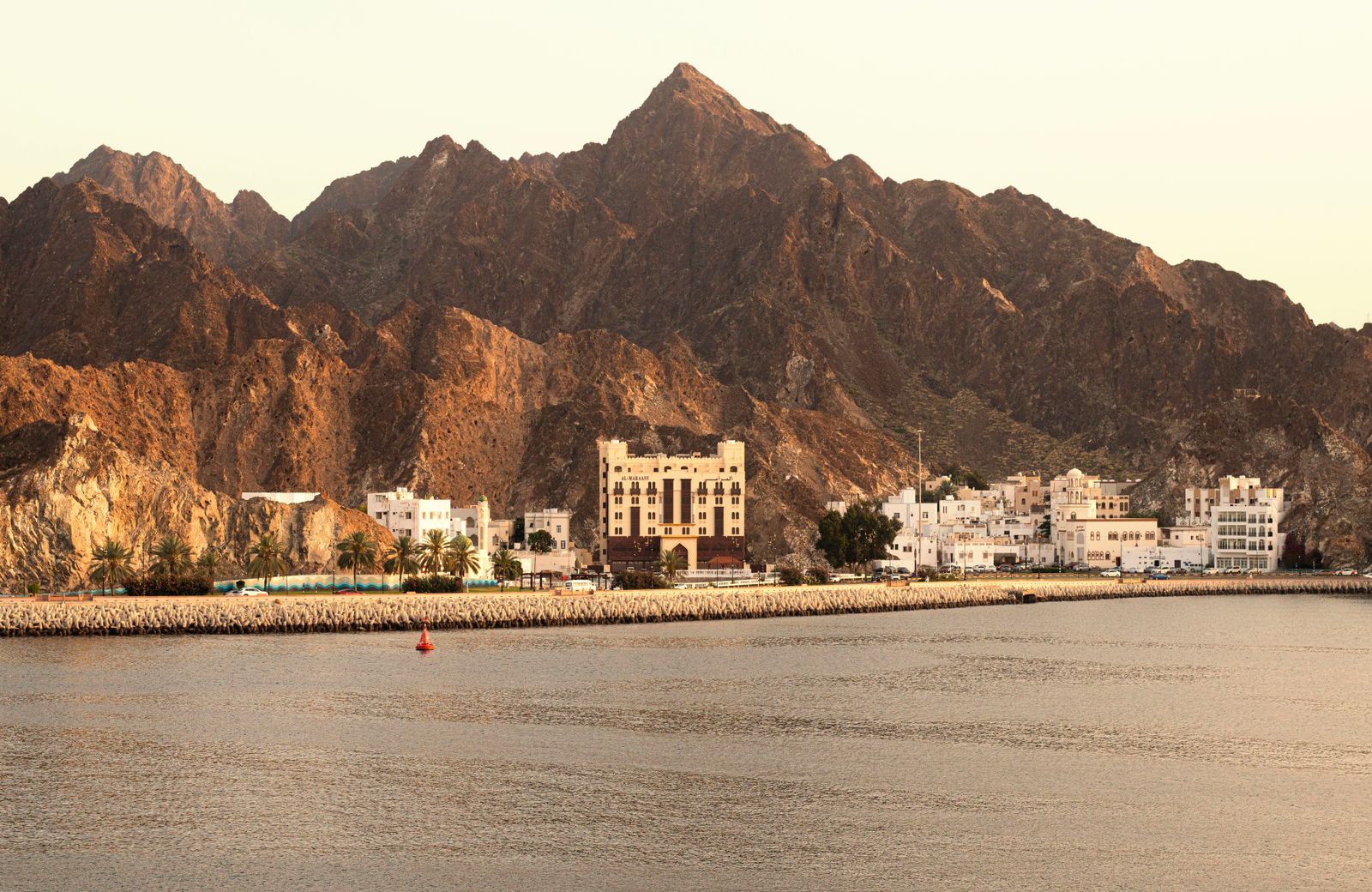
The Mutrah Corniche (1km waterfront around the fishing harbour; dhow boats moored; the Al Jalali and Al Mirani Portuguese forts (1588) on the headlands; the fish market open from 5am; the finest coastal promenade in Oman) leads to Old Muscat, the original capital settlement, 3km east by taxi.
💡 Mutrah Corniche at sunset (6pm; 1km from the souq entrance east to the harbour head; the dhows in the golden light; the twin Portuguese forts on the headlands). The fish market morning (5–8am) is the most local Muscat experience — 5 min walk from the souq entrance.
The Royal Opera House Muscat (Al Khuwair; the only purpose-built opera house in Arabia; the October–April season with international orchestras, opera companies, and ballet; tickets OMR 5–25; free Thursday evening concerts in the Amphitheatre) and dolphin boat tours (Mutrah Corniche; OMR 5–8; 1.5h; spinner and bottlenose dolphins in the Muscat fjords) are the two most distinctive Muscat experiences.
💡 Check the Royal Opera House season (rohmuscat.om; October–April; tickets OMR 5–25; book 2–3 days ahead for popular performances). The free Thursday Amphitheatre concerts are the best-value cultural evening in the Gulf. Dolphin tours: depart Mutrah dock at 8am (the dolphins most active at dawn).
Muscat’s food scene reflects the diversity of the city’s population: the Indian restaurant corridor (the Ruwi district; the finest Indian food in Arabia at the lowest prices; the thali (OMR 1.50–2.50), the biryani (OMR 2), and the masala dosa (OMR 0.80) are the most affordable quality meals in the Gulf); the traditional Omani food (the shuwa (the lamb slow-roasted in a sealed underground pit for 24–48h; the most celebrated Omani dish; available at Kargeen Caffe and the Bait Al Luban Restaurant in Mutrah; OMR 6–10); the Omani harees (the wheat and meat porridge; OMR 1–2; the most traditional Omani breakfast)); the seafood (the Gulf of Oman kingfish, the hammour (grouper), and the cuttlefish grilled at the Mutrah Corniche seafood restaurants; OMR 3–8 per main). Bait Al Luban Restaurant (17 Mutrah Corniche; the finest Omani food with a Corniche view; OMR 6–15) and Kargeen Caffe (the most atmospheric Muscat restaurant; the covered garden; the frankincense burning; OMR 5–12) are the two essential Muscat dining experiences.
4WD (4×4) is not optional for: Jebel Akhdar (the Al Hajar Mountain road requires 4WD above 2,000m; rental companies confirm this at check-in), Wahiba Sands (all dune driving requires 4WD low range; deflate tyres to 1.2 bar for sand), and all wadi off-road driving.
Dress code in Oman (the country follows Islamic customs; both men and women should cover shoulders and knees in all public spaces outside beach resorts).
Ramadan in Oman (the Islamic fasting month; dates move earlier by 10–11 days each year).
Omani souq bargaining (the Mutrah Souq in Muscat and the Nizwa Friday Market are the two most important souq bargaining venues in Oman).
Photography etiquette in Oman (Omanis (particularly women) consider being photographed without explicit permission intrusive and disrespectful; always ask permission before photographing a person).
Qahwa (the Omani spiced coffee brewed with cardamom and rose water; served in small handleless cups with dates; offered free at every hotel and home) is the most important Omani hospitality ritual. Shake the cup to signal you’ve finished.
Sultan Qaboos Grand Mosque first (non-Muslim visits 8–11am; dress modestly; OMR free). Drive the corniche to Mutrah Souq while it reopens at 4pm — frankincense, silver, and the fish market at the far end. Finish in Old Muscat: Al Alam Palace from the outside, the Portuguese forts above the harbour, and dinner at Bait Al Luban overlooking the water.
Morning dolphin cruise from Marina Bandar Al Rowdha (7am departures; OMR 8–15; sightings near-guaranteed October to April). The Amouage perfume factory tour on the way back explains why Omani frankincense ends up in bottles costing more than your hotel. Afternoon swim at Qantab beach, sunset from the Shangri-La headland road.
Download Oman offline (critical for wadi driving and Jebel Akhdar routes where there is no signal). Most Oman off-road routes are mapped.
Free
Oman is a Muslim country; shops and restaurants close for prayer. The Prayer Times app shows the 5 daily prayer windows so you can plan activities around them.
Free
OMR is a strong currency; use the Wise card to avoid the 3–5% hotel exchange markup. Bank ATMs throughout Muscat offer the best interbank rate.
Free
Arabic script translation (camera mode for restaurant menus and market signs). The Omani dialect is distinct from Gulf Arabic — Modern Standard Arabic is understood everywhere.
Free
From the Grand Mosque of Muscat to the ancient forts of Nizwa, the rose gardens of Jebel Akhdar, the dhow yards of Sur, the Wahiba Sands, and the Khareef of Salalah.