SK
Bratislava
The little big city on the Danube
The little big city on the Danube
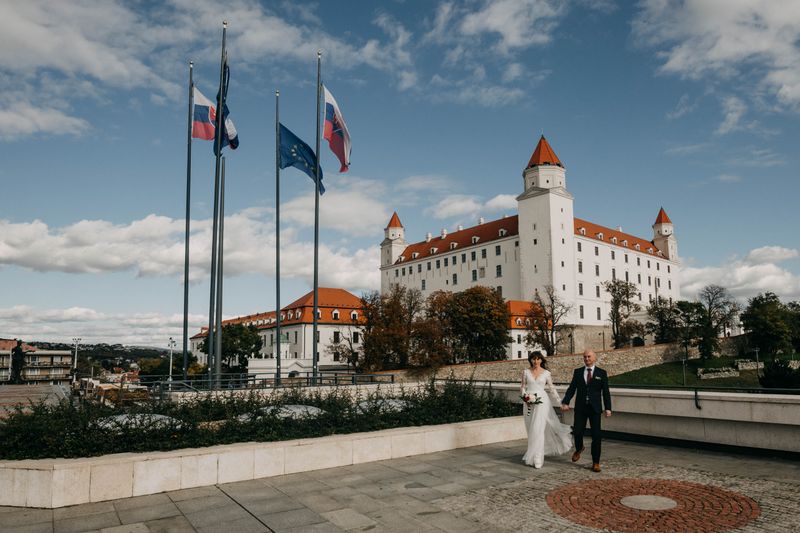
The four-towered white castle on the hill — rebuilt from a ruin in the 1950s — has guarded the Danube crossing since the ninth century and once kept the Hungarian crown jewels. Today it houses the Slovak National Museum’s history collections, but the real draw is the terrace: on clear days the view runs across the river to Austria and Hungary both.
Walk up through the old town’s Castle Steps and descend the baroque gardens on the far side — the loop beats retracing your route.
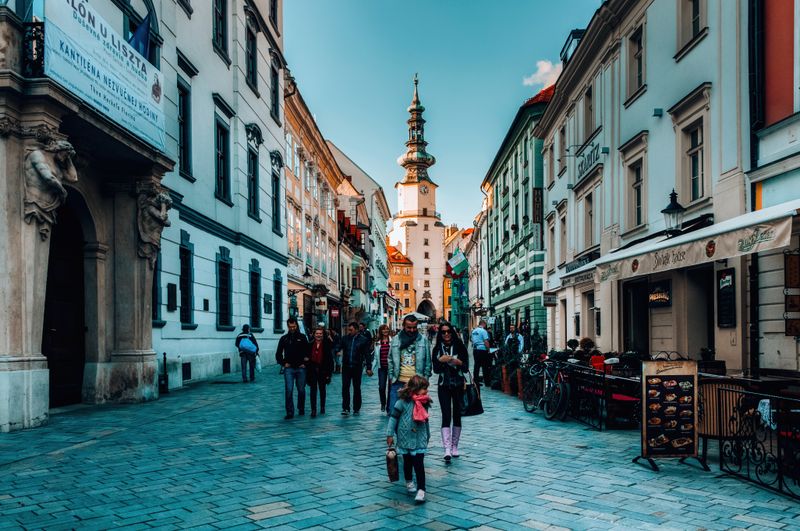
Bratislava’s core is one joyful square kilometre: the Main Square with its Roland fountain and old town hall, Michael’s Gate — the last survivor of the medieval walls, copper-spired and climbable — and St Martin’s Cathedral, where the Hungarian kings were crowned for 250 years. Bronze statues lurk throughout; tipping your hat to Schone Naci is a local courtesy.
Follow the small brass crowns set in the pavement — they trace the historic coronation route from the cathedral through the gate.
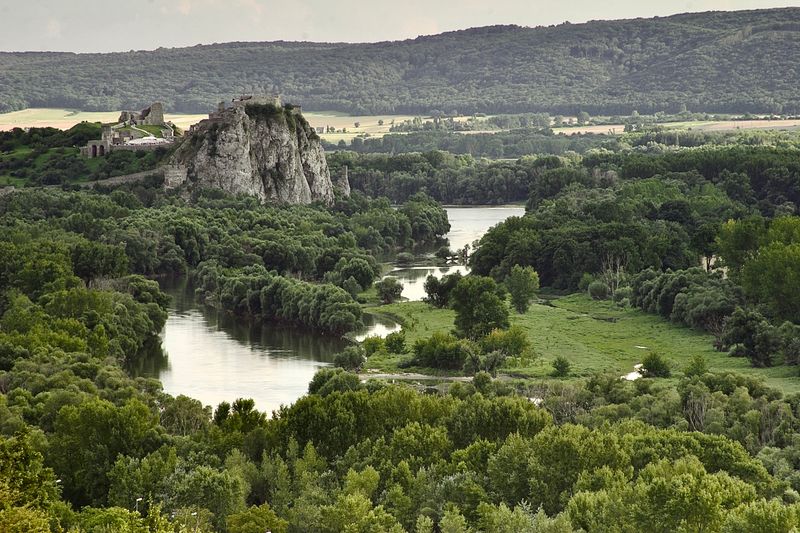
Twenty minutes downstream, the ruined fortress of Devín crowns a crag above the meeting of the Danube and Morava rivers — a site fortified since the Celts and a national symbol of Slavic history. During the Cold War the Iron Curtain ran along the water below; a memorial honours those who died trying to cross it.
Take bus 29 or, better, the summer boat from the city centre — and try the currant wine the village of Devín is famous for.
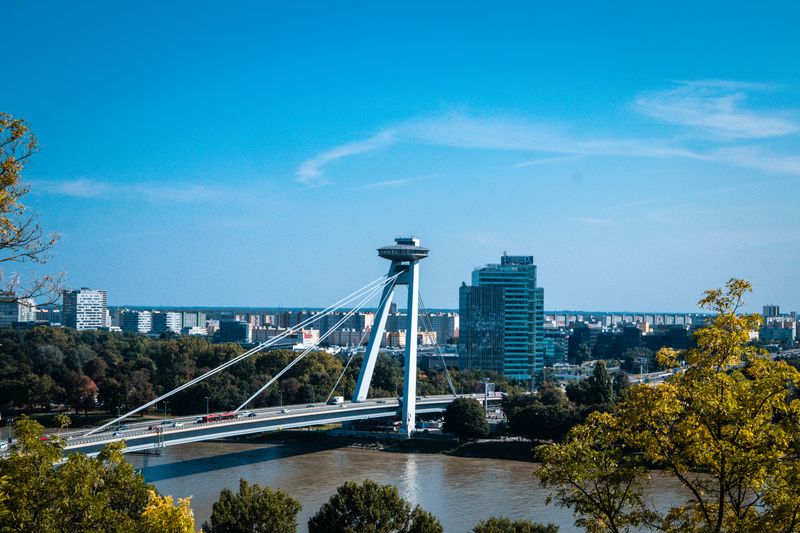
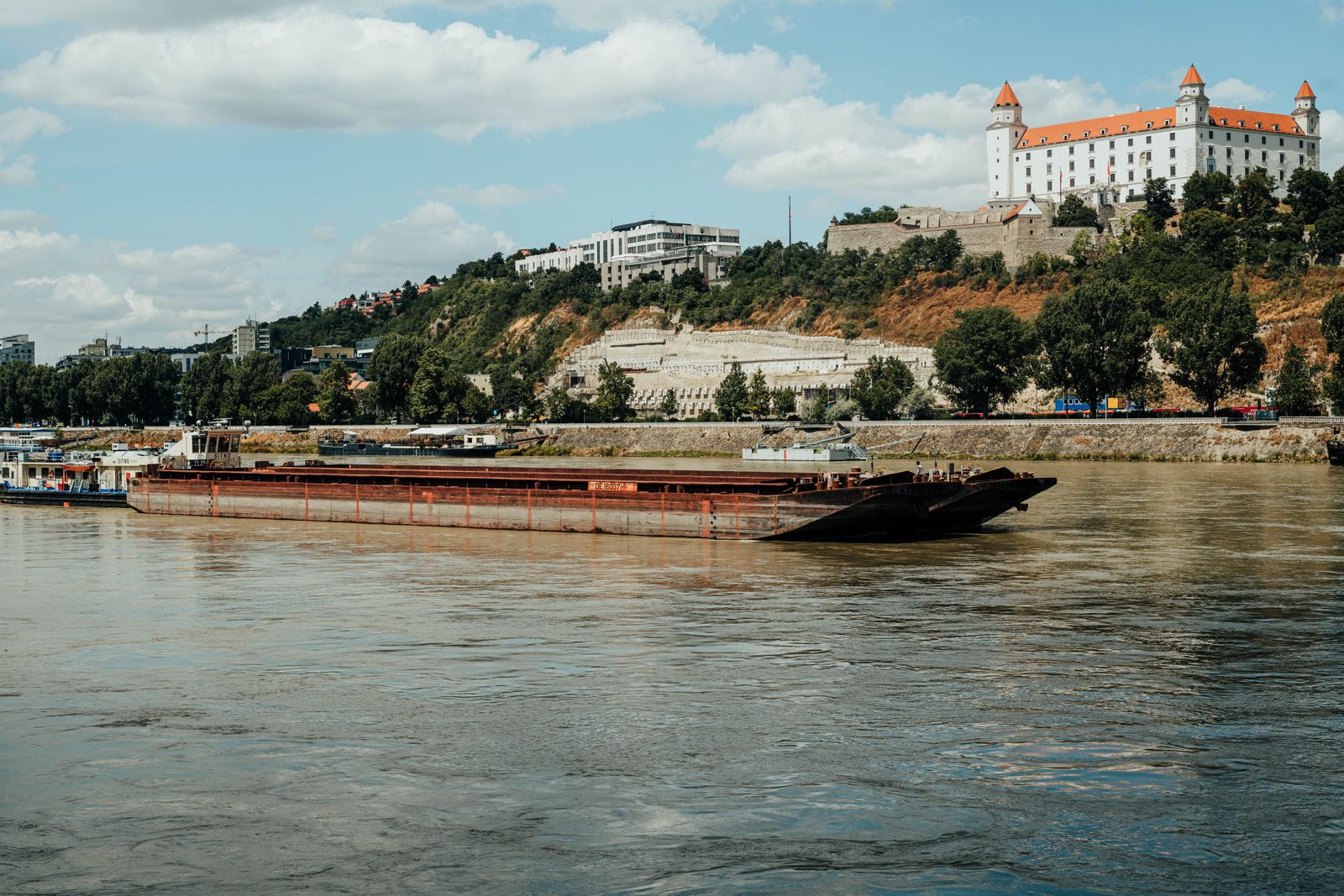
The SNP Bridge — universally the UFO Bridge — carries its flying-saucer observation deck 85 metres above the Danube, with a 360-degree view from the castle to the socialist-era Petržalka blocks it was built to serve. Below, the riverbanks have come alive: floating bars, the Eurovea promenade and the summer ‘beach’ with deckchairs in the sand.
Time the observation deck for sunset, then walk the embankment east to the river-barge bars for a Slovak craft beer on the water.
Slovak comfort food rules: bryndzové halušky — potato dumplings in tangy sheep’s cheese with crisped bacon — is the national dish and the essential first dinner, chased with žinčica, the sheep’s-whey drink. Look for kapustnica (smoky sauerkraut soup), roast duck with lokse potato pancakes in autumn, and apfelstrudel that remembers the Habsburgs. The old town’s cellar taverns pour Slovak lagers and wines from the Small Carpathians that almost never get exported — the vineyards start at the city’s edge, and a ridčka of young wine in a Rača or Modra wine cellar is the classic half-day trip. Coffeehouse culture runs deep too: Pressburg’s cafes were Vienna’s rivals once, and the old town’s konditorei still prove it.
Coffee on the Main Square, then follow the brass crowns from St Martin’s Cathedral through the old town, climbing Michael’s Gate for the rooftop view. Find Čumil on the way — he’s easy to miss and impossible to forget.
Climb the Castle Steps for the museum and the three-country view from the terrace, then descend through the baroque gardens to a halušky lunch in a cellar tavern.
Bus or summer boat to Devín Castle, where the Morava meets the Danube beneath the ruined crag — walk the ramparts, read the Iron Curtain memorial, taste the currant wine.
Back in town, ride up the UFO Bridge for sunset over the river, then finish on the embankment — dinner of duck and lokse, and a nightcap on a river-barge bar under the bridge lights.
🛂 Entry rules: EES and ETIAS
Slovakia is in the Schengen area, which has two EU border systems for non-EU visitors.
EES (in force): since 10 April 2026 the EU’s Entry/Exit System registers non-EU visitors’ passport details, fingerprints and a photo the first time they enter the Schengen area, replacing passport stamps. Allow extra time at the border on your first trip; later crossings are quicker. EU, EEA and Swiss citizens are not registered.
ETIAS (not yet running): a €20 online travel authorisation for visitors who don’t need a visa, such as UK, US, Canadian and Australian citizens. It hasn’t started and no start date has been confirmed, so nobody can apply yet; ignore websites that offer to “pre-register” you for a fee.
Visa-free visitors can stay up to 90 days in any 180-day period across the whole Schengen area, not per country.
Official information: EU: Travel to Europe (EES & ETIAS) · Reviewed September 2026
Trains and boats link Bratislava and Vienna in about an hour — twin-capital trips are easy, and Bratislava is the cheaper place to sleep and eat.
Buy public transport tickets before boarding (app or yellow machines) and validate on board — inspectors are frequent and fines are real.
The Small Carpathians wine region starts at the city limits — Slovak whites rarely leave the country, so this is your chance; September’s vintage festivals are the peak.
The old town crosses in 15 minutes on foot — skip taxis entirely in the centre and save the transit pass for Devin and the castle hill tram.
Bratislava’s Christmas markets are Vienna’s charm at half the price — mulled wine, lokse and roast goose under the lights on the Main Square.
Cards and phones pay everywhere including transport — keep only small coins for public toilets and market stalls.
The main ride-hailing app in Bratislava — cheaper than taxis and everywhere in the capital.
Free
Cheap intercity coaches linking Bratislava with Vienna, Budapest, Prague and the Tatras.
Free
Multi-currency card with excellent exchange rates for euro payments and ATM withdrawals.
Free
Bratislava on the Danube, Gothic Košice, the High Tatras above Poprad, silver-town Banská Štiavnica and castle-crowned Trenčín — Slovakia rewards going beyond the capital.
Planning a wider trip? Our Slovakia travel guide covers getting there, costs, when to go and more.