ES
Seville
Flamenco, Tapas and Andalusian Heat
Flamenco, Tapas and Andalusian Heat

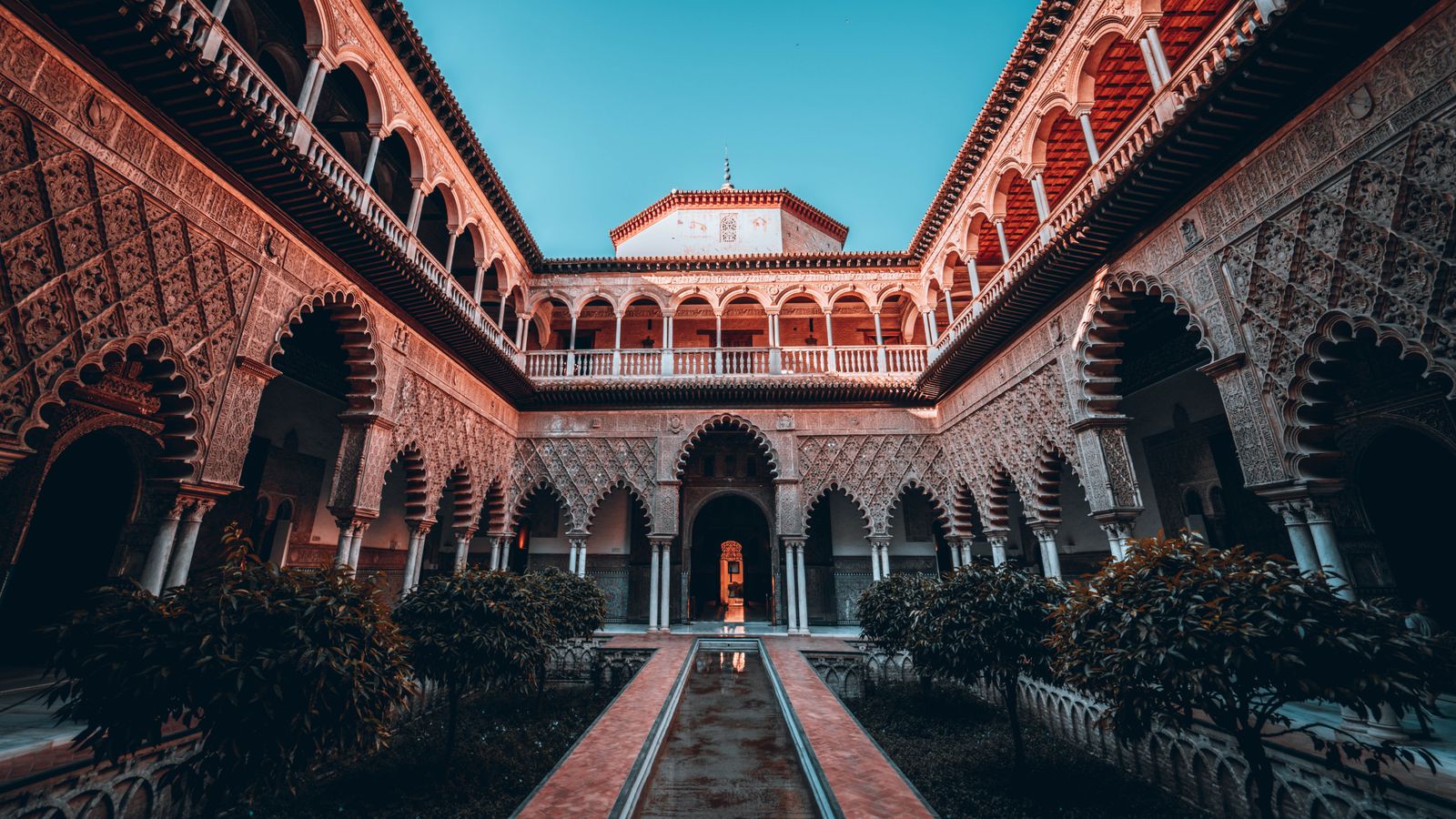
The royal palace has been expanded and rebuilt over 1,000 years of continuous occupation: Moorish arches, Mudéjar tilework, Renaissance loggias and baroque gardens all coexist in one complex. The current Spanish royal family still uses it as an official residence. Book timed entry online at least a week ahead — walk-up queues are serious. Entry €14.50. The gardens alone take an hour to walk properly.
Book at alcazarsevilla.org (€14.50 + €1 booking fee) — the Alcázar is the most-booked sight in Seville. Morning slots sell out weeks ahead in April and September. The Mudéjar Palace interior and the Royal Chambers are the highlights.

The largest Gothic cathedral in the world by volume (the metrics are disputed but the size is not). Columbus is buried here — his tomb is carried by four kings representing the medieval kingdoms of Spain. La Giralda tower, the former minaret of the mosque, is climbed by ramps rather than stairs (horses could ascend). The view from the top is the best in Seville. Entry €13.
Book at catedraldesevilla.es (€12.50 + €1 booking fee). Climb La Giralda (34 ramps; no steps — designed for horses) for the finest elevated view of Seville. The Christopher Columbus tomb is inside the Cathedral nave.
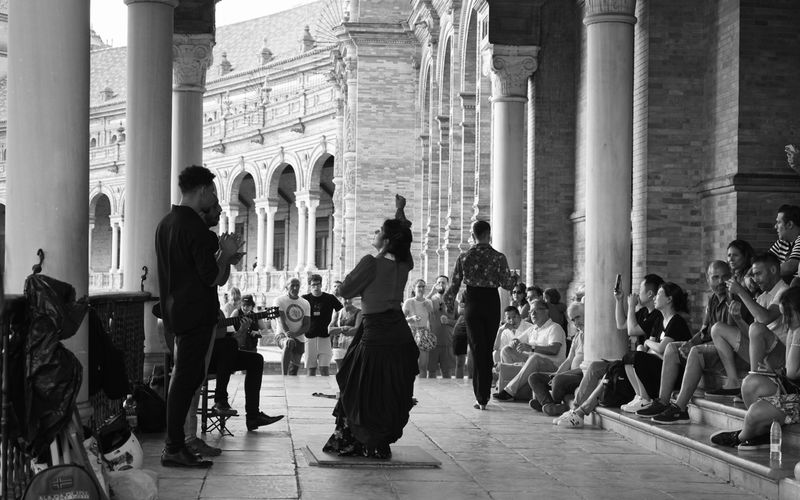
Seville is the birthplace of flamenco and remains its emotional home. The Triana neighbourhood has the oldest flamenco culture. Tablao El Arenal and Casa de la Memoria are the two most respected venues for formal performances. A serious flamenco show is two hours and expensive (€35–50); a peña (members’ club that occasionally admits visitors) is cheaper and more authentic. Ask your hotel; the best advice is local.
For authentic flamenco (not tourist tablao): the Casa de la Memoria (€18; book 48h ahead) and La Carbonéría bar (free; Calle Levíes 18; 10:30pm nightly) are the most respected Seville venues. Book Casa de la Memoria at casadelamemoria.es.

Built for the 1929 Ibero-American Exposition: a semicircular brick-and-tile palace with a moat, decorative bridges and province-specific tile panels representing every region of Spain. It was used as a filming location for Lawrence of Arabia and Star Wars. Entry is free; the most striking views are from the bridge over the moat. Horse-drawn carriage tours leave from here (€35–50 for 45 min).
The Plaza de España (1929; free to enter) has one ceramic tile panel per Spanish province. Rent a rowing boat on the canal (€6/45 min) for the finest angle. The plaza is most atmospheric at dawn and at night when it’s floodlit.
Seville’s tapas culture is the real thing: order a drink at a bar and a small plate of food arrives uninvited, included in the price. The drink costs €2–4; the tapa is free; another round produces another tapa. A complete evening of drinking and grazing at three or four bars costs €15–25 per person. The neighbourhood of El Arenal has the best concentration of serious tapas bars; La Alfalfa has the trendier options. The Mercado de Triana, in the Triana neighbourhood across the Guadalquivir, has the best fresh produce and fish in the city.
Salmorejo (a thick, cold tomato cream, smoother than gazpacho, with hard-boiled egg and crispy ham on top) is the defining Sevillian dish. Pringá (slow-cooked meat spread eaten on toast) is the Sunday morning tapas order. Manzanilla (a dry, briny sherry from the nearby town of Sanlúcar de Barrameda) is the correct drink in Seville — cold, from a half-bottle, with any tapas. The sherries produced 90 minutes from here (Jerez, Sanlúcar, El Puerto) are among the most complex wines in the world and almost nobody outside Spain drinks them. Seville is the place to try.
The historic centre is fully walkable — Alcázar to the Cathedral is 3 minutes, Cathedral to Plaza de España is 20 minutes. The single tram line (T1) runs from Prado de San Sebastián bus station to the Cathedral. The Sevici bike-share system (€1.35/day) is excellent for the flat cycle paths along the Guadalquivir river. Taxis are cheap and plentiful. The AVE high-speed train station (Santa Justa) is 20 minutes walk from the cathedral — connections to Madrid (2h30) and Córdoba (45 min) leave frequently.
March to May is Seville at its best: warm without being dangerous, the orange trees in blossom, and two of Spain’s greatest festivals (Semana Santa, Feria de Abril). October and November are the second window. June to September requires heat management.
Seville is one of the most affordable large cities in Western Europe. The free-tapas drinking culture means food and drink costs are dramatically lower than anywhere else in Spain. Per person per day.
Seville is the cheapest major city in Spain. The free-tapas culture means a full evening of food and drink costs less than a pizza elsewhere in Europe.
A flamenco show (€35–50) is the main mid-range expense. Choose one good venue rather than two mediocre ones.
The Alcázar private guided tour (€60–80/person) accesses areas closed to the public including the current royal apartments.
Four days covers Seville properly: the two major sights, a flamenco show, a day trip to Córdoba and enough evenings for the tapas crawl.
Walk the Santa Cruz neighbourhood in the evening (the former Jewish quarter: narrow streets, orange trees, no cars). Tapas crawl starting in El Arenal. First evening manzanilla. The Giralda is visible from everywhere; it is correctly beautiful at dusk.
The Santa Cruz neighbourhood at evening is the finest first hour in Seville: the jasmine scent, the narrow alleys, the first sherry at a bar on Calle Mateos Gago. The Cathedral floodlit from Calle Alemanes at night is the finest view in Seville.
Alcázar at 9:30am (first slot, book ahead). Cathedral and Giralda afterwards. Lunch in the Triana market. Plaza de España in the afternoon. Flamenco show in the evening (Casa de la Memoria, book ahead).
Book both Alcázar and Cathedral online before you arrive. Alcázar at 9:30am; Cathedral after 1pm for the best Giralda light (east-facing; afternoon is finest). The Alcázar gardens (included) bloom with orange trees in spring.
AVE from Santa Justa to Córdoba (45 min). The Mezquita — the great mosque converted into a cathedral with a full baroque nave inserted into its centre — is the most vertiginous architectural experience in Spain. The Jewish Quarter. Return by 6pm. Tapas at La Alfalfa in the evening.
ALVIA from Seville Santa Justa to Córdoba (45 min; €15 return). The Mosque-Cathedral (Mezquita; €10) is the finest religious building in Andalucía. The Judéría quarter adjacent has the tightest alleys in Spain. Leave Seville by 9am.
Triana market in the morning. Cycle the river path. Lunch in Triana. Afternoon free. A second, slower flamenco bar in the evening: the peñas around Triana have informal shows from 10pm that are a different experience from the formal tablao.
Cross the Triana Bridge to the ceramic tile workshops and tapas bars of the Triana neighbourhood. The Torre del Oro (€3; river views) and the morning paseo along the Paseo de Cristóbal Colón are Seville at its most local.
🛂 Entry rules: EES and ETIAS
Spain is in the Schengen area, which has two EU border systems for non-EU visitors.
EES (in force): since 10 April 2026 the EU’s Entry/Exit System registers non-EU visitors’ passport details, fingerprints and a photo the first time they enter the Schengen area, replacing passport stamps. Allow extra time at the border on your first trip; later crossings are quicker. EU, EEA and Swiss citizens are not registered.
ETIAS (not yet running): a €20 online travel authorisation for visitors who don’t need a visa, such as UK, US, Canadian and Australian citizens. It hasn’t started and no start date has been confirmed, so nobody can apply yet; ignore websites that offer to “pre-register” you for a fee.
Visa-free visitors can stay up to 90 days in any 180-day period across the whole Schengen area, not per country.
Official information: EU: Travel to Europe (EES & ETIAS) · Reviewed September 2026
From June to September, Seville at 1–5pm is 40°C in direct sun. Every local disappears.
The Alcázar is one of the two sights in Seville that require advance booking (€14.50, timed entry at alcazarsevilla.org).
The Feria de Abril (usually two weeks after Easter) is Seville at its most itself: 1,000 casetas (decorated tents), flamenco, horses, fino sherry and the entire city in traditional dress for seven days.
Every drink you order at a bar in Seville comes with a free tapa. It’s not on the menu; it just arrives.
If you plan a day trip to Granada (1h30 by train), book the Alhambra at the same time you book Seville flights.
Tourist tablao shows are widely available (€35–50).
High-speed AVE to Córdoba (45 min, €14–22), Madrid (2h30, €40–90) and Granada (1h30, €20–40). The Santa Justa station is 20 min walk from the cathedral.
Free
Seville city bike-share: 260 stations, flat city, excellent cycle paths along the river. Day pass from €1.35. The Guadalquivir riverside route from Triana to the Expo site is 5km of flat cycling.
Free
Restaurant reservations in Seville. Book El Rinconcillo (Seville’s oldest tapas bar, since 1670) and Taberna del Alabardero a few days ahead for weekend dinners.
Free
Download Seville offline. The Santa Cruz lanes are labyrinthine and poorly signed; the Triana backstreets are easiest to navigate with a GPS.
Free
Quick answers to the questions travellers most often ask before visiting Seville.
Spring (March-May) is glorious, taking in Semana Santa and the April Feria, and autumn is lovely too. Summer is famously scorching (often over 40°C), while winters are mild.
Two to three days for the Cathedral and Giralda, the stunning Royal Alcázar, Plaza de España and the Santa Cruz quarter, plus flamenco, tapas and perhaps a day trip to Córdoba.
The historic centre is very walkable, backed by trams, buses, a metro line and bike hire. You don’t need a car.
The soul of Andalusia — flamenco, the fairytale Royal Alcázar, the vast Cathedral and its Giralda tower, the grand Plaza de España, superb tapas, and its passionate Semana Santa and Feria festivals.
Discover more of Spain's great destinations.
Planning a wider trip? Our Spain travel guide covers getting there, costs, when to go and more.