TR
Pamukkale
The White Thermal Cascades
The White Thermal Cascades
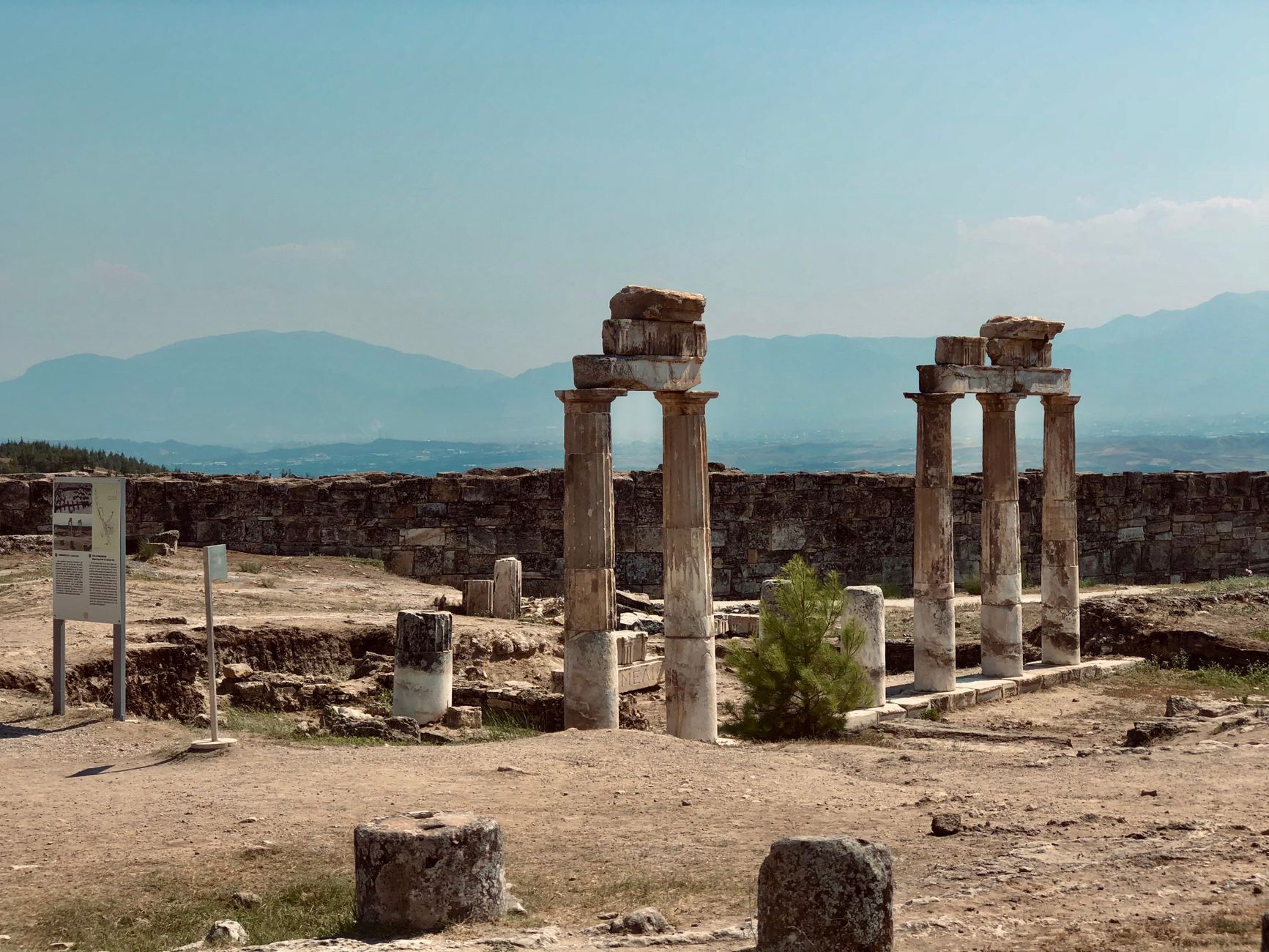
Hierapolis was a Roman spa city founded in 190 BC above naturally hot springs that still flow at 35°C. The 12,000-seat theatre is nearly intact, and the necropolis — 2km of tombs — is the largest and finest preserved ancient cemetery in Turkey.
The finest way to see Hierapolis and the terraces is to walk down through the ancient city towards the pools at sunset — the crowds thin, the light turns golden, and the white calcite glows.

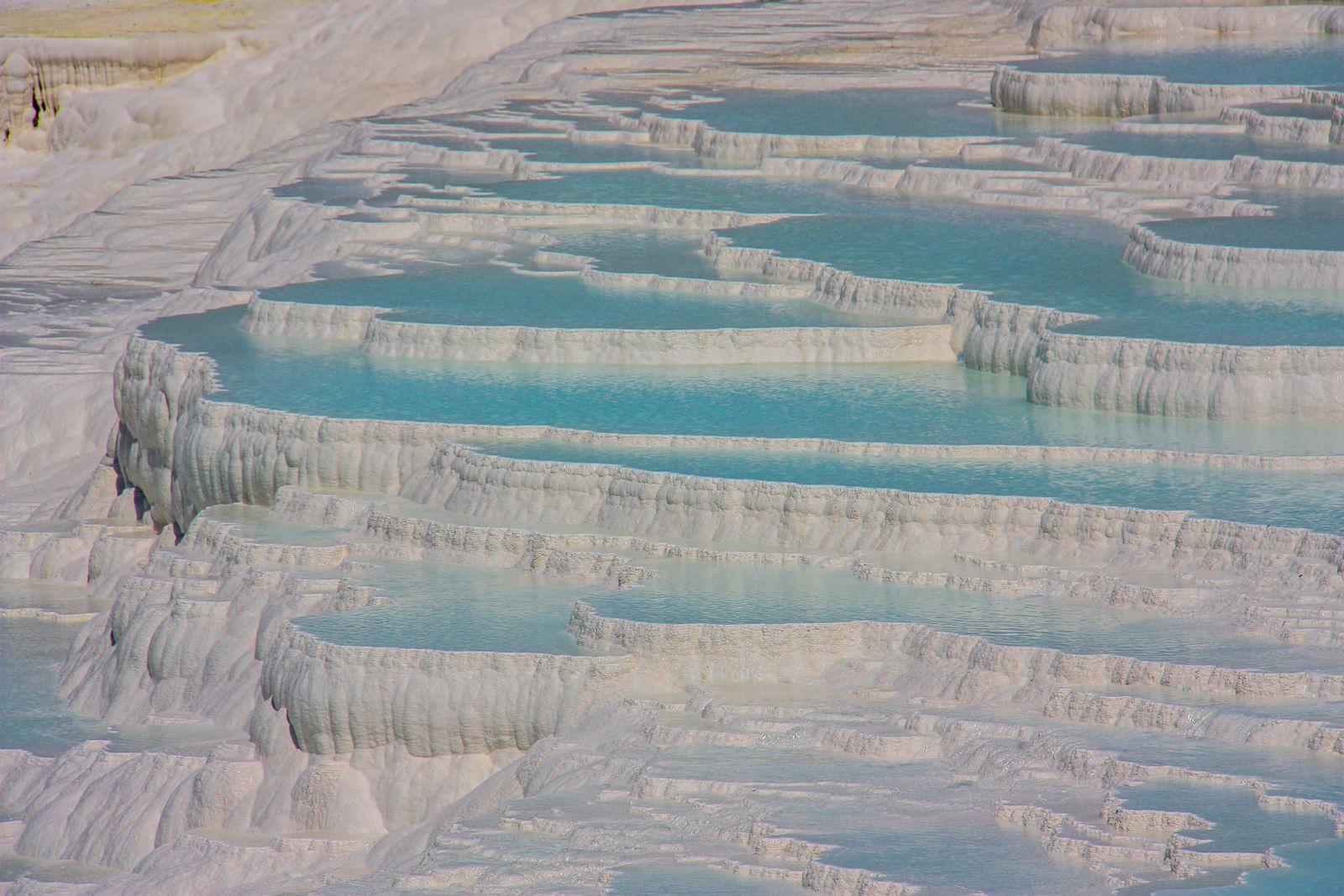
The calcium-white travertine cascades are among the most spectacular natural formations in the world — 2,700 metres of stepped pools forming over thousands of years from 35°C spring water. UNESCO-listed with Hierapolis. Shoes must be removed at the gate.
The travertines are best at 6am before the tour buses arrive from the coast — the pools are electric blue in the early light and the warm calcite is quiet underfoot.

The Antique Pool is a 35°C thermal spring in which you swim among submerged Roman marble columns and architectural fragments toppled by an ancient earthquake. The most unusual swimming experience in Turkey. Sun loungers are included; bring a rash vest for the reflected glare.
Cleopatra’s Pool is a 35°C spring with 2,000-year-old Roman marble columns submerged in it — you swim among architectural fragments. Bring a rash vest; the marble reflects intense sun.

Aphrodisias is the finest classical sculpture site in Turkey — the museum’s 2nd-century portrait busts are extraordinary. The 30,000-seat stadium is the best-preserved ancient stadium in the world. The site is 100km east of Pamukkale; the drive takes 90 minutes.
Aphrodisias is 100km east but worth the journey — the stadium is the best-preserved ancient stadium in the world and the site museum’s portrait sculptures are finer than anything at Ephesus.
Pamukkale’s restaurant scene is village-scale but has a specific virtue: the local Denizli lamb (the most prized lamb breed in Turkey; the slow-grilled chops at village restaurants; ₺200–400 for a mixed grill), the gozleme (the thin dough flatbread stuffed with spinach and cheese, cooked on a griddle on the village main street; ₺80–120; the best lunch for day visitors), and the stuffed vine leaves in olive oil from the Aegean tradition. Most overnight visitors eat at their thermal hotel (dinner is usually included in the room rate; the Turkish buffet spread with Aegean dishes). Day visitors: the village restaurant strip outside the lower Pamukkale gate has the gozleme women, the grilled köfte stalls and the ayran yogurt drink sellers. The most celebrated village restaurant is Kayihan (the terrace view of the travertines; the lamb dishes; ₺200–400 pp).
The Pamukkale–Hierapolis site is navigated entirely on foot (3–4h for the complete circuit from the lower gate through the terraces to the Hierapolis plateau, the theatre, the necropolis and out through the upper gate). Within the Hierapolis plateau the distances are significant: the Theatre (central), the Cleopatra Pool (central), the Martyrium of St Philip (1km northeast) and the Necropolis east road (2km from the theatre) require sustained walking on a flat but exposed plateau. The dolmus from Denizli (₺25; 30 min; from the Denizli dolmus terminal near the otogar) is the standard approach for those arriving by bus or train to Denizli. For the Aphrodisias day trip: a return taxi (₺800–1,200 with 2h waiting) or a village tour minibus (₺200–300 pp) are the two options; no public bus covers the 90km route.
The lower gate opens at 6am in summer — arrive then to have the pale-blue pools to yourself before the tour buses from Bodrum and Antalya begin arriving after 9am.
Shoes must be removed at every terrace entrance — bring a drawstring bag to carry them rather than relying on the rental lockers, which fill up quickly by mid-morning.
The Cleopatra Pool is best before 9am or after 5pm — midday it is crowded enough that the submerged marble columns are hard to reach.
Aphrodisias is one of the finest Roman sites in Turkey and sees almost no visitors — the 30,000-seat stadium is intact and the museum’s portrait sculptures are extraordinary. 90km west, 1.5h by car.
Every Pamukkale village hotel has a thermal pool fed by the same 35°C spring water as the terraces, included in the room rate.
The Hierapolis necropolis extends 2km north of the city walls and is almost always empty — a long walk among Roman sarcophagi with the Cürüksu Valley below.
Apr–Jun and Sep–Oct are ideal (20–28°C; manageable crowds). Jul–Aug is very hot; arrive before 8am. Dec–Mar: cool but thermal pools are warm and terraces whitest (least algae).
Two days: the terraces at dawn, Hierapolis (theatre + necropolis), Cleopatra Pool, and an Aphrodisias day trip.
Lower gate at 6am — bare feet on the warm white calcite, the blue pools still quiet. Up through the Hierapolis necropolis and theatre. Cleopatra’s Pool in the afternoon. Sunset from the upper terrace.
The Hierapolis necropolis is the largest ancient cemetery in Turkey — 2km of tombs stretching north. Walk it in the morning before the travertine queues form on the slope below.
Drive east to Aphrodisias: the Temple of Aphrodite, the immense 30,000-seat stadium, the extraordinary sculpture museum. Return for a final thermal pool soak at the village.
The Aphrodisias stadium is the most intact in the ancient world — walk the full 262m length of the track. The silence inside is remarkable for somewhere that once held 30,000 people.
Pamukkale is one of Turkey’s best-value UNESCO destinations. The combined terraces + Hierapolis entry (₺800; approximately €22) is exceptional value for the scale of the experience. Per person per day.
The overnight village thermal hotel (dinner and breakfast included; ₺1,200–2,500) plus the combined site entry (₺800) and the Cleopatra Pool (₺600) gives the full Pamukkale experience for approximately ₺3,000.
The Aphrodisias day trip (₺400 entry + ₺800–1,200 return taxi with waiting) is the most rewarding archaeological day trip in Turkey after Ephesus — combining it with Pamukkale makes for the finest two-day classical.
A private archaeology tour of Aphrodisias with a classicist guide.
On-demand rides for Pamukkale to Aphrodisias day trips and Denizli airport transfers.
Free
Audio guide to Hierapolis and the Pamukkale thermal terraces covering Roman spa city history.
Free
Download the Pamukkale and western Turkey offline map before arrival for navigating the ruins and regional roads.
Free
Quick answers to the questions travellers most often ask before visiting Pamukkale.
Spring and autumn offer the most comfortable weather for walking the terraces. Summers are hot and busy, and winters are cold but atmospheric, with the warm pools especially inviting.
One to two days to walk the white travertine terraces, bathe in the thermal pools, explore the ruins of Hierapolis above, and take a dip in Cleopatra’s antique pool.
The terraces and Hierapolis are explored on foot (barefoot on the travertines); buses and tours reach the site from Denizli and the coast, and a car adds flexibility.
The surreal, dazzling white travertine terraces and thermal pools of the “Cotton Castle” (a UNESCO site), cascading down a hillside, crowned by the ruins of the Greco-Roman spa city of Hierapolis and Cleopatra’s antique pool.
Explore more of Turkey’s extraordinary cities and landscapes.
Planning a wider trip? Our Turkey travel guide covers getting there, costs, when to go and more.