GB
London
The Capital That Contains Multitudes
The Capital That Contains Multitudes

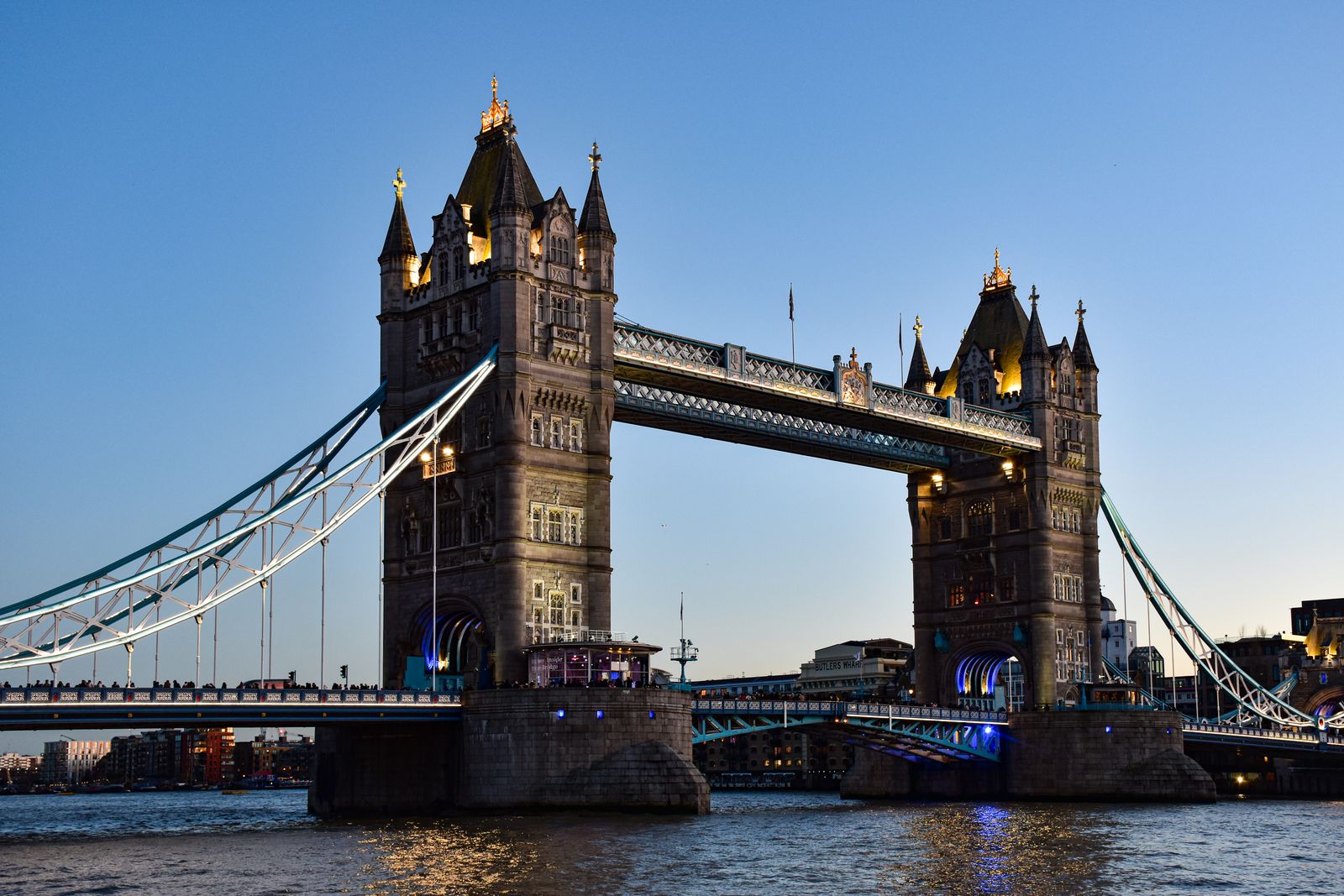
Tower Bridge (1894) is the most recognisable piece of Victorian engineering in London, best viewed from the South Bank promenade in either direction. The Tower Bridge Experience (£14) accesses the high glass walkways and Victorian engine rooms; impressive but optional. The adjacent Tower of London (£33) is worth the entry: the Crown Jewels, 1,000 years of royal history, and the Yeoman Warder tours that leave every 30 minutes. Book ahead for Tower of London.
Tower Bridge is free to walk across (the road deck is always open). The Tower Bridge Exhibition (glass walkways + engine rooms; £14.50; book at towerbridge.org.uk) is best booked in advance. HMS Belfast moored opposite is a good 2-hour addition (£24).
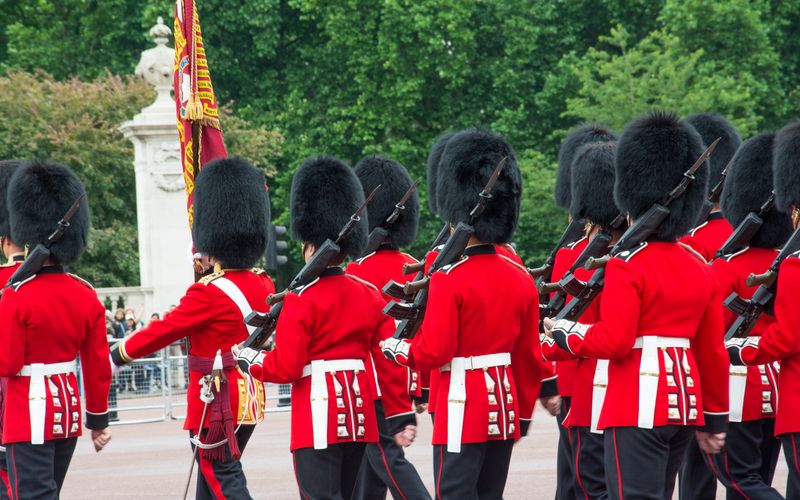
The Changing of the Guard at Buckingham Palace (free, approximately 11am most days — check royal.uk for schedule) draws crowds but is worth seeing once. The State Rooms inside the palace are open in August and September (£30–33). St James’s Park behind it is the most central and pleasant park in London: pelicans, the lake, the view of the palace and Horse Guards. All free, always open.
St James’s Park (free; open dawn to dusk) is the finest Royal Park — the lake view of Buckingham Palace from the bridge is the most-photographed angle. The Changing of the Guard runs 11am most days (check royal.uk for schedule; free from the railings).
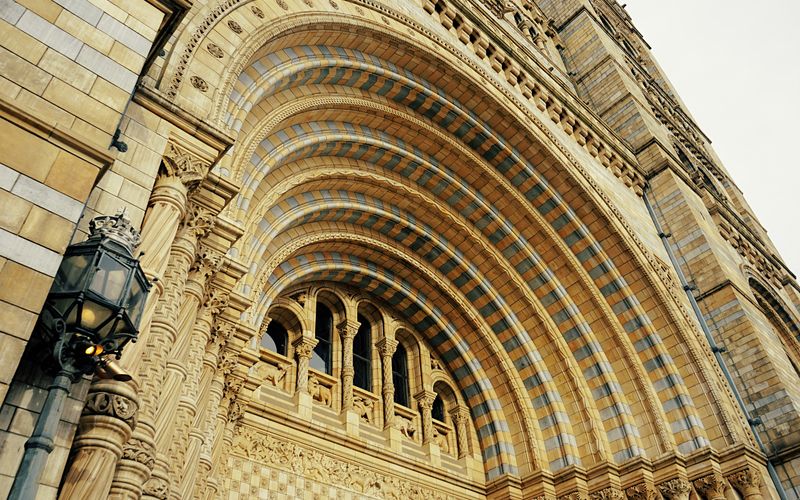
Eight million objects from across all human civilisations, free entry, no booking required (except for special exhibitions). The Great Court (Norman Foster’s glass-roofed atrium, opened 2000) is the largest covered public space in Europe. The Rosetta Stone, the Elgin Marbles, the Sutton Hoo helmet, the Lewis Chessmen. Allow a full day for a serious visit; two or three rooms for a focused one. Friday evening until 8:30pm is the least crowded time to visit.
Entry is free. Go straight to Rooms 4 (Egyptian sculptures; the Rosetta Stone), 40-48 (the Elgin Marbles), and 37 (the Lewis Chessmen). Arrive at 10am on a Tuesday or Wednesday — weekends in summer the Great Court is packed.
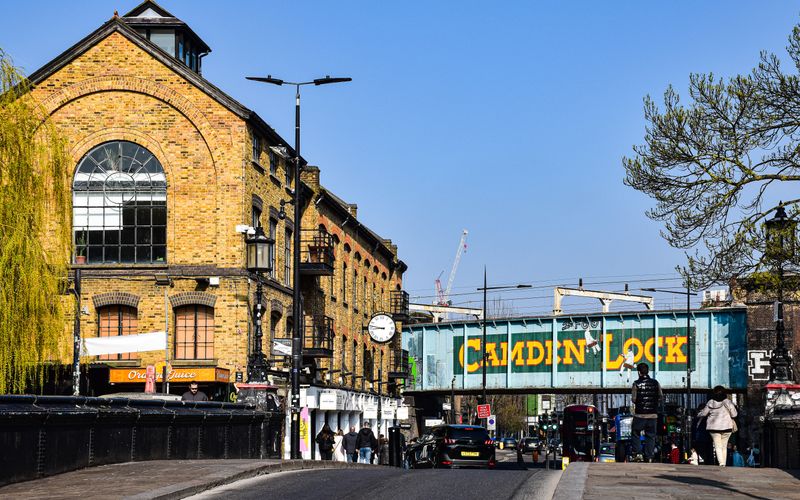
The Camden Market complex (free entry, daily) has 1,000+ stalls across five market areas: street food from 40+ countries, independent fashion, vintage clothing, records and art. The food section (Camden Lock Market, the Stables Market) is excellent for lunch — genuinely international and priced for the area. The surrounding neighbourhood has the canal walk to Little Venice (2km, 30 min each way) and enough independent shops to spend an unplanned afternoon.
Camden Market is busiest on weekends (10am–6pm) — go on a Saturday for the market, or a Monday for the empties-out. The food stalls along the Regent’s Canal are the best cheap lunch in North London. The round trip by Regent’s Canal from Little Venice (45 min by narrowboat; £12) is a lovely approach.
The standard case against London food — expensive, poor quality, rain — belongs to a different city in a different decade. Today London has absorbed 150 years of immigration and produced a food culture with no parallel in Europe for diversity. Brick Lane for Bangladeshi curry; Chinatown for Cantonese dim sum and Sichuan; Brixton Market for Caribbean jerk and West African stew; Borough Market for artisan British produce; Maltby Street Market for serious cheese, charcuterie and natural wine. The £6 Indian lunch on Tooting High Street and the £180 tasting menu at The Ledbury exist in the same city and both are correct within their category.
The pub remains the social architecture of London life. A good pub — real ale on handpump, a fireplace in winter, a beer garden in summer, food that goes beyond chips, a quiz night on Tuesdays — is one of the most enjoyable places to spend an evening in Europe. The distinction between a good pub and a tourist pub is primarily proximity to a major monument: the further you walk from the Tube station, the better the pub tends to be. Borough Market and Southwark have the best concentration of serious pubs in central London.
Tap your contactless bank card directly on the yellow readers at Tube gates — no Oyster card, no ticket purchase required. The fare is capped daily and weekly at the same level as an Oyster card. The Elizabeth Line (Crossrail) runs east-west across London in 10 minutes and has transformed connectivity between Heathrow, Paddington, the City and Canary Wharf. TfL’s Citymapper app is more accurate than Google Maps for London transport, particularly for bus timing. Black cabs are expensive but reliable; Uber and Bolt are significantly cheaper. Walking between adjacent Tube stations is almost always faster than the Tube itself in Zone 1.
London is excellent year-round. May–June and September–October offer the best combination of mild temperatures and thinner crowds. July–August is peak tourist season with school-holiday families; prices are highest. January–March is cold but cheap and the museums are at their emptiest.
London is expensive for accommodation and eating out, but uniquely generous with free cultural experiences. The museums alone save £30–50 per day compared with equivalents in other cities. Per person per day, couple travelling.
London’s free museum network means a budget traveller has access to better art and history than in almost any other city in Europe.
West End theatre tickets (£20–120+) are the major mid-range expense. Book 2–4 weeks ahead online; day-seats for £20–30 are often available at the box office on the morning of the show.
The Royal Opera House (Covent Garden) has standing places from £8 and stalls from £35 to see world-class opera and ballet. Book 3 months ahead for popular productions.
Five days covers central London properly and allows one day trip. The museums alone could fill a week; be selective.
Tower Bridge on foot from London Bridge station. Walk west along the South Bank: Borough Market (lunch), Shakespeare’s Globe (exterior or tour), Tate Modern (Turbine Hall, free). Dinner in Bermondsey Street.
St Paul’s Cathedral (free to walk past on the South Bank; £23 to enter; climb the dome for the finest elevated London view — book at stpauls.co.uk). The Tate Modern directly opposite (free) fills an afternoon without a plan.
British Museum at 10am (free, no booking; allow 3 hours for the highlights). Lunch in Bloomsbury. Covent Garden afternoon: the piazza, Neal’s Yard, Monmouth Coffee. Evening in Soho or Seven Dials.
The British Museum Great Court at 10am on a weekday is the best start to a London day: free, spectacular, and 15 min from any central tube station. Get lost in the permanent collection for 2 hours before deciding on lunch.
Westminster Abbey (£29, book ahead) or Westminster exterior walk. Houses of Parliament guided tour (when available) or exterior. St James’s Park to Buckingham Palace (Changing of the Guard if the schedule fits). Hyde Park. Victoria & Albert Museum afternoon (free). South Kensington dinner.
The South Bank walk from Westminster Bridge to Borough Market (2km; flat; free) is the finest 45-minute walk in London. The Borough Market (Mon–Sat; free to browse) has been feeding Londoners since the 12th century.
Liverpool Street area: Spitalfields Market (Sunday is best; weekdays for food stalls). Brick Lane for Bangladeshi food at lunchtime. Shoreditch in the afternoon: street art, Boxpark, Redchurch Street independent shops. Dinner in Bethnal Green or Dalston.
The National Gallery on Trafalgar Square (free; ng.online booking for peak) is the finest single collection of European painting in the UK. Go for the Vermeer rooms, the Turner, the van Eyck Arnolfini Portrait (1434). 2 hours minimum.
Brighton (1h from Victoria): the Lanes, the seafront, fish and chips on the pier, the Royal Pavilion (£18). Or Oxford (1h from Paddington): the Bodleian Library tour, Radcliffe Camera, the covered market, a pub by the river. Both fill a full day.
Primrose Hill (free; 78m; 15 min from Camden by Regent’s Canal) gives the finest panoramic view of central London from any open hilltop. Sunset from the top bench on a clear evening is the finest free thing in London.
🛂 Entry rules: you need a UK ETA
Most visitors who don’t need a visa, including EU, US, Canadian and Australian citizens, must have an Electronic Travel Authorisation (ETA) before travelling to the UK, and airlines and ferry operators refuse boarding without one. It costs £20, allows stays of up to six months at a time and lasts two years or until your passport expires.
Apply in the official UK ETA app or on GOV.UK; most decisions come within minutes, but apply at least three working days before you travel. British and Irish citizens don’t need one, and neither do legal residents of Ireland arriving from Ireland.
Official information: GOV.UK: apply for an ETA · Reviewed September 2026
Any contactless bank card or Apple/Google Pay taps in and out on all London Underground, Overground, Elizabeth line, and bus journeys. Daily caps apply automatically — same price as Oyster.
The British Museum, National Gallery, V&A, Tate Modern, Natural History Museum, and Science Museum are all free permanent collections. Book free timed slots online for summer weekends.
The South Bank (Waterloo Bridge to Tower Bridge; 3km; always free) passes the Tate Modern, Globe Theatre, Borough Market, and gives the finest sustained Thames views in London.
London’s best pubs are a core cultural experience. The Princess of Shoreditch, The Anchor Bankside, The Lamb (Lamb’s Conduit Street), and The Dove (Hammersmith) are the reference points.
The Underground runs at full capacity during 7–9am and 5–7pm weekdays. Non-time-sensitive journeys are noticeably faster and more comfortable outside these windows.
The Tower of London (£33; book at hrp.org.uk; morning timed slots sell fastest) has the Crown Jewels and Yeoman Warder tours.
The best public transport app for London: real-time Tube delays, bus tracking and walking directions. More accurate than Google Maps for bus arrival times and service disruptions.
Free
Official London transport app: live Tube departure boards, station status, journey planning and contactless payment tracking. Essential for planning around disruptions.
Free
Day trips: Brighton (1h, £8–20), Oxford (1h, £10–30), Bath (1h30, £15–40), Cambridge (50 min, £10–25). Advance tickets save significantly vs walk-up.
Free
Download London offline by area. Useful for walking routes in Zone 1 and finding streets in Shoreditch, Bermondsey and Peckham where signal can drop.
Free
Quick answers to the questions travellers most often ask before visiting London.
Late spring (May-June) and early autumn (September) offer mild weather and long days; summer is busiest; December is festive; winter is cold, dark and quieter. Rain is possible year-round, so pack a layer whenever you go.
Four to five days covers the main sights, a few of the great museums and a couple of neighbourhoods. A week or more lets you explore deeper and add day trips to places like Oxford, Bath or Windsor.
By the Underground (Tube), buses, Overground and Elizabeth line, all paid with a contactless card or phone; the centre is also very walkable. You do not need a car.
Yes, especially hotels, but many world-class museums — the British Museum, National Gallery and Tate among them — are free, and its parks, markets and walks cost nothing, so London works on a range of budgets.
Discover more of the UK's great destinations.
Planning a wider trip? Our United Kingdom travel guide covers getting there, costs, when to go and more.