US
Chicago
The Windy City
The Windy City
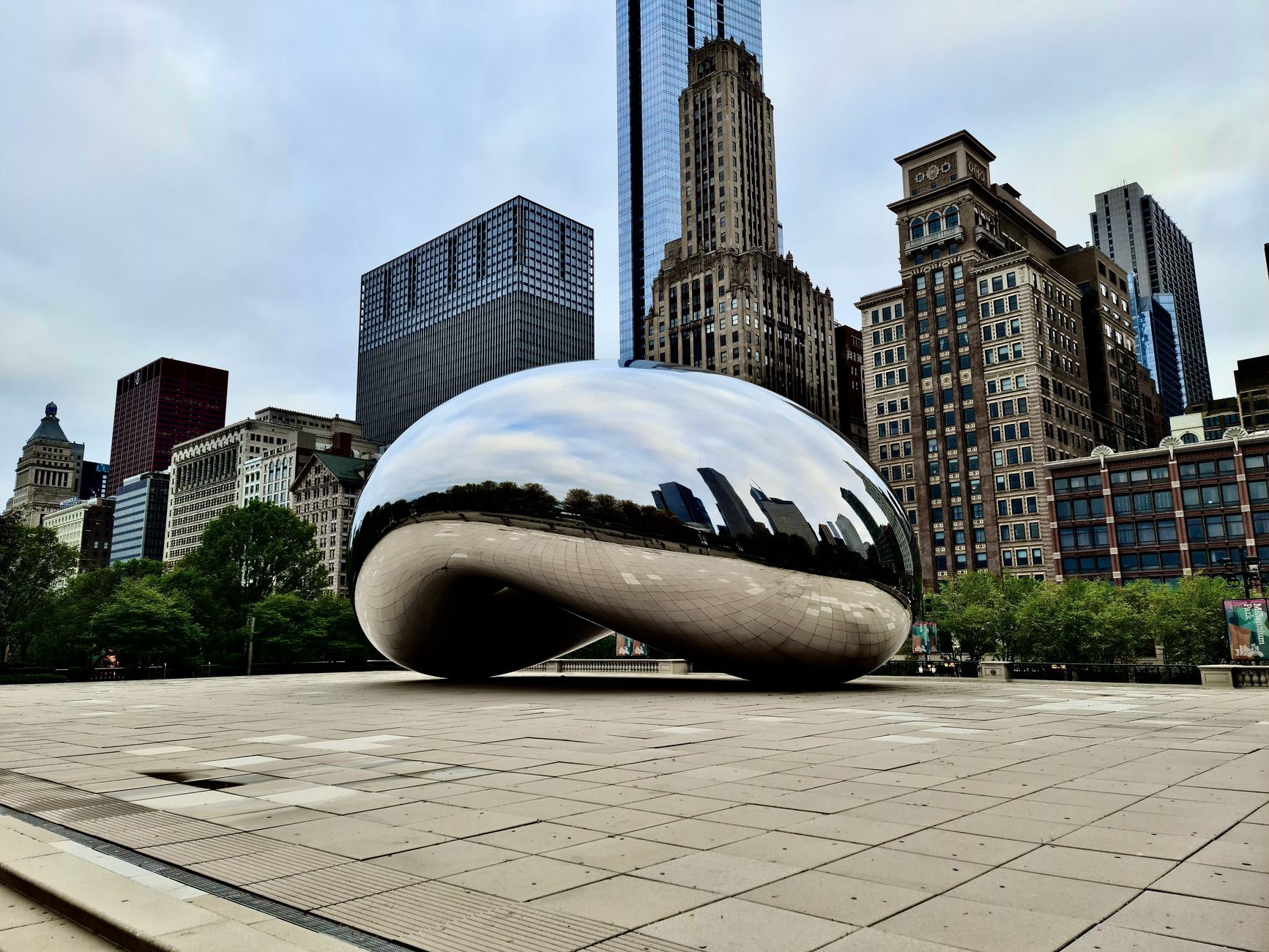
Millennium Park (2004, 24.5 acres, free) is the finest urban public space built in the USA in the 21st century. Cloud Gate (Anish Kapoor, 2006) — the “Bean,” a 110-tonne elliptical sculpture in mirror-polished stainless steel — reflects the Chicago skyline in a curved panorama and has become the most photographed public artwork in America. The Jay Pritzker Pavilion (Frank Gehry, 2004) is the outdoor concert venue; the Chicago Symphony and the Chicago Jazz Festival perform there in summer, free. Crown Fountain (Jaume Plensa, 2004) is the video-face tower with the water jet children play in. All free.
Cloud Gate (the Bean; free; 6am-11pm) is best photographed in early morning. The Jay Pritzker Pavilion (free summer concerts; cityofchicago.org) is adjacent. Lurie Garden at the east end of the park is the finest public garden in Chicago.
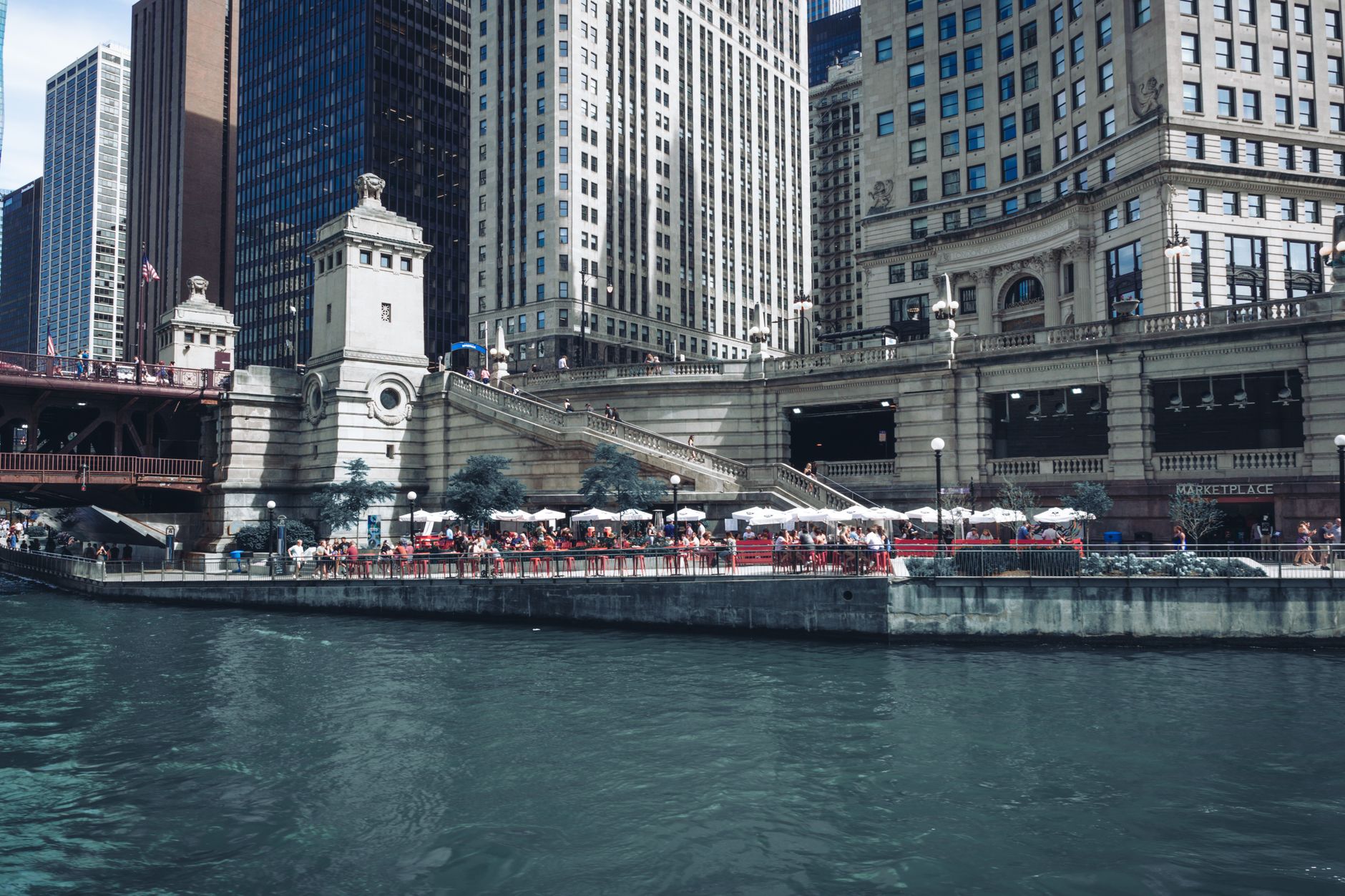
The Chicago Architecture Center offers river and L-train tours (from $55) that are the most informative introduction to the city’s architectural history. The Chicago Riverwalk (3km, free) runs from Lake Shore Drive to Lake Street along the south bank of the Chicago River — a sequence of riverside restaurants, kayak launches, an urban beach and the best ground-level view of the canyon of towers above. The self-guided Chicago Loop Walking Tour (free, downloadable map from the Chicago Architecture Center) covers 26 significant buildings in the Loop in 2–3 hours.
The Chicago Architecture Center river cruise ($55; architecture.org; 90 min) is the finest built-environment tour in the US. The River Walk (free; south bank of the Chicago River through downtown) gives the same views on foot for free.

Navy Pier (1916, reconstructed 2016) extends 1km into Lake Michigan and contains a Ferris wheel (rides $20), an IMAX cinema, the Chicago Shakespeare Theater and the most popular lakefront dining in the city. More significant is what Navy Pier represents: the lakefront itself. The Lakefront Trail (29km, free) runs continuously from Evanston in the north to South Shore in the south along the lake; in summer it is cycling, running, volleyball and outdoor yoga. The views across Lake Michigan from the pier at sunrise and sunset are the best free views in the city.
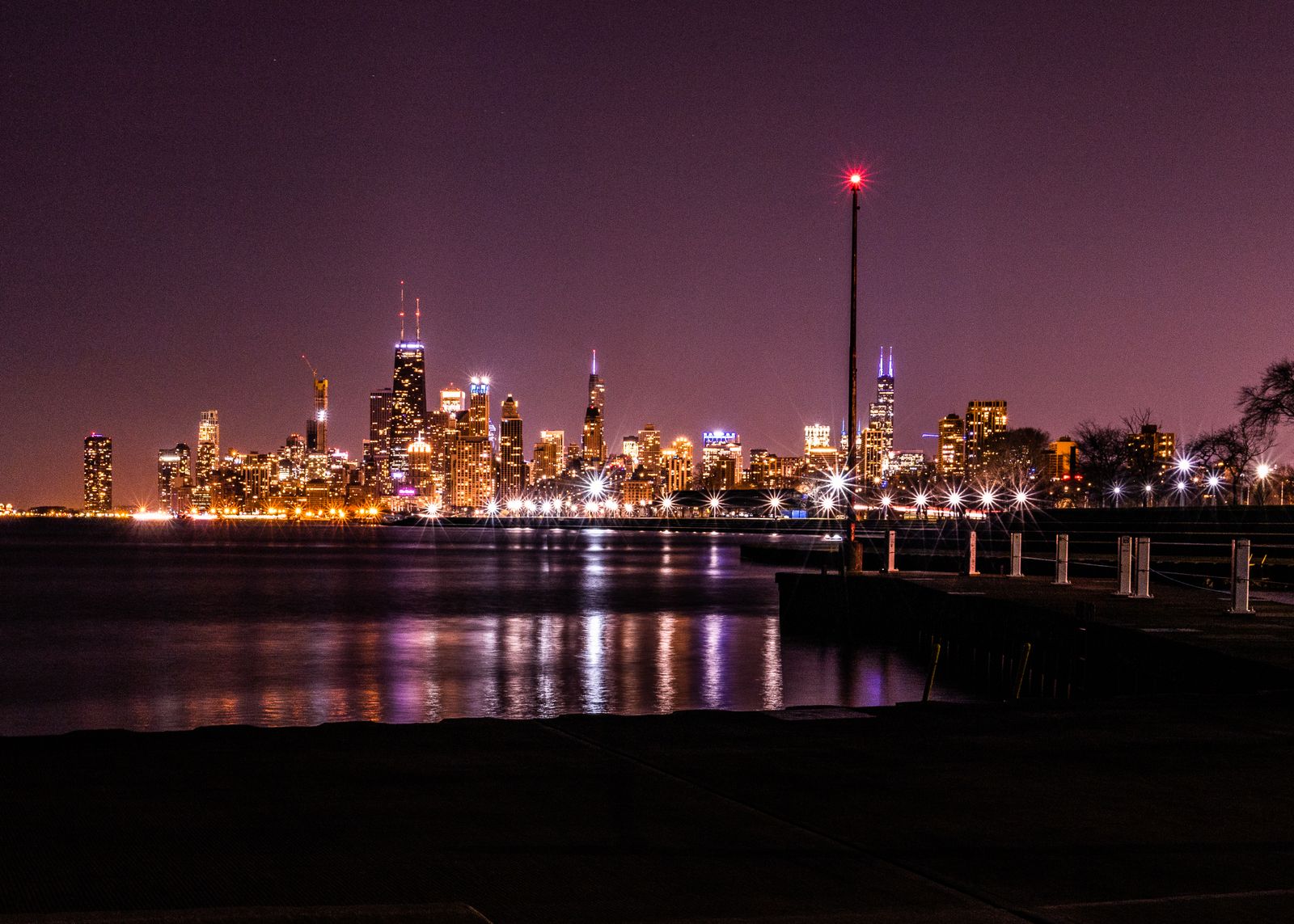
The Lakefront Trail (free; 18.5 miles; flat) gives a far better lake experience than Navy Pier. The Chicago skyline from Oak Street Beach (north) or the Museum Campus (south) are the two finest unobstructed city views.

The Art Institute of Chicago (1893, Michigan Avenue, $25) is one of the three finest encyclopaedic art museums in the USA alongside the Met and the Getty. The collection highlights: Georges Seurat’s “A Sunday on La Grande Jatte” (1886, the pointillist masterpiece), Grant Wood’s “American Gothic” (1930), Edward Hopper’s “Nighthawks” (1942, the diner painting reproduced on a million posters) and the largest collection of Thorne Miniature Rooms in the world. Free on Thursday evenings 5–9pm. Allow 3 hours minimum.
The Art Institute of Chicago ($26; artic.edu; free Thu evenings 5-8pm) has the finest Impressionist collection outside France: Seurat’s Sunday on La Grande Jatte and Grant Wood’s American Gothic in the same building. Allow 3-4 hours.
Chicago has four specific food identities and each is genuinely excellent. Deep-dish pizza (a thick buttered pastry crust, layered with mozzarella, filling and then tomato sauce on top; Pizzeria Uno and Giordano’s are the two most historically credible addresses; Pequod’s in Lincoln Park is the best for caramelised-crust pan pizza) is the dish that everyone expects. Chicago-style hot dogs (Vienna Beef frank, yellow mustard, white onion, tomato, pickle, sport peppers and celery salt in a poppy seed bun; no ketchup, ever) are the street food that locals actually eat: Portillo’s and Gene & Jude’s in River Grove. The Italian beef sandwich (slow-roasted beef, giardiniera peppers, au jus dipping broth, Turano roll) at Al’s Beef or Mr. Beef on Orleans is the third essential. The Maxwell Street Market (Sunday mornings, Canal & Roosevelt) has the best tamales and Mexican street food in the city for $4–8.
For fine dining, Chicago has a serious Michelin scene: Alinea (Grant Achatz, 3 stars, avant-garde tasting menu, $385–495 per person, book 60 days ahead when reservations open) is one of the most technically innovative restaurants in the world. Smyth (John Shields, 2 stars), Oriole (2 stars) and Boka (1 star) represent the next tier. The Chicago dining scene has more Michelin stars per capita than New York and a more even distribution across price points.
The CTA L (elevated rail) is the fastest way between neighbourhoods. The Loop, Red, Blue, Green, Brown, Orange, Pink and Purple lines radiate from the downtown Loop station complex. A single fare is $2.50 (Ventra card or contactless payment); a day pass costs $10. The Blue Line from O’Hare to downtown is $2.50 — the cheapest airport connection in any major US city. Walking in the Loop and River North is generally faster than riding for distances under 1.5km. The Divvy bike-share system ($1/ride, $5 day pass) covers downtown and the Near North Side comprehensively.
Jun–Sep is Chicago at its finest: the lakefront fills with activity, the free outdoor festivals run every weekend, and the city’s natural tendency toward communal outdoor life takes full effect. The Chicago Jazz Festival (early September, free) and the Chicago Blues Festival (June, free) are the two best free music events in the USA. Winter is very cold but culturally rich.
Chicago is the best-value of the major US cities for visitors: cheaper accommodation than New York or San Francisco, excellent free lakefront and parks, and a restaurant scene that rivals either city at a lower price point. Per person per day.
Millennium Park, the Lakefront Trail, the Chicago Blues Festival (June) and the Chicago Jazz Festival (September) are all free. The Art Institute is the main paid attraction.
The architecture boat tour is the best value paid experience in Chicago and significantly better than the Skydeck at Willis Tower for understanding the city.
Alinea opens reservations 60 days ahead at exactly midnight; tickets typically sell out within hours. This is the most technically ambitious restaurant in the USA.
Three days covers the architecture, the art institute, the lakefront and a neighbourhood in depth.
Architecture Center river tour at 10am ($55; book ahead). Chicago Riverwalk lunch (outdoor dining on the river, May–October). Millennium Park: Cloud Gate, Pritzker Pavilion. Art Institute of Chicago ($25; allow 2–3 hours; “Nighthawks,” “A Sunday on La Grande Jatte”). Chicago-style hot dog at Portillo’s for a quick dinner before heading to a blues club.
The Riverwalk (free; lower Wacker Drive; May-Oct) is the finest urban waterway walk in the US. Architecture cruise at 10am. Cloud Gate before lunch. Art Institute in the afternoon (free Thu evening 5-8pm).
Divvy bike rental at Millennium Park. Cycle north along the Lakefront Trail to Lincoln Park and the Lincoln Park Zoo (free, 35 acres). Wrigley Field (if baseball season) or the Wrigley neighbourhood for lunch. Navy Pier for the lake views and Ferris wheel in the afternoon. Deep-dish pizza at Pequod’s for dinner (arrive by 5:30pm to avoid the queue).
The Lakefront Trail (18.5 miles; flat; free) connects the Museum Campus (Field Museum, Adler Planetarium, Shedd Aquarium) to the North Side beaches. Lincoln Park Zoo (free; 10am-5pm daily) is the finest free zoo in the US.
The L Brown Line to Merchandise Mart, then a walk through the River North gallery district. Wicker Park (Blue Line, Damen stop) for the best independent shopping and coffee in Chicago. Pilsen (Mexican-American neighbourhood, Pink Line) for street art murals and the best tacos in the city at La Palma. Maxwell Street Market (Sundays) for tamales.
Wicker Park (Blue Line to Damen) has Milwaukee Avenue independent shops and Chicago’s best independent music venues. The Garfield Park Conservatory (free; 300 N Central Park) is one of the finest in the US.
🛂 Entry rules: ESTA for visa-free visitors
Citizens of Visa Waiver Program countries, including the UK, most of the EU, Australia, New Zealand and Japan, must have an approved ESTA before boarding a flight or ship to the United States. It costs about US$40, is valid for two years or until your passport expires, and allows stays of up to 90 days at a time.
Apply at least 72 hours before travel on the official CBP site or the ESTA Mobile app; many look-alike websites charge extra for the same form. Canadian citizens don’t need an ESTA. Everyone else needs a visa.
Official information: US CBP: official ESTA site · Reviewed September 2026
The Chicago Architecture Center river tour (from $55, 90 minutes, departs from the Riverwalk at Michigan Avenue Bridge) is the single best introduction to Chicago’s architectural heritage.
Buddy Guy’s Legends (700 S. Wabash, the Loop) is the most historically significant blues club in Chicago: Buddy Guy himself performs regularly in January (check the website).
Pizzeria Uno (1943) is historically significant and tourist-facing; Pequod’s in Lincoln Park (2207 N.
The Chicago Lakefront Trail (29km continuous, free) runs along Lake Michigan from Evanston to South Shore.
Cloud Gate in Millennium Park is most photographed at peak tourist hours (10am–4pm) when the reflection includes hundreds of visitors.
The Windy City nickname is technically more accurate than most (it does funnel Lake Michigan wind between the buildings).
Official CTA app: L train and bus real-time arrivals, day pass purchase ($10 unlimited), Divvy bike-share integration and trip planning across the full CTA network.
Free
Architecture tour booking (river, L-train, walking), building information, self-guided Loop tour map and the Open Architecture Chicago annual event calendar.
Free
Official app: audio guides for the permanent collection (“Nighthawks,” the Thorne Rooms, the Impressionist galleries), timed entry booking and exhibition information.
Free
Alinea and most of Chicago’s Michelin-starred restaurants use Tock for pre-paid, timed reservations. Set up an alert for Alinea availability 60 days out.
Free
Download Chicago offline. The L train lines and the Lake Shore Drive route are the most-used navigation features; the Riverwalk and Millennium Park walking routes benefit from GPS.
Free
Quick answers to the questions travellers most often ask before visiting Chicago.
Late spring through early autumn (May-October) is best, with warm days and a packed festival calendar. Winter is bitterly cold and windy, while spring and autumn are pleasant and less crowded.
Three to four days for the Loop and Millennium Park, the Art Institute, an architecture river cruise, the lakefront and a neighbourhood or two.
By the ‘L’ trains and buses on a Ventra card, with a very walkable downtown; the L from O’Hare and Midway is cheap and easy. A car isn’t needed.
Its spectacular architecture and skyline (best seen on a river cruise), deep-dish pizza, blues and jazz heritage, world-class museums, and the lakefront along Lake Michigan.
Discover more of America’s great destinations.
Planning a wider trip? Our USA travel guide covers getting there, costs, when to go and more.