
PT
São Miguel
The largest Azorean island, with crater lakes, hot springs, tea plantations and the capital, Ponta Delgada
The largest Azorean island, with crater lakes, hot springs, tea plantations and the capital, Ponta Delgada
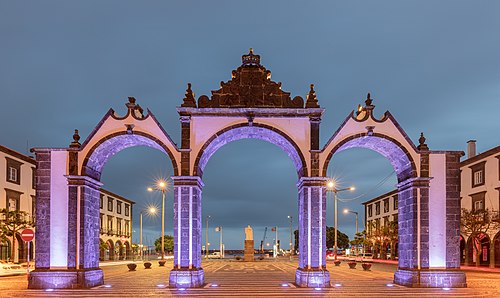
The island capital has black-and-white cobbled streets, churches built from dark basalt and the three-arched city gates (Portas da Cidade) by the harbour.
Photo: Diego Delso, CC BY-SA 4.0

A huge volcanic crater in the west of the island holds twin lakes, one blue and one green. Viewpoints such as Vista do Rei look down into the caldera, and trails run along the rim.
Mist often covers the crater; go early or check webcams.
Photo: Descobrimentos novos, CC BY-SA 4.0

A village in a volcanic valley with steaming fumaroles, hot springs and the Terra Nostra garden’s iron-rich thermal pool. Cozido das Furnas, a stew, is slow-cooked in the hot ground by the lake.
Bring a dark swimsuit; the iron water stains.
Photo: Diego Delso, CC BY-SA 4.0

A crater lake in the centre of the island inside a nature reserve, with a trail down to its beaches.
Photo: Gonçalo Torres, CC BY-SA 4.0

Tea has been grown here since the 19th century, making it one of the few tea plantations in Europe. Visitors can see the factory and walk through the fields.
Photo: Krzysztof Ziarnek, CC BY 4.0
Try cozido das Furnas, fresh fish and seafood, limpets (lapas), local cheese, and pineapples grown in greenhouses. Finish with a queijada from Vila Franca do Campo.
Ponta Delgada has the widest choice of restaurants and cafés.
João Paulo II Airport (PDL) in Ponta Delgada has flights from Lisbon and Porto (about 2 hours 15 minutes) and some direct routes from other European and North American cities. Inter-island flights connect with the other Azores.
A rental car is the easiest way to get around; buses are slow. The Azores are part of Portugal and the Schengen area. Non-EU visitors are registered in the EU Entry/Exit System on arrival, and visa-exempt travellers will need an ETIAS travel authorisation once it launches, expected from late 2026. Check current rules before you travel.
The Azores use the euro. Prices are generally lower than in mainland Western Europe, but rental cars are in short supply in summer, so book early.
Prices are approximate and highest in July and August.
Crater lakes, hot springs and the coast.
Explore the old town and join a whale-watching trip.
Drive to Sete Cidades, walk the crater rim and visit the hot springs at Ferraria.
Visit Furnas, Terra Nostra Park and the fumaroles, and eat cozido by the lake.
Stop at Lagoa do Fogo and the Gorreana tea plantation.
Weather changes quickly; carry a rain jacket and check webcams before viewpoints.
Book rental cars early in summer.
Whale watching runs most of the year; spring is best for migrating blue whales.
Some popular viewpoints have parking limits or shuttles in peak season.
Quick answers for planning time in São Miguel.
Fly to Ponta Delgada, about 2 hours 15 minutes from Lisbon.
A volcanic crater with twin blue and green lakes.
Yes, at Terra Nostra, Poça da Dona Beija, Caldeira Velha and Ferraria.
It is the easiest way to see the island; tours are an alternative.
May to September for the driest weather.
Planning a wider trip? Our Azores travel guide covers getting there, costs, when to go and more.