PT
Terceira
An island of patchwork fields, festivals and the UNESCO-listed Renaissance city of Angra do Heroísmo
An island of patchwork fields, festivals and the UNESCO-listed Renaissance city of Angra do Heroísmo

Listed by UNESCO in 1983, the town has a grid of streets with colourful houses, churches and the Monte Brasil peninsula, an old volcano with a fortress and walking trails.
Photo: Diego Delso, CC BY-SA 4.0

One of the few volcanic vents in the world you can walk down into, with a lake at the bottom and silica formations on the walls. It opens on a limited schedule.
Check opening hours before you go.
Photo: Diego Delso, CC BY-SA 4.0

On the north coast, natural swimming pools are formed in black lava rock. The area also produces wine, with a small wine museum.
Photo: Diego Delso, CC BY-SA 4.0

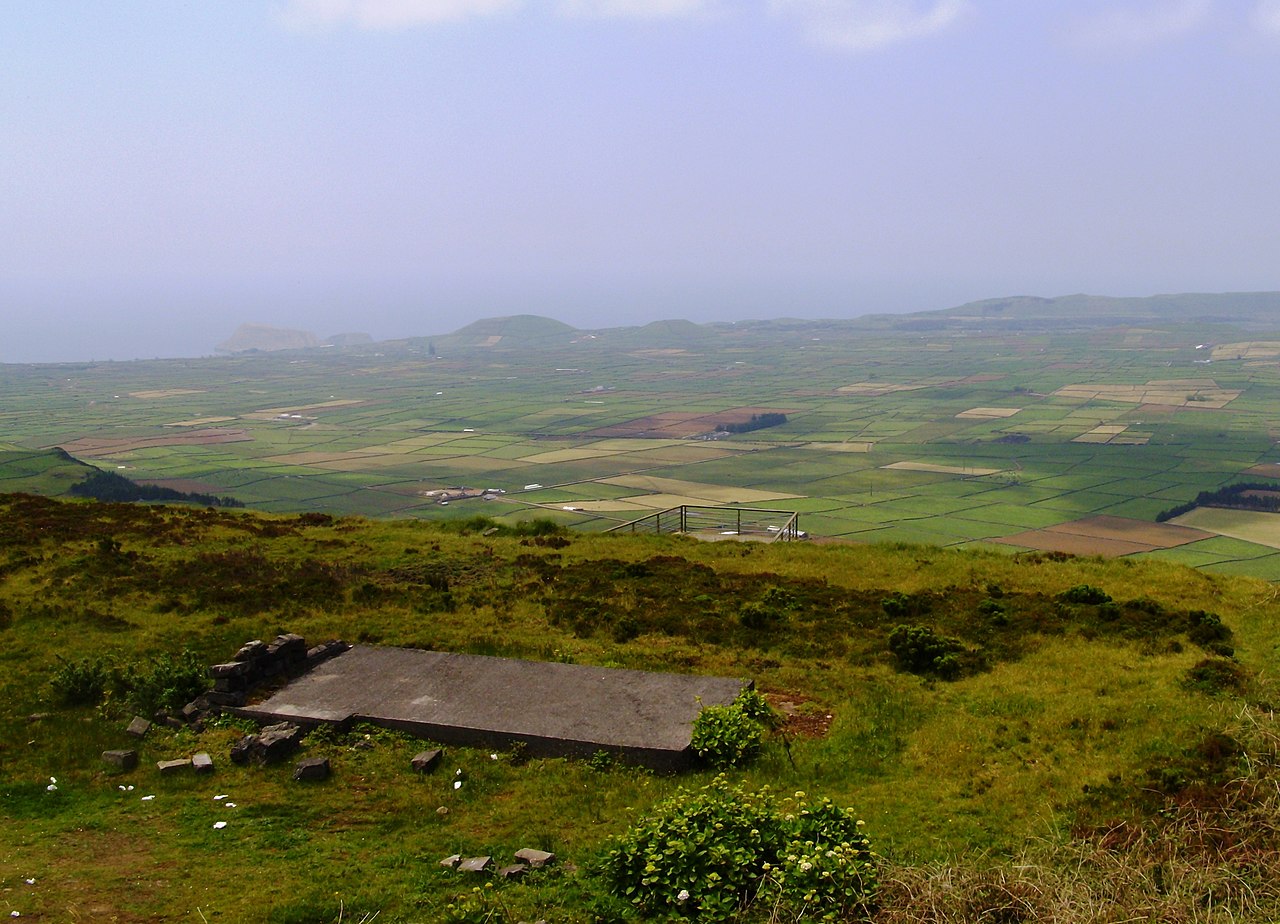
A viewpoint on the rim of an old volcano looks over a patchwork of green fields divided by stone walls, stretching to Praia da Vitória.
Photo: Carlos Luis M C da Cruz, CC BY-SA 3.0
Terceira’s signature dish is alcatra, beef slow-cooked in a clay pot with wine and spices. Try local cheeses, donas amélias (spiced cakes) and Biscoitos wine.
Angra and Praia da Vitória have the most restaurants.
Lajes airport, about 20km from Angra, has flights from Lisbon and Ponta Delgada and some seasonal international routes. It is shared with an air base.
Buses link the main towns, but a car is best. The Azores are part of Portugal and the Schengen area. Non-EU visitors are registered in the EU Entry/Exit System on arrival, and visa-exempt travellers will need an ETIAS travel authorisation once it launches, expected from late 2026. Check current rules before you travel.
The Azores use the euro. Prices are generally lower than in mainland Western Europe, but rental cars are in short supply in summer, so book early.
Prices are approximate and higher during the June festivals.
Town, caves and coast.
Explore Angra do Heroísmo and walk on Monte Brasil.
Visit Algar do Carvão and the Serra do Cume viewpoint.
Swim in the Biscoitos pools and visit the wine museum.
The Sanjoaninas festival in Angra is held in late June.
At a tourada à corda, watch from a safe distance.
Bring layers and a rain jacket.
Rent a car to explore the interior.
Quick answers for planning time in Terceira.
Yes, since 1983.
A volcanic vent you can walk down into.
In the natural lava pools at Biscoitos and elsewhere on the coast.
Terceira’s slow-cooked beef dish, baked in a clay pot.
May to September.
Planning a wider trip? Our Azores travel guide covers getting there, costs, when to go and more.