ES
Valencia
Paella, Futurism and Year-Round Sun
Paella, Futurism and Year-Round Sun

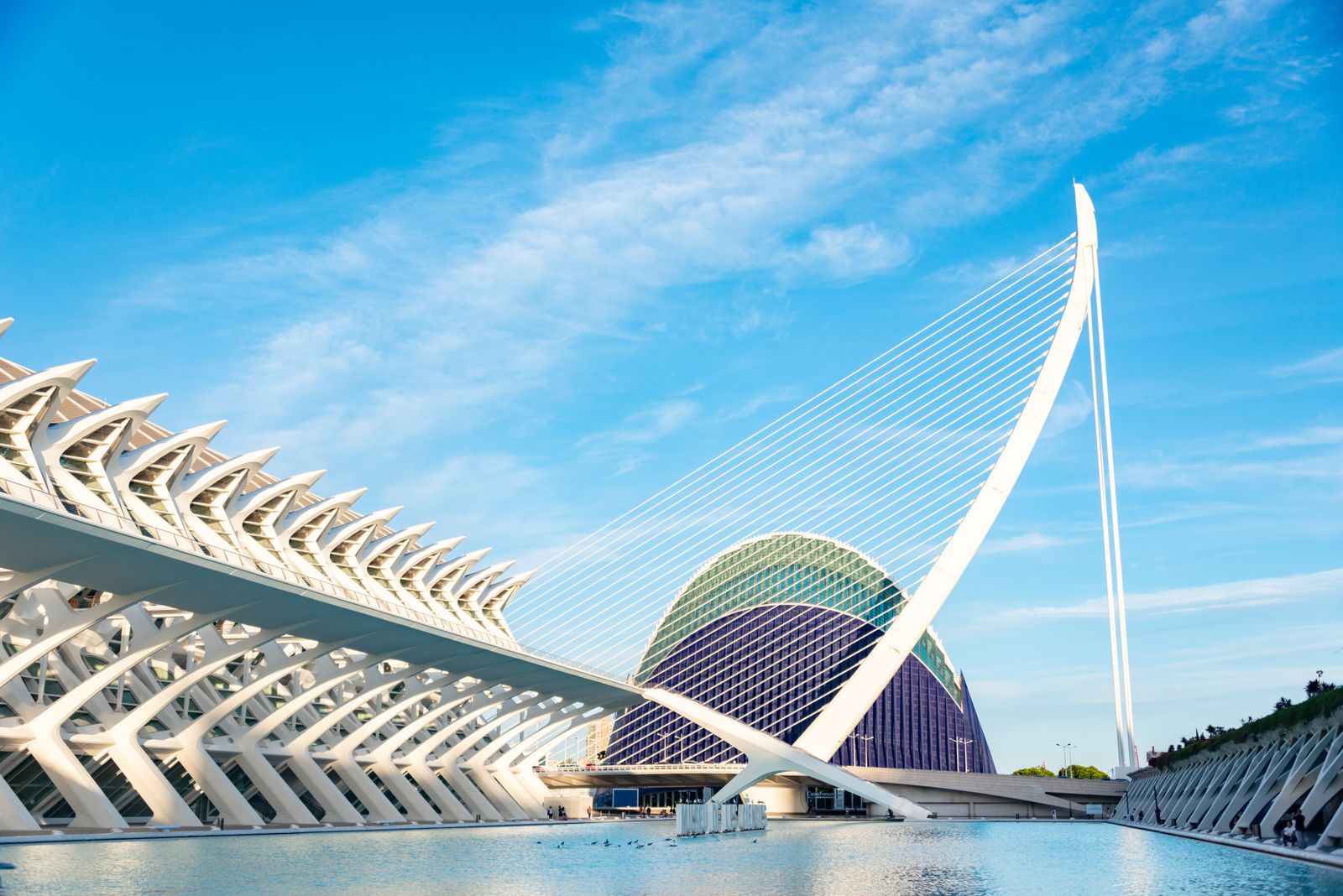
Santiago Calatrava’s futurist complex covers 350,000m² at the eastern end of the Turia river bed. The Oceanogràfic (Europe’s largest aquarium, €32) is the main crowd-draw. The Hemisferic (IMAX cinema, €9) and Museo de les Ciències (interactive science, €8) are worth the separate entries. The complex is most striking at dusk when the white concrete turns amber. Walk around the exterior — that alone takes an hour.
The Oceanogràfic (€38; cac.es) is the largest aquarium in Europe — book a day ahead in summer. The Cità de les Arts i les Ciències complex is also free to walk around and photograph at night when the buildings reflect in the pools.
Valencian paella contains rabbit, chicken, green beans and garrofó (white lima beans), cooked in a wide flat pan over orange-wood fire. Seafood paella is a different dish. The original experience is lunch at a restaurant on the edge of the Albufera lagoon (El Palmar village, 30 min south): rice from the adjacent paddies, eaten by the water. In the city, La Pepica (on the Malvarrosa seafront, since 1898) is the most famous; Casa Carmela and La Riuà are preferred by locals.
Authentic Valencian paella is rice, rabbit, chicken and vegetables — not seafood, which is a tourist adaptation. El Palmar village (15km south; bus from Colón) has the most traditional paella in the region. Order at 1pm; it takes 30 minutes to prepare.
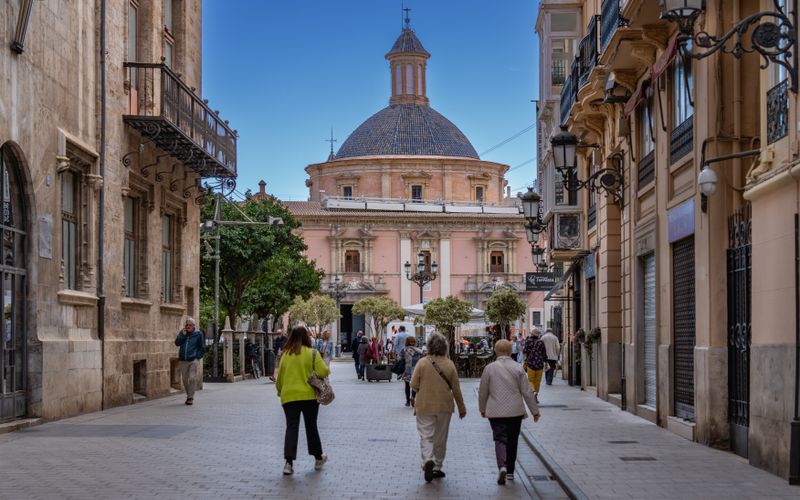
El Carmen is the medieval neighbourhood inside the old city walls: narrow streets, the 14th-century Torres de Quart and Torres de Serranos (climbable, €2), street art and the densest bar concentration in Valencia. The Mercado Central (built 1928, the largest covered market in Europe, 8,000m²) sells the fresh produce Valencia eats: citrus, rice, hake, horchata. Open Monday–Saturday mornings.
The Mercado Central (free to browse; Mon–Sat 7am–3pm) is the finest market hall in Spain — the 1928 Art Nouveau iron and glass structure is as extraordinary as the produce. El Carmen adjacent is Valencia’s most atmospheric neighbourhood for evening tapas.
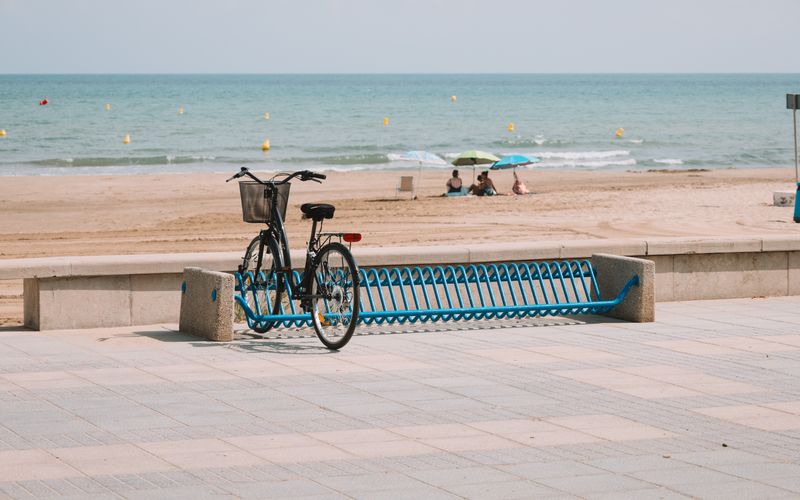
Four kilometres of city beach running northeast from the old port. The tram from the centre takes 20 minutes and drops you at the seafront. Beach culture runs from June to September; the promenade paseo is year-round. The beach restaurants at the south end serve fresh fish and the correct local lunch: all i pebre (eel with garlic, paprika and potato, a lagoon dish) and a horchata to close.
Valencia’s beaches are the finest of any major Spanish city. Rent a bicycle from any Valenbisi station (€13.40/week unlimited 30-min rides) for the full Passeig Marítim seafront circuit (4km; flat; scenic).
The single most important food rule in Valencia: paella is a lunch dish. Restaurants do not serve it for dinner and if they do, it’s not fresh. A proper Valencian paella requires 45–60 minutes to cook; ordering it requires choosing it when you sit down and waiting. Any restaurant that serves paella in 15 minutes has made it earlier and reheated it. The correct paella restaurants are full at 2pm on a Sunday, not at 8pm on a Tuesday.
Horchata de chufa — a cold, milky-white drink made from tiger nuts, slightly sweet, served over ice — is Valencia’s most distinctive refreshment. Horchatera Santa Catalina in the city centre has been making it since 1836. It comes with fartons (long, sweet breadsticks for dipping). All i pebre (eel in garlic-paprika sauce) is the correct lagoon dish. The Ruzafa neighbourhood has the best restaurant density in the city for dinner, with everything from traditional Valencian to Japanese to natural wine bars.
Valencia is Spain’s most cycling-friendly city. The Turia Gardens cycling path runs 9km through the centre of the city on the dry bed of the Turia river (diverted after a catastrophic flood in 1957). The Valenbisi bike-share system (€3/week) has 276 stations. Metro lines 3 and 5 connect the airport to the city (25 min, €3.90). Tram line 4 serves the beach at Malvarrosa. The EMT bus network covers everything the metro misses. Taxis are cheap: centre to beach, €8–12.
Valencia is genuinely good year-round: mild winters, warm springs and autumns. The two highlights are Fallas (mid-March) and beach season (June–September). Spring and autumn give the best combination of temperatures and manageable crowds.
Valencia is the most affordable of Spain’s three main coastal cities — noticeably cheaper than Barcelona and somewhat below Madrid for accommodation. Excellent value for quality.
The City of Arts complex exterior is free and one of the most photogenic places in Spain. Paying for entry is optional.
Sunday paella at Casa Carmela (€18–25/person for the full dish) is the single best meal in Valencia. Book a week ahead.
Quique Dacosta in Dénia (1h south) holds 3 Michelin stars. If you’re serious about Spanish gastronomy, book it alongside Valencia.
Valencia at its own pace: markets in the morning, a long paella lunch, an afternoon at the beach or on a bike, evening in El Carmen.
Walk El Carmen in the evening — the streets around Torres de Serranos and the Plaza del Tossal. Bar crawl in the neighbourhood. The Mercado Central exterior at dusk for orientation. Dinner in Ruzafa.
El Carmen is Valencia’s medieval quarter inside the old city walls. Walk from the Cathedral to the Torres de Serranos (€2; free at 6pm) for the finest view of the old city at sunset.
Mercado Central at 9am when it opens — buy oranges and eat them. Old city in the morning: Torres de Serranos (€2, climb for the city view). Turia Gardens cycling afternoon. City of Arts and Sciences at dusk for the exterior light.
Mercado Central opens at 7:30am. Walk the Jardí del Túria (the former river bed converted to a 9km linear park; free) to reach the City of Arts — the walk alone is worth the 30 minutes.
Casa Carmela or La Riuà for Sunday paella lunch: arrive at 1:30pm, order the Valencian paella immediately. Walk to Malvarrosa beach for the afternoon. Return via tram. Evening vermouth in El Carmen.
Order paella at El Palmar before 2pm (30 min preparation time). After lunch, walk the Albufera lake circuit (2km) for the wetland birds. The rice paddies in September (harvest season) turn the landscape gold.
30 min south by bus or taxi to El Palmar village on the edge of the Albufera lagoon. Boat trip on the lagoon (€8–12). Lunch at a lagoon-edge restaurant with the correct paella context. Return for an afternoon in the Barrio de Ruzafa.
The Albufera boat trip (€4.50; 45 min) through the rice paddies and reed beds at sunset is the most atmospheric thing in the Valencia region — and the origin of the world’s most famous rice dish.
🛂 Entry rules: EES and ETIAS
Spain is in the Schengen area, which has two EU border systems for non-EU visitors.
EES (in force): since 10 April 2026 the EU’s Entry/Exit System registers non-EU visitors’ passport details, fingerprints and a photo the first time they enter the Schengen area, replacing passport stamps. Allow extra time at the border on your first trip; later crossings are quicker. EU, EEA and Swiss citizens are not registered.
ETIAS (not yet running): a €20 online travel authorisation for visitors who don’t need a visa, such as UK, US, Canadian and Australian citizens. It hasn’t started and no start date has been confirmed, so nobody can apply yet; ignore websites that offer to “pre-register” you for a fee.
Visa-free visitors can stay up to 90 days in any 180-day period across the whole Schengen area, not per country.
Official information: EU: Travel to Europe (EES & ETIAS) · Reviewed September 2026
The kitchen at a proper paella restaurant needs 45–60 minutes. You must order it when you sit down. It arrives between 2–3pm.
The Oceanogràfic (Europe’s largest aquarium) is the main draw and books ahead in summer (€32, schedule.oceanografic.org).
The Fallas festival (March 15–19) burns papier-mâché sculptures up to 30m tall in the streets after a week of fireworks, music and mascletà (daytime pyrotechnic shows).
The 9km car-free cycling path through the Turia river gardens is the most enjoyable way to cross Valencia.
The 1836 horchateria near the Mercado Central serves the definitive version. Order it on ice (bien fría) with fartons. Avoid the bottled versions sold in supermarkets.
Thursday evening in El Carmen is when the neighbourhood is at its most animated.
Official Valencia bus and metro app with real-time routes, journey planning and digital ticket purchase. Covers metro Lines 3&5 (airport), tram to Malvarrosa and all city buses.
Free
City bike-share app for Valencia’s 276-station network. €3 weekly pass gives 30-min rides. The Turia Gardens route is 9km car-free through the city centre.
Free
Regional trains: Alicante 1h30, Barcelona 3h30 (AVE). Cercanías for Xativa and Sagunto day trips. Buy in advance for the Barcelona AVE.
Free
Restaurant bookings in Valencia. Reserve La Riuà for Sunday paella at least a week ahead; Ruzafa neighbourhood restaurants on weekend evenings.
Free
Download Valencia offline. The El Carmen and Ruzafa backstreets are easiest navigated with an offline map; signal can drop in the covered market hall.
Free
Quick answers to the questions travellers most often ask before visiting Valencia.
Spring (especially the Las Fallas festival in March) and autumn offer warm, pleasant weather. Summer is hot and humid, and winters are mild — among the warmest in mainland Spain.
Two to three days for the futuristic City of Arts and Sciences, the old town and Cathedral, the Central Market, the Turia gardens and the beaches — plus paella, which was born here.
By metro, trams and buses, and it’s wonderfully bike-friendly thanks to the Turia park that rings the centre. The old town is walkable.
Being the birthplace of paella, the striking City of Arts and Sciences, the vibrant Las Fallas festival, the Modernista Central Market, the green Turia riverbed park and its Mediterranean beaches.
Discover more of Spain's great destinations.
Planning a wider trip? Our Spain travel guide covers getting there, costs, when to go and more.