JP
Hiroshima
Peace, Memory and the Inland Sea
Peace, Memory and the Inland Sea
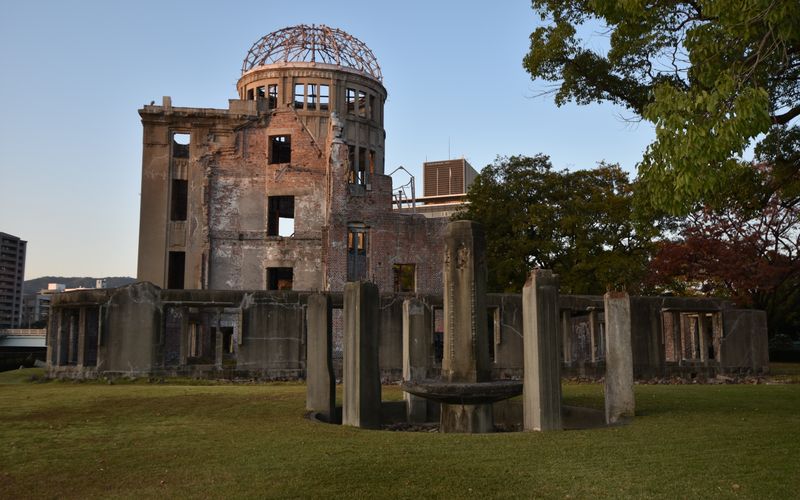
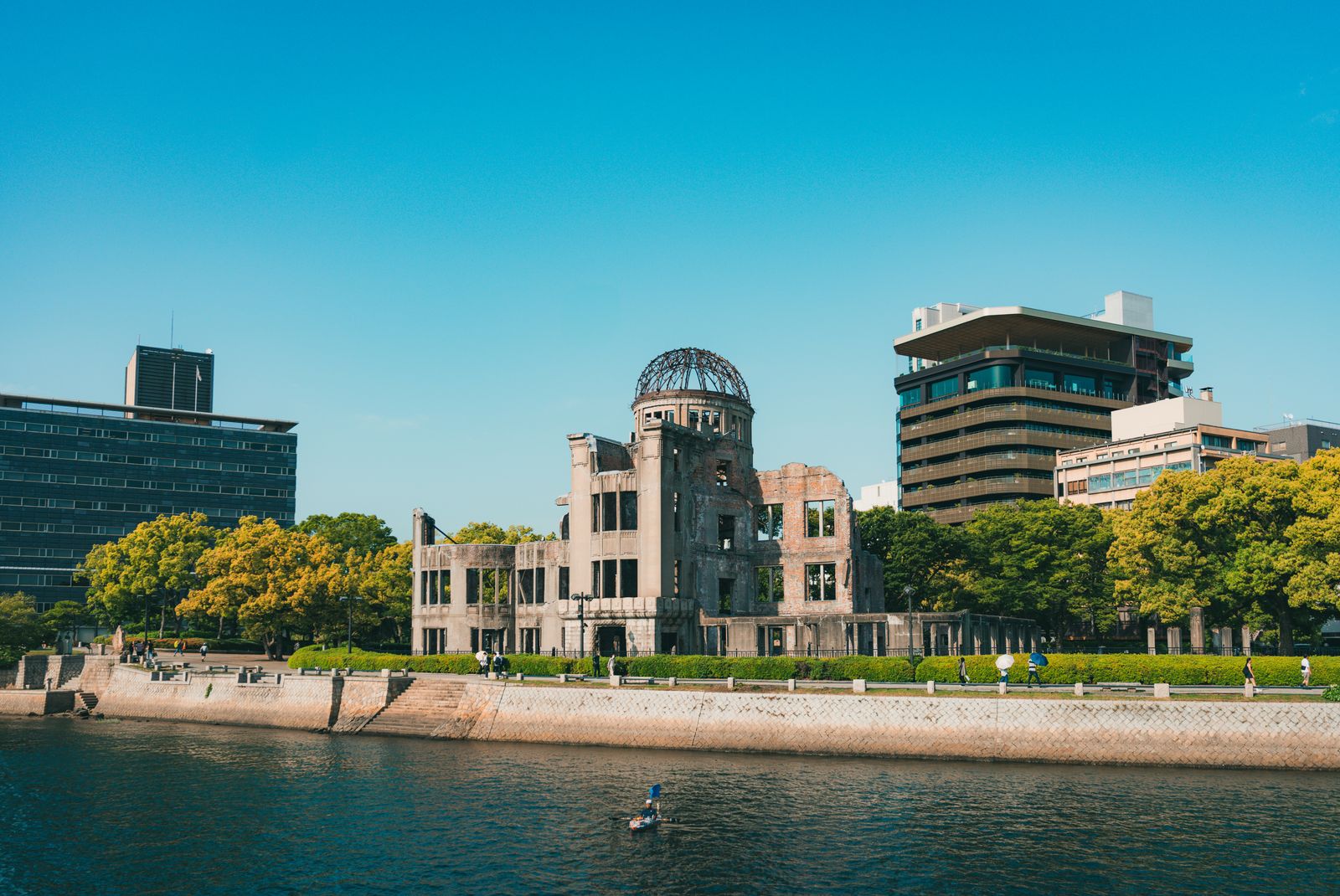
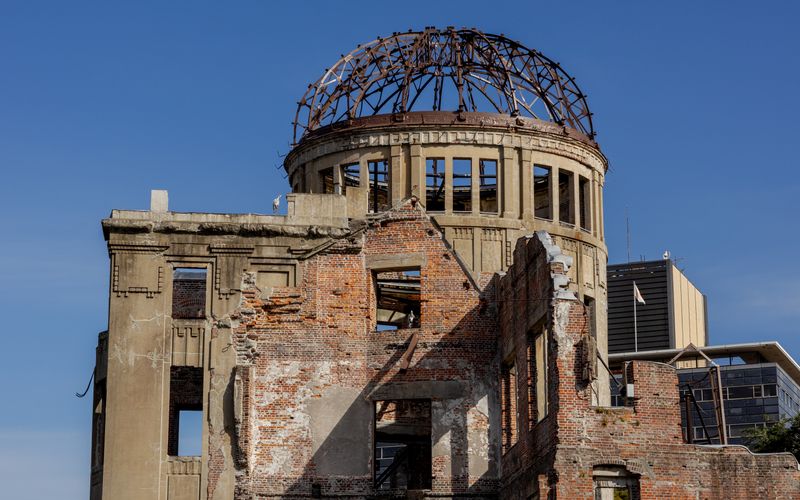
The A-Bomb Dome — the preserved skeleton of the Prefectural Industrial Promotion Hall, 160m from the hypocentre, the only structure near the centre that partially survived — is a UNESCO World Heritage Site. The park around it contains the Children’s Peace Monument (paper cranes; Sadako Sasaki’s story), the Peace Flame (which has burned continuously since 1964 and will be extinguished when all nuclear weapons are eliminated), and the Cenotaph. Entry to the park is free.
The A-Bomb Dome is the only structure in the blast zone left standing, preserved exactly as in August 1945. The park is free; the Peace Bell can be rung by any visitor. Arrive at dawn before the organised school visits begin at 9am.
Peace Memorial Museum →
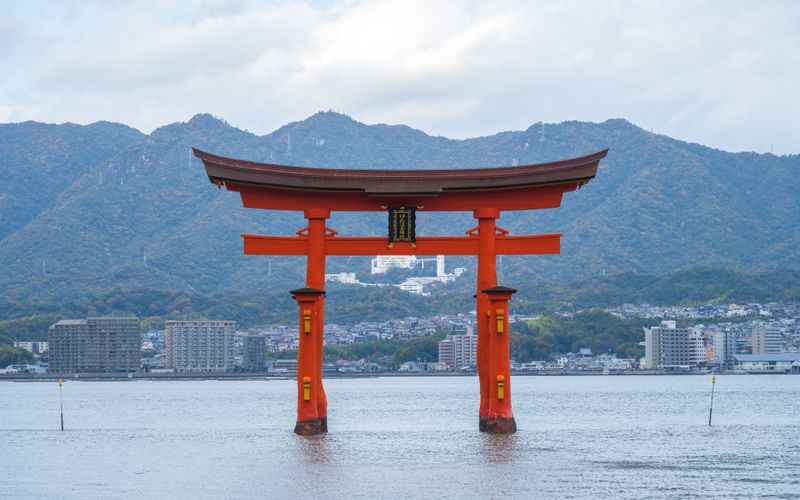
The vermilion O-torii gate of Itsukushima Shrine appears to float on the sea at high tide and stands on the tidal flat at low tide, surrounded by wading birds and deer. Both states are worth seeing. The shrine itself (¥300) is built on stilts over the water. Check the tide times before visiting: high tide gives the floating gate; low tide lets you walk to it. The island has no cars; deer roam freely in the village and up the forested mountain trails.
The floating torii is accessible on foot at low tide (check tide times before visiting). The Itsukushima Shrine ferry (¥180; 10 min) runs every 10–15 min from Miyajimaguchi. The deer on the island are tame but will eat maps and tickets if given the chance.
The museum, opened in 1955, contains artifacts, photographs, testimonies and scientific analysis of the bombing and its aftermath. The west building covers the pre-war city and the bombing; the east building has survivors’ testimonies and personal objects. Allow 2 hours minimum; the material is presented with moral seriousness and without sentimentality. Entry ¥200. Open daily except December 30–31. The audio guide is excellent.
Among the most important museums in the world (¥200). Allow 2–3 hours. The East Building gives historical context; the West Building holds the personal artefacts — do the West Building last. The exhibit of Sadako’s folded cranes is the most affecting room.
Book museum entry →
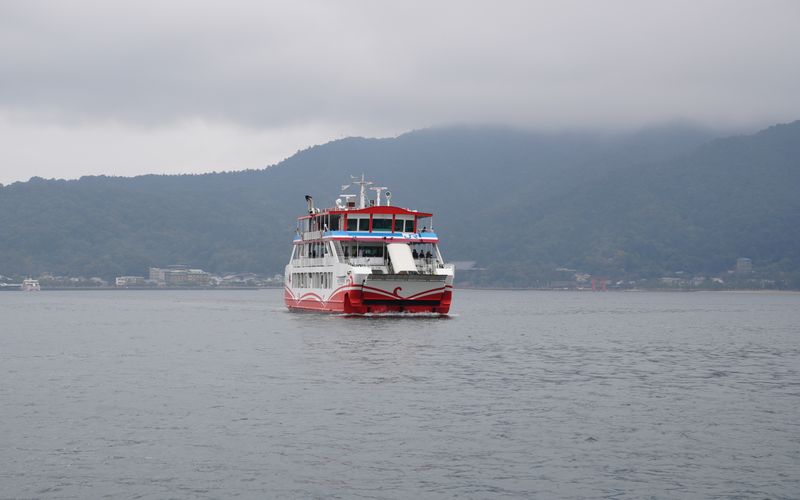
The Seto Inland Sea (Setonaikai), enclosed between Honshū, Shikoku and Kyūshū, contains more than 700 islands and is the most sheltered stretch of ocean in Japan. From Hiroshima, ferries reach Omishima (the “Island of Gods”, a 7th-century shrine and citrus orchards), Ōkunoshima (the famous rabbit island — 1,000 rabbits live there) and the island art museums of the Shimanami Kaido. The ferry network is an underused part of the Hiroshima visit.
The Shimanami Kaidō cycling route (Onomichi to Imabari; 70km) crosses 6 islands via suspension bridges — Japan’s finest long-distance cycling route. Day-rentals from ¥1,500 at both ends. The first island (Mukaishima) is achievable as a 4-hour return from Onomichi.
Hiroshima has two food identities. The first is Hiroshima-style okonomiyaki: a layered savoury pancake that differs fundamentally from the Osaka version. Where Osaka mixes all ingredients into the batter, Hiroshima builds in layers — a thin crêpe base, a mound of shredded cabbage, pork belly, squid, noodles (either ramen or udon) and an egg on top, finished with the sweet otafuku sauce and bonito flakes. Okonomimura (“Okonomi village”, a five-floor building with 25 okonomiyaki restaurants) on Shintenchi-dori is the correct place to eat it; choose a restaurant on the upper floors where the chefs have been cooking for decades.
The second identity is oysters: Hiroshima Prefecture produces 60% of Japan’s farmed oysters, and the oyster restaurants near Miyajima’s ferry terminal are the most direct way to eat them. Kaki furai (deep-fried oysters in breadcrumbs) and grilled oysters in the half-shell with a squeeze of ponzu are the two standard preparations. In the Saijo district east of Hiroshima, eight sake breweries have operated since the Edo period; the Sake Brewery Street (Sake no Machi) is worth a half-day detour for the tastings.
The Hiroshima tram network (streetcar, flat fare ¥220) is the city’s main transport; lines 1, 2 and 6 cover the Peace Park, Hiroshima Station, the castle and the entertainment district. Tram Line 2 runs to the Miyajima Ferry Terminal (Hiroden-Miyajimagūchi), where JR Ferry and Miyajima Matsudai Ferry both run 30-minute crossings to Miyajima island (¥200–400 each way; JR Pass holders travel free on the JR Ferry). Walking is practical for the Peace Park area, which is flat and compact.
Hiroshima is excellent year-round. Spring (April) for cherry blossom in Peace Memorial Park; autumn (November) for foliage on Miyajima mountain. Summer is hot but the inland sea views are superb. The museum is significant in any season.
Hiroshima is one of the cheaper major cities in Japan. The main museum is ¥200. The ferry to Miyajima is ¥400 return. Most of the city’s significant experiences are low-cost or free. Per person per day.
The Peace Memorial Museum (¥200) is the best-value museum in Japan and one of the most important in the world.
A half-day in the Saijo sake district (east Hiroshima) combines sake tasting with a cultural district walk.
A Miyajima island ryokan overnight is the definitive experience: the shrine and torii gate at 5am, when the island is empty, is unlike any other moment in Japan.
Two days is the natural unit: one day for the city and Peace Memorial, one for Miyajima island. An overnight on the island for sunrise makes it three days and is the ideal version.
Peace Memorial Park in the morning: A-Bomb Dome, Cenotaph, Children’s Peace Monument. Peace Memorial Museum after 10am (2+ hours, follow it seriously). Hiroshima Castle in the afternoon (¥370). Okonomimura for dinner — choose a restaurant on the 3rd or 4th floor and eat at the counter.
The Peace Park is most moving in the early morning. Start at the A-Bomb Dome, cross the Aioi Bridge (the original aiming point), walk to the Flame of Peace, then the museum. Allow 3 hours for the museum — it is not a quick visit.
First ferry at 6:30am for the quietest morning experience. Itsukushima Shrine (¥300) and the torii gate. Walk up the forested mountain (Misen, 1h30 each way or ropeway ¥1,000) for the inland sea panorama. Oysters grilled on the island for lunch. Return by 4pm before the day-trippers arrive. Or: stay overnight and see the torii at dawn.
Check tide tables before going (ebb tide reveals the torii foundations; flood tide creates the floating effect). Ferry from Hiroshima-port (30 min; ¥200) or Miyajimaguchi (10 min; ¥180). Hire a kayak at high tide for the closest view of the torii gate from the water.
The Peace Memorial Museum (¥200) is the most important museum in Japan and requires time. The personal testimonies and artifacts require attention that a 45-minute visit cannot give.
The torii gate at high tide (floating, reflected in still water) and at low tide (standing on the tidal flat, walkable) are both worth seeing — and very different.
The island empties at around 5pm as day-trippers leave.
The deer on Miyajima are sacred and roam freely.
The five-floor Okonomi Village building (Shintenchi-dori, Naka Ward) has 25 okonomiyaki restaurants and represents the full range of the dish.
Hiroshima sits on the Tōkaidō/San’yō Shinkansen: Tokyo 4h, Osaka 1h30, Kyoto 1h40, Hakata/Fukuoka 50 min.
Essential for Hiroshima’s menus and okonomiyaki restaurant boards, which are almost always in Japanese only. Download the Japanese offline language pack.
Free
Download Hiroshima offline. The tram routes and Miyajima ferry terminal locations are easiest navigated with GPS. The island itself has no roads; walking directions work well.
Free
Restaurant guide for Hiroshima okonomiyaki and oyster restaurants. Filter by Naka Ward for the Okonomimura area; search Miyajimaguchi area for island-adjacent oyster restaurants.
Free
Book tours, day trips and skip-the-line tickets in and around Hiroshima.
Free
Quick answers to the questions travellers most often ask before visiting Hiroshima.
Spring, for the cherry blossom, and autumn, for the foliage, are the most beautiful and comfortable. Summers are hot and humid, and winters mild.
One to two days for the Peace Memorial Park, the A-Bomb Dome and Museum, and a half-day trip to the island of Miyajima and its famous floating torii gate.
By trams and buses, with a walkable centre; a short train and ferry reach Miyajima, and the city is on the shinkansen bullet-train line. No car needed.
Its moving Peace Memorial Park, the A-Bomb Dome and Museum commemorating the 1945 atomic bombing and its message of peace, the nearby island of Miyajima with its “floating” torii gate, and Hiroshima-style okonomiyaki.
Discover more of Japan's great destinations.
Planning a wider trip? Our Japan travel guide covers getting there, costs, when to go and more.