GB
Edinburgh
The Athens of the North
The Athens of the North
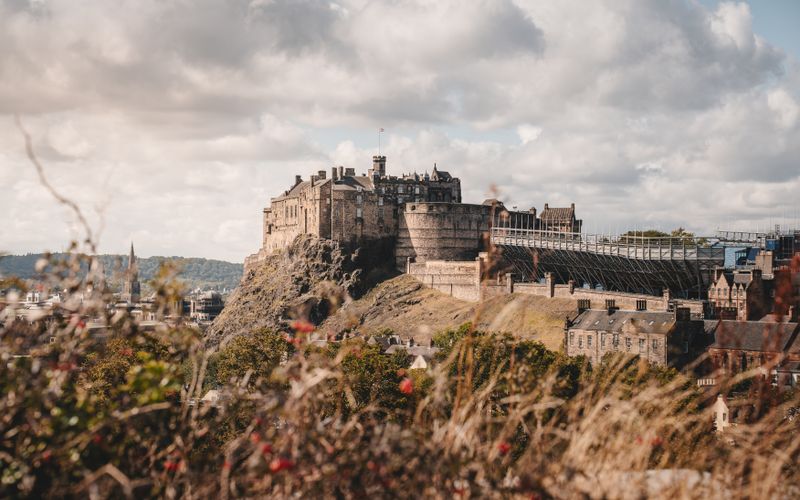
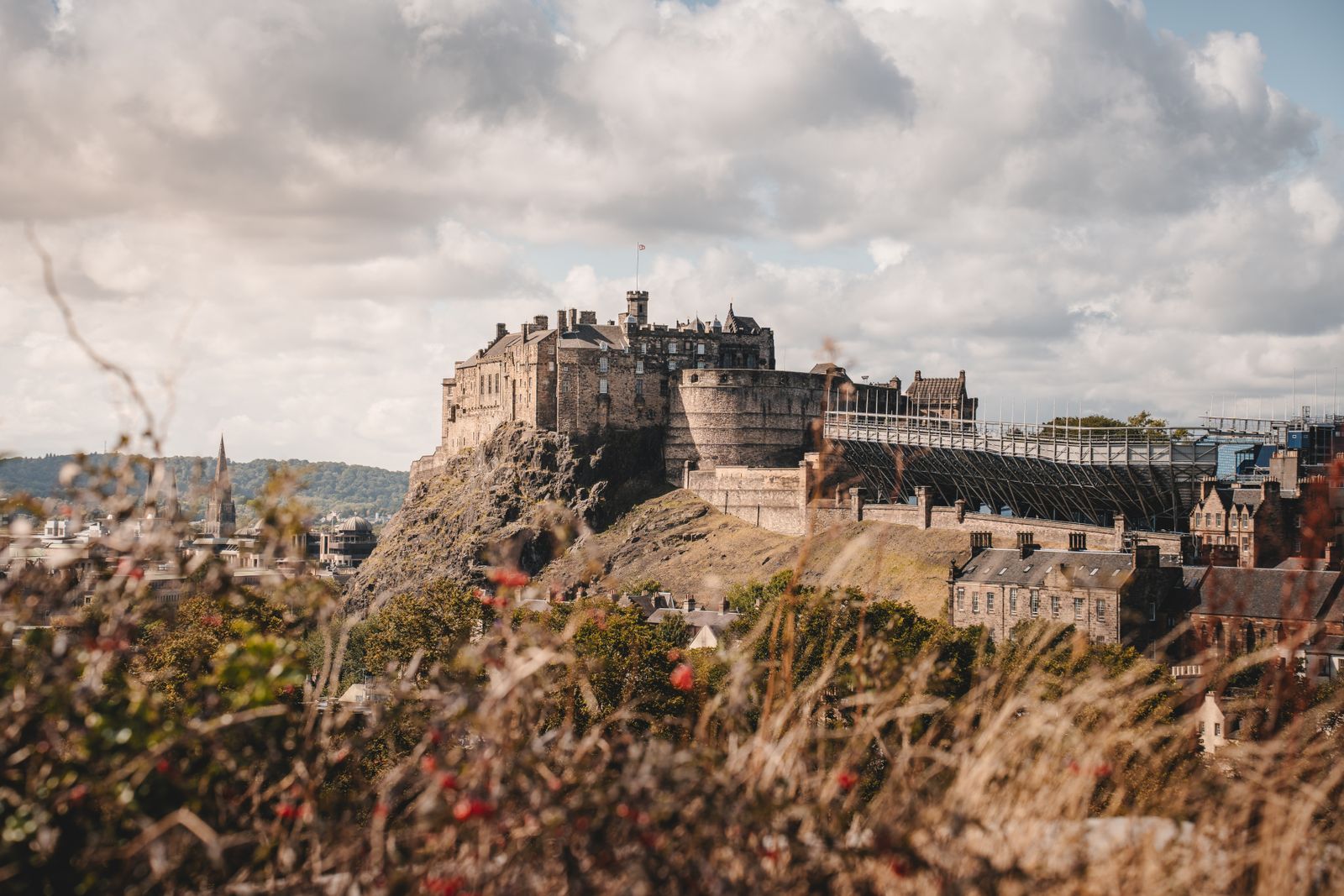
The castle has been occupied since at least the 12th century and sits on an 80-metre volcanic plug visible from across the city. The Crown Jewels of Scotland (the oldest crown jewels in the British Isles), the Stone of Destiny (on which Scottish monarchs were crowned until 1296) and the national war memorial are all housed within. The One O’Clock Gun has been fired every weekday since 1861. Entry £21.50; book online to avoid queues. Views from the battlements cover the Firth of Forth and beyond.
💡 The castle (£18; book at historicenvironment.scot) is most atmospheric at opening (9:30am) in the morning mist. The one o’clock gun fires from the Half-Moon Battery daily (except Sundays and Good Friday) — an Edinburgh institution since 1861.
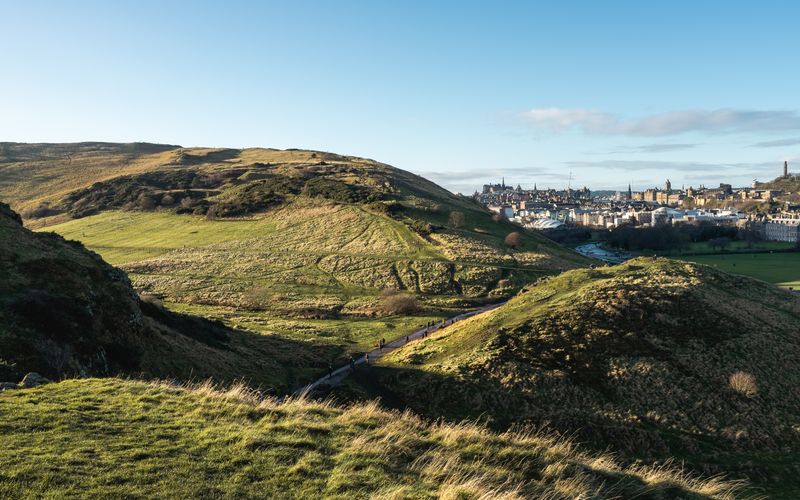
The 251-metre summit of an extinct volcano within the city boundary is the highest point in Edinburgh and gives a 360-degree view of the city, the Firth of Forth, the Pentland Hills and on clear days the Highlands. The main path from the Holyrood Palace car park takes 45–60 minutes and is graded easy-to-moderate. No entry fee. Holyrood Park surrounding it covers 260 hectares and contains three lochs, geological formations spanning 350 million years and the ruins of St Anthony’s Chapel.
💡 Arthur’s Seat (251m; 45 min from Holyrood Palace car park) gives the finest panoramic view of Edinburgh and the Firth of Forth. Start early: the summit is crowded by 11am on summer weekends. The walk is free and requires no equipment.
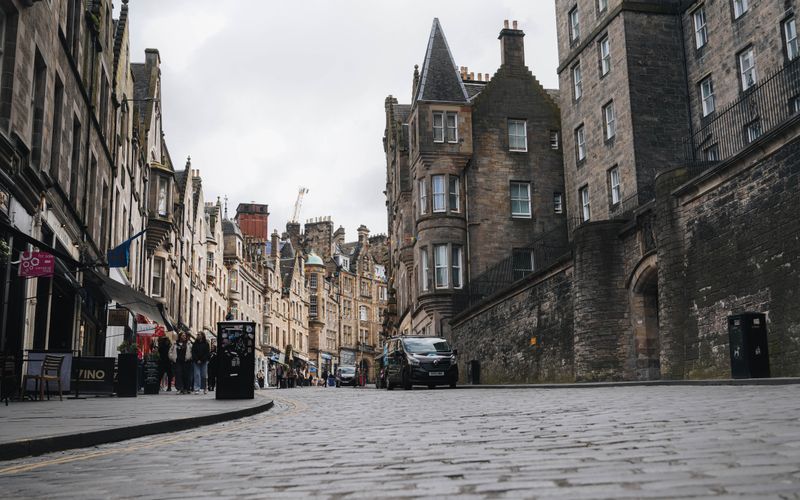
The Royal Mile is the 1.1-mile spine of the medieval city running from Edinburgh Castle to the Palace of Holyroodhouse. Off it run the wynds and closes — narrow lanes dropping steeply down both sides of the ridge — that contain centuries of Edinburgh history compressed into a small area. Victoria Street curves down to the Grassmarket; Greyfriars Kirkyard (where Bobby the faithful Skye Terrier is buried) is adjacent; Brodie’s Close commemorates Deacon Brodie, the inspiration for Jekyll and Hyde.
💡 The closes (narrow alleyways) off the Royal Mile are best explored with a copy of the free Old Town map from the Edinburgh tourist office. Mary King’s Close (£17.50; book online) is the most atmospheric: a preserved 17th-century street beneath the current city.
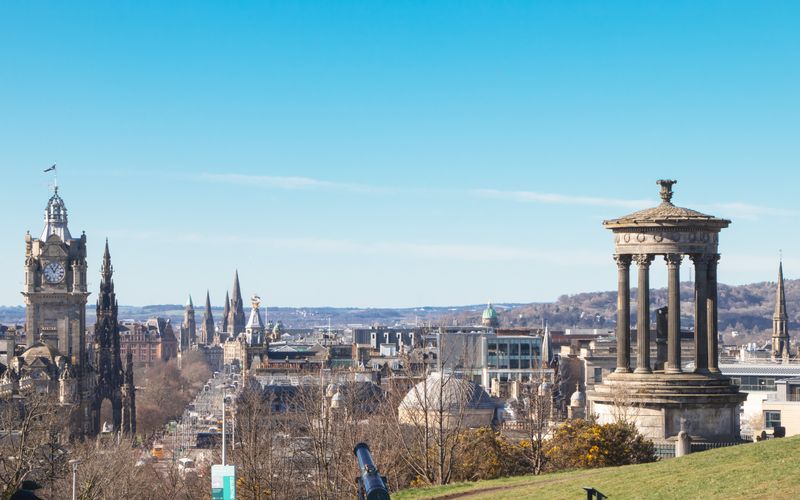
Calton Hill (101m, 20-minute walk from the east end of Princes Street) has a cluster of 19th-century monuments including the unfinished National Monument (the “Edinburgh Disgrace,” modelled on the Parthenon and abandoned in 1829) and the Nelson Monument (climb for the city view, £5). The view from the top is the definitive Edinburgh photograph: the castle, the Old Town skyline and Arthur’s Seat in one composition. Free to access at any time.
💡 Calton Hill (free; 15 min walk from Princes Street) gives the best panoramic view of the Old Town and the castle from the east. The unfinished National Monument (1826) and the Nelson Monument (£8) are both on the summit.
Edinburgh’s food scene has improved dramatically since the turn of the century and is now among the best in the UK outside London. The Grassmarket area has the highest density of restaurants and bars in the Old Town. The New Town (particularly the streets around Thistle Street and the Stockbridge neighbourhood) has the best mid-range restaurants. A brace of Michelin-starred restaurants — The Kitchin (Tom Kitchin, on the Leith waterfront, Scotland-on-a-plate philosophy), Martin Wishart (also Leith) and Paul Kitching’s 21212 (in a Georgian townhouse) — give Edinburgh genuine fine-dining credentials.
The whisky culture is extensive and well-served by the city’s many independent whisky bars: Scotch Whisky Experience (Royal Mile, tourist-facing but comprehensive tasting menu), The Scotch Malt Whisky Society (Queens Street, members bar with public access, over 100 cask-strength expressions), and the Bow Bar (Victoria Street, no-nonsense selection, the best everyday whisky pub in the city). The Fringe in August adds a thousand pop-up performance venues to the bar landscape; some of the best comedy in Britain happens in a basement you need a handwritten map to find.
The Old Town and New Town together cover a compact area that is 20 minutes across on foot. Princes Street Gardens sit between them; the National Museum of Scotland, the castle and Greyfriars are all within 15 minutes of each other. The Edinburgh tram (one line, city centre to airport) is useful for airport access. Lothian Buses cover the full city; the day ticket (£4.50) is good value for exploring Leith, Stockbridge and other outer neighbourhoods. The No. 11 bus to Portobello (Edinburgh’s seaside suburb, 20 minutes) and the No. 42 to Cramond (a Roman fort site on the Firth of Forth) are worth knowing.
May–June and September–October give the best balance of weather and crowd levels. August is extraordinary but expensive and full. December–January has the Christmas market and Hogmanay. Edinburgh is beautiful in all seasons; the light in November on the grey stone is specific to this city.
Edinburgh is significantly cheaper than London. Outside August, hotel prices are reasonable by UK standards. The national museums are free. Per person per day, couple travelling. August Fringe period: add 50–100% to accommodation costs.
All of Edinburgh’s national museums and galleries are free entry. The major cost is the castle (£21.50); Arthur’s Seat and Calton Hill are free.
The Royal Yacht Britannia (£19) is unexpectedly one of the best-presented heritage sites in Scotland — the below-decks crew quarters are as interesting as the royal staterooms.
The Balmoral Hotel (1902, the clock tower is kept 3 min fast to help people catch trains from Waverley station below) is Edinburgh’s landmark luxury hotel.
Three days covers Edinburgh thoroughly: the castle, the Old Town, a hill climb and one day trip or a slow Leith day.
Edinburgh Castle in the morning (book ahead, £21.50). Royal Mile walk downhill: duck into the closes and wynds. Greyfriars Kirkyard. Grassmarket for lunch. Victoria Street and the Bow Bar in the evening. Dinner in the Old Town.
💡 The Royal Mile is most atmospheric in the early morning — the closes and the pubs fill with coaches by 10am. Climb Arthur’s Seat before breakfast for the finest start to an Edinburgh day.
Calton Hill before 9am for the morning light on the city (free). Walk down through the New Town: Charlotte Square, George Street. National Gallery of Scotland on Princes Street (free, world-class collection). Afternoon: bus to Leith for the waterfront, a seafood lunch and the Royal Yacht Britannia (£19).
💡 The Scottish National Gallery (free; Mound; the finest permanent collection in Scotland) and the National Museum of Scotland (free; Chambers Street) are both free and excellent for an afternoon when the sights feel crowded.
Arthur’s Seat in the morning (allow 2 hours for the climb and descent, proper shoes). Lunch in Stockbridge — Edinburgh’s most pleasant neighbourhood, independent shops, the Botanics (Royal Botanic Garden, free). Evening: whisky tasting at the Scotch Malt Whisky Society or a Fringe show if August.
💡 The Grassmarket (below the castle; pubs, independent shops, the weekly Saturday market) and Greyfriars Kirkyard (Greyfriars Bobby; the most atmospheric cemetery in Edinburgh; free) are the best slow afternoon in the Old Town.
Edinburgh Festival Fringe (August; 3,000+ shows; free to ticketed) is the world’s largest arts festival. Hotel prices triple in August — book accommodation in January at the latest.
Arthur’s Seat (822m; 45-min walk from Royal Mile; free; always accessible) is a volcanic hill with 360° Edinburgh views. The summit path is rough — proper footwear is genuinely necessary.
The Bow Bar (80 West Bow, Grassmarket) has 500+ single malts and knowledgeable staff who will guide you through regions and distilleries. The correct first whisky stop in Edinburgh.
Greyfriars Kirkyard (free; always open; 5 min from Royal Mile) has grave stones that inspired J.K. Rowling’s Harry Potter character names. The churchyard itself is the finest in the city.
Leith (2km north; 40-min walk or bus 22/35) has the finest seafood restaurants in Edinburgh, the Royal Yacht Britannia (£20), and a working port atmosphere absent from the tourist centre.
Edinburgh Hogmanay (December 31; ticketed street party; from £35) is one of the world’s finest New Year’s Eve events. Street party tickets go on sale in October — book immediately.
Official Lothian Buses app for Edinburgh city buses: real-time departures, route planning and day ticket purchase (£4.50). Covers all routes including Leith, Portobello and the airport bus.
Free
Official Fringe app with the full programme, venue maps, ticket booking and show recommendations. The programme launches in June; the best shows sell out quickly.
Free
Scottish train network covering Edinburgh Waverley to Glasgow (50 min, £15 return), Stirling (45 min), Perth and Inverness. Real-time updates and mobile tickets.
Free
Whisky database and personal collection tracker. Useful for noting expressions tried at Edinburgh’s whisky bars and identifying bottles at distillery shops.
Free
Edinburgh ghost tours, whisky distillery tours, Royal Mile walking tours and Highlands day trips. Book 1–2 weeks ahead for August; availability is immediate in other months.
Free
Download Edinburgh offline. The closes and wynds off the Royal Mile are too narrow to show Google Street View but are exactly mapped; offline GPS navigation is more reliable than printed maps in the Old Town.
Free
Discover more of the UK's great destinations.