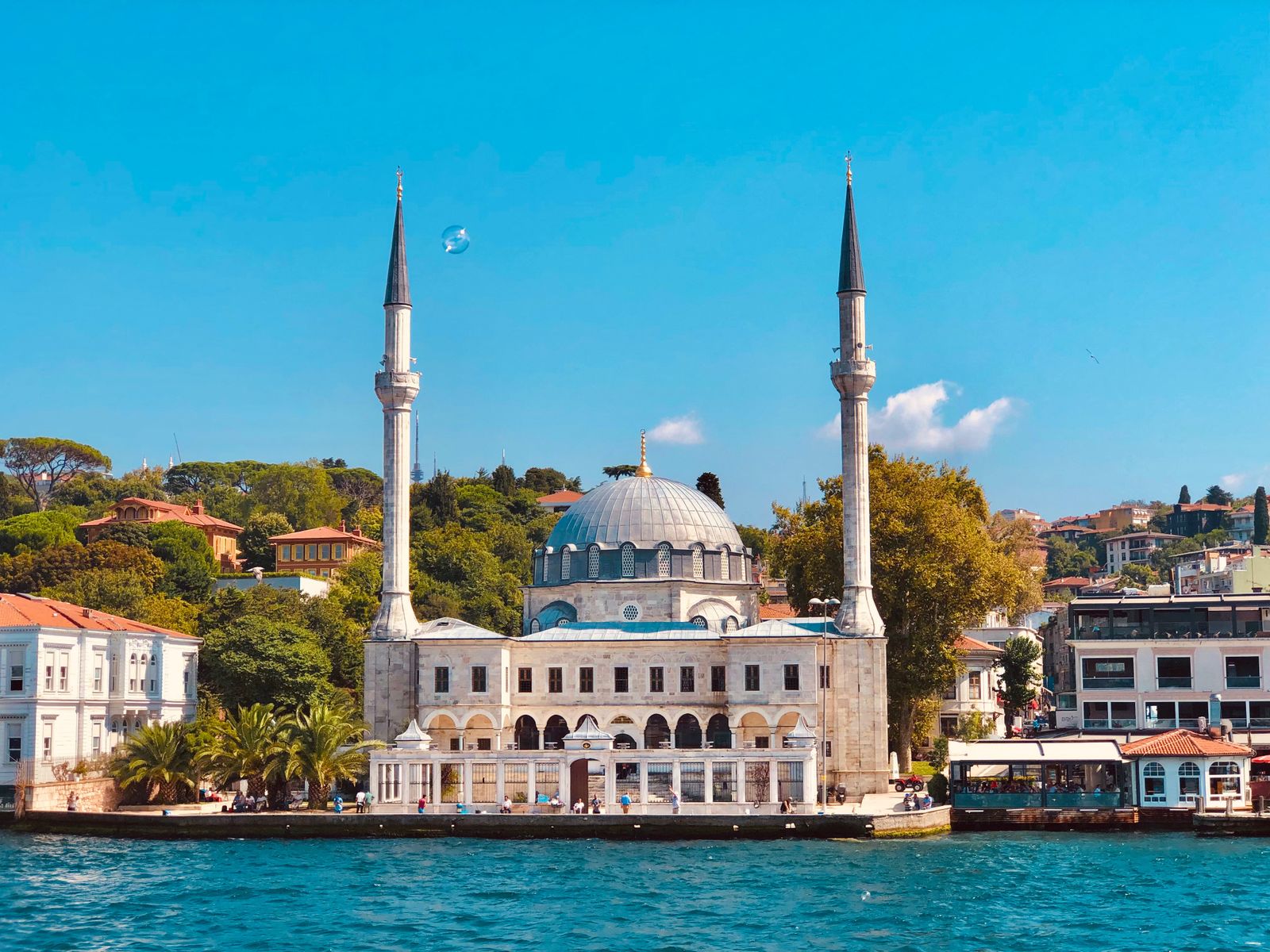
TR
Istanbul
Where Europe Meets Asia
Where Europe Meets Asia

Completed in 537 AD, the Hagia Sophia was the largest enclosed space in the world for nearly a thousand years. The 31-metre dome appears to float on a ring of arched windows. The Deesis mosaic in the upper gallery is the finest Byzantine mosaic in Istanbul.
Arrive at 8:30am when Hagia Sophia opens — visitor numbers hit 50,000 by midday. Cross immediately to the Blue Mosque opposite before the morning crowds reach both.
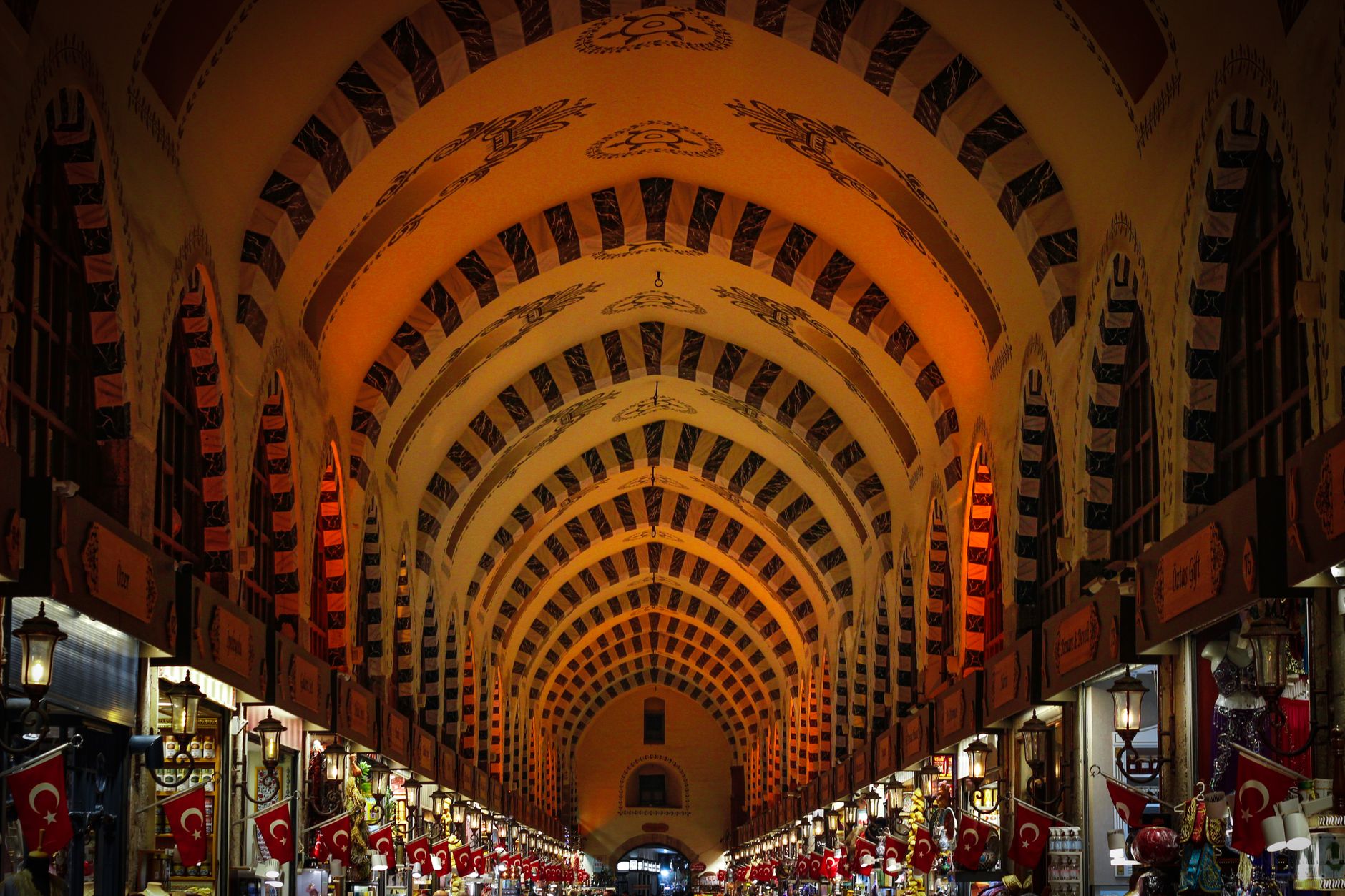
The world’s oldest covered market, built in 1461, spreads across 58 streets with 4,000 shops. The inner Bedesten — the original lockable vault at the centre — has the finest antique carpets and silver. Never accept the first price; half is a standard opening offer.
Never accept the first price in the Grand Bazaar — half is a standard opening offer. The finest antique carpets are in the inner Bedesten, the original lockable market at the centre.

The 31km strait dividing Europe from Asia is best experienced on the public commuter ferry from Eminönü — the finest harbour route in the world at local transit prices. The Golden Horn inlet separates Sultanahmet from Beyöğlu; the Galata Bridge crosses it.
The public Bosphorus commuter ferry from Eminönü is the finest harbour cruise in the world at a fraction of the tourist boat price. Take the morning departure for the best light on the minarets.
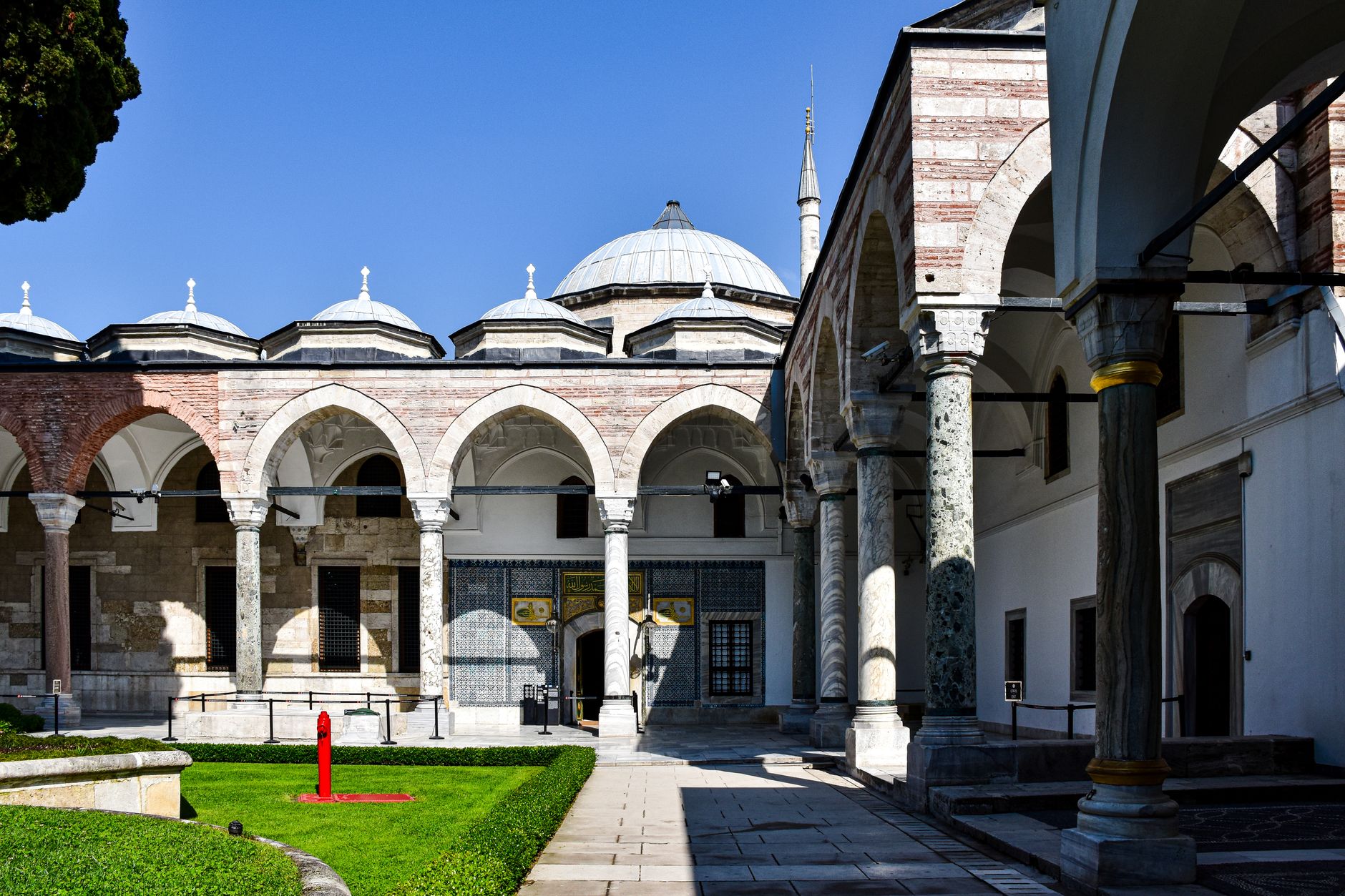
The Ottoman imperial palace from 1465 to 1853 spreads across 70 hectares on a promontory above the Golden Horn. The Harem requires a separate ticket with limited daily slots — book online. The treasury holds the 86-carat Spoonmaker’s Diamond, one of the largest cut diamonds in the world.
Book the Harem separately and in advance — daily slots sell out days ahead. The palace treasury’s 86-carat Spoonmaker’s Diamond is included with the main entry ticket.
Istanbul’s food culture is one of the most diverse and most deeply rooted in the world: the köfte (the spiced minced lamb meatballs; the Sultanahmet Köftecisi since 1920; the most famous köfte restaurant in Turkey), the balik ekmek (the mackerel sandwich; the fish grilled on boats at the Galata Bridge waterfront; ₺100–150; the most specific Istanbul street food), the simit (the sesame-crusted circular bread; the Istanbul simit cart at every corner; ₺10–20; eaten with white cheese and tea for breakfast), the meze culture of the Beyoglu meyhane (the raki tavern; the multiple small cold and warm dishes; the raki anise spirit with water and ice — the Lion’s Milk; the most convivial eating in Turkey), and the contemporary Istanbul restaurant scene (the Karakoy and Cihangir restaurant cluster; Mikla — the rooftop restaurant of Chef Mehmet Gürs; the New Anatolian cuisine; the finest contemporary Turkish cooking) make Istanbul the most varied and most pleasurable eating city between Paris and Tokyo. Specific addresses: Sultanahmet Köftecisi (Divan Yolu Cad. 12; the 1920 köfte restaurant; ₺150–300), Karakoy Gulluoglu (the finest baklava in Istanbul; the pistachio and the cream-filled katmer; ₺40–80 per piece), and Mikla (Marmara Pera Hotel, Beyoglu; the tasting menu of New Anatolian cuisine; ₺1,500–3,000 pp).
The Istanbul Kart (the rechargeable transit card; available at any metro or tram station; top up in ₺50–100 increments; ₺6–12 per ride; valid on all city transit: tram, metro, ferry, bus, funicular) is the essential Istanbul tool. The T1 tram (the historic peninsulaa to Kabatas; the most useful tourist line; Sultanahmet stop for the Hagia Sophia and Blue Mosque) connects to the F1 funicular at Kabatas for Taksim Square, and the Beyoglu neighbourhood walk begins there. The Sehir Hatlari ferry (from Eminonu pier; the most enjoyable transit in Istanbul; the Kadikoy–Eminonu route for the Asian side; ₺6 per trip) gives the best views of the Bosphorus. The city is large: use the metro (M1–M12 lines) for longer journeys; Uber for point-to-point convenience.
At 8:30am the mosque is almost empty — 50,000 visitors pass through daily by midday. Dress code is strict: headscarves for women, no shorts, shoes off at the entrance.
The balık ekmek (grilled mackerel in bread, ∼₺80) from the boats under Galata Bridge is the most famous cheap eat in Istanbul. Best at lunch when the catch is freshest.
The Šehir Hatları commuter ferry from Eminönü to Kadıköy costs ₺6 and takes 25 minutes — the finest harbour crossing in the world for the price.
The Çemberlitaš Hamam on Divan Yolu is the most historic bath in Istanbul, built by Sinan in 1584. Open 6am–midnight.
The Grand Bazaar is almost empty at 8:30am on weekdays — lanes that fill solid by 10am are yours alone.
Buy simit, cheese and olives from the vendors around the Spice Bazaar perimeter at 8am — the finest cheap breakfast in Istanbul, eaten standing at the stall.
Apr–Jun and Sep–Oct are ideal (18–25°C; mild; the monuments uncrowded in the early morning). Jul–Aug is the hottest and most crowded. Dec–Feb is cold but atmospheric, with the Grand Bazaar quiet and occasional snow on the minarets.
Three days: the Sultanahmet monuments, the Grand Bazaar, a Bosphorus ferry, the Asian side, and the Beyoglu meyhane evening.
Walk from Hagia Sophia across the square to the Blue Mosque, then up through the Topkapi gardens. Spice Bazaar and Galata Bridge in the afternoon. Evening hammam.
The Sultanahmet sites form a natural anticlockwise loop — start at Hagia Sophia and finish in the Grand Bazaar as the afternoon light hits the lantern quarter.
Morning ferry to Kadîköy on the Asian shore — the fish market, the Moda promenade, a long lunch. Return by Bosphorus ferry. Galata Tower at sunset.
The Kadîköy fish market is best before 9am — buy from a stall and take it to the cook-to-order restaurants in the arcade behind for the freshest meal in Istanbul.
Breakfast baklava in Karaköy, then the Istanbul Modern on the waterfront. Afternoon at the Chora Church mosaics in Edirnekapu. Bosphorus shore walk north through the wooden yalî villages.
The Bosphorus ferry to Sarîyer takes 2.5 hours end to end — sit on the starboard side heading north for the Ottoman waterfront palace sequence.
Istanbul is one of the best-value major cities in the world for foreign visitors following the lira depreciation of the 2020s. The major monuments (Hagia Sophia ₺900; Topkapi ₺900; Chora ₺900) are approximately €25–30 each — excellent value for world-class heritage. Per person per day.
The Bosphorus ferry (₺6; 20 min to the Asian continent), the balik ekmek (₺100–150), the Grand Bazaar (free to enter) and the Blue Mosque (free) make Istanbul’s greatest experiences accessible at almost no cost outside.
The Cemberlitas Hamami (built 1584 by Mimar Sinan; ₺900–1,500 for the full bath and scrub) and a Beyoglu meyhane dinner (the raki, the cold meze, the grilled fish; ₺600–1,200 pp) together give the most complete.
The Ciragan Palace Kempinski (the 19th-century Ottoman palace on the Bosphorus; the only hotel in Turkey in a genuine sultan’s palace; the outdoor pool on the Bosphorus; the Bosphorus-view suite at ₺15,000–30,000/night) is.
Official Bosphorus and Golden Horn ferry timetables, live departures and route planning for all Sehir Hatlari lines.
Free
On-demand rides across Istanbul including airport to Sultanahmet transfers and Asian-side destinations.
Free
Istanbul restaurant discovery and booking, with Kadikoy, Beyoglu and Sultanahmet neighbourhood filtering and user reviews.
Free
Download the Istanbul European and Asian offline maps before arrival — essential for navigating the bazaars without data.
Free
Quick answers to the questions travellers most often ask before visiting Istanbul.
Spring (April-May) and autumn (September-November) offer the most pleasant weather and thinner crowds. Summers are hot and busy, and winters are cool and can be rainy.
Three to four days for Hagia Sophia, the Blue Mosque, Topkapı Palace and the Grand and Spice Bazaars, plus a Bosphorus cruise and time to explore neighbourhoods on both continents.
By trams, metro, funiculars, buses and the scenic Bosphorus ferries, all on an Istanbulkart; the Sultanahmet historic core is very walkable.
The great city straddling Europe and Asia — Hagia Sophia, the Blue Mosque, Topkapı Palace, the Grand and Spice Bazaars, cruises on the Bosphorus, and layers of Byzantine and Ottoman history amid vibrant street life.
Explore more of Turkey’s extraordinary cities and landscapes.
Planning a wider trip? Our Turkey travel guide covers getting there, costs, when to go and more.