TR
Izmir
The Aegean Metropolis
The Aegean Metropolis
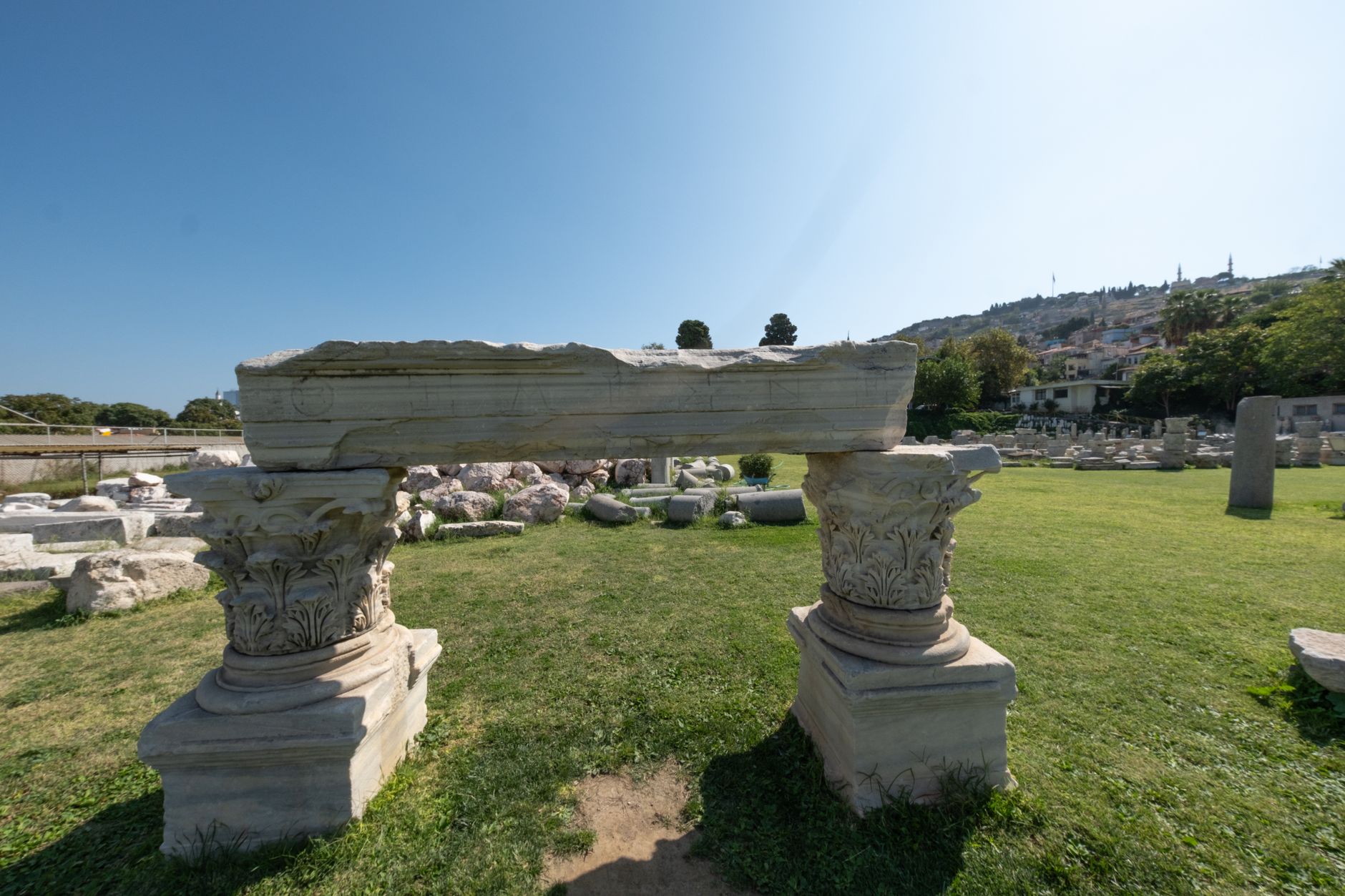
The 4th-century BC Agora of ancient Smyrna was rebuilt by Marcus Aurelius after the earthquake of 178 AD. The subterranean vaulted hall and the north colonnade with its standing columns are the finest Roman remains in the Aegean. Most visitors miss the cistern entirely.
The Agora’s underground cistern and standing north colonnade are the finest Roman remains in the Aegean — most visitors miss the subterranean vaulted hall entirely. The adjacent museum is closed Mondays.
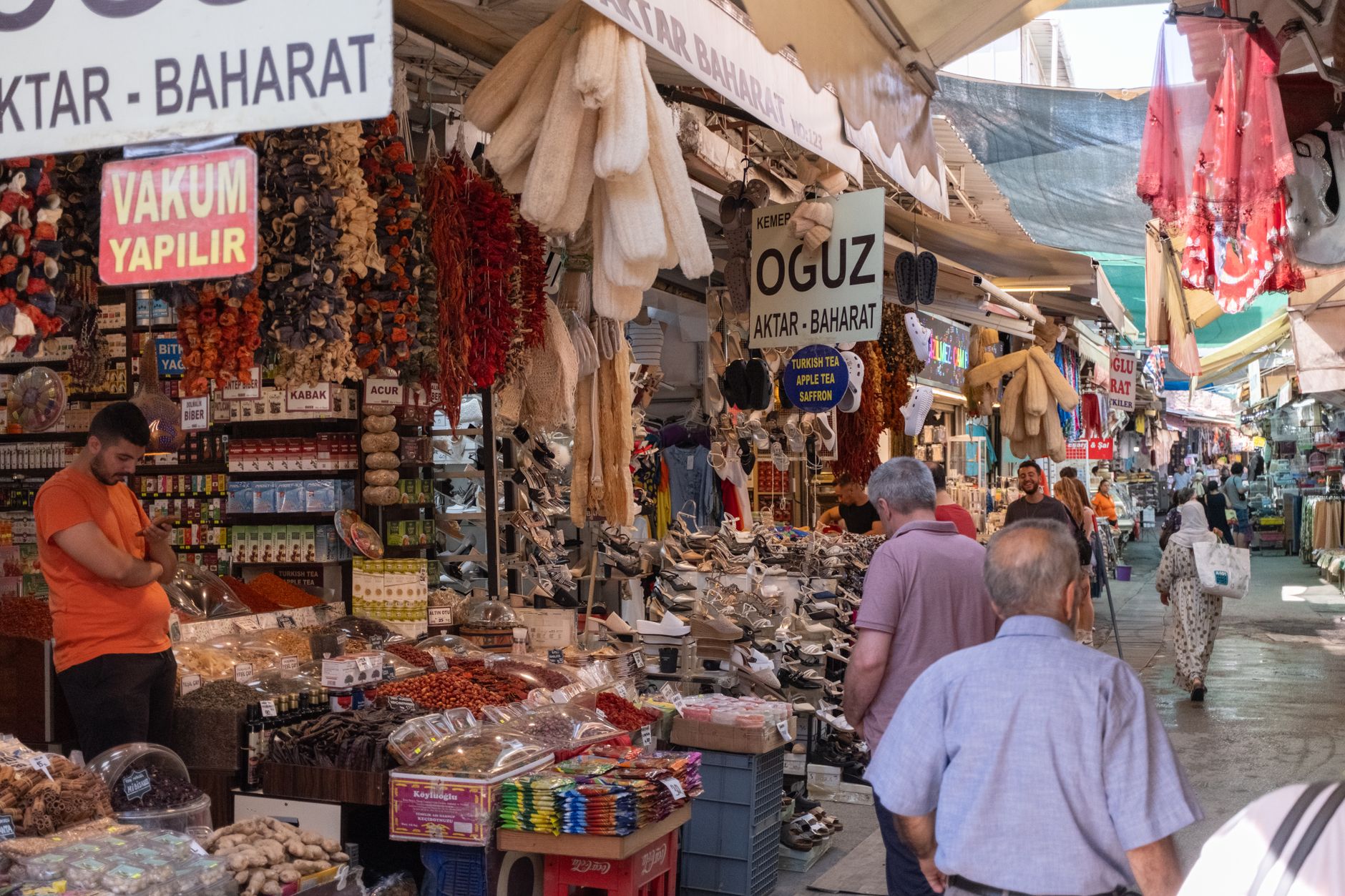
Kemeraltı is the finest bazaar in Aegean Turkey — a 17th-century covered market with a spice section, a silver street, and the Kızlarağası Han caravanserai courtyard at its heart. The adjacent Konak Pier Art Nouveau arcade and the fish market complete the quarter.
Kemeraltı is best entered from the Konak end before 9am when the spice stalls are setting up. The Kızlarağası Han courtyard halfway through is the finest caravanserai in Izmir.
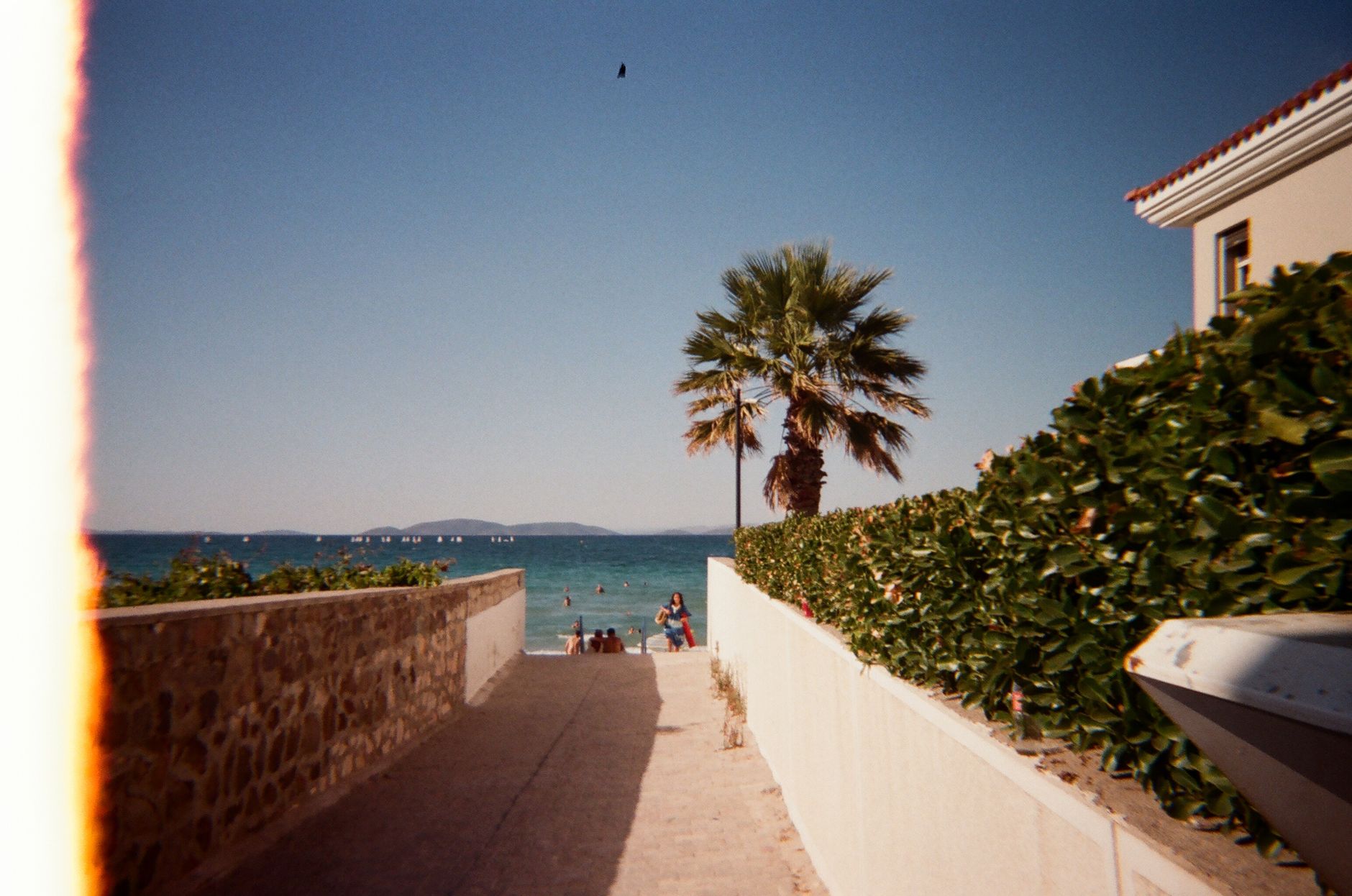
The Çešme Peninsula, 80km west of Izmir, has the finest cobblestone village in the Aegean at Alaçatı — boutique hotels, galleries, and a Saturday herb market. Ilıca Beach has warm thermal springs rising through the sand. The peninsula is Turkey’s kitesurfing capital.
Alaçatı is the finest cobblestone village in the Aegean — stone houses, bougainvillea, boutique hotels, and a Saturday herb market. Ilıca thermal beach 5km away has warm underwater springs.
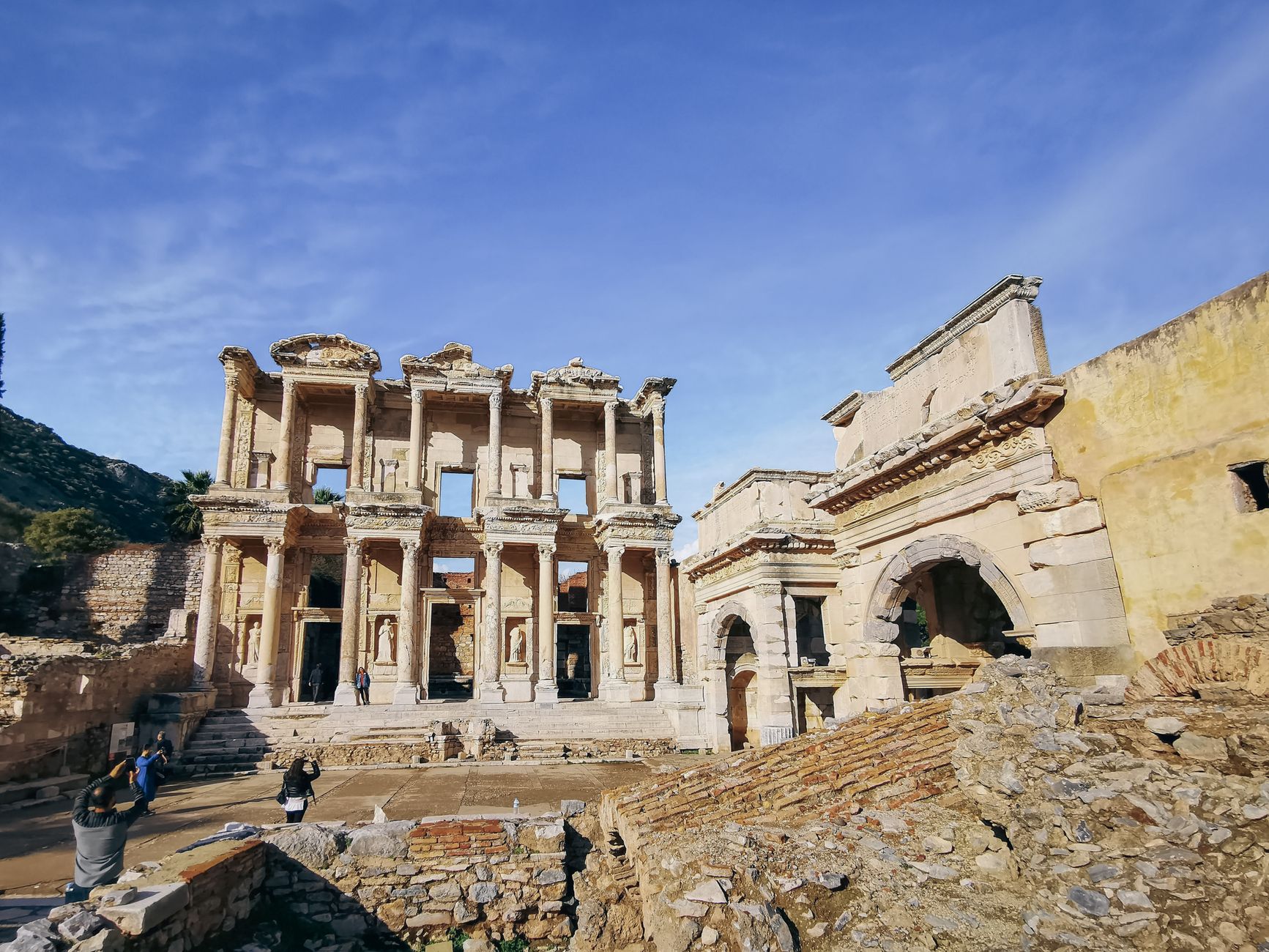
Ephesus was the second city of the Roman Empire with a population of 250,000. The Library of Celsus and the 25,000-seat Great Theatre are the finest surviving Roman civic structures in the world. The site receives 3 million visitors a year — arrive at the 8am opening.
Ephesus gets 3 million visitors a year — arrive at the 8am opening for the Library of Celsus in the morning light without the crowds. The Terraced Houses alongside are the finest domestic Roman interiors surviving anywhere.
Ephesus official site →
Izmir has the most European and most innovative food culture of any Turkish city after Istanbul: the boyoz (the Sephardic Jewish sesame pastry that is the defining Izmir breakfast food; the flaky, slightly bitter pastry made with tahini and sunflower oil; eaten in the morning with a hard-boiled egg and a glass of tea; available from the boyoz carts outside the Izmir bazaar from 7am; ₺15–25 each), the Izmir kofte (the thin, spicy, Izmir-specific minced lamb kofte grilled on skewers; the most specific Izmir street food; available at Konak Pier and the Konak market), the kumru (the Cesme-origin sandwich; the oval bread filled with sucuk sausage, kashar cheese and tomato; ₺80–120; the most beloved Izmir street food), and the Alsancak cafe bar scene (the craft beer bars; the natural wine bars; the modern Turkish cuisine restaurants — Konak Pier seafood; the meze at the Kiz Kulesi restaurants on the Kordon). The most celebrated Izmir addresses: Balci Manisa Köftecisi (the Manisa köfte; the most celebrated kofte in Izmir; ₺200–350), and the Kordon seafood restaurants (the grilled sea bass with Aegean olive oil and fresh herbs; ₺400–800).
The Izmir Metro (the 3-line system; the most useful is Line 1 connecting the Airport with Fahrettin Altay in the south, through Basmane station and Konak, to Bornova; ₺12 per ride; the Izmir Kart transit card is the most practical purchase on arrival at the airport) covers the main tourist corridor. The Izmir bay ferries (the Izmir Buyuksehir Belediyesi ferries from the Konak pier and the Alsancak pier; ₺10–15; crossing to Karsiyaka and Bostanli on the north shore) give the most pleasant and most practical cross-bay transit. For Ephesus: the Izmir–Selcuk TCDD train (1h15; ₺40; the most comfortable and most scenic approach; the train runs 4–5 times daily from the Basmane train station; buy tickets at the station or online at tcdd.gov.tr) is the most practical option for independent travellers.
Ephesus receives 3 million visitors a year — arrive at the 8am opening on a weekday to walk the Curetes Street with the Library of Celsus in the morning light, before the cruise coaches arrive after 10am.
The boyoz — the flaky, sesame-dusted Sephardic pastry — is the definitive Izmir breakfast. Buy it from the street carts at the Kemeraltı Bazaar entrance before 9am with a glass of çay.
Alaçatı, 90km west, is the finest preserved cobblestone village in the Aegean — stone houses, bougainvillea, a Saturday herb market.
The Kızlarağası Han, inside Kemeraltı Bazaar, is an 18th-century Ottoman caravanserai with stone arcades around a courtyard cafe — the finest hidden space in Izmir, missed by almost all visitors.
The bay ferry from Alsancak or Konak pier to Karšıyaka takes 20 minutes and costs ₺10 — the finest short commute in Izmir and the best view of the waterfront at sunset.
The Basmane–Selçuk train runs four times a day and costs ₺60 — the cheapest and most scenic way to reach Ephesus. Buy tickets at tcdd.gov.tr the evening before.
Apr–Jun and Sep–Oct are ideal (18–28°C; Ephesus manageable). Jul–Aug is the hottest and most crowded (30–35°C; visit Ephesus at 8am only). Nov–Mar is mild with the fewest tourists.
Three days: the Kemerıltı Bazaar, Izmir Agora, an early Ephesus train, Selcuk, Cesme and Alacati.
Boyoz pastry breakfast at the Kemeraltı entrance. Izmir Agora — the vaulted cistern below, the standing colonnade above. Kemeraltı Bazaar: spice market, silver street, Han courtyard for tea. Kordon promenade at sunset.
The Kordon is Izmir’s great evening ritual — 4km of waterfront cafes and the Gulf at sunset. The finest stretch runs between Alsancak and Konak, where the locals gather every evening.
Train from Basmane to Selçuk. Ephesus at 8am — Library of Celsus in the morning light, the Great Theatre, the Terraced Houses. Selçuk town for lunch and the Isa Bey Mosque.
The Basmane–Selçuk train runs hourly and takes 75 minutes. The Isa Bey Mosque in Selçuk is the finest Seljuk mosque in Turkey, built from reused Roman columns in a courtyard of ancient stonework.
Alaçatı village: the stone streets, the Saturday herb market. Ilıca thermal beach in the afternoon. Çešme town for a kumru sandwich before the drive back.
Alaçatı’s Saturday market sells dried herbs, fresh cheese, local olive oil, and lavender — arrive before 10am when the villagers are still selling their own produce before the tourist coaches arrive.
Izmir is one of the most affordable large cities on the Mediterranean for foreign visitors. The boyoz (₺15), the Izmir Agora (₺150), the Selcuk train (₺40) and the Ephesus entry (₺800) make the most significant experiences remarkably accessible. Per person per day.
The Selcuk train (₺80 return) + Ephesus entry (₺800) + boyoz breakfast (₺30) + Izmir kofte lunch (₺150) = approximately ₺1,100 (€30) for the finest archaeological day in Turkey, making Izmir the most.
The Ephesus Terraced Houses (₺300 additional above the main ₺800 entry; the intact Roman residential frescoes and mosaics; the most complete Roman domestic interior surviving anywhere; the guided walkway through the living)
A private early-morning Ephesus tour (the guide meets you at the Selcuk station; the site at 8am before any other visitors; the Terraced Houses explained room by room; the Library of Celsus with the archaeologist who excavated it;)
On-demand rides across Izmir including airport transfers from Izmir Adnan Menderes Airport.
Free
Audio guide to Ephesus covering the Library of Celsus, the Great Theatre and the Terraced Houses.
Free
Download the Izmir and Ephesus offline map before arrival — essential for navigating the bazaar and Selcuk ruins.
Free
Download the Turkish offline pack and use camera mode for menus and signs.
Free
Quick answers to the questions travellers most often ask before visiting Izmir.
Spring (April-June) and autumn (September-October) are ideal, with warm Aegean weather. Summers are hot and busy along the coast, and winters are mild.
About two days for the Kordon seafront, the Kemeraltı bazaar and Konak Square, using the city as a base for the ancient ruins of Ephesus and the Çešme beach resorts.
By metro, trams, buses and ferries across the bay, with a walkable waterfront; trains and buses reach Ephesus and the coast. Ferries are a scenic way to cross the city.
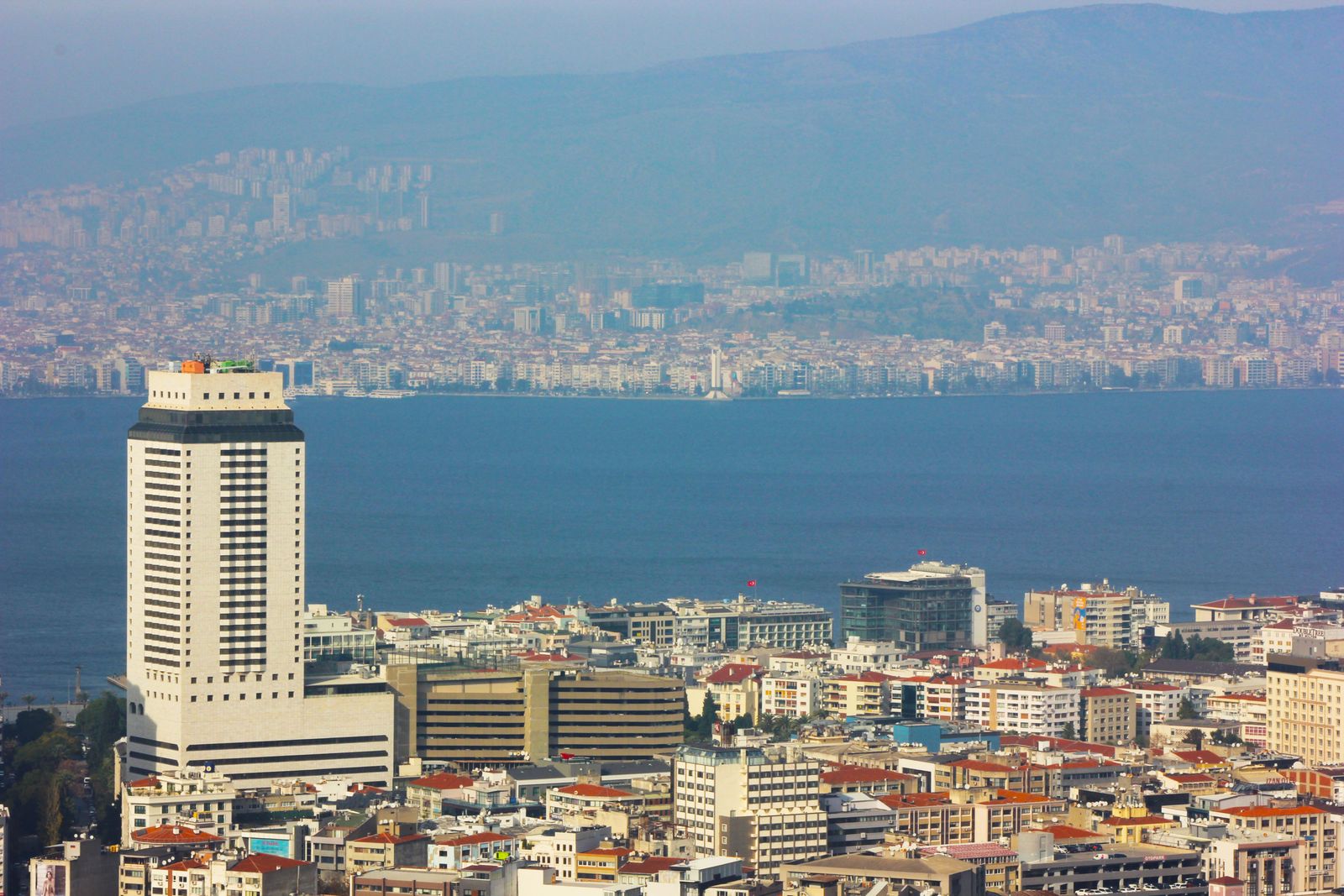
Turkey’s relaxed, liberal Aegean city — the palm-lined Kordon promenade, the sprawling Kemeraltı bazaar, and its role as the gateway to the spectacular ancient ruins of Ephesus and Pergamon and the Çešme beaches.
Explore more of Turkey’s extraordinary cities and landscapes.
Planning a wider trip? Our Turkey travel guide covers getting there, costs, when to go and more.