XK
Pristina
The Young Capital of the Balkans
The Young Capital of the Balkans
The NEWBORN monument (the word “NEWBORN” in 2-metre steel letters; Agim Ramadani Square; free; painted by a different artist every year on 17 February, Independence Day) is Kosovo’s defining public symbol — installed at the declaration of independence in 2008 and redecorated annually. The National Library of Kosovo (1982; Rexhep Luci Square; free entry) is one of the most extraordinary brutalist buildings in Europe: a white geometric structure covered in domes and wire mesh that looks like a spaceship made of funnels.
💡 Visit the NEWBORN monument at 9am before tour groups. On Kosovo Independence Day (17 February), the repainting ceremony draws crowds and international media. The National Library is open to visitors on weekday mornings; the interior is as unusual as the exterior.
The Imperial Mosque (Xhamia e Mbretit; Rr. Fehmi Agani; free entry outside prayer times; built 1460s under Sultan Mehmed II; one of Kosovo’s oldest Ottoman buildings) is the finest mosque in Pristina — a single-domed interior with painted Ottoman tile work and a minaret visible from most of the old town. The adjacent Old Hammam (Hamami i Vjetër; 15th century; partially restored; free to view exterior) is one of only a few surviving Ottoman bathhouses in Kosovo.
💡 The mosque interior can be visited outside prayer times (ask at the entrance; shoes off required; a headscarf for women is provided at the door). The Friday midday prayer produces the finest call to prayer heard anywhere in Kosovo.
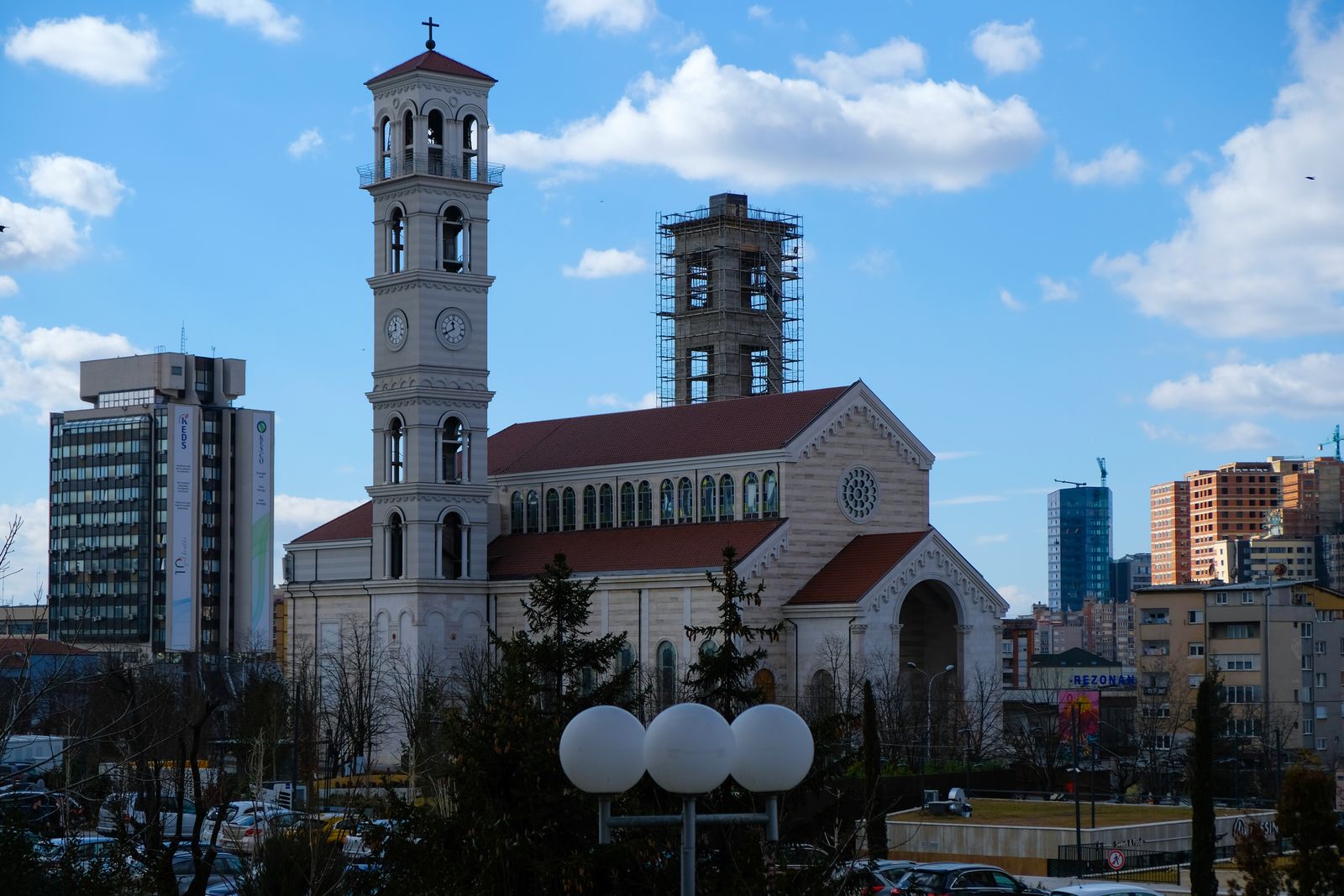
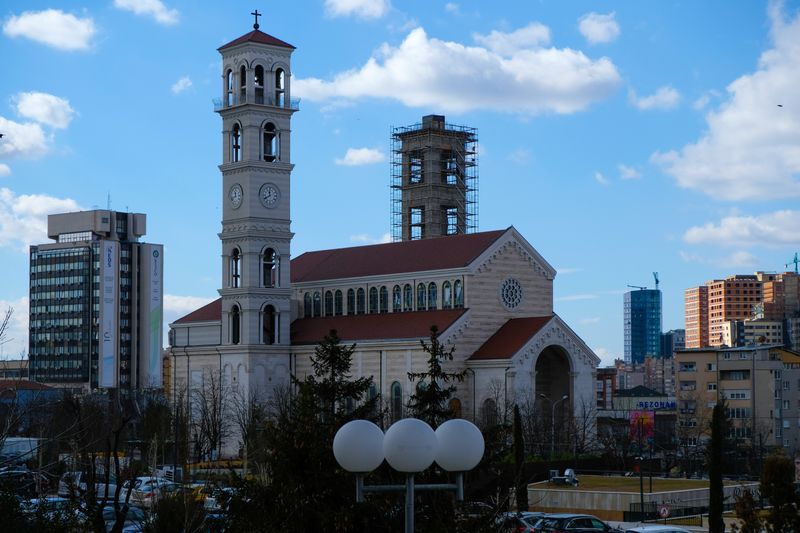
The Cathedral of Saint Mother Teresa (Sheshi Nëna Terezë; free; completed 2016; the largest church in Kosovo) is a modern cathedral dedicated to Prizren-born Mother Teresa (ethnic Albanian; canonised 2016) with a striking contemporary design. Bill Clinton Boulevard (Bulevardi Bill Klinton) runs north from the cathedral with a golden Clinton statue erected in 2009 in gratitude for NATO’s 1999 intervention — one of very few places in the world where an American president has a street and a lifesize gold statue simultaneously.
💡 Walk the full length of Bill Clinton Boulevard from the Clinton statue north through the main shopping and cafe district to the Grand Hotel for a cross-section of Pristina daily life. The street food vendors (byrek; pite; fresh squeezed pomegranate juice; €1–2) are the finest street eating in the city.
The Ethnological Museum of Kosovo (Sheshi Adem Jashari; €2; Tue–Sun 10am–5pm) occupies a beautifully restored 17th-century Ottoman house and displays traditional Kosovo Albanian domestic life — embroidery, costume, woodwork, and household objects from a society that has changed beyond recognition in 50 years. Pristina’s city centre cafe culture is among the most active in the Balkans: Soma Book Station, Ditë e Natë (Day and Night), and Coffee Art are the cultural hubs.
💡 The city centre cafe scene around Rr. Luan Haradinaj and the surrounding streets operates from 7am until 1am. Most cafes serve Albanian macchiato (the standard Balkan coffee — a double espresso with a small amount of hot milk; €0.80–1.20) and home-made pastries. This is the social architecture of Kosovo and worth several hours of sitting and observing.
Pristina eating has improved dramatically since 2015. Oda (Rr. Rrustem Statovci; traditional Kosovo Albanian cuisine — flija, tavë kosi, fergesë; €6–12 for a full meal) is the finest traditional restaurant in the city, set in an Ottoman courtyard house. Era (city centre; contemporary Balkan and international; €8–15) is the most reliably good mid-range option. Street food: byrek (spinach or cheese filo pastry; €0.50–0.80 per slice from any furre/bakery; the finest at the morning market on Rr. Migjeni), and pite (egg-filled flatbread; €1). The Albanian macchiato (€0.80–1) at any city centre cafe is the essential daily ritual and among the best value coffee experiences in Europe.
NEWBORN monument at 9am (Agim Ramadani Square; best light; 15 mins). Imperial Mosque interior (free; 9:30am). Old Hammam exterior. Ethnological Museum (€2; 10am–noon; 17th-century Ottoman house). Albanian macchiato at Soma Book Station for lunch. Bill Clinton Boulevard walk (30 mins; gold Clinton statue; street food; €1–2). National Library exterior at 3pm (brutalist masterpiece; free to photograph). Mother Teresa Cathedral interior (free; 4pm). Dinner at Oda restaurant (€8–12).
Furgon from Pristina bus station to Prizren (departs when full; 1.5h; €3; first furgon from 6am). Full day in Prizren (Ottoman bridge, Sinan Pasha Mosque, Prizren Fortress). Return furgon to Pristina by evening. Alternatively: day trip to the Graçanica Monastery (10km south of Pristina; taxi €6 return; the finest Byzantine frescoes in Kosovo; 14th century; active Orthodox monastery).
Kosovo is recognised by around 100 countries (including the US, UK, and most of the EU) but not by Serbia, Russia, China, or Spain.
An Albanian macchiato (€0.80–1.20 at any city cafe) is a double espresso softened with a small amount of steamed milk — not a latte, not a cappuccino.
The Kosovo furgon network is fast, cheap, and reliable. Furgons (shared minibuses) depart when full from the Pristina bus station every 30–60 minutes to all major Kosovo cities.
Kosovo declared independence in 2008; the vast majority of Kosovo Albanians regard this as a settled matter.
Kosovo’s street art scene — centred on the NEWBORN monument vicinity, the walls of Rr.
Licensed Pristina taxis are metered (flag fall €1; €0.50/km). Most journeys within the city are under €3.
Works well in Kosovo. Download Kosovo offline map before departure.
Free
Ride-hailing app (similar to Uber) available in Pristina. Fixed prices; more reliable than street taxis.
Free
Download Albanian offline pack. Most younger Kosovars speak English but older residents may not.
Free
Best multi-currency card for Kosovo. ATMs widely available; Revolut gives the best EUR exchange rate.
Free
Discover Kosovo’s extraordinary cities — from the young capital Pristina to the Ottoman stone bridge of Prizren.